| Author |
 Replies: 5,946 / Views: 249,664 Replies: 5,946 / Views: 249,664 |
|
|
|
Pillar of the Community
 United States
8056 Posts |
Nice Amsterdam siege issue! Another Bathory grosz from Gdansk for 1578, far from yesterday's eye candy. 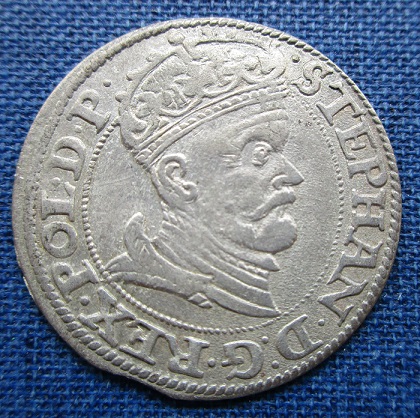 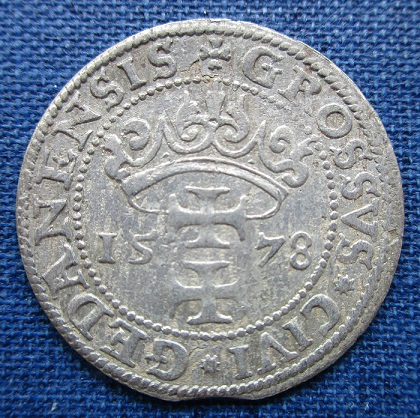 |
|
Moderator
 United States
34562 Posts |
Yes some super posts for today. Mine is a 2 Kreuzer from the German Countship of Pfalz-Simmern:   "If you climb a good tree, you get a push."
-----Ghanaian proverb
"The danger we all now face is distinguishing between what is authentic and what is performed."
-----King Adz
|
|
Bedrock of the Community
United Kingdom
18901 Posts |
Sorry, was out all day yesterday and didn't have time to post this, but as it's an overdate - 1578 over 7 English sixpence of Queen Elizabeth I, it will ease the transition to 1677... 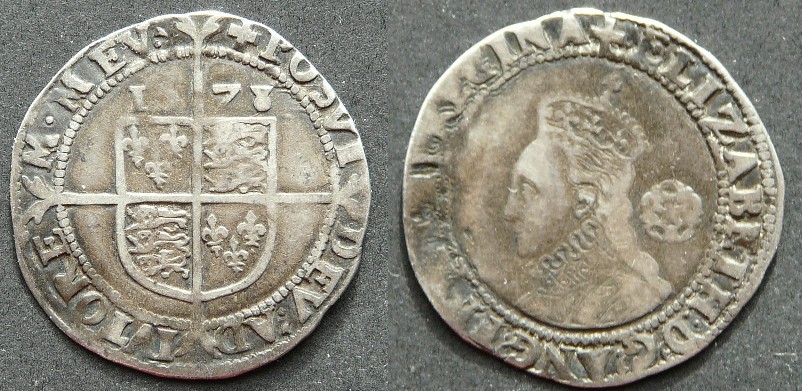 |
|
Pillar of the Community
Belgium
1185 Posts |
1577 Following the plunder of muting Soldiers in the Spanish Netherlands, with the fury of Antwerp as climax, a strong anti-Spanish sentiment was present in the seventeen provinces. William of Orange took the initiative to unite all provinces in a joined protest against the Spanish terror. This so called Pacification of Ghent (agreement concluded on November 8 1576) was the beginning of the third revolt which - as we have seen in the last two weeks - ended in splitting up the 17 provinces in two regions (more or less the current Belgium/Luxemburg and the Netherlands). A monetary heritage that memorazes this period are the survivors of whole, half and quarter Statendaalders (ecu des etats). These pieces, which are quite difficult to obtain (especially the quarters) still mention the King, but also PACE ET IVSTITIA (peace and justice - the motto of the third revolt. Below an example of a half and a quarter Statendaalder from the province of Brabant. A whole daalder of 1579 of Tournai was shown two days ago. The arrangement has been discussed in the past days, as it may have inspired ofher mint masters for a similar design (e.g. the Franc four H from Henri IV, but also four F arrangement for François Alençon) the obverse shows a portrait of standing the king with scepter PHS DG HISP Z REX DUX BRAB the reverse shows a cross configuration of four crowned PH (king PHilippe) - horizontally a symmetrical indication of the face value (e.g. 8 S 8 for a quarter = 8 stuivers); legend PACE ET IVSTITIA 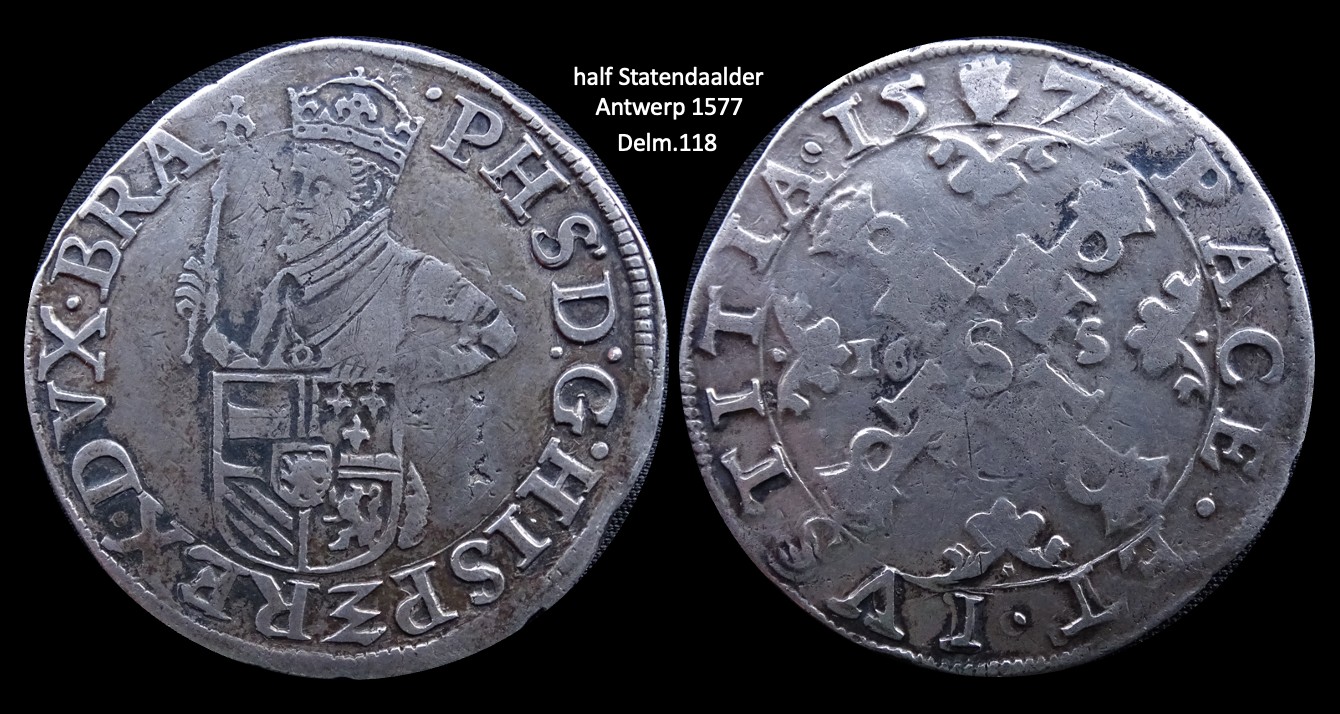 Delm.118 half Statendaalder Antwerp 1577 mintmastersign: hand 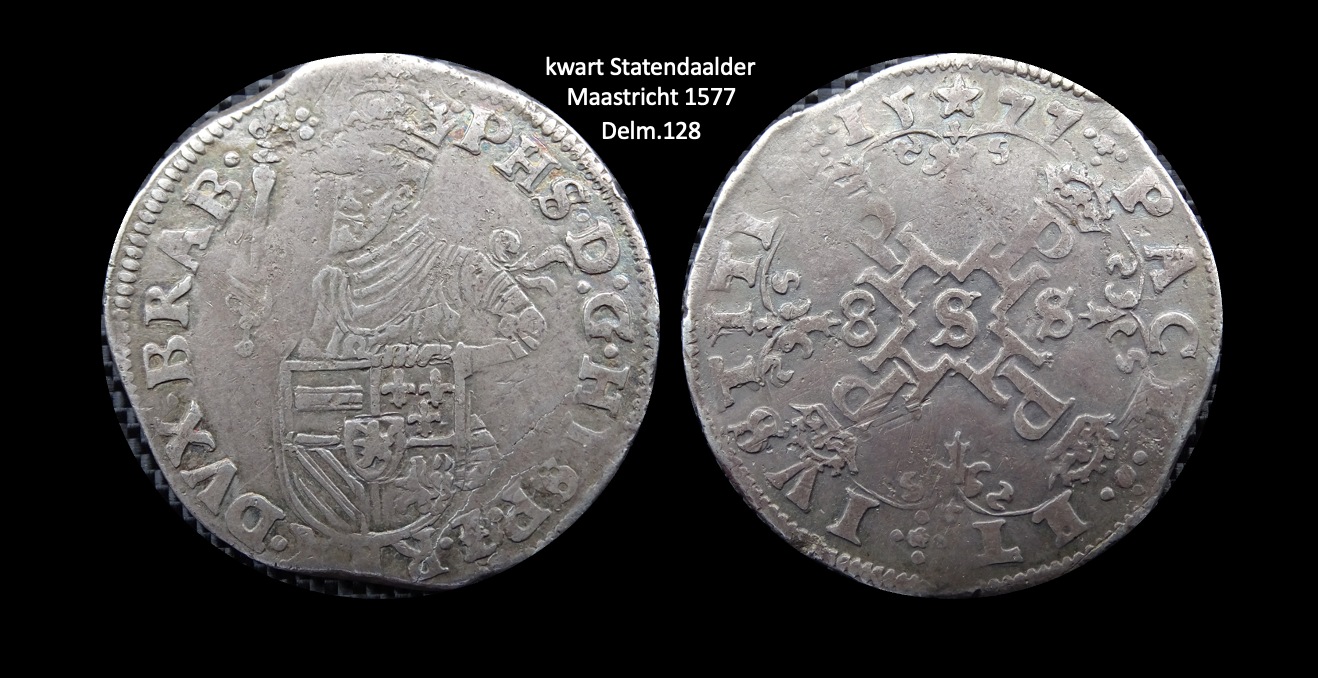 Delm.128 quarter Statendaalder Maastricht 1577 mintmastersign: star These daalders were minted in provinces in the North and South, symbolizing a united revolt. Holland, however had started its own monetary policy, which was far more radical. Indeed on the so called Leeuwendaalder, the king of Spain was no longer mentioned. The original purpose was to gain profit to pay the revolting army. Indeed, by melting the Philipsdaalders and Bourgondische Kruisdaalders ±10% of silver was spared. More about this coin tomorrow and Saturday (first issue end of 1575). Below the first date of a half leeuwendaalder, in general the half is much more difficult to find than the whole.  The obverse shows a knight looking to the right holding banners that are connected to the coat of arms of Holland. The reverse gave the coin its name: a rampant lion looking to the left - legend CONFIDENS DMO NON MOVETUR (he that trusts in God will not be shaken). Finally a jeton from Holland which - like the leeuwendaalder - illustrates the more radical course of this province in the war against Spain. 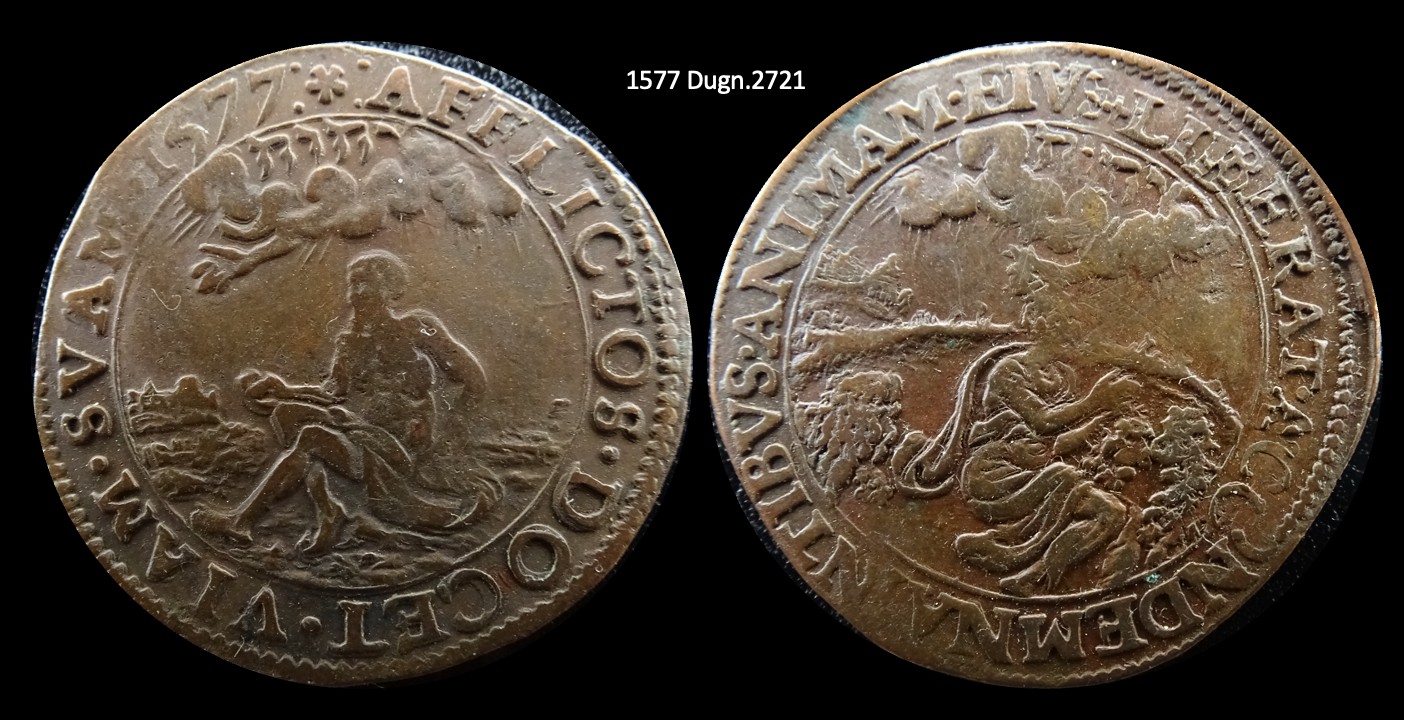 Dugniolle 2721 Dordrecht 'Encouraging the citizens to continue the war' OBV: Prophet Elias in the desert gets manna from the heaven AFFLICTOS DOCET VIAM SVAM 1577 REV: Daniel in the lion's den LIBERAT A CONDEMNANTIBVS ANIMAM EIVS Edited by 1c5d7n5m
11/23/2023 07:42 am
|
|
Pillar of the Community
United States
8056 Posts |
Very nice group including quite an early leeuwendaalder. I think my 1577 Gdansk coin is the only siege issue in my collection. The clergy and nobles in Gdansk were disappointed in the election of Stefan Bathory as king, and refused to acknowledge his authority, leading to the 1577 siege. The coins are popular (and hence pricey). Here is a 1 grosz with obverse legend DEFENDE NOS CHRISTE (Christ protect us) and a lamination reverse that I added to my collection long ago: 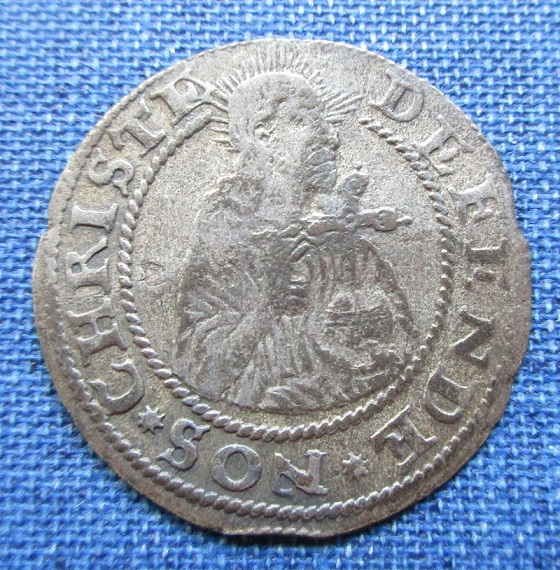 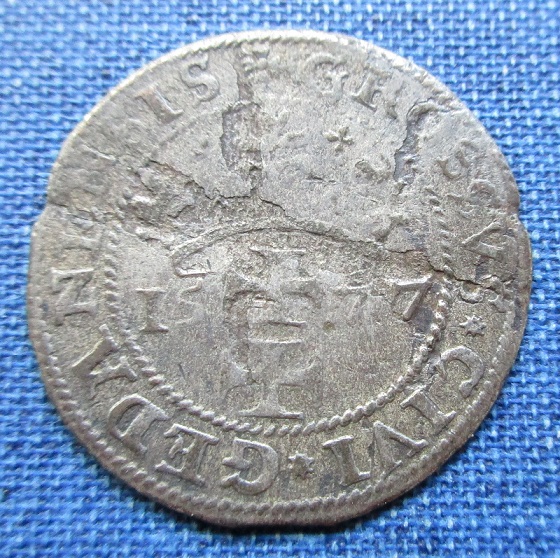 Edited by tdziemia
11/23/2023 07:57 am
|
|
Pillar of the Community
Sweden
2124 Posts |
Quote:
Very nice group including quite an early leeuwendaalder.  France 1577, double tournois, Henry III, Paris (A). France 1577, double tournois, Henry III, Paris (A).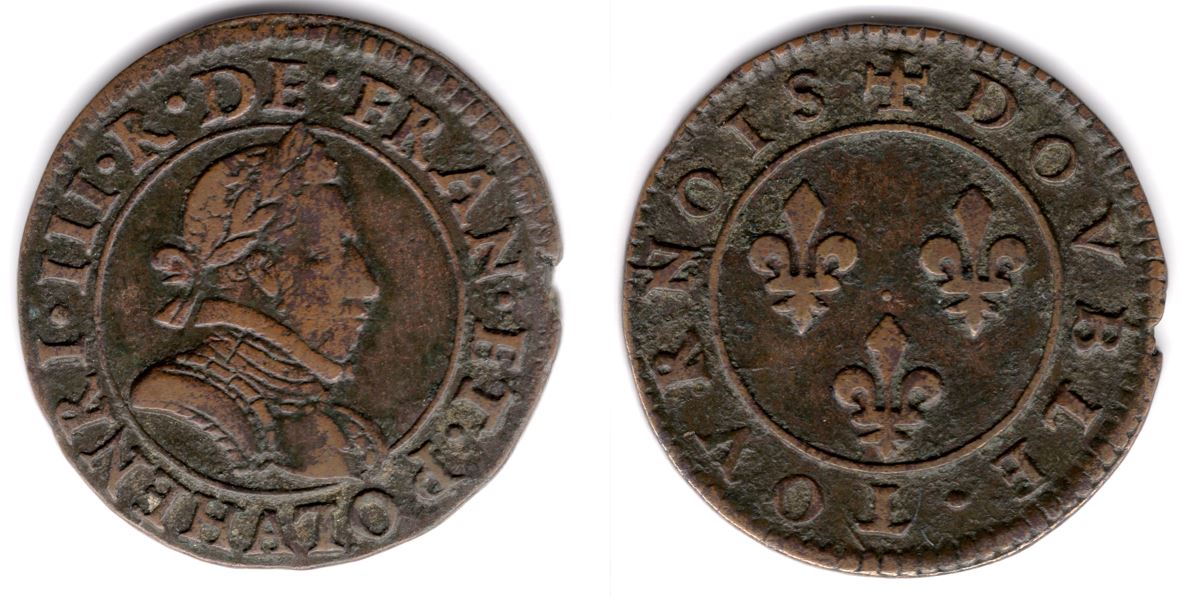 The first copper deniers and double deniers are minted 1577, the first year the coins are undated. From 1578, the year is included on the coins. Milling was still on the experimental stage and most coins were hammered. The copper small change was, however, already from start minted using mechanical presses. |
|
Pillar of the Community
Russian Federation
5186 Posts |
Quote:
I can't think of anything I had photographed that was dated in the 1599-1580 range, but as we're coming into the 1570s and 1560s I'll probably have a lot more entries and I should probably check up on my options to avoid missing anything interesting. Checked my image folder; AFAICT the dates I have for the 16th century are 1599 (already posted), 1575 (presumably my next entry candidate, in two days), 1566, 1556, 1554, 1522, 1521, 1517, 1511. Looks like much of my 16C stuff went without pics. I do hope to get an ID on this one but it doesn't appear to have a date... |
|
Moderator
United States
34562 Posts |
Looking forward to your contribution in a couple days @j1m. Here is another 2 Kreuzer minted at Simmern, but just one year earlier than my coin from yesterday:   "If you climb a good tree, you get a push."
-----Ghanaian proverb
"The danger we all now face is distinguishing between what is authentic and what is performed."
-----King Adz
|
|
Pillar of the Community
Belgium
1185 Posts |
1576 At the end of the year the seventeen provinces signed their intention to unite the protest against the military presence of Spain in the Netherlands, known as the Pacification of Ghent. The jeton below memorizes this landmark event of the third revolt 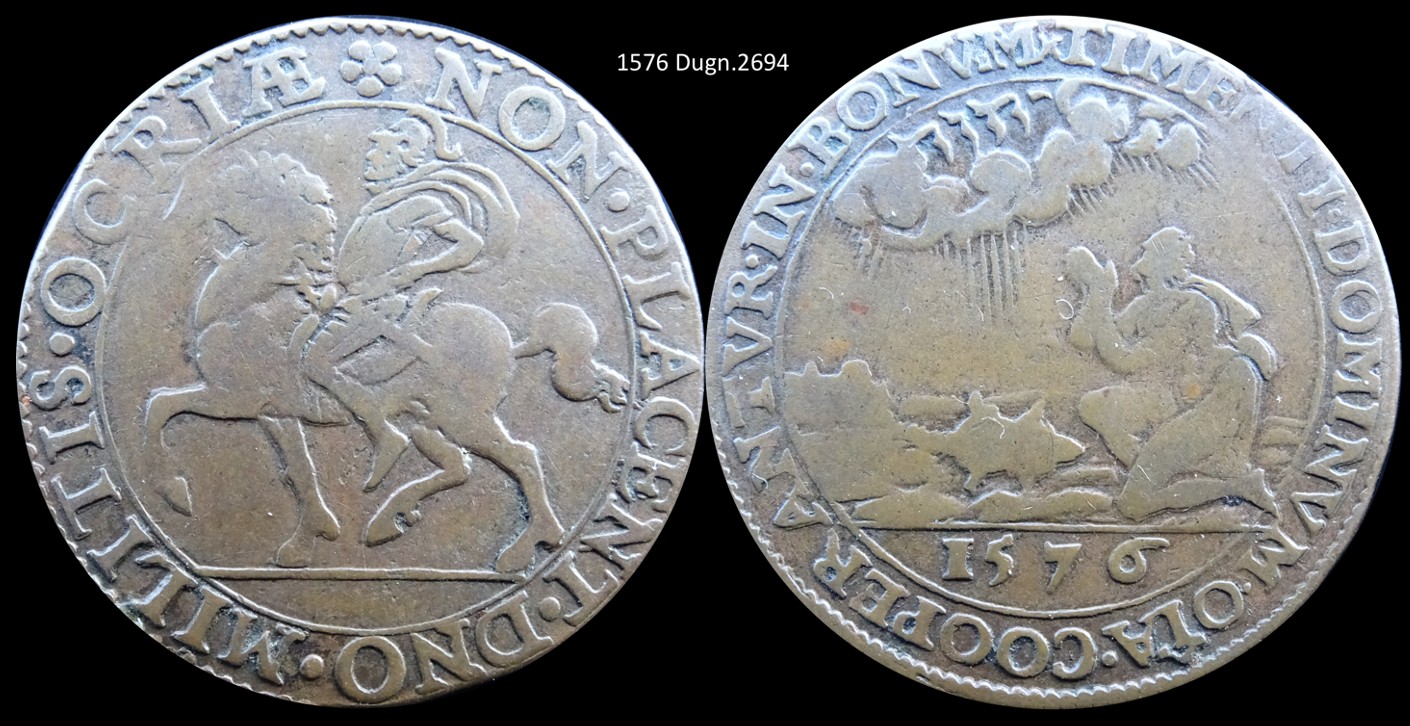 1576 Dugn.2694, vLoonI. I 298/293 - 'Pacification of Ghent' OBV knight on horse NON PLACENT DNO MILITIS OCRIAE REV person praying/thanking 1576 TIMENTI DOMINVM OLA COOPERANTVR IN BONUM It was hoped that this agreement would bring long lasting peace to the Netherlands, this after two previous revolts and almost 10 years of war which brought heavy losses (lives, economy) to society. The jeton below expresses the patience all these years and hope. We know from the last two months that this hope was idle. 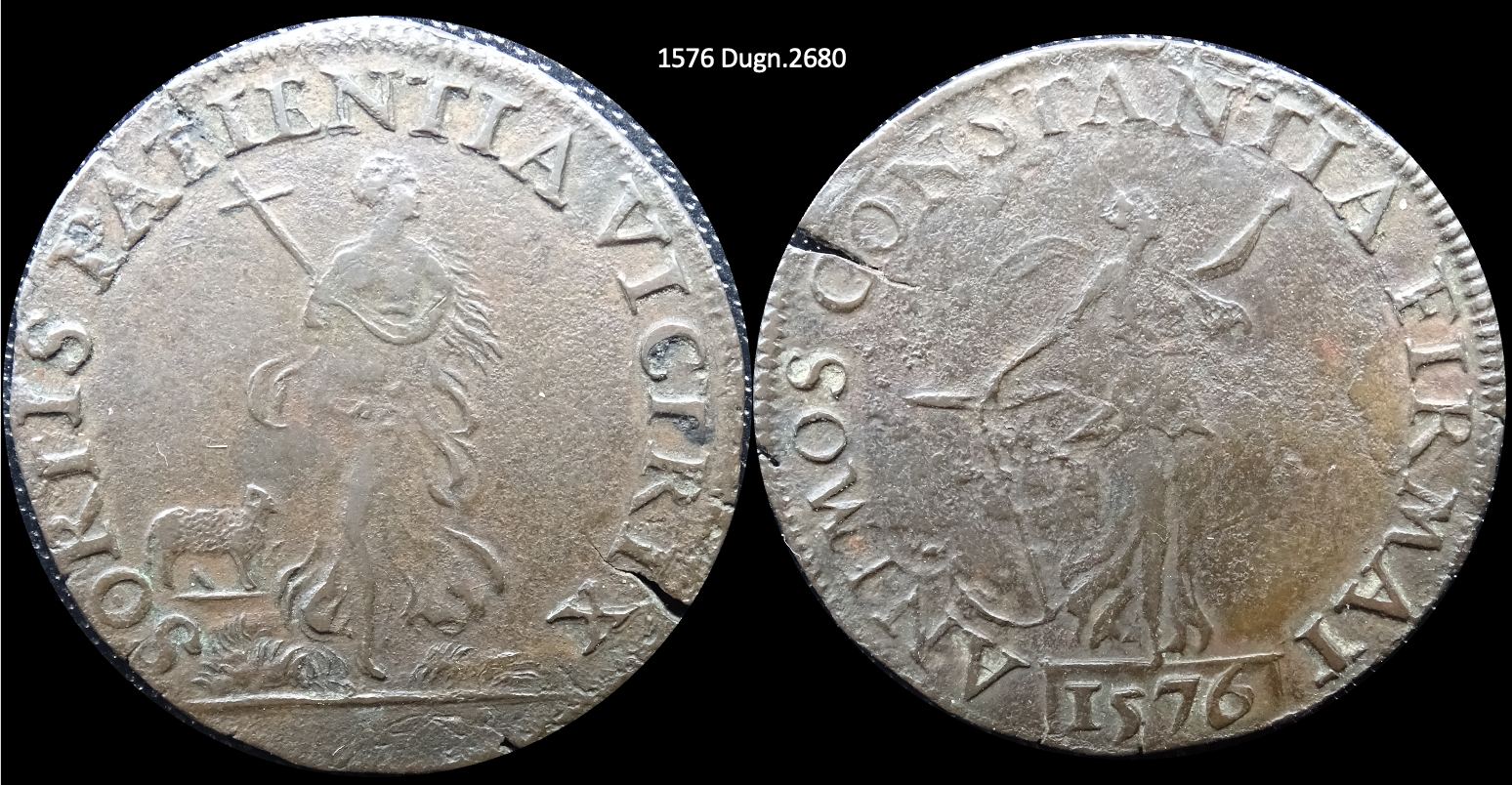 Dugniolle 2680 'Hope for peace' OBV: Patience with cross and lamb SORTIS PATIENTA VICTRIX REV: Hope with anchor begging to the heavens ANIMOS CONSTANTIA FIRMAT 1576 As already mentioned yesterday, the province of Holland went a step further in the revolt (it was the leader of the second revolt in 1572 and the years that followed). November 1575, the mint of Dordrecht made the revolutionary step to melt down the legal large silver pieces (Philipsdaalder and parts; Bourgondische kruisdaalder and parts) and strike newly designed coins, 10% lighter than the legal ones approved by Spain for the same face value. The profit from this illegal act served to pay for the cost of the revolution. The new coin was the Leeuwendaalder. The obverse does not show the king and his titles, but a knight, a symbolic figure of resistance with a legend stating this is the new silver coin of Holland. The reverse does not show the coat of arms of Philippe II, but a rampant lion with the legend CONFIDENCE DOMINO NON MOVETUR, alluding to freedom of religion which was unshakable. The knight on obverse underwent two important changes in less than one year of time: a spooky/hazy figure, roughly sketched in type 1a (last months of 1575), a mocking/clowneske figure in type 1b (first half of 1576) to a knight expressing strength in type 1b (second half of 1576 and more than a century following). One may understand this remarkable metamorphosis by rebelling state that had no official leader yet (Orange was not yet chosen as Stadhouder) and that had to begin from scratch with the design of a new coin. Here an example of a Leeuwendaalder type 1b, Delmonte 830, first half of 1576:  and a Leeuwendaalder type 2, Delmonte 831, second half of 1576 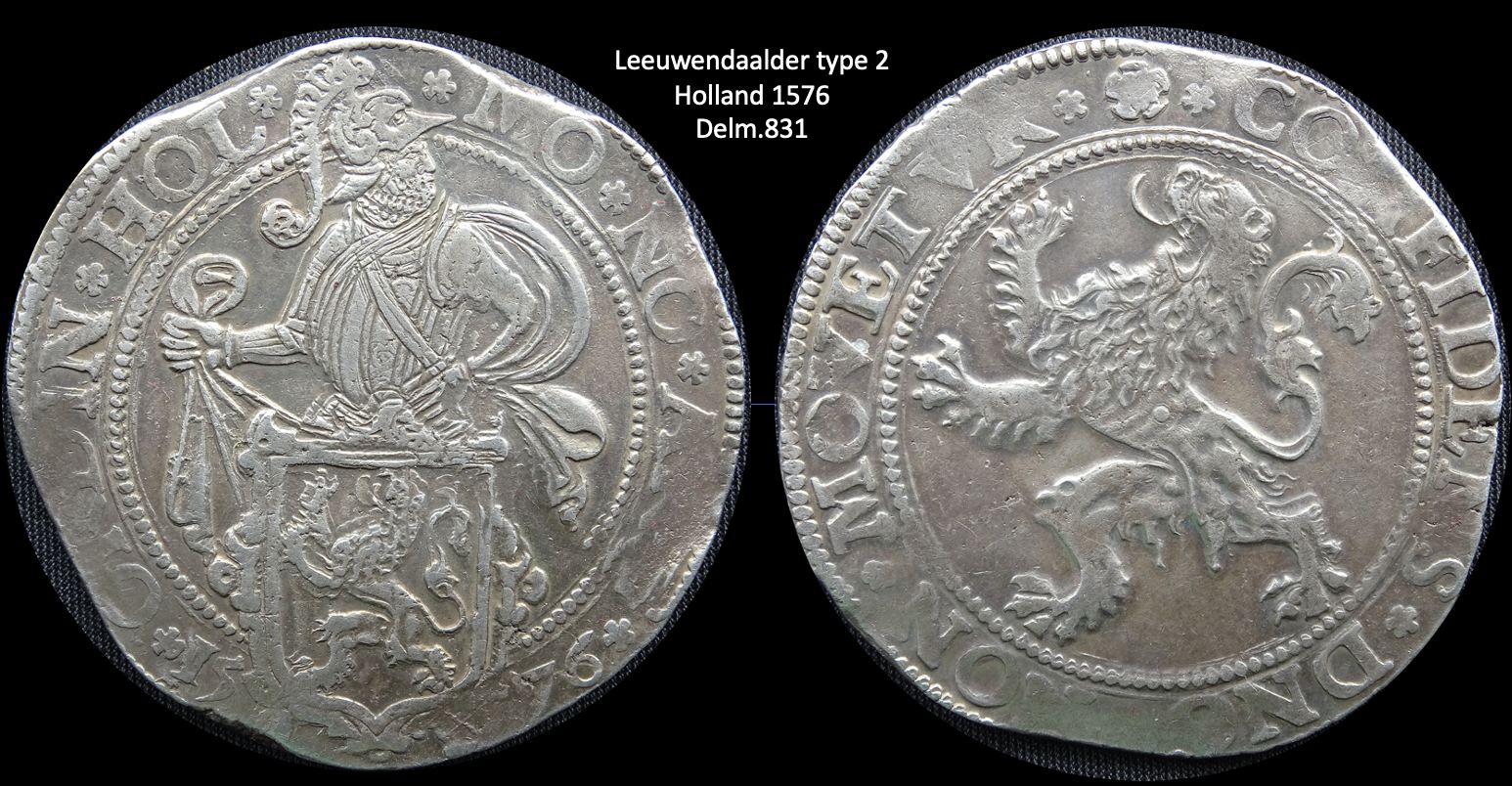 Tomorrow I'll show an example of type 1a, which is the rarest of all Leeuwendaalders, rarer than the imitations made in Italy and Germany, or the and the counterstamped pieces used on Malta (all very pricy). Moreover, the type 1a is the first taler-sized coin produced in what could be called the "United States of the Netherlands", made after a struggle of independence from the superpower of that period. It is curious that so few coin collectors know about this coin. |
|
Pillar of the Community
United States
6879 Posts |
1576 France 2 Sols Parisis 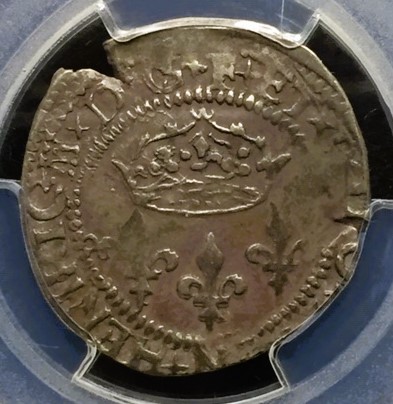 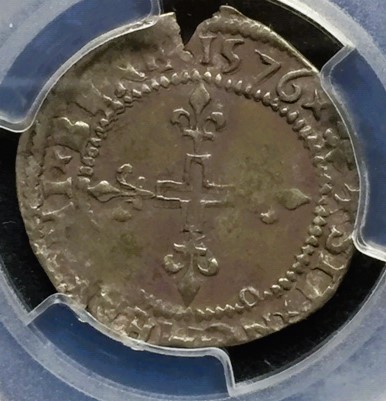 |
|
Pillar of the Community
United States
8056 Posts |
The variety in the position of the knight in the early leeuwendaalders is interesting (as they eventually become highly standardized). I have a schilling of the Duchy of Courland & Semigalia for 1576 (with a strikingly similar lion): 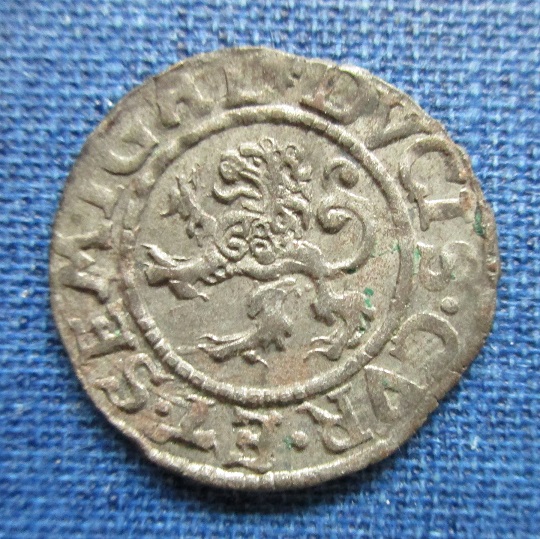 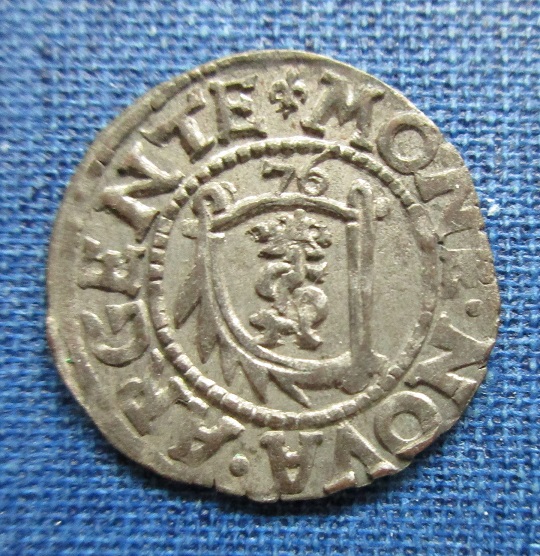 |
|
Moderator
United States
34562 Posts |
No rampant lions on this uniface 2 Pfennig from Salzburg:   "If you climb a good tree, you get a push."
-----Ghanaian proverb
"The danger we all now face is distinguishing between what is authentic and what is performed."
-----King Adz
|
|
Pillar of the Community
Belgium
1185 Posts |
1575 According to A. O. Van Kerkwijk, the two die engravers still working at the mint of Dordrecht at the end of the second revolt (1572-1575 - a period which had caused great damage and suffering in the towns and cities of Holland) were Dirk Jacobz and Gerard van Bylaer. Conditions in the region were bad : part of the land had been inundated, the Spanish troops under the Count of Alva were on their retreat towards south of the big rivers. But Leyden and Alkmaar had not been captured despite a long Spanish siege, so the spirit of rebel victory was present. Holland was bringing the revolt to a new stage by the Resolution of the States of Holland from September 9 1575, with the goal to mint new money, a revolutionary coin that would be called Leeuwendaalder. Adult men from Dordrecht were prompted to serve as guards or charged to enhance entrenchments and strongholds to defend the city. But Dirk Jacobz and Gerard van Bylaer were exempted in order to to work continuously on new dies, to melt the old silver that were common for decades under Spanish rule in order to privide the metal to produce the lighter "lion dollars". The citizens of Dordrecht were asked to change their old silver in return for the new coins, a deal that resembled the period of punching (kloppen - 1572-1574). The 10% profit in silver was most welcome to pay the rebel soldiers for their duty. The obverse die design showed a rebel soldier, the legend explaining that this coin was the new money from the state of Holland. The reverse showed the lion of Holland ready to fight with a legend explaining the importance of being standfast in the battle for freedom. This design was a winner from the beginning and gave the piece its well known name.  Dirk Jacobz and Gerard van Bylaer could not know that their somewhat primitive design of 1575 (the obverse needed a few adaptations the year that followed - see photo below), which was minted in modest quantity to raise some money for the revolution, would develop into an internationally recognized trade coin, made in all of the United Provinces by the millions for over a century. It would get the status of trade money preferred over all other coins of the time in the Levant, in the far East, in the Baltic and even in North America.  |
|
Pillar of the Community
Sweden
2124 Posts |
Very interesting with the historical background, 1c5d7n5m.  Interesting also to see the clear and rather fast progression of the quality of the designs for the knight and the lion on those Leeuwendaalders. First a quick prototype to meet time-to-market demands, followed by an improved version, and then finally something useful. That makes me think of modern software development ...   Quote:
1576 France 2 Sols Parisis Nice! |
|
Pillar of the Community
Russian Federation
5186 Posts |
Quote:
No rampant lions on this uniface 2 Pfennig from Salzburg That beastie on the left side of the Salzburg coat of arms (top of the three) sure looks like a rampant lion to me... (Apparently sources differ on the actual identity of that particular heraldic animal; it's usually depicted as black.) |
| |
Replies: 5,946 / Views: 249,664 |








 First Page
 Previous Page


 Posted 11/22/2023 3:50 pm


