| Author |
 Replies: 5,946 / Views: 249,662 Replies: 5,946 / Views: 249,662 |
|
|
|
Pillar of the Community
 United States
8056 Posts |
Indeed a rare type! I can only find 4 examples in 15 years on acsearch and sixbid, of which only one of comparable quality to yours  . |
|
Pillar of the Community
Belgium
1185 Posts |
thanks erafjel and tdziemia
can you post a picture of the one piece with comparable quality tdziemia? when was it auctioned?
|
|
Pillar of the Community
Russian Federation
5186 Posts |
My entry for 1575 is, as it happens, also Dutch, but it's nowhere near as nice in either quality or, to the best of my knowledge, rarity... ...though the sheer amount of variants makes figuring out rarity tricky. 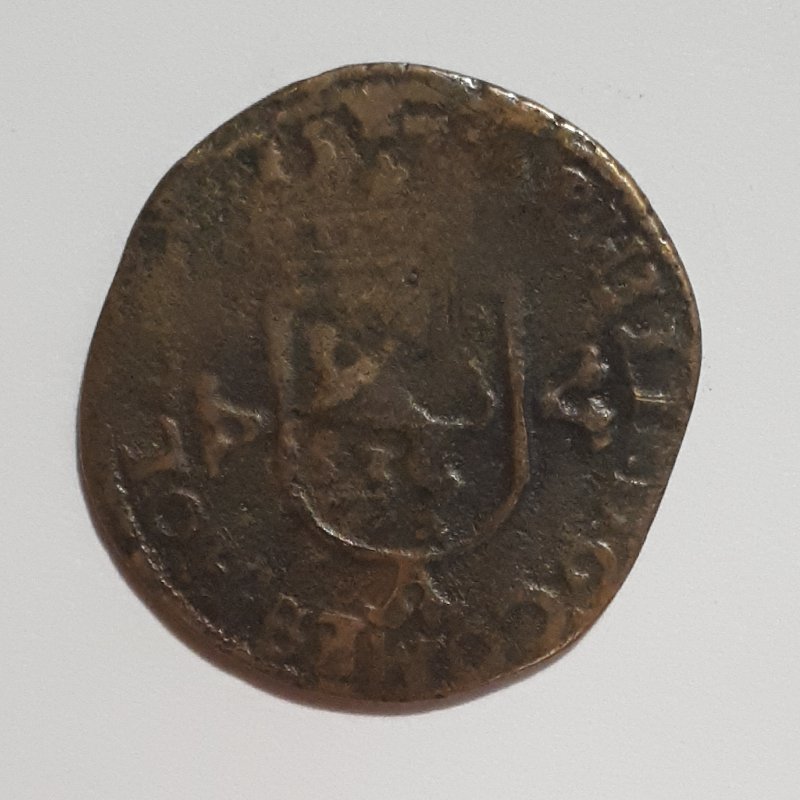  Spanish Netherlands, Philip II Province of Holland, oord (double duit), 1575 V.57.2 - GH.263.11 - vdCh.XXXV.79-84 - PW 2008 (per this page on duiten.nl) cf. Numista 28280 (different obverse legend) Obverse: crowned coat of arms over forked cross, PHILIP:D:G:COMES.HOLL[A]: 15  7[5] Reverse: seated figure inside walled garden, AVX.NO[S]T.IN[.]NOM[.DO]M 26x24 mm, 4.74 grams I'm not confident now whether the obverse legend ends HOLLA or HOLLAN; I presumably had reasons to assume the former when writing my 6th edition entry, but that leaves quite a lot of unexplained space in the upper left (10-11h). Unfortunately I do not have the coin in hand any more. The only example shown with a supposed HOLLAN legend on the duiten.nl site actually reads HOLAN [sic]; I'm not sure if there's a catalog of all known variants anywhere. At 4.74 grams, this coin would be severely underweight - it should have been 7.46 grams. I'm not sure what's up with that. Hopefully it's not a fake... |
|
Moderator
 United States
34562 Posts |
Yep good point @j1m. It seems to be feline and rampant, but I'm not 100% sure that it is a lion. Maybe a panther? I'll need to research that a little bit. I have a similar piece to post today, but thought I'd include an early map of the city of Salzburg from within this general timeframe. Here is a little information from the writeup by the seller: Quote:
This extraordinary engraving is from Georg Braun & Frans Hogenberg's "Civitates Orbis Terrarum" or "Atlas of the Cities of the World". The work was published in Augsberg in 1575. It is considered the greatest atlas of city views ever made. It included some of the earliest views available and is a crucial guide to understanding the world in the 16th century. --- "The "Civitates orbis terrarum" or the 'Braun & Hogenberg' is the most famous of the early town atlases. 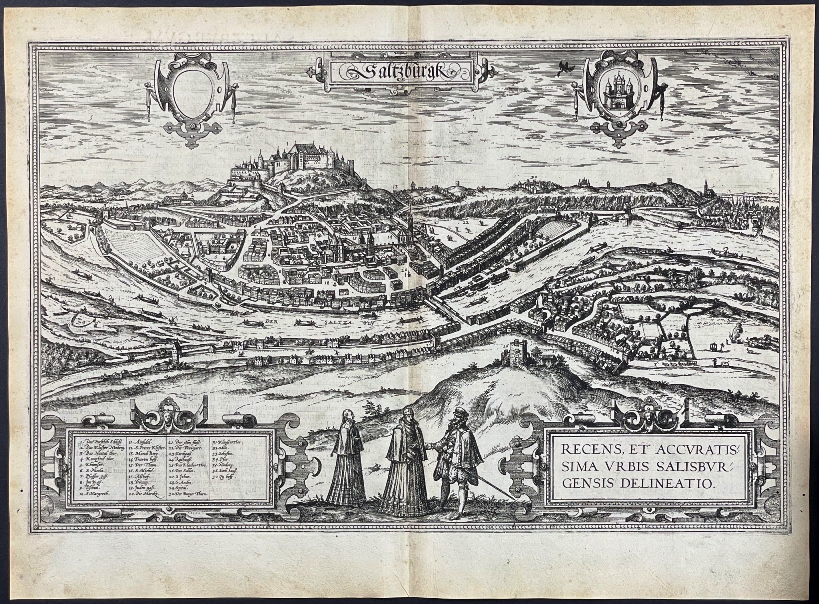   "If you climb a good tree, you get a push."
-----Ghanaian proverb
"The danger we all now face is distinguishing between what is authentic and what is performed."
-----King Adz
|
|
Pillar of the Community
Sweden
2124 Posts |
Quote:
Obverse: crowned coat of arms over forked cross, PHILIP:D:G:COMES.HOLL[A]: 157[5] Looking closely, I think that the inscription is ... HOL Z ... which could be ... HOL Z ZE[L], that is, Hollandiae et Zelandiae. Quote:
I'd include an early map of the city of Salzburg from within this general timeframe That is a very nice city view.  Do you have that map? |
|
Pillar of the Community
Belgium
1185 Posts |
Quote:
It seems to be feline and rampant, but I'm not 100% sure that it is a lion. good point, in the Arabic world it was called the "dog dollar" instead of "lion dollar" |
|
Moderator
United States
34562 Posts |
Quote:
Do you have that map? No sorry, but it is for sale right now on Abe.com. Buying old maps would definitely cut into my ability to purchase old coins. "If you climb a good tree, you get a push."
-----Ghanaian proverb
"The danger we all now face is distinguishing between what is authentic and what is performed."
-----King Adz
|
|
Pillar of the Community
Belgium
1185 Posts |
last image from 1575/6 (detail of obverse of early Leeuwendaalders) a picture is worth a thousand words  |
|
Pillar of the Community
Belgium
1185 Posts |
1574 this year marks the turning point of the second revolt, which started in 1572 with the sea beggars taking the port of Brielle on april 1 by surprise the duke of Alva, Fernando Alvarez, responded with iron discipline, sacking and utterly destroying some towns & cities like Zutphen and Naarden, reasoning that all other cities would surrender to escape total destruction but the reasoning was wrong, the Dutch cities resisted and defended themselves against sieges; and in 1574 two of such sieges ended by the Spanish army leaving after heavy losses Alkmaar and Leyden, both produced siege money to pay the defending soldiers; resources were exhausted, so the Alkmaar coins were made from lead; some of the Leyden guilders were pressed paper ! Below a siege coin (14 stuyver - in silver) from Leyden that was carried as a pendant, a piece of memory of the resistance; unlike the siege coins from most other cities, Leyden (Lugdunum Batavorum in Latin), these coins are stamped on both sides. The rampant lion is visible and the coat of arms of the city (keys); PVGNO PRO PATRIA (I fight for my motherland) needs little explanation 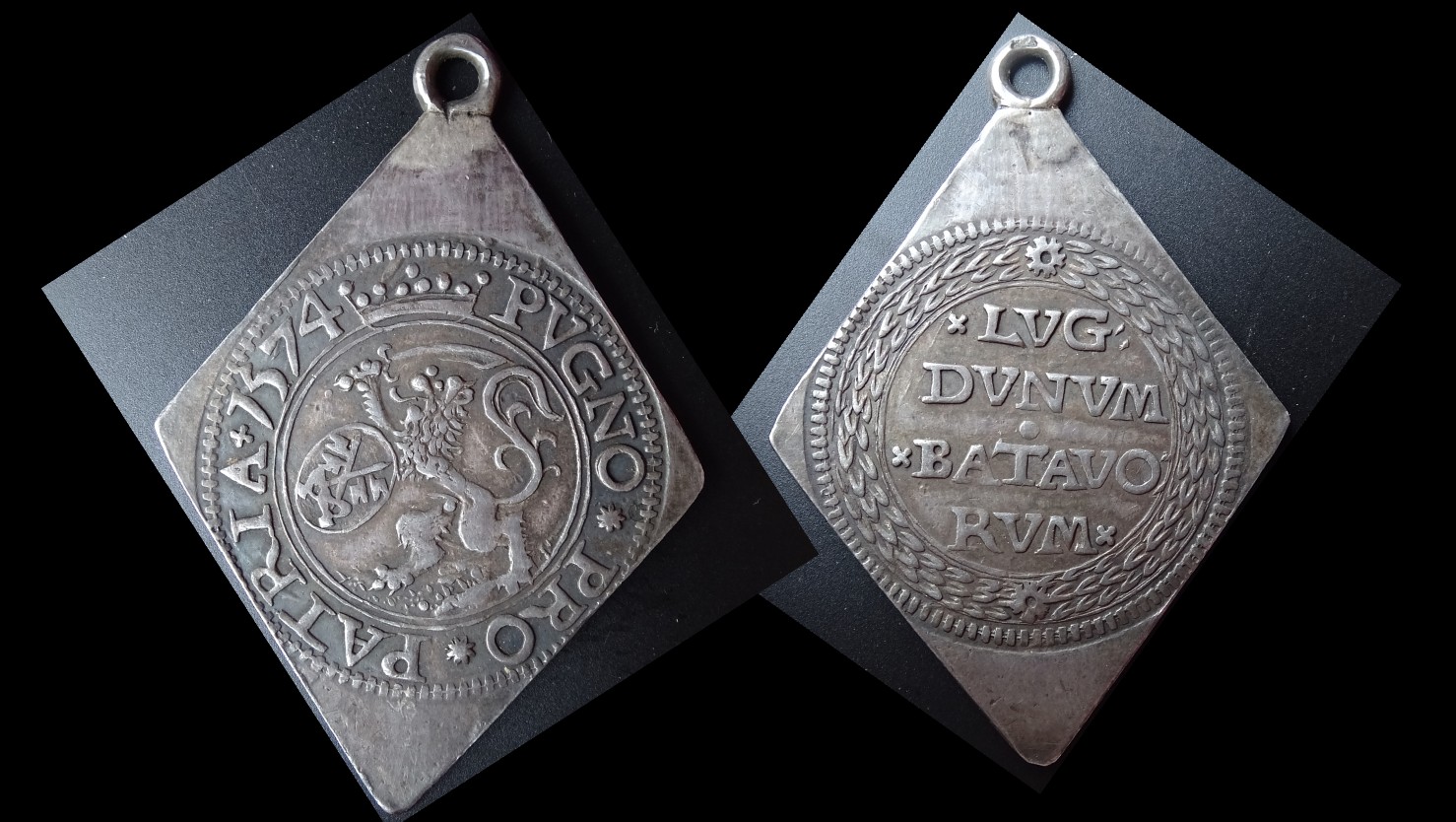 Most of these coins were kept with care by later generations; early collectors items that were encased in beautiful contemporaty settings to be used as pendant (see example of a 28 stuyver shown as print) 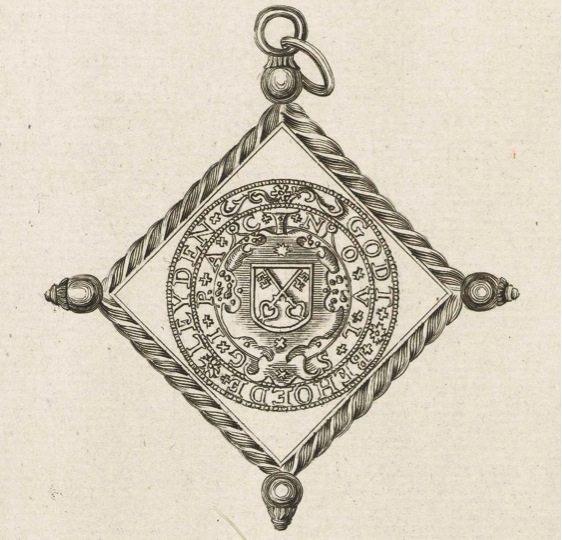 below my own 28 stuyver (with on the reverse a Dutch legend GODT BEHOEDE LEYDEN (God saves Leyden). A piece that was not mounted - a better piece for the coin collector ? Most coin dealers would say yes (asking a higher price), but I am not sure.... 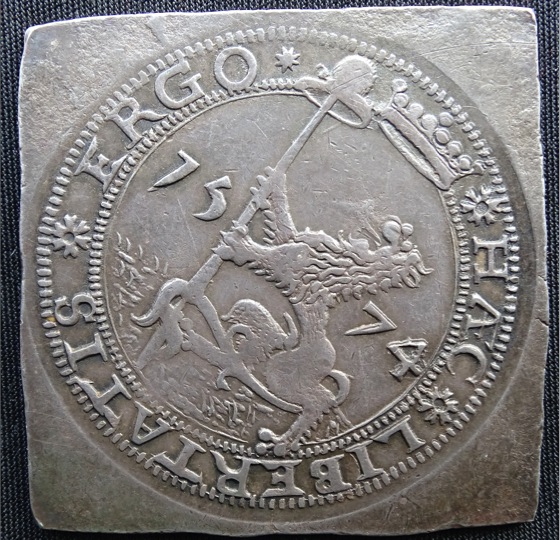 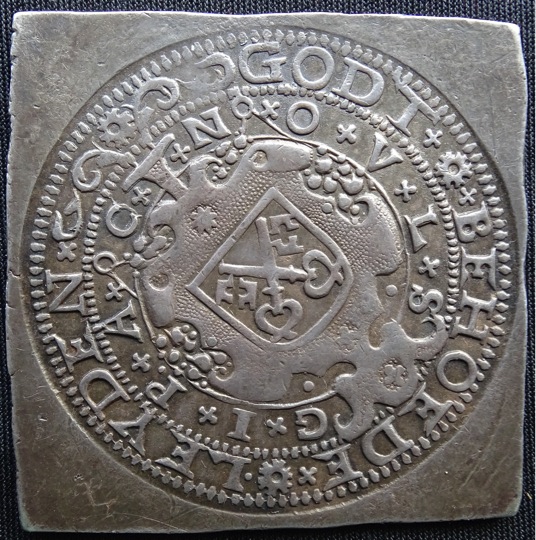 Edited by 1c5d7n5m
11/26/2023 04:59 am
|
|
Moderator
United States
34562 Posts |
I'm loving those siege coins! Here is a Groschen from the German Free City of Hildesheim dated 1574 AD:   "If you climb a good tree, you get a push."
-----Ghanaian proverb
"The danger we all now face is distinguishing between what is authentic and what is performed."
-----King Adz
|
|
Pillar of the Community
United States
8056 Posts |
Quote:
Quote:
Obverse: crowned coat of arms over forked cross, PHILIP:D:G:COMES.HOLL[A]: 157[5]
Looking closely, I think that the inscription is ... HOL Z ... which could be ... HOL Z ZE[L], that is, Hollandiae et Zelandiae.
van Gelder & Hoc agree with that. They have HISP Z REX COMES HO only for 1574, and COMES (or var) HOL Z ZEL for the later dates of this type. |
|
Pillar of the Community
United States
8056 Posts |
I will squeeze in this 1574 demi-ecu Philippe / halve Philipsdaalder of Brabant that features one of the villains in 1c5d's Dutch independence saga. 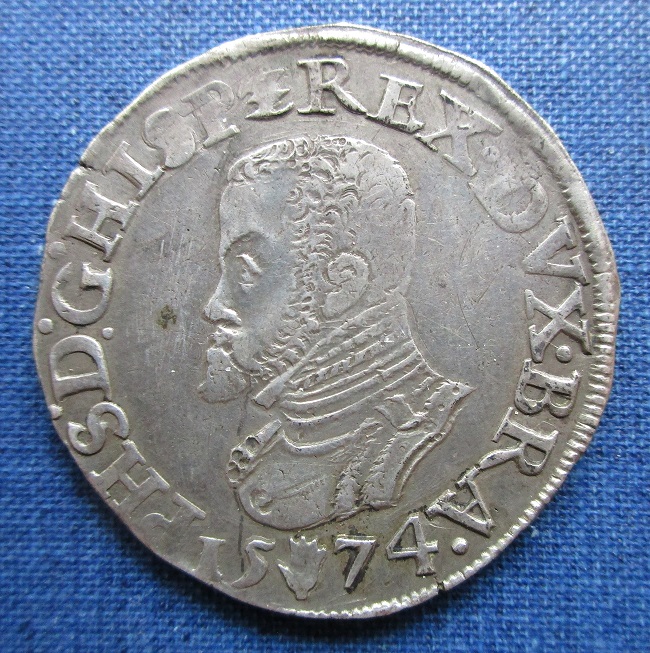 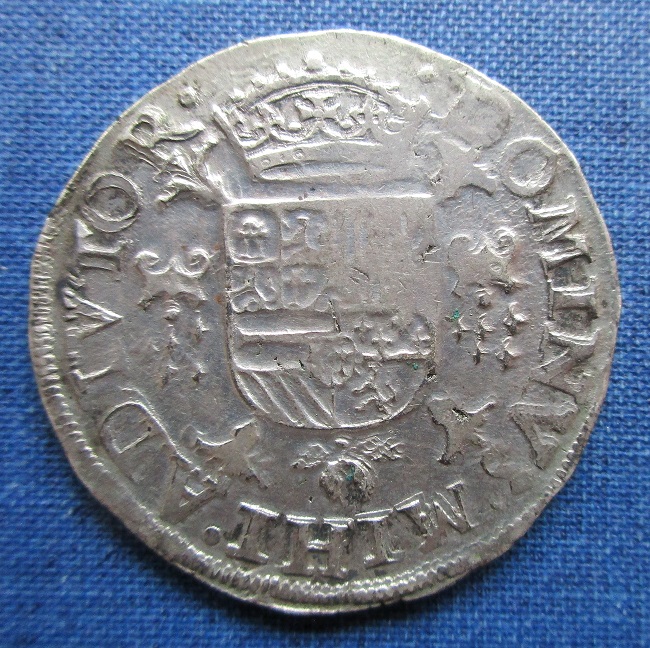 ..and follow by starting 1573 with this denar struck in Gdansk. 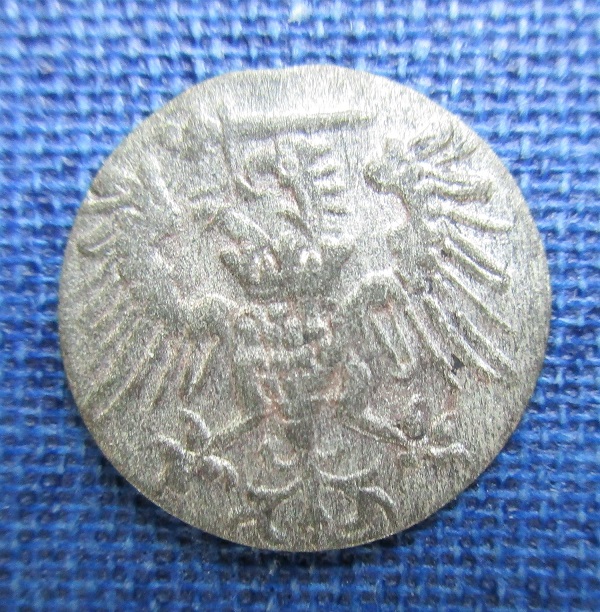 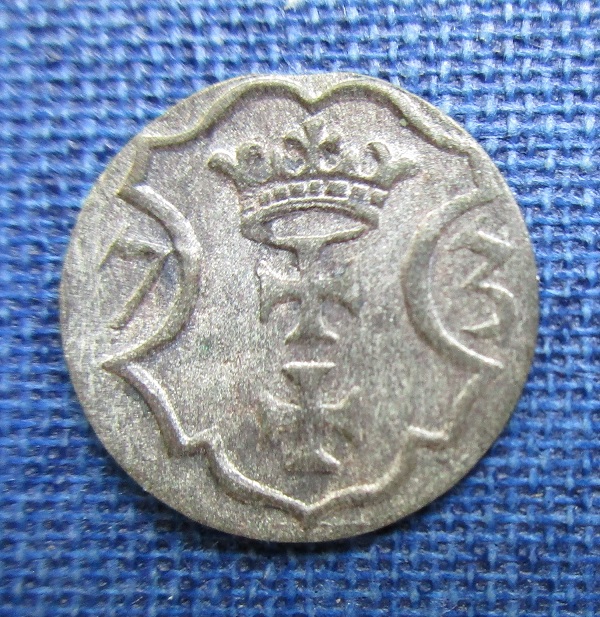 Sigismund II had died in July, 1572, and the election of Henry of France as the first elected monarch of the Poland-Lithuania Commonwealth was concluded in September 1573. This city issue is considered an interregnum type, and the only coin struck in Polish territory between 1572 and 1577. Henry would arrive at the royal castle in Krakow in January 1574, and be gone by mid-year (I geuss he didn't like the food?) Edited by tdziemia
11/27/2023 08:18 am
|
|
Pillar of the Community
Belgium
1185 Posts |
very nice half Philipsdaalder, tdziemia I would not call Phillippe II a villain Being the king, he was the person in charge of the largest imperium of his age, trying to maintain power & stability; this included war in the mediterrenean, against England, France and the Dutch rebels ..... |
|
Pillar of the Community
Belgium
1185 Posts |
1573 Second year of the second revolt, which was most intense in Holland and Zeeland. The significant monetary fact in this period was the rebel decision, officially announced in the plakkaat of 7 February 1573, to put counterstamps on one face of the silverpieces in circulation. These were mostly Philipsdaalders (or parts - ecu Philippe) and Bourgondische Kruisdaalders (ecu de Bourgogne), but also foreign silver: thalers from Germany, shillings from England .... The stamps on the Philipsdaalders were typically punched in the neck of the king, symbolic for the war waged against him. Old non-stamped coins were ordered to be exchanged for new (stamped) pieces: for 9 old one received 8 new (that had a 12% higher face value). The profit of this operation went to wages of the rebel army and is estimated to be ±250,000 guilders. About 90% of all surviving counterstamped pieces are the type stamped in Holland (small lion), the remaining 10% are stamps from Zeeland (lion in water). Below a stamp from Holland (small lion) with as host coint a half Philipsdaalder 1573 from the province of Holland. The date of the host coin must be older than (or equal to) the moment of stamping. 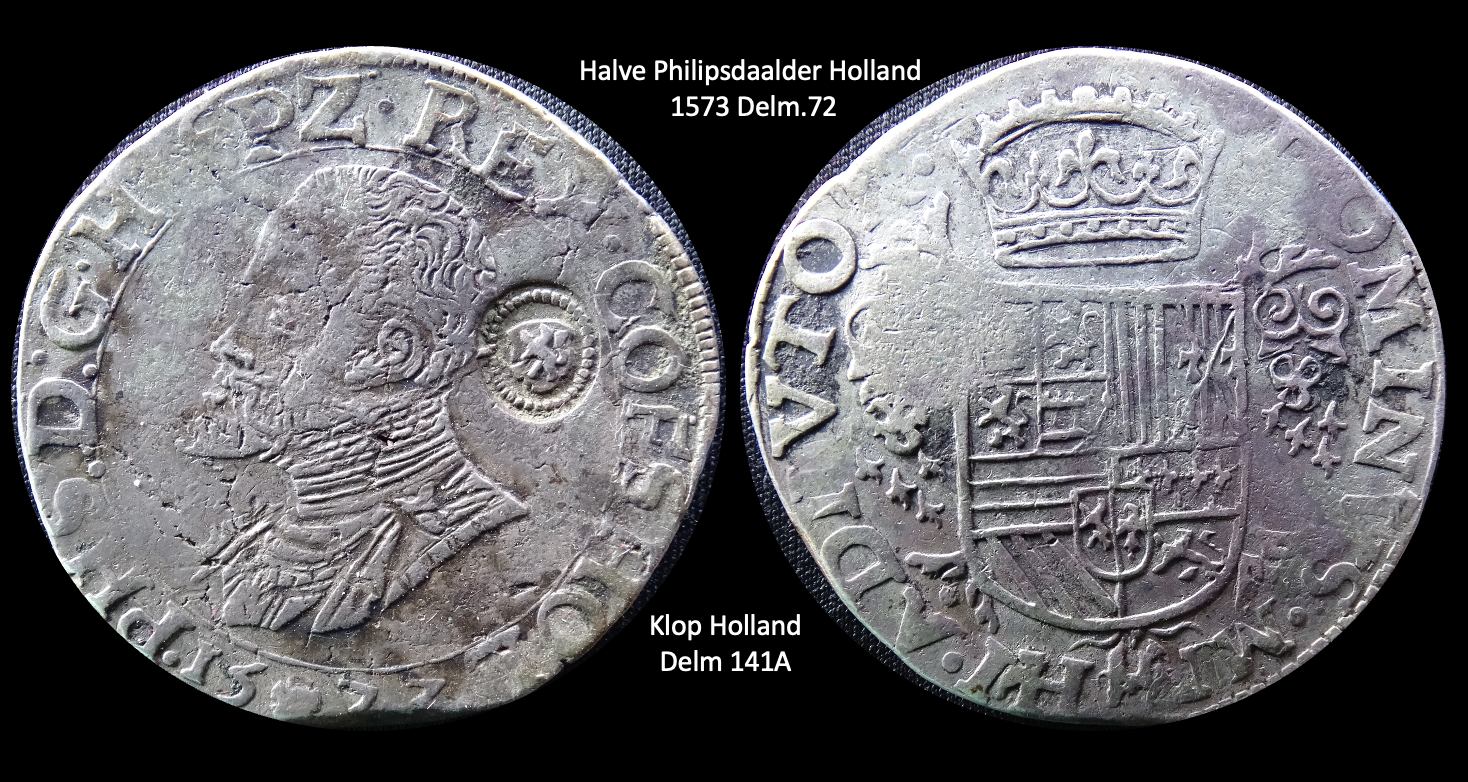 Below a series of other stamped coins, including a host coint a half Philipsdaalder 1574 from the province of Holland. This is evidence for the fact that the stamping continued well into 1574. 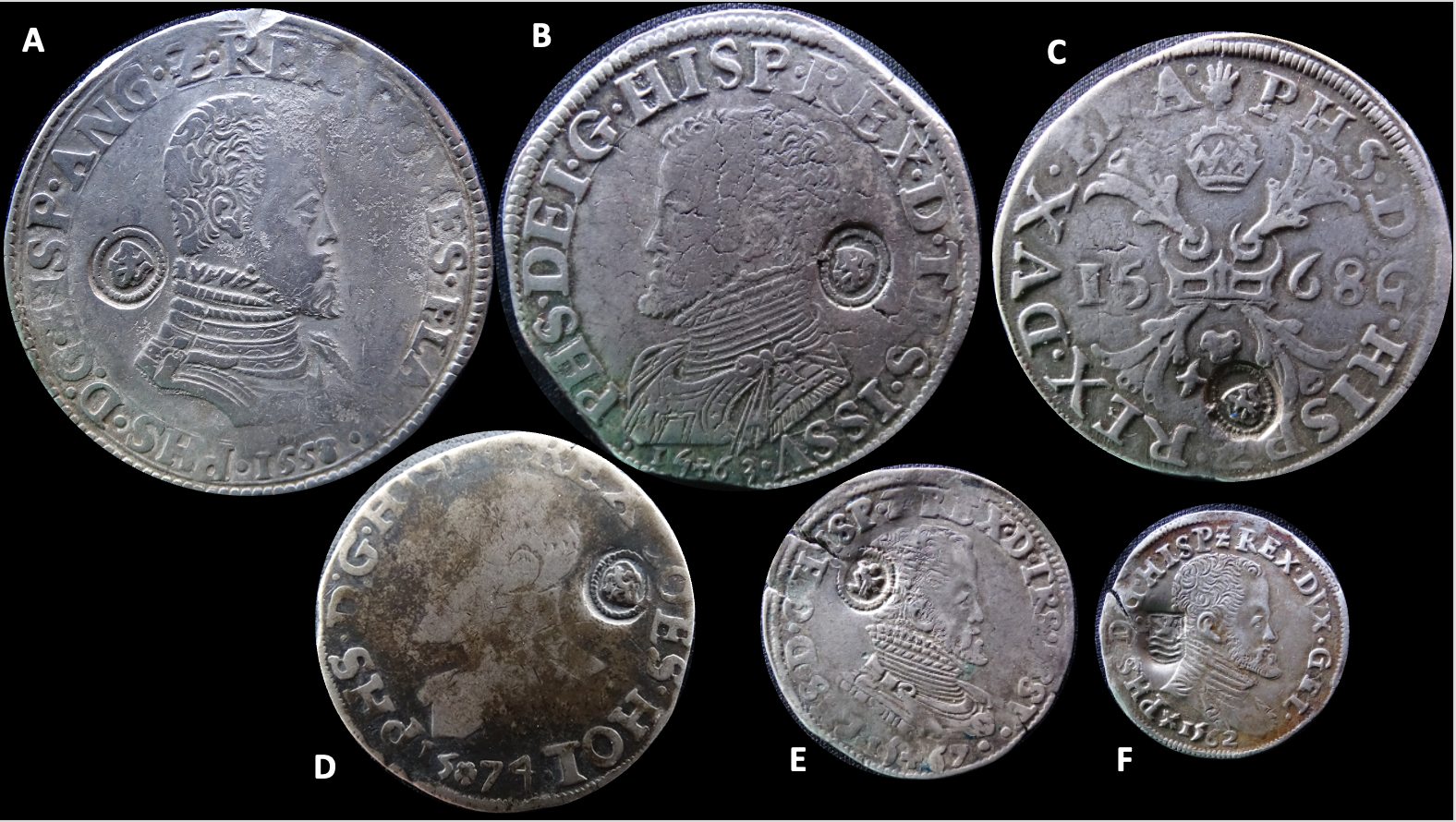 Counterstamp ('Klop') province of Holland Counterstamp ('Klop') province of Holland lion; Host coins: A) Philipsdaalder Vlaanderen, 1558; B) Philipsdaalder Overijssel, 1563, C) Bourgondische kruisdaalder, Brabant, Antwerp mint 1568 D) Halve Philipsdaalder Holland 1574 (!); E) 1/5th Philipsdaalder Overijssel 1567 Counterstamp ('Klop') province of Zeeland lion standing in water ; host coin: F) 1/10th Philipsdaalder Gelderland 1562 for those who understand Dutch: below the link to an outstanding article about these counterstamps: https://jaarboekvoormuntenpenningku...80/1980g.pdfEdited by 1c5d7n5m
11/27/2023 10:06 am
|
|
Moderator
United States
34562 Posts |
A super collection of counter-stamped, devalued coins @1c5! Here is another Groschen, but this time from the German Electorate of Saxony-Albertine:   "If you climb a good tree, you get a push."
-----Ghanaian proverb
"The danger we all now face is distinguishing between what is authentic and what is performed."
-----King Adz
|
| |
Replies: 5,946 / Views: 249,662 |








 First Page
 Previous Page


 Posted 11/25/2023 09:24 am


