| Author |
 Replies: 5,946 / Views: 249,661 Replies: 5,946 / Views: 249,661 |
|
|
|
Pillar of the Community
 United States
8056 Posts |
@1c5d, first, to answer your question of a couple of days ago, here is the 1575 Leeuwendaalder I was referring to: https://www.acsearch.info/search.html?id=3125296Next, I will post this coin I just won, with your advice on how to date it, and also your guess on what value it would have circulated at in Holland. As you mentioned, not only other Low Countries coins circulated, and were stamped, but this one caught my interest because I also happen to collect Duchy of Lorraine coins. I think it has the same counterstamp as the ones you are posting for 1573? The Lorraine testons were struck to a similar standard as French testons of the same era, bit over 9 grams, and about 0.900 (for info, host coin here can be dated to 1556-1557). It appears that the act of stamping created the substantial crack. Gee, does one consider this crack PMD? (Post Mint Damage) Or not, because it occurred at the second mint it passed through?  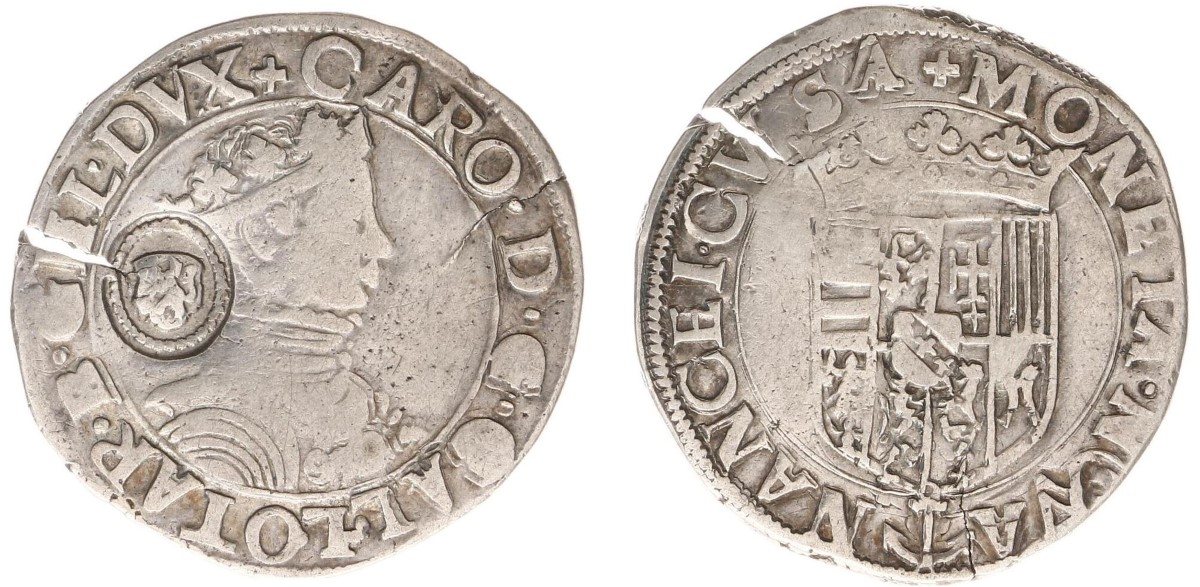 © Heritage Auctions Europe Edited by tdziemia
11/27/2023 9:58 pm
|
|
Pillar of the Community
Belgium
1185 Posts |
@tdziemia: very interesting example of counterstamped (Holland, 1573/4) silver piece originating from the Lorraine  I think this stamped teston is very rare, so you acquired an interesting piece ! the stamp demonstrates that this foreign silver piece circulated in Holland at that time, I presume it was more or less valued as a fifth Philipsdaalder the stamp was also put in the neck of the portrait, although this is not Philippe ! the big crack in the platelet (ner the stamp) is similar to the cracks on my 1/5th and 1/10th philipsdaalder, so it was inflicted by the stamp; one never sees it on the bigger silver pieces |
|
Pillar of the Community
Belgium
1185 Posts |
1572 the second Dutch revolt (starting April 1 with the capture of Den Briel - op een april verloor Alva den Bril) was caused by harsh taxation of the population (in particular the hated tenth penny) in order to pay the heavy cost of maintaining a large Spanish army in the Netherlands. The second revolt was mostly concentrated in Holland and Zeeland. In response to this new level of revolt, Alva ( the iron duke) started a ruthless campaign of punishment, leaving Brabant for the north and completely destroying a few small cities on his way The normal rule of war was those days that if a city opened its gates before the enemy had installed the pieces of artillery, surrender was under mild conditions, meaning no executions. But Alva violated this principle, with Mechelen, Zuthpen and in particular Naarden (were every inhabitant, man, woman, child was executed). Alva anticipated that his severity of action would set an example and scare all cities in Holland so mauch that these would not resist but open their city gates. But this reasoning proved to be wrong: his next target, the large city of Haarlem (second largest in Holland, after Dordrecht) closed its gates when the Spanish army arrived. A long siege followed (11 dec 1572 --> 13 july 1573); attack after Spanish attack was defended with success; casualties on both sides were enormous. However, the sea beggars failed to bring aid to the isolated city and famine and exhaustion finally forced Haarlem to capitulate. https://en.wikipedia.org/wiki/Siege_of_HaarlemBut the Spanish capture proved to be a Pyrrhus victory and the tide turned in favor of the rebels the following years. The lack of money to pay the Spanish troops and the inundation of the lands surrounding the cities were factors that led to the failure of Alva's campaign to capture Holland. In 1575 he returned southwards, via Zeeland to Brabant, and the iron duke returned disappointed and sick to Spain, never coming back to the Netherlands again. Below a whole and a half siege daalder (Velddaalder) from the Siege of Haarlem: 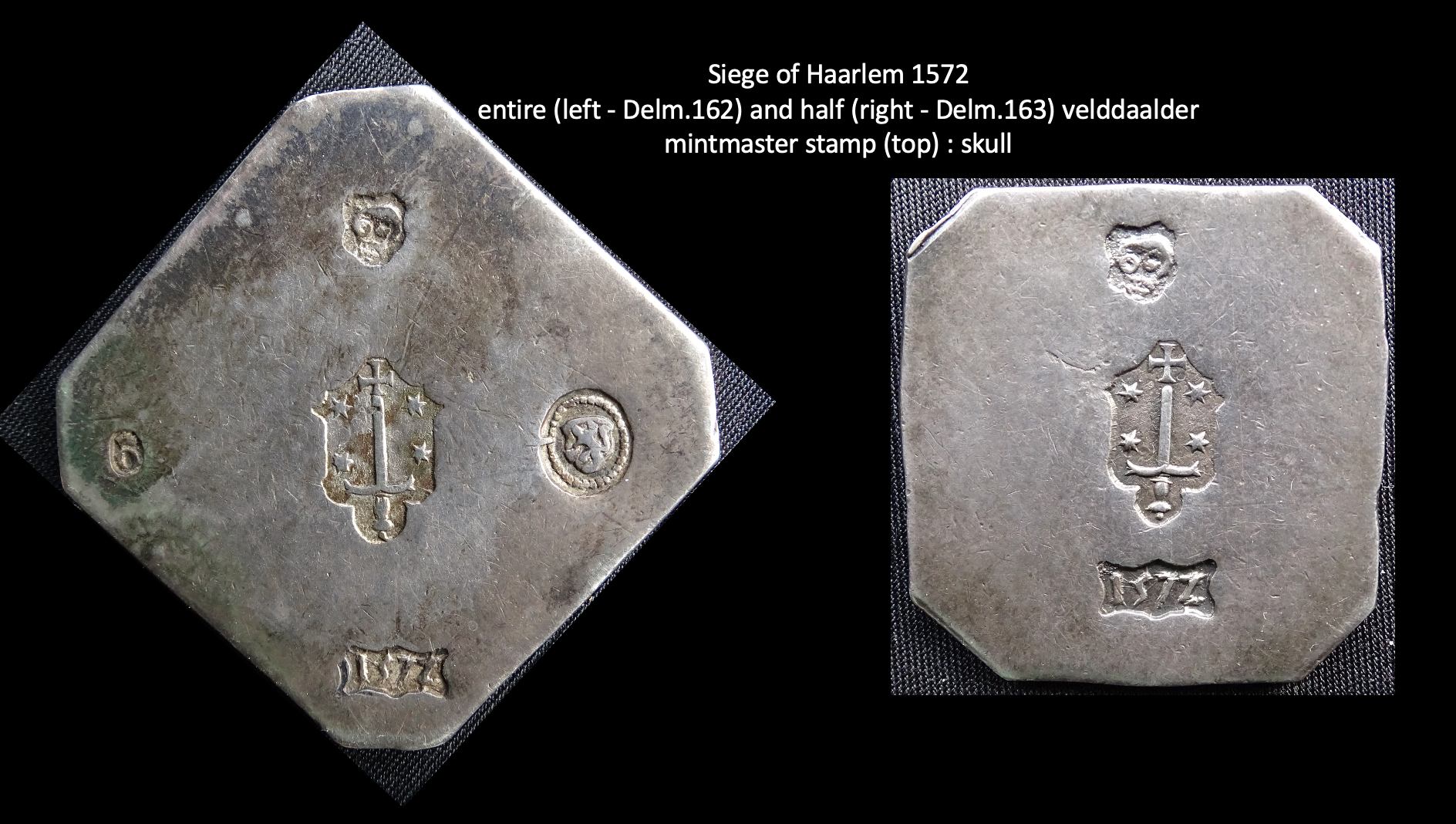 In distant area of Europe, king Philippe waged another war - against the Ottoman Empire, the control over the Mediterrenean sea being the main prize; this war had ups and downs for the two sides. A major victory for Spain occured in october 1571 with the naval battle of Lepanto, in Greek waters ( https://en.wikipedia.org/wiki/Battle_of_Lepanto). The jeton below memorizes this fact. 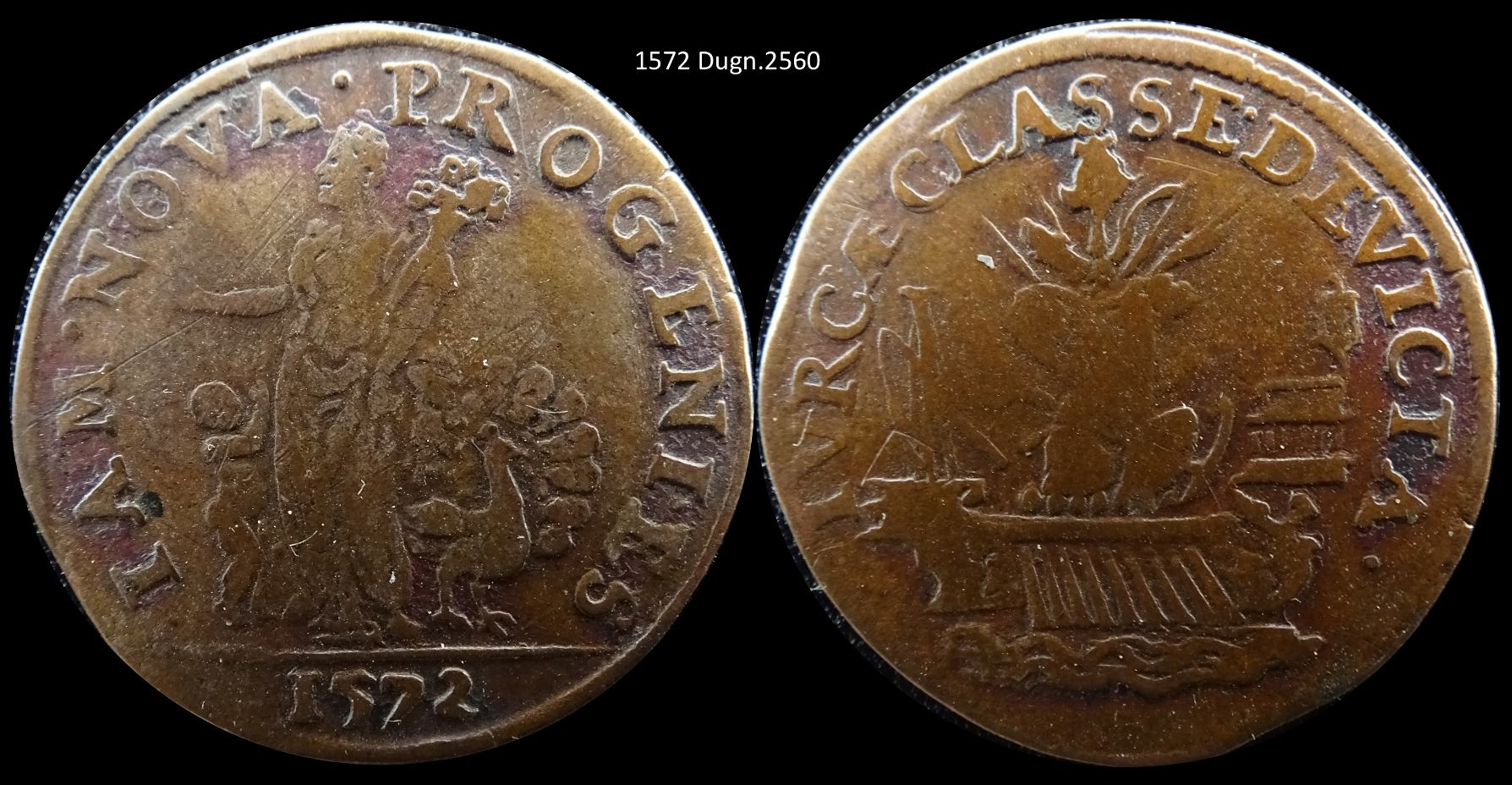 Dugniolle 2560 'birth of Prince Don Diego / victory at Lepanto' OBV: Juno with child, horn of plenty peacock IAM NOVA PROGENIES 1572 REV: Captured Ottoman galley TVRCAE CLASSE DEVICTA |
|
Pillar of the Community
Sweden
2124 Posts |
I don't have anything to show for the moment, my collection is a bit sparse for the next decades. But those countermarked coins and that siege money are fascinating, they truly bear testimony of history, which is a major motivation for my own collection. It is so rewarding to take part of your tremendous collection, 1c5d7n5m!  And that countermarked Lorraine teston is soo exciting ...!  |
|
Moderator
 United States
34562 Posts |
Yes another fascinating day of Dutch history! Just in case anyone else hadn't heard of the "hated tenth penny", here is a blurb from wikipedia with a little detail about this 10% tax: Quote:
Ironically, the Habsburg rulers themselves pushed through the fiscal reforms that gave the rebellious provinces the wherewithal to resist the power of the sovereign. Emperor Charles V needed to increase the borrowing capacity of his government to finance his many military adventures. To that end it was necessary to put in place a number of fiscal reforms that would ensure that the public debt could be adequately serviced (thereby increasing the creditworthiness of his government). In 1542 the president of the Habsburg Council of State, Lodewijk van Schoor, proposed the levy of a number of taxes throughout the Habsburg Netherlands: a Tenth Penny (10 percent tax) on the income from real property and private loans, and excise taxes on beer, wine, and woollen cloth.[1] These permanent taxes, collected by the individual provinces, would enable the provinces to pay enlarged subsidies to the central government, and (by issuing bonds secured by the revenue of these taxes) finance extraordinary levies (beden in old Dutch) in time of war. Other than expected, these reforms strengthened the position of the provinces, especially Holland, because as a condition of agreeing to the reform the States of Holland demanded and got total control of the disbursement of the taxes. I'm still stuck in German for today. Here is a Groschen minted in the Duchy of Brunswick-Wolfenbuttel. You'll notice that there is a very worn wildman on the back. I started a thread on this numismatic personality a while back: http://goccf.com/t/264257  "If you climb a good tree, you get a push."
-----Ghanaian proverb
"The danger we all now face is distinguishing between what is authentic and what is performed."
-----King Adz
|
|
Pillar of the Community
United States
8056 Posts |
Quote:
And that countermarked Lorraine teston is soo exciting ...! I noticed when I opened 1c5d's link that the Lorraine Teston is listed in the (authorless?) article in the Jaaroboek, but also that countermarked French testons of Francois I and Henri II are known. Quote:
You'll notice that there is a very worn wildman on the back The horse on the front is kinda cute too. I have an Ecu Philippe / Philipsdaalder stuck in Antwerp for 1572: 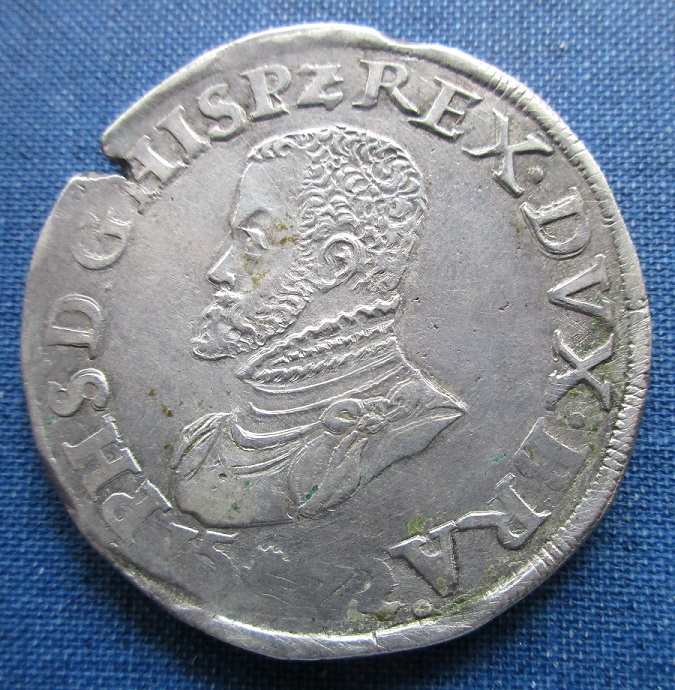 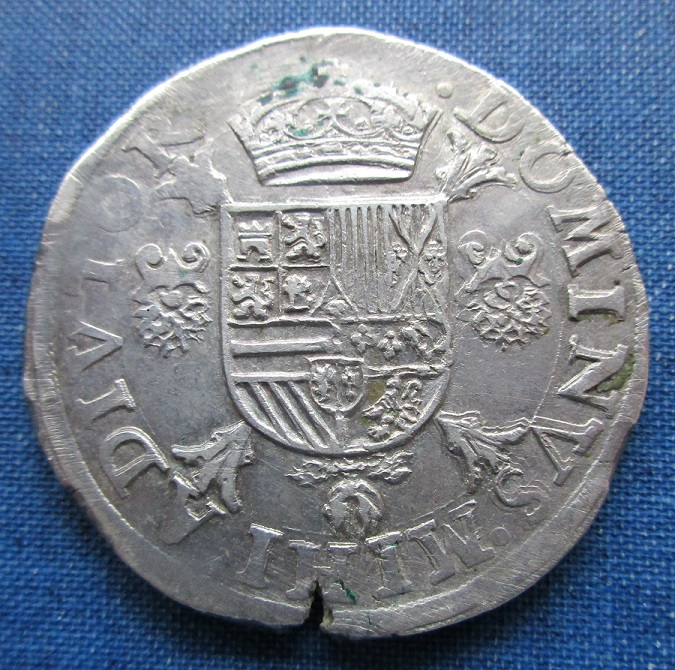 Edited by tdziemia
11/28/2023 2:47 pm
|
|
Pillar of the Community
Sweden
2124 Posts |
Quote:
countermarked French testons of Francois I and Henri II are known. I will sure keep an eye out!  I saw a Swedish daler/daalder in that list too ...  |
|
Pillar of the Community
Belgium
1185 Posts |
1571 The main event of this year is the battle of Lepanto (October 7) in which more than 450 battle ships were engaged in the Gulf of Patras (Greece). The two opposing fleets were on the one hand from the league of Catholic countries (organized by pope Pius V) including Venice, the Papal States, Genua, Spain, and Malta and on the other hand the Ottoman Empire. As written yesterday, the victory went to the league. One of the soldiers aboard a Spanish vessel was Cervantes who would later write the masterpiece Don Quichote. The two jetons below illustrate this victory. They also illustrate that there are die variants that are not enlisted in the (very detailed) catalogue composed by Dugniolle in the 19th century and now further completed online by Paul van der Zee http://www.dugniolle.com/index.html). More than half of the 4427 entries in the enormous catalogue of Dugniolle of jetons from the low countries are die variants, often major ones with differences in legend ..... Quite understandable that the minor variants are not listed. 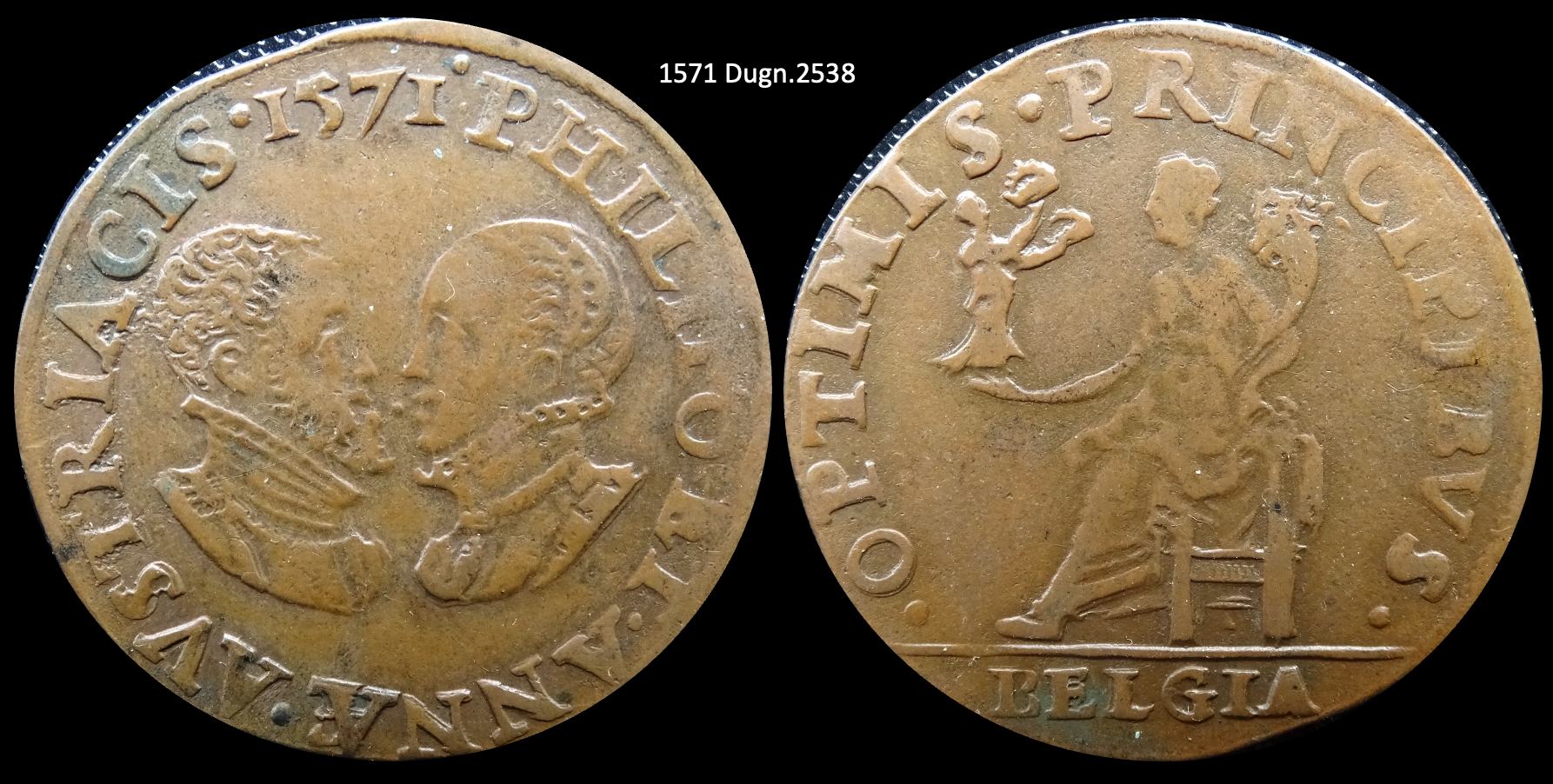 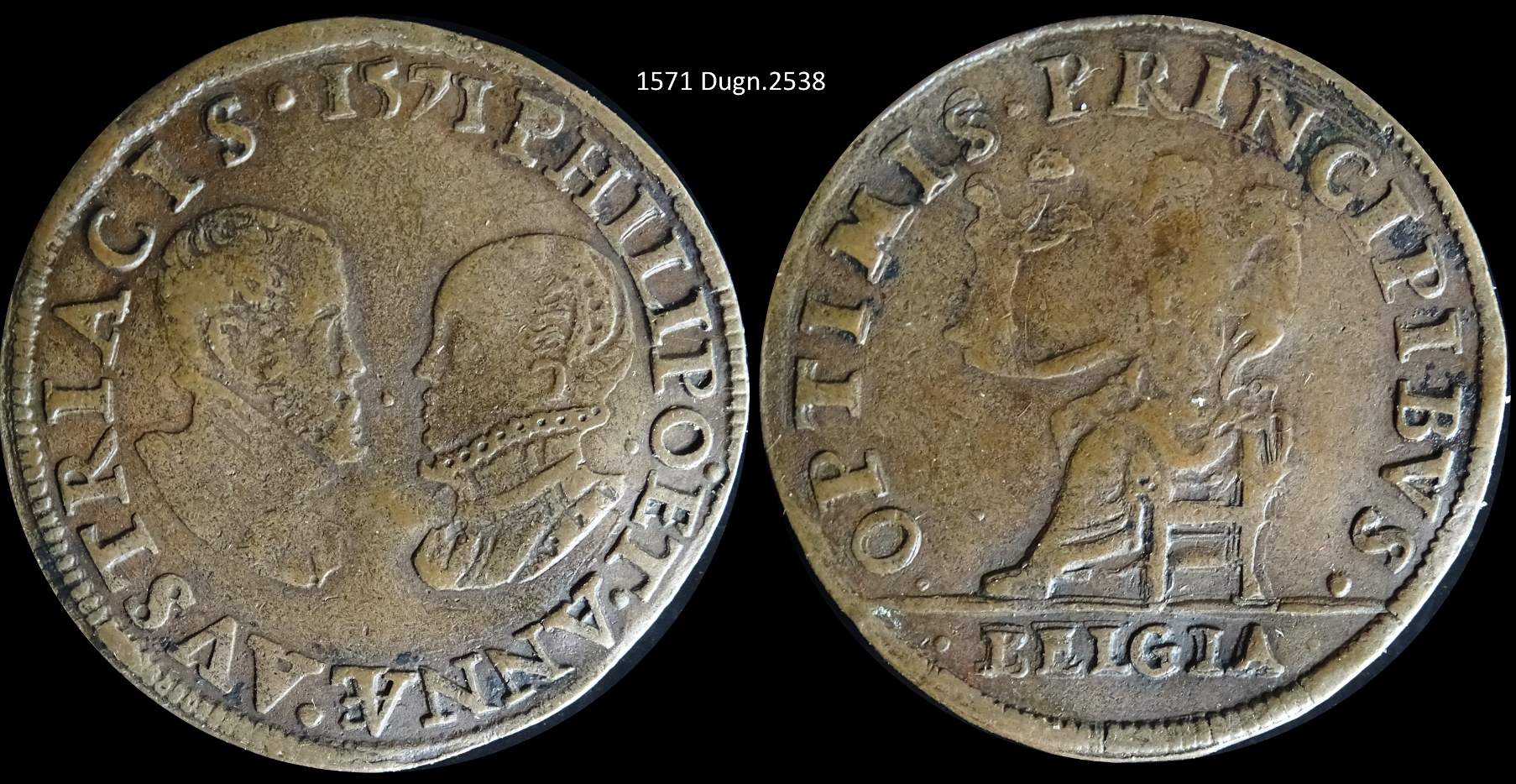 Dugniolle 2538 variant 1 and 2 'Philippe II & Anna of Austria honored by the victory at Lepanto' OBV: portraits of Philippe II & Anna of Austria PHILIPO ET ANNAE AVSTRIACIS 1571 REV: Seated 'BELGIUM' with cornucopia and statue of victory OPTIMIS PRINCIPIBVS // below: BELGIA variant 2 (not in Dugnolle) lacks on the OBV a 'secret point' above 1 of 1571 & lacks a 'secret point' behind the neck of Anna; on the REV there are two 'secret points' left and right of BELGIA Finally a deviation from the "rule of counterstamps" on Philipsdaalders or pieces thereof: on this 1/10th Philipsdaalder from Holland, 1571, the counterstamp was placed on the REV side, instead of the usual OBV side behind the neck of the king 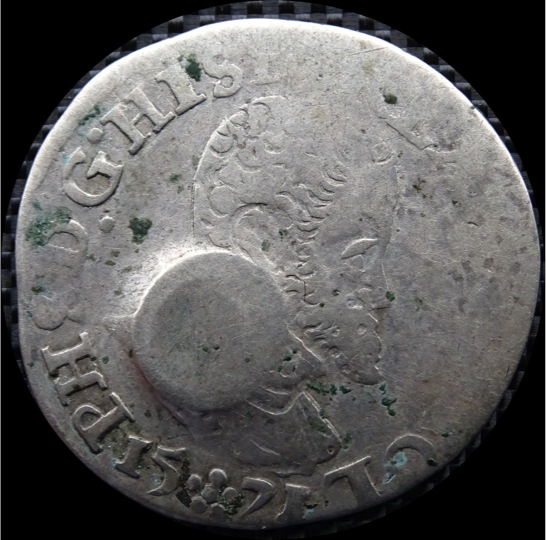 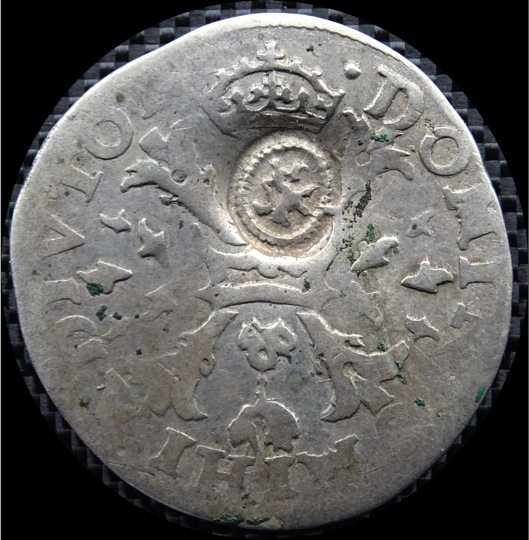 Edited by 1c5d7n5m
11/29/2023 05:23 am
|
|
Pillar of the Community
United States
8056 Posts |
Also a fractional Philipsdaalder for me for 1571, but it is 1/5, and Brabant: 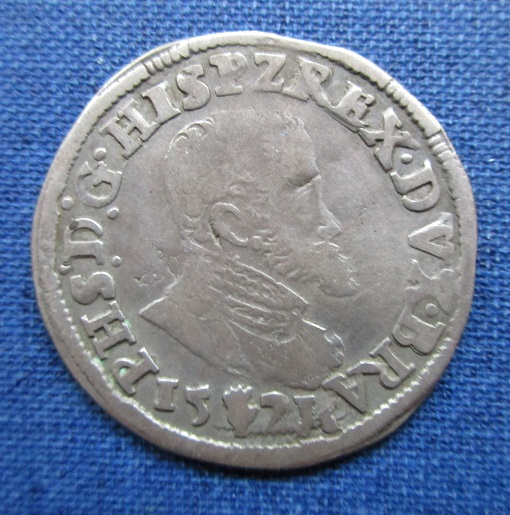 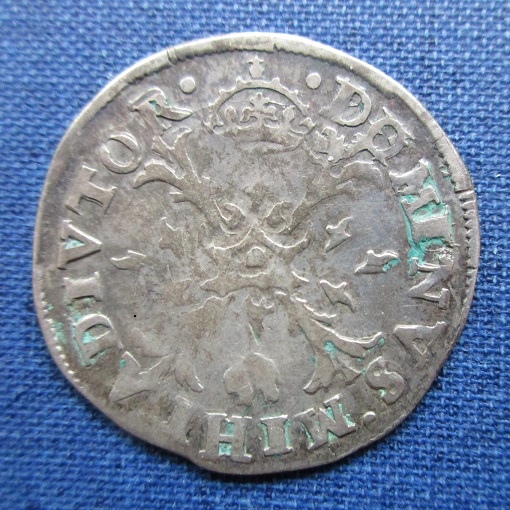 |
|
Pillar of the Community
Belgium
1185 Posts |
hi tdziemia, nice piece seems to be a 1/10th of a Philipsdaalder (like the piece above from Holland), seing the cross of Burgundy on the Reverse: the 1/5th Philipsdaalder has the coat of arms of Habsburg |
|
Pillar of the Community
United States
8056 Posts |
 Shame on me! I have changed the info in my spreadsheet. For anyone who is envious of 1c5d's spectacular collection of jetons on the 80 years' war, the next CNG e-auction has a nice selection. |
|
Moderator
United States
34562 Posts |
Here is a 1/84 Gulden from the German Free City of Nürnberg:   "If you climb a good tree, you get a push."
-----Ghanaian proverb
"The danger we all now face is distinguishing between what is authentic and what is performed."
-----King Adz
|
|
Pillar of the Community
Belgium
1185 Posts |
Quote:
the next CNG e-auction has a nice selection  |
|
Pillar of the Community
Belgium
1185 Posts |
1570 While the first revolt seemed to be adequately suppressed by the iron duke (Alva) the seabeggars in Holland and Zeeland were secretly preparing a new revolt by improving the defences of the cities (e.g. removing trees outside&near the city walls). The jeton below brings the great news from the Spanish Netherlands: the mariage between Philippe II and Anne of Austria (1549-1580). But, curiously the reverse shows the portrait of his former spouse, Isabelle de Valois 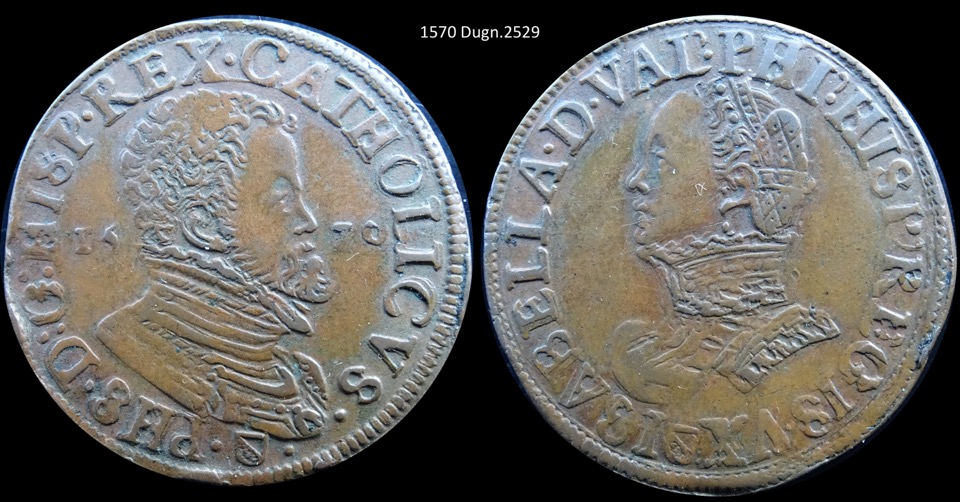 1570 Dugn.2529, vOrden133, Tas105 - Utrecht 'mariage between Philippe II and Anne of Austria ' OBV: portrait Philips II, PHS D.G. HISP REX CATHOLICVS. 1570 REV: portrait Isabelle van Valois, ISABELLA D. VALOIS HISP REGIS VX finally for this year, my rarest coin (R4 probably) with a Holland counterstamp of the Dutch rebels: a half thaler from the city of Cologne dated 1570 (not on the list of the paper I mentioned before) 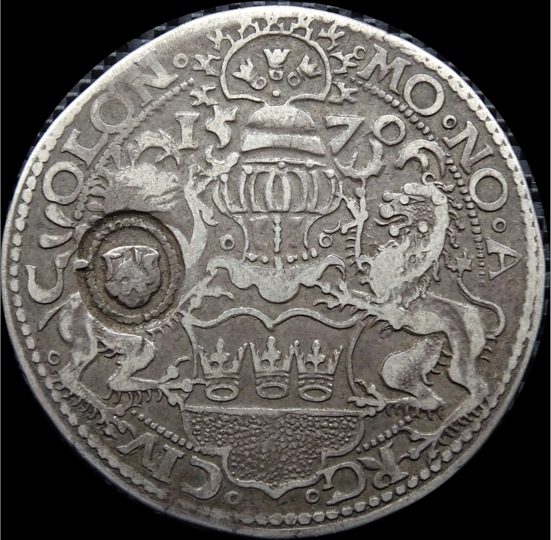 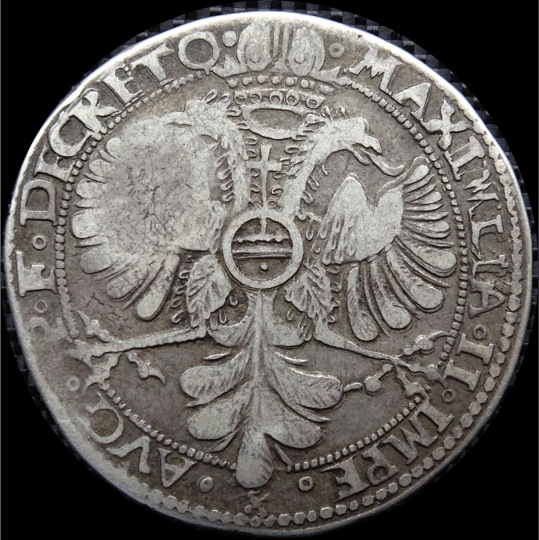 |
|
Pillar of the Community
United States
8056 Posts |
Another spectacular coin! I understand it is the countermark that makes it rare, but I also like the obverse design of the host coin, with the three crowns (symbolizing the three kings I believe ... very seasonally appropriate  ) device showing up both in the arms below the helmet, and in its decoration on top. There are many interesting things in the list of coins in the Jaarboek article. For instance, the Italian coins that showed up in Holland. The Milanese grosso and Venetian marcello are common enough coins, but even a medium sized silver coin of Alfonso II of Ferrara is exceedingly rare today. I wonder why they were abundant enough then to show up half way across the continent?  I am back to Poland-Lithuania for the next few weeks, staring with this tiny two denar Lithuanian coin from 1570: 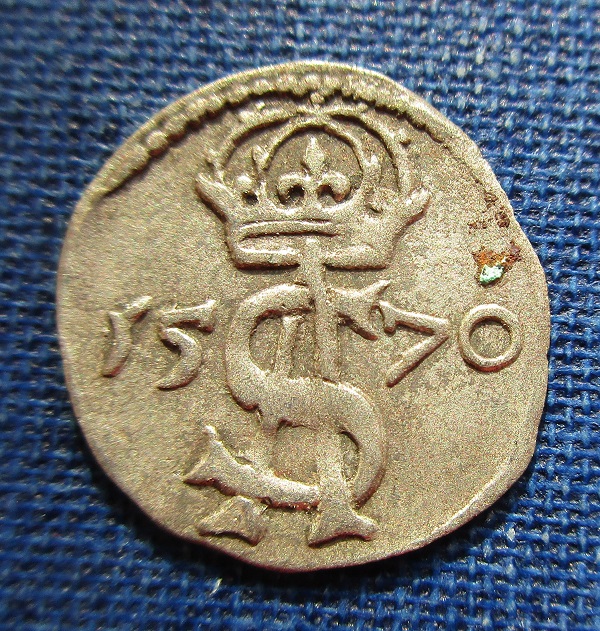 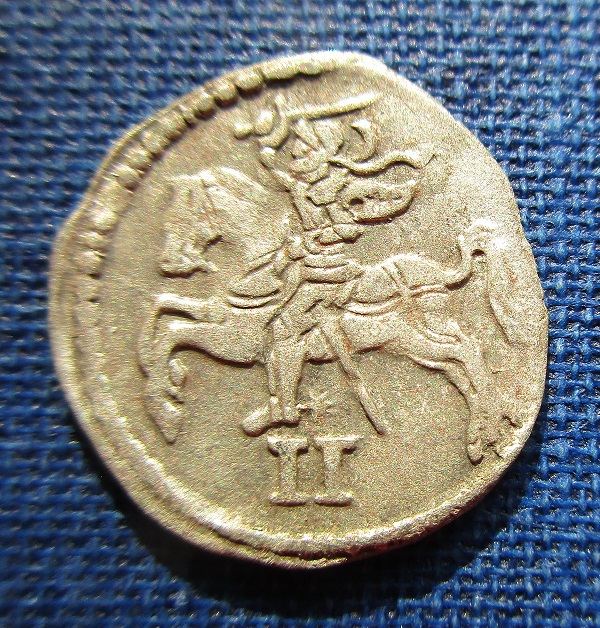 |
| |
Replies: 5,946 / Views: 249,661 |








 First Page
 Previous Page


 Posted 11/28/2023 03:51 am


