| Author |
 Replies: 5,946 / Views: 251,634 Replies: 5,946 / Views: 251,634 |
|
|
|
Pillar of the Community
United States
2261 Posts |
Disclaimer: the following questions come from someone who has zero experience with older/ancient foreign coins.
I've noticed that many of the recent coins in this thread do not have recognizable Hindu-Arabic numerals (1, 2, 3, 4, etc...) for dates.
Can I assume that what my untrained eye sees are numerals in some other system? And what about when the poster states that this is "datable" to a certain year? Does that mean that they don't know for sure the exact date, but it could be that year?
|
|
Moderator
 United States
34570 Posts |
Quote:
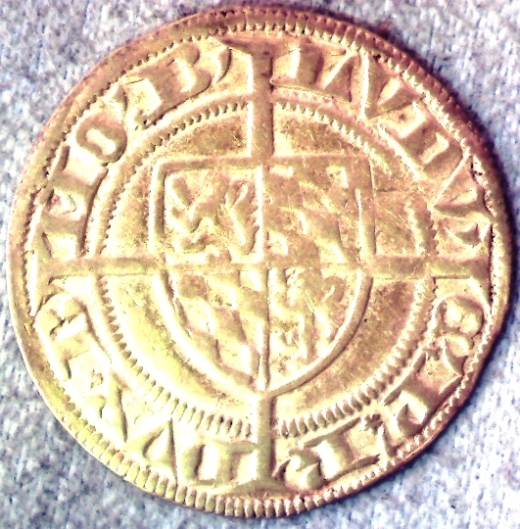
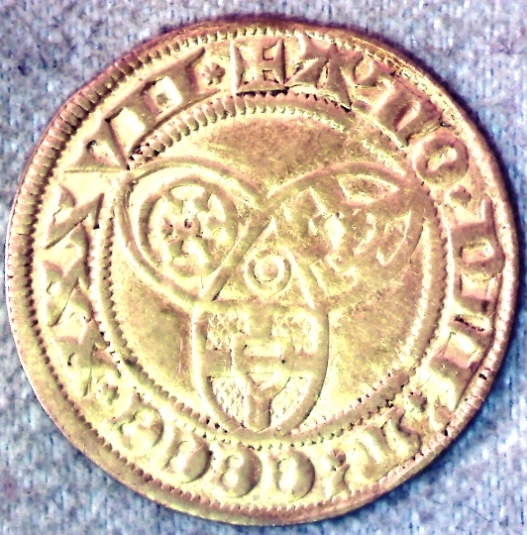
And what about when the poster states that this is "datable" to a certain year? Does that mean that they don't know for sure the exact date, but it could be that year? I can tackle this question, at least to the extent that I am using it in these OFEY threads. To me, this means that the coin is known to have been minted in that year. In some cases, that means that the monarch or other persons named on the coin only ruled for a single year while in other cases it means that there is still extant legislation or mint records showing a specific year for minting that type or denomination at that facility. Several months ago (maybe years now), we had a really good conversation on CCF about the mostly French term "emissions" and what this means for dating coins. I'm sure @j1m, @tdz, @era, or one of the others that frequent this thread can find that discussion. Today's coin is a good example of the term "datable". This Gold Gulden is datable to 1439 AD. It is attributed as Freidberg 797 and Noss 362. One downside is the still partly visible evidence of a prior mounting. Again, my apologies for the poor coloration of the pictures. 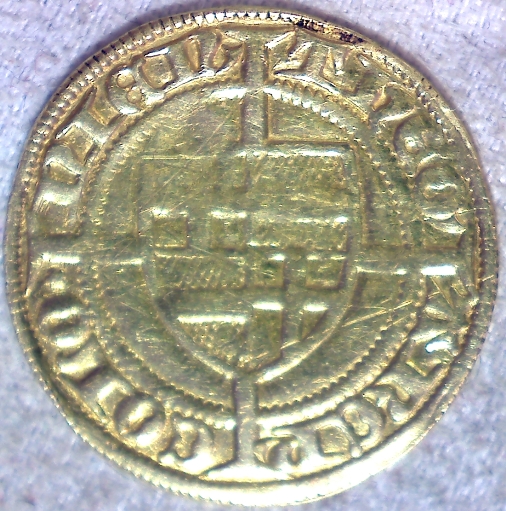 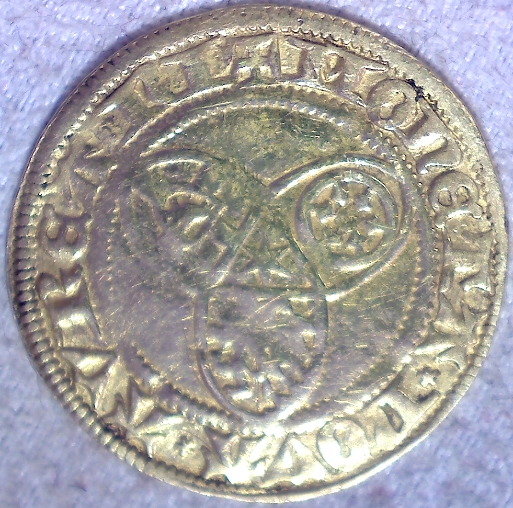 "If you climb a good tree, you get a push."
-----Ghanaian proverb
"The danger we all now face is distinguishing between what is authentic and what is performed."
-----King Adz
|
|
Pillar of the Community
 Sweden
2124 Posts |
Quote:
Several months ago (maybe years now), we had a really good conversation on CCF about the mostly French term "emissions" and what this means for dating coins. I think it might be this thread, just a bit over 51 months ago  : http://goccf.com/t/365955A real nice goldgulden btw, Spence.  |
|
Moderator
United States
34570 Posts |
Awesome thx for finding that!
"If you climb a good tree, you get a push."
-----Ghanaian proverb
"The danger we all now face is distinguishing between what is authentic and what is performed."
-----King Adz
|
|
Moderator
 United States
197885 Posts |
|
|
Pillar of the Community
Russian Federation
5186 Posts |
Almost responded there by accident - posting here instead... Quote:
I know that the holy grail for the OFEY gang is DATED coins, but it struck me that maybe some of the really tough dates could be found here as undated, but attributed. Probably... I suspect that for most of the 15th century (and even more so the 14th) it's probably usually easiest (and almost certainly usually cheaper) to find an Islamic dated coin - it's just that they're harder to ID, and (partly as a consequence) comparatively few people collect those, so it might be tricky to get a hold of a coin with the exact right date. (And the field is large enough that you can't just cherrypick very easily.) Past the early 14th century we'd be entering the areas where Islamic dates are usually written out in words (though, as we've already seen in both the 7th and 6th editions, there are some sporadic examples of such even in the 15th century), which makes identification and attribution even harder (can't just look out for the numerals). But by that point European options dry up so much that there's almost no competition anyway. I highly suspect (and might even have mentioned) that if I was even slightly more comfortable with buying coins online (from places like MA Shops) I'd probably already have had most of the 15th century represented by Islamic coins in my OFEY collection. If I was any better at attribution (and/or had a few more months to go around with my increased budgets before having to move away in 2022) I could probably have done the same for the 14th century (with its strong Golden Horde representation) even with just local coin stores. Some day I hope to return back to Moscow and (re)start collecting ancient and medieval coins again. It's nominally legal in Israel, but the supply is tiny (and mostly goes to tourists), and the prices are correspondingly high (and I hadn't been able to establish anything regarding the legality of buying coins from abroad). |
|
Pillar of the Community
United States
1871 Posts |
Jaunpur Sultanate AE falus AH 843 (1439 CE) GG-J6 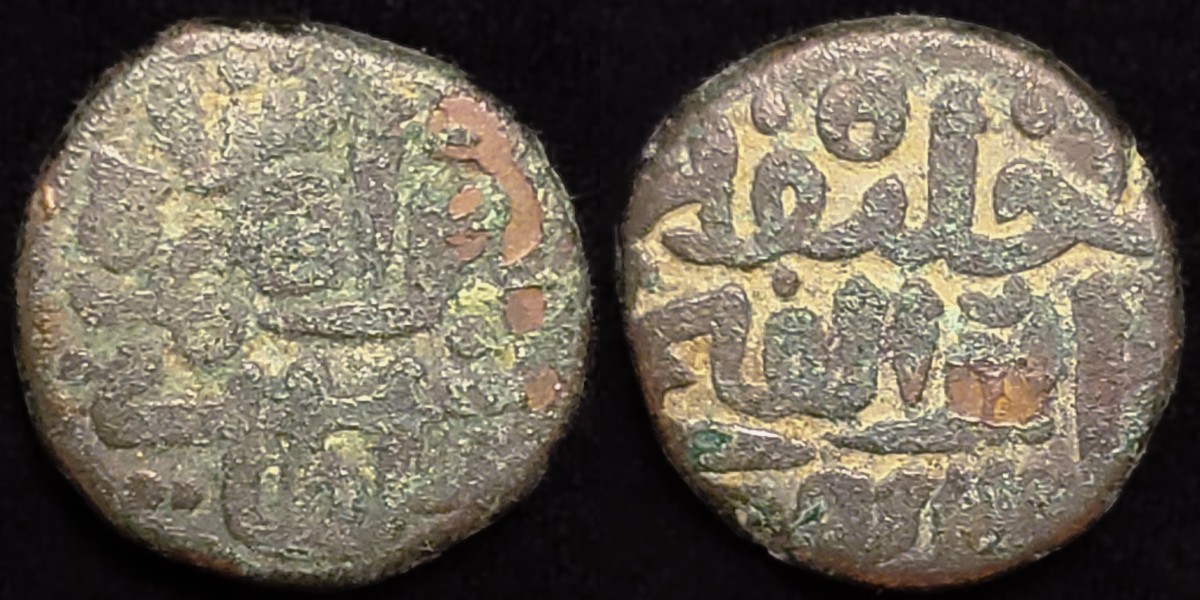 |
|
Pillar of the Community
Australia
2583 Posts |
Quote:
I've noticed that many of the recent coins in this thread do not have recognizable Hindu-Arabic numerals (1, 2, 3, 4, etc...) for dates. For the AH dated coins (Arabic text) the normal numerals are fairly easy to distinguish from the flowing text lines. However, depending on the region and time-frame, the numerals can vary in shape and even morph into the shape of other previous numbers (0, 4, 5, 6, 7). Wikipedia has an informative read on the development of the Hindu - Arabic number system https://en.wikipedia.org/wiki/Hindu...meral_system and also there was a discussion on this page http://goccf.com/t/428286&whichpage=343 regarding the changing of number shapes over time. I recall on that page that you may have sparked a good discussion about the changing shapes of both Western and Eastern numerals by querying the different shape of the number 4. More to the point that you make though, perhaps the 'hidden' numbers on the Arabic style coins should be highlighted more often. I know I often put a coin up, assuming that everyone can see what I see. Additionally, sometimes there is only part of a date visible, but the coin is dateable through other means, for example in my latest posted coin in the Sixth Edition, a 1389 CE (AH 791) Timurid AR Miri, only the top section of the numeral 1 is visible, with the 7 and 9 being off flan. This coin is dateable as the Chaghatayid "successor" Mahmud started his 'reign' in 790 and died in 800, which leaves 791 as the logical date. There were other type coins which cited Mahmud posthumously, or included his successor Muhammad subsequent to 800, but not this type of 'miri'. The Ox moves slowly, but the Earth is patient.
|
|
Moderator
United States
34570 Posts |
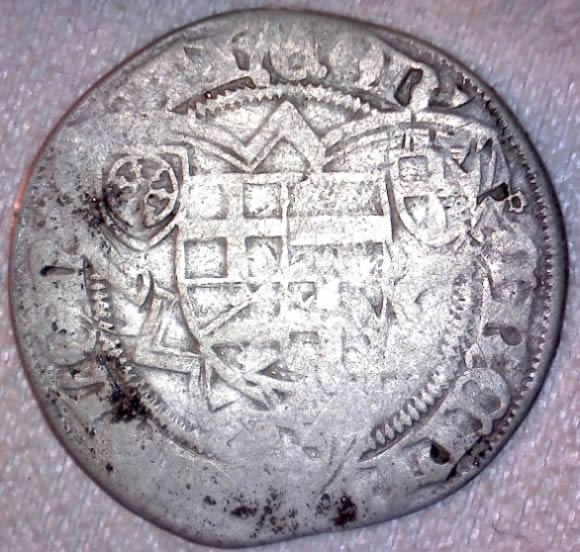
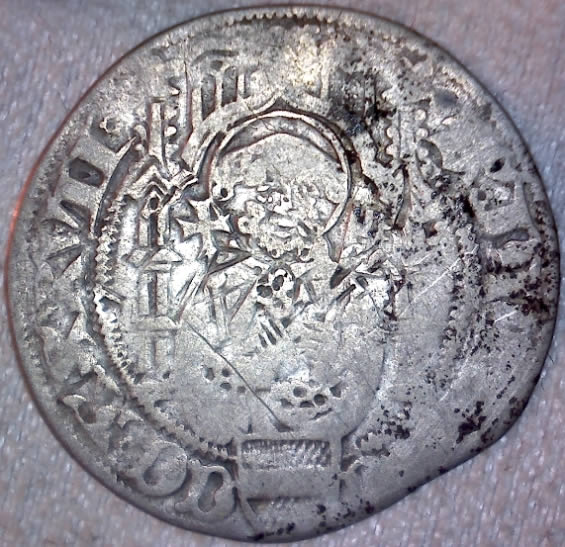
For today, I have another Groschen from Cologne's mint at Riehl. Unlike my last few coins posted, this one has the date of minting on it (1438 AD, just mostly in roman numerals). I have attributed it as Levinson I-44. 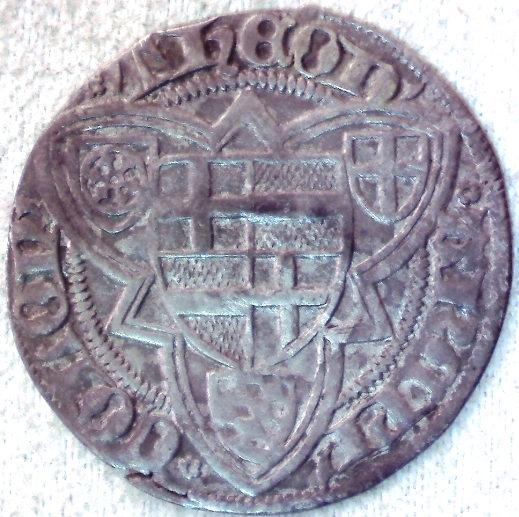 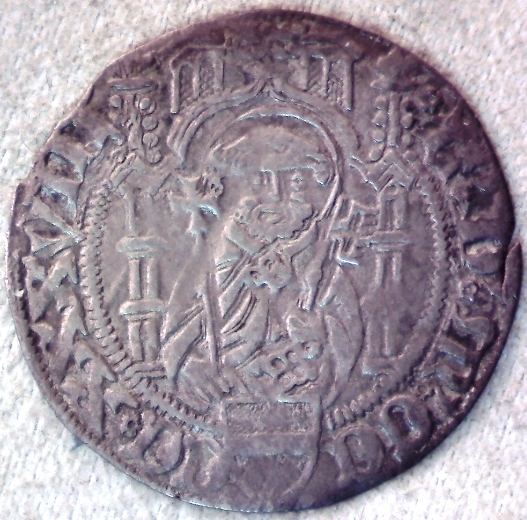 "If you climb a good tree, you get a push."
-----Ghanaian proverb
"The danger we all now face is distinguishing between what is authentic and what is performed."
-----King Adz
|
|
Moderator
United States
197885 Posts |
Quote:
Jaunpur Sultanate AE falus AH 843 (1439 CE) GG-J6 Quote:
For today, I have another Groschen from Cologne's mint at Riehl. Nice examples! |
|
Pillar of the Community
United States
1780 Posts |
Excellent groschen, Spence...choice!
|
|
Moderator
United States
34570 Posts |
"If you climb a good tree, you get a push."
-----Ghanaian proverb
"The danger we all now face is distinguishing between what is authentic and what is performed."
-----King Adz
|
|
Moderator
United States
197885 Posts |
Very nice! |
|
Pillar of the Community
Australia
2583 Posts |
 Stunning! The Ox moves slowly, but the Earth is patient.
|
|
Moderator
United States
197885 Posts |
|
| |
Replies: 5,946 / Views: 251,634 |





 First Page
 Previous Page


 Posted 05/20/2024 12:44 pm