| Author |
 Replies: 10 / Views: 826 Replies: 10 / Views: 826 |
|
|
Pillar of the Community
United States
911 Posts |
Not necessary to elaborate. I am only seeking opinions on the definitive signs. I seem to recall stepping and no increase in the thickness of the devices.
Are there any exceptions to this premise?
?
|
|
|
|
Pillar of the Community
United States
3207 Posts |
in general, Machine Doubling creates flat surfaces on top of the devices, a doubled die created rounded ones |
|
Pillar of the Community
 United States
911 Posts |
The reason I ask is this.  Would this be MD or DDO? This is 1996 LMC. |
|
Pillar of the Community
United States
911 Posts |
Really close to what I am seeing. Best image I can get.
|
|
Valued Member
United States
157 Posts |
Machine Doubling usually looks like a scraping and leaves a shelf like extension. Most of those will appear near the rim. A deteriorating die will have metal pushed up along the edge that has deteriorated due to wear. These would be MD and DD types of doubling. True doubling will usually appear along the edge of a devise or letter with a similar height. When this happens, it makes the character appear wider or thicker than normal. Now, keep in mind that I am still learning, I am sure others can give a much better explanation.
|
|
Bedrock of the Community
United States
62064 Posts |
The Machine Doubling will only appear on the outside/inside of the devices most of the time. 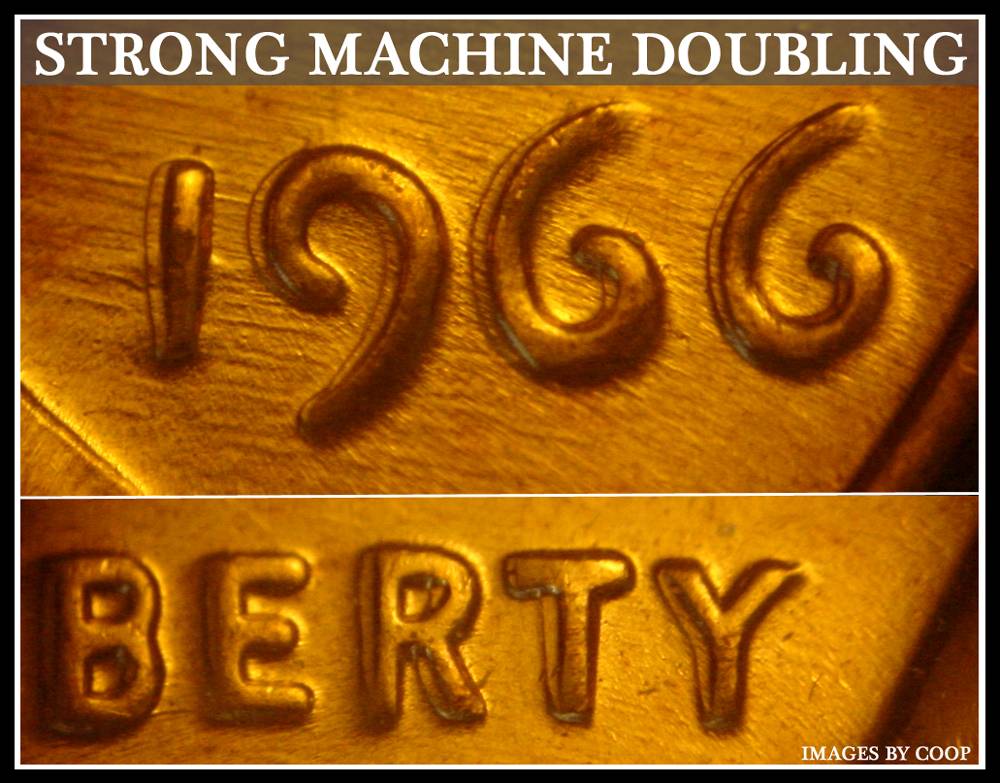 But sometimes the Machine Doubling bounces after the strike an alters an area higher than the edge:  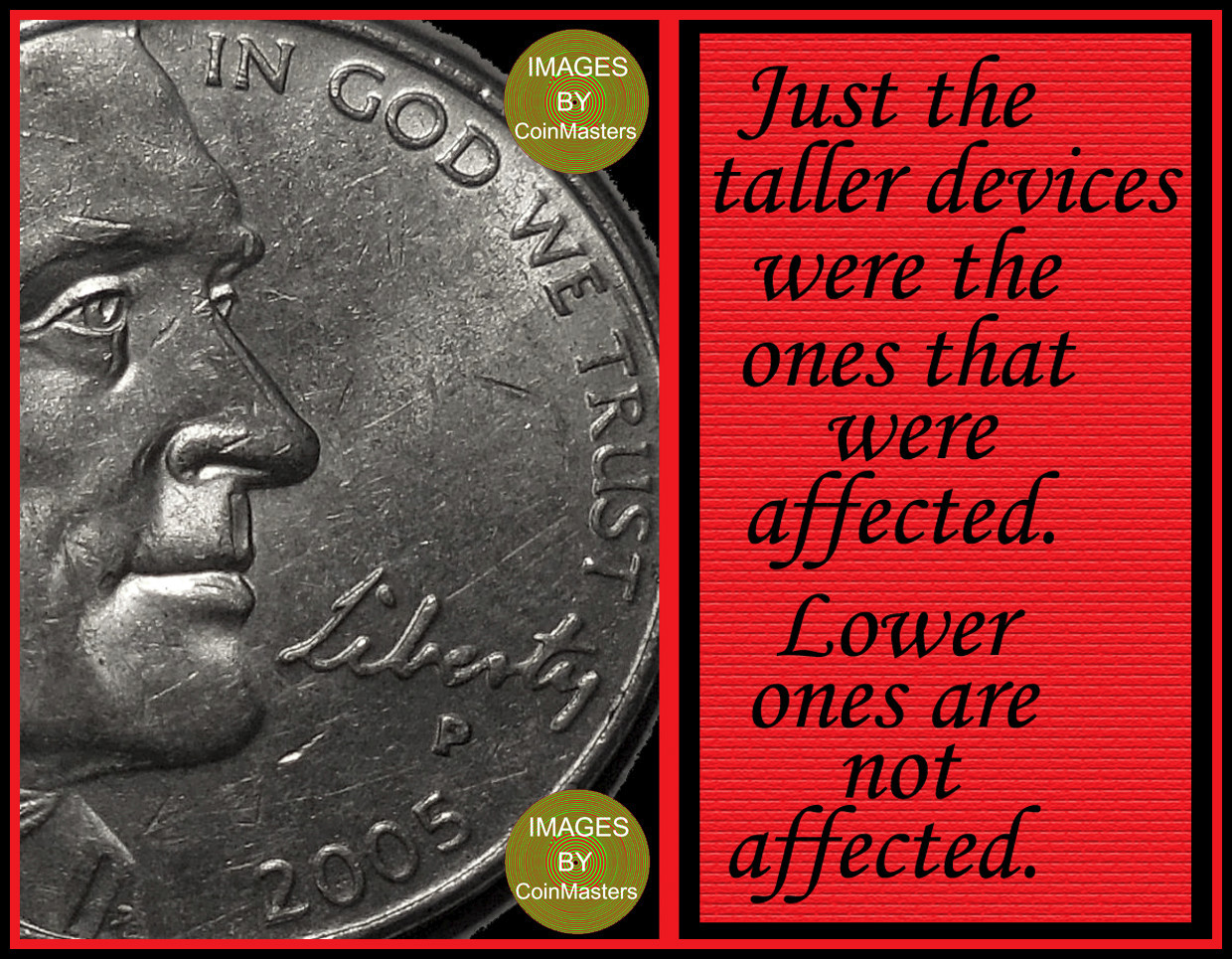 When this happens, the affected area will be flat where the metal was shoved after the strike. uploaded/coop/q2019-W_high_bounce_MD_Newfinds_AAA.jpg 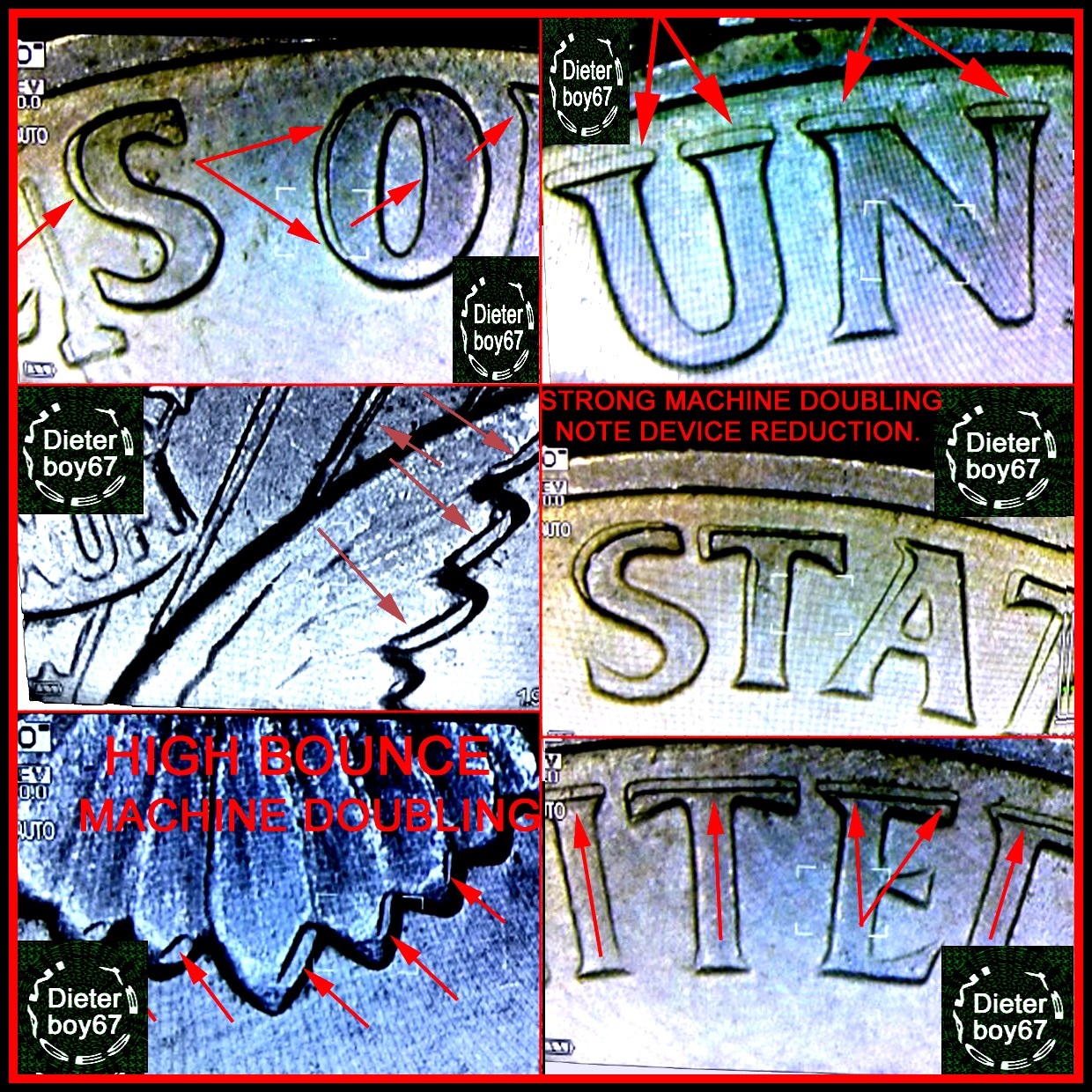 Sometimes we call this push doubling when it shoves it so far it enlarges the size of the devices:  So Machine Doubling we like to show rules about it, but a loose machine doesn't follow our rules. Often Machine Doubling is in one direction:  On this coin, the machine just a little loose and the movement was in a single direction. Other times it does what it want to do: 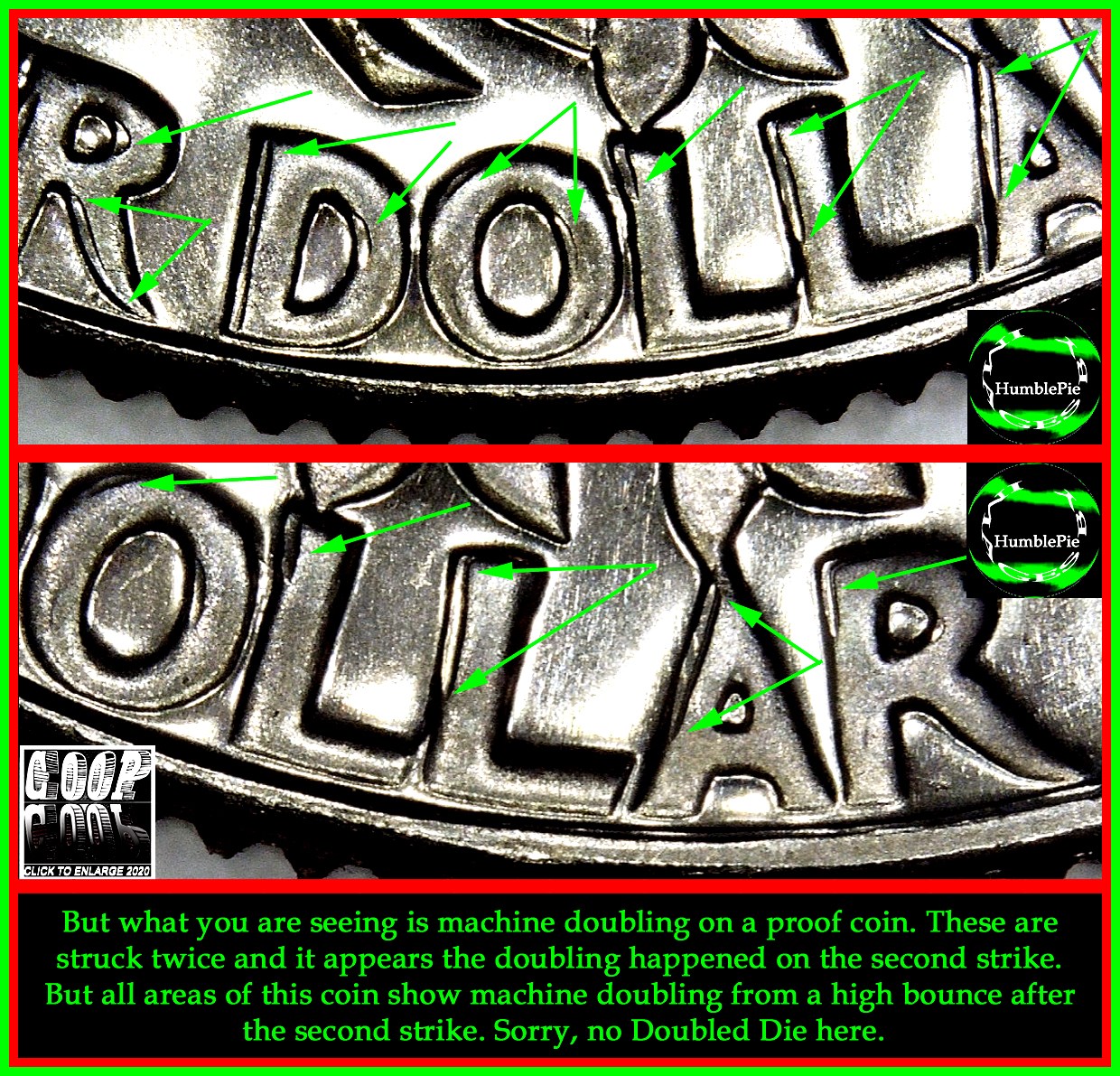 This all happens after the strike. In less than a second. What looks like to use as a lot of movement, but to the machine it is so slight, the operator doesn't even it noticed it. |
|
Moderator
 United States
110384 Posts |
caused by a 'loose' set-up of the coin press.
|
|
Pillar of the Community
Canada
6244 Posts |
COOP explain the possibilities. me I complete looking your photo. It is MD. Look at the direction of the "doubling", same direction, same angle. Your is west to east, on perfect pattern for MD. And keep in mind: the DD is always local, very few exceptions which are big rarities. My words, COOP explanation and you has the base to understand. Good hunting off (me I prepare to hunting fall period)
|
|
Pillar of the Community
United States
911 Posts |
Thank you all for your input. This is where the confusion comes in. Before starting a search of 4 well circulated 1996 LMC's, I referenced VV,CC, and Wexlers so that I would be familiar with what to look for. The image I posted is provided by Wexlers example of WDDO-004. According to the description this is close spread towards the rim.  . It is not noted as MD for a die marker, rather a slight spread on these devices. Silviosi, without prior research, I too would have presumed this to be MD on the date and would have disregarded this cent. The spread here is the most decernable aspect of this variety. Has Wexler mistakenly described MD as DD? |
|
Bedrock of the Community
United States
62064 Posts |
Seeing these side by side of Wexler's listing will help us what is going on with these dies: 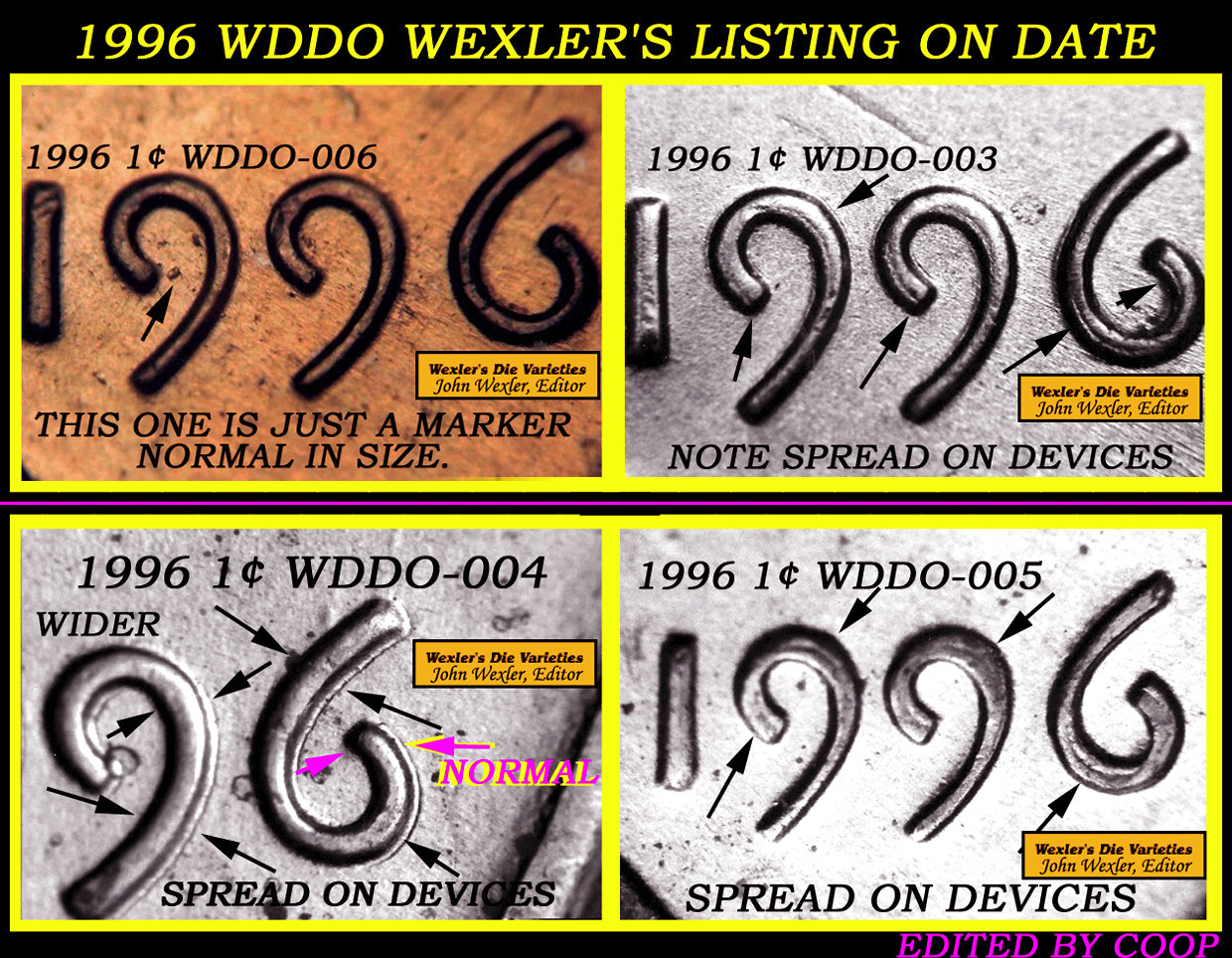 Note the 004 die is showing spread on the devices on the 96. While it appears we should not be looking at the right edge of the devices. The spread is on the digits. The other digits are mention on the description above on his excerpt from his site. Spread on the devices is what shows hub doubling. That is what we should be looking at. Note how the other date areas are showing spread on the devices, except #6 as it is a marker image on the date. Spread is the difference between a normal die and a doubled die. Spread on the center areas of devices. CoopHome: Why is spread so important on doubled dies? Hub doubling is seen by spread |
|
Pillar of the Community
United States
911 Posts |
The spread on 005 & 006 is quite obvious. At first glance the 004 says MD. Yet,it is not. Appears flat and shelved as MD would be,yes? Easily mistaken. I would think MD if I saw this. Apparently others would as well.
Regardless, no varieties found in this search. But I did pick up a spikehead.
Tricky business,this hobby. Thanks for the feedback Coop.
|
| |
Replies: 10 / Views: 826 |
|




 Posted 08/05/2022 8:10 pm





