| Author |
 Replies: 13 / Views: 1,214 Replies: 13 / Views: 1,214 |
|
|
Valued Member
United States
59 Posts |
|
|
|
|
Pillar of the Community
 United States
2000 Posts |
|
|
Pillar of the Community
 United States
7174 Posts |
 MD |
|
Pillar of the Community
United States
3237 Posts |
|
|
Moderator
United States
56855 Posts |
 MD John1  |
|
Valued Member
United States
108 Posts |
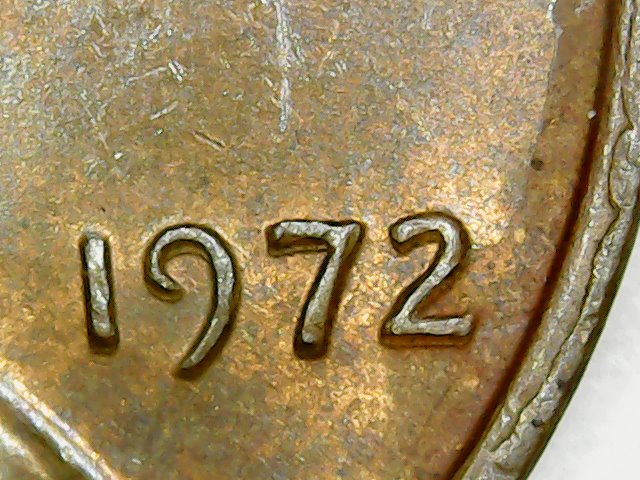
I am a newbie but I wanted to contribute that I have some of those LMCs and I learned why the devices look so strange and could be mistaken for a DDO. While reading the forums here as well as other websites, I learned that as the die starts to deteriorate, the devices get thinner and thinner. I am curious though why this is so prevalent on the 1972 LMC. Maybe other years from the 70s too I think. I mean, you don't see that in other decades very much. Was that a bad time frame for the mint as it pertains to changing out the dies? |
|
Moderator
United States
56855 Posts |
1972 P-D-S are known with master die doubling so most if not all will show some stage of a DDO. John1 |
|
Bedrock of the Community
United States
94367 Posts |
MD for sure. to the CCF! |
|
Pillar of the Community
United States
3237 Posts |
@centseeker you're confusing Machine Doubling and Die Deterioration Doubling. The doubling on this coin was caused by the die bounching off the coin after the strike and pinching the already-struck coin ever so slightly out of alignment with the first strike, not by aging of the die. |
|
Valued Member
United States
108 Posts |
@SamCoin oh that's right! Thanks for clarifying with the links. Those indeed are the pics I recall seeing. In Machine Doubling, you see that flat area underneath, so "flat under fat" so to speak. In contrast, with Die Deterioration Doubling, the tops of the devices spread out and get really fat and you cannot really see a flat part underneath like in MD. I am also learning how to identify the attributed Doubled Die varieties via the various markers over at Variety Vista but it sure is complicated. Too bad there is not an app with yes/no questions like, "Do you see a die gouge at this location around the tie <example pic is shown> ?" If the answer is yes, the app moves on to the next relevant question. If the answer is no, the next question might show a different example of the same area to specify the stages, and so on. At the end of all the questions, the app tells you the variety type, like "1972 DDO-001 blah blah blah" or whatever it is. |
|
Bedrock of the Community
United States
62064 Posts |
Well these sites are assuming that you know these things. So come here and ask specific questions, then we can help you fill in the blanks of what you are still lacking on information. I have a link on this site, that can answer questions, before you even think of them. It is a CoopHome, note it turns blue. When you click on that there is already 19 pages of thread answers to questions that help fill in the spaces of what you have not considered yet. If you start on page 19 and go backwards, you can see the question and answers of the threads, then read those threads to help train your eyes as to what you are seeing/should be see on different coins. This thread has thousands of images on it to help train your eyes and help to determine what you are seeing. If there is a question, you can ask a question there on that thread, of start a new thread with a question on a topic. Looking forwards to you questions. |
|
Valued Member
United States
108 Posts |
@coop Oh wow thanks for that! Is there a way to do a search just on that thread specifically?
|
|
Valued Member
United States
108 Posts |
Here is an example of just the date on one of my 1972 cents which I do believe shows the Machine Doubling pretty good with this angle. You can see skinny shiny top parts on top of the darker flat parts of the devices. Am I right to identify this example as MD? 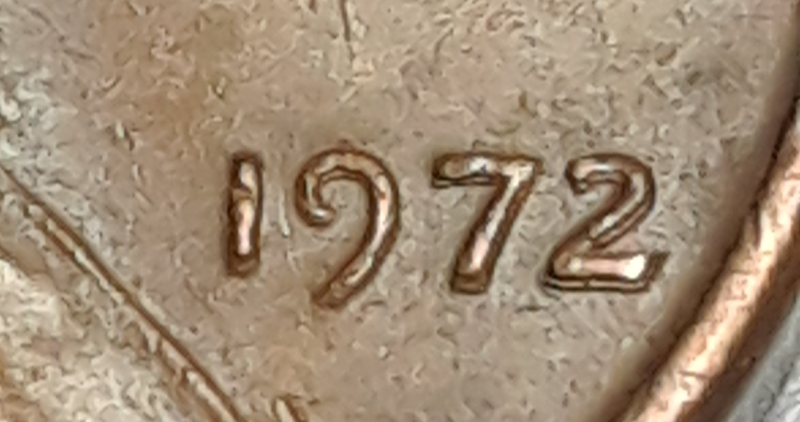 |
|
Bedrock of the Community
United States
62064 Posts |
On search try coopthread (then topic). That might speed things up a bit.
|
| |
Replies: 13 / Views: 1,214 |
|






 Posted 08/29/2022 10:45 pm





