| Author |
 Replies: 18 / Views: 2,247 Replies: 18 / Views: 2,247 |
|
Valued Member
United States
157 Posts |
|
|
|
|
Bedrock of the Community
United States
94367 Posts |
Edited by Coinfrog
08/30/2022 12:51 pm
|
|
Pillar of the Community
United States
3237 Posts |
|
|
Valued Member
 United States
157 Posts |
Thanks Guys. Always good to know. I'll add it to my reference coins.
|
|
Bedrock of the Community
United States
62064 Posts |
How to tell is it is Machine Doubling: 1. The outside/inside edges of the devices are affected. If it is die wear, then it would be showing in the direction of the closest rim. 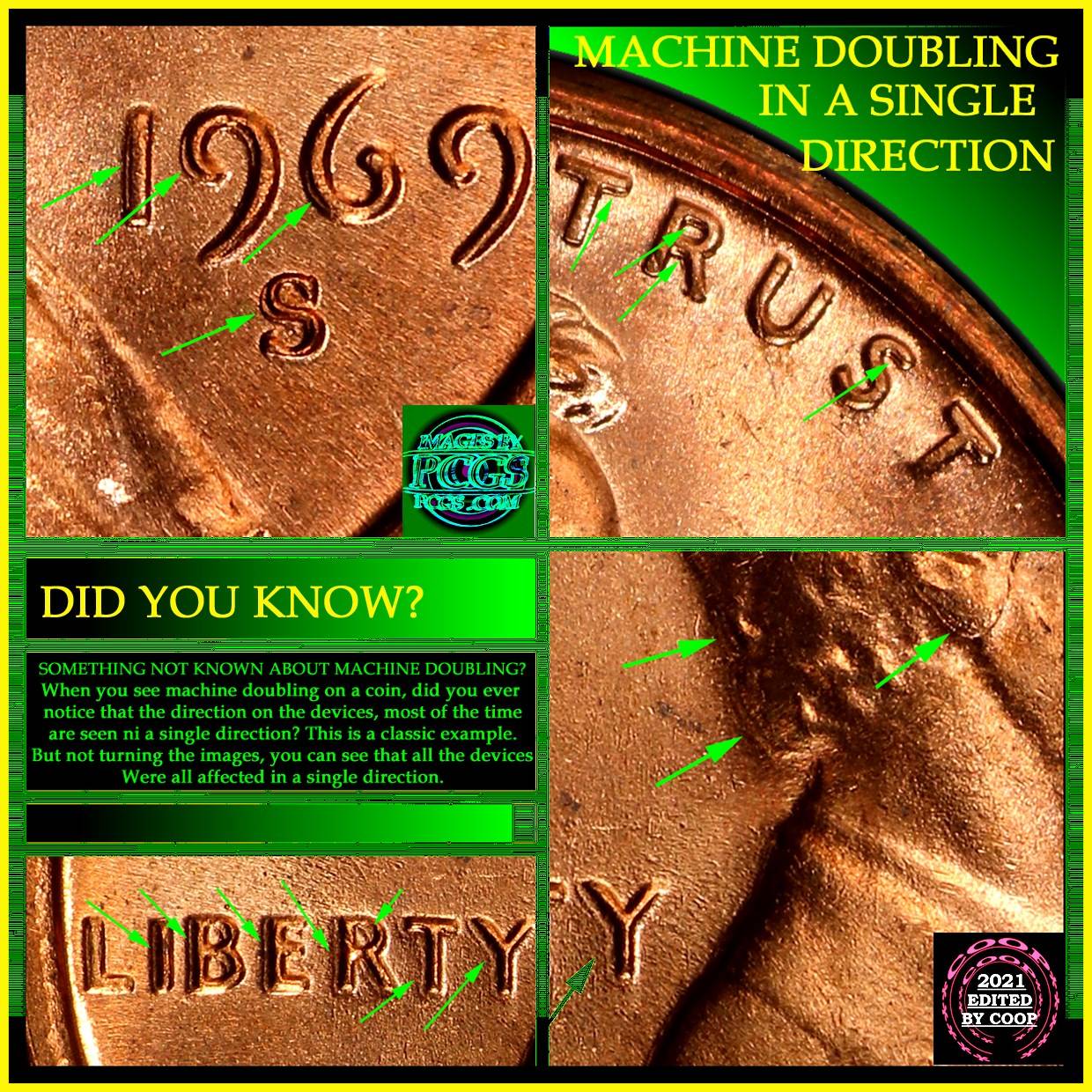 2. The affected area is on one side of the coin, and the contour will be removed. sometimes it show a push upwards on the device, that makes it taller than the device itself. 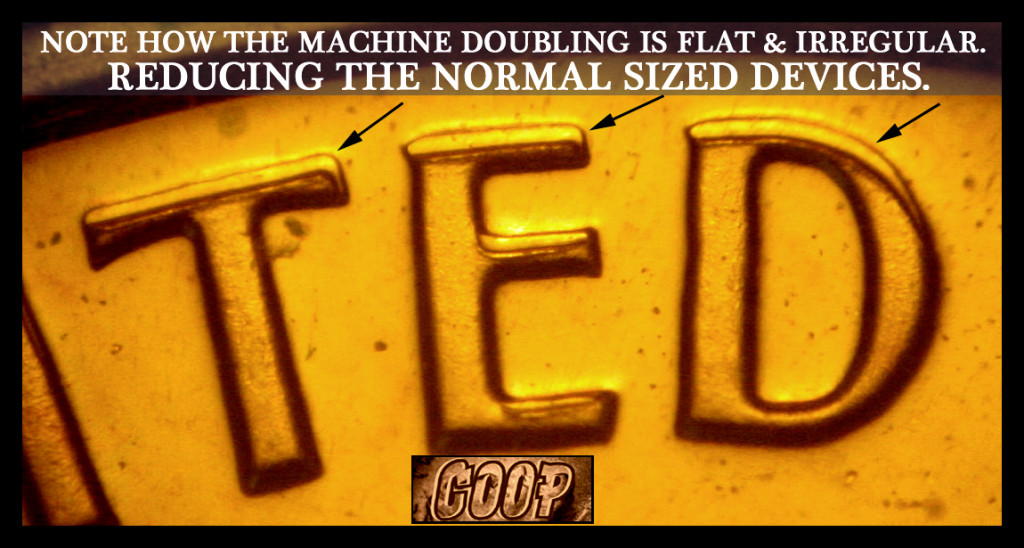 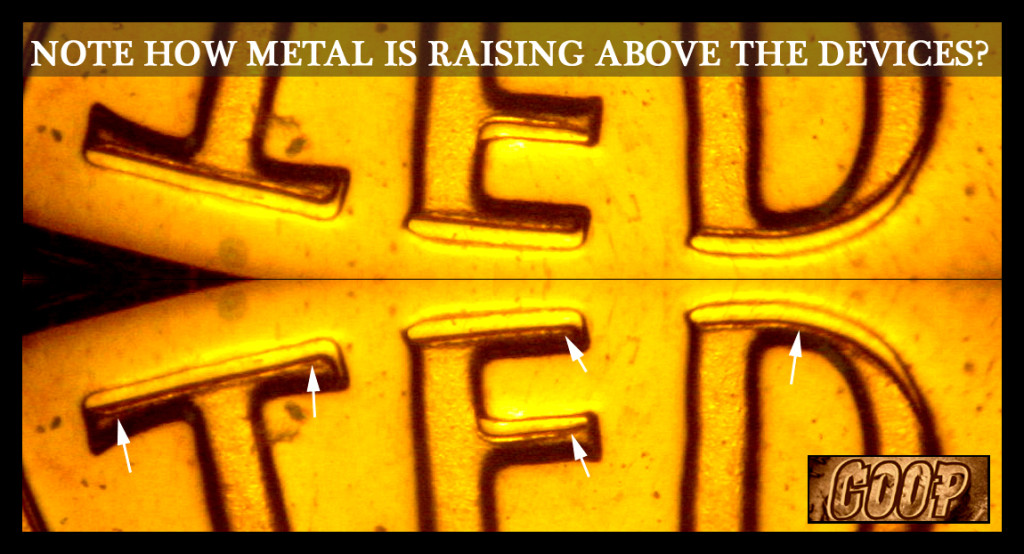 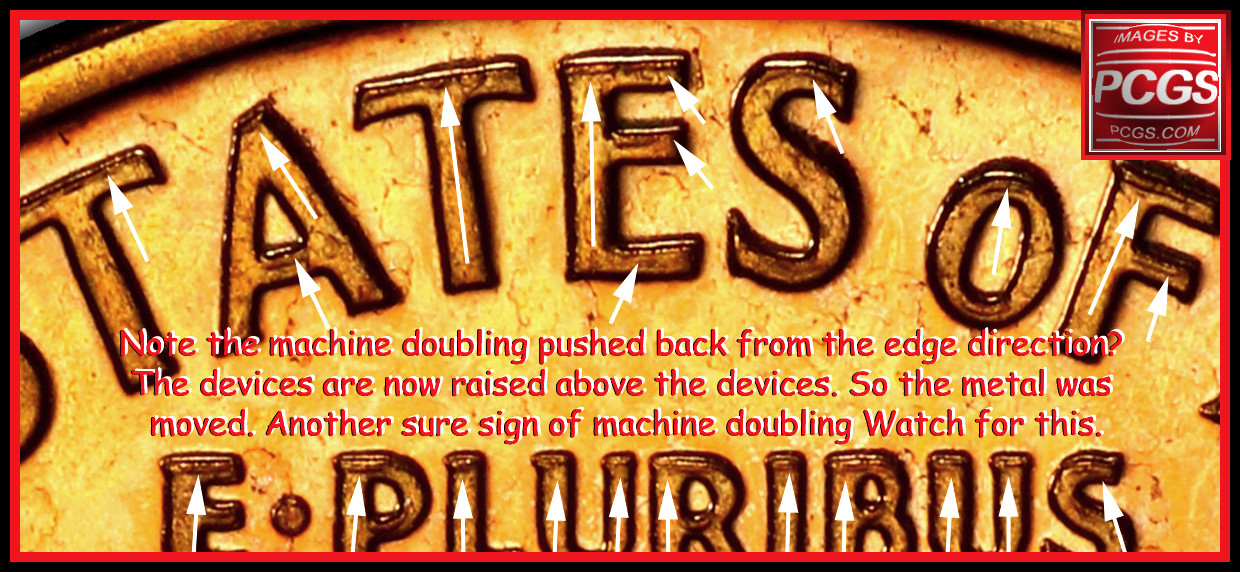 3. The affected are will show a 90 degree push on the devices: 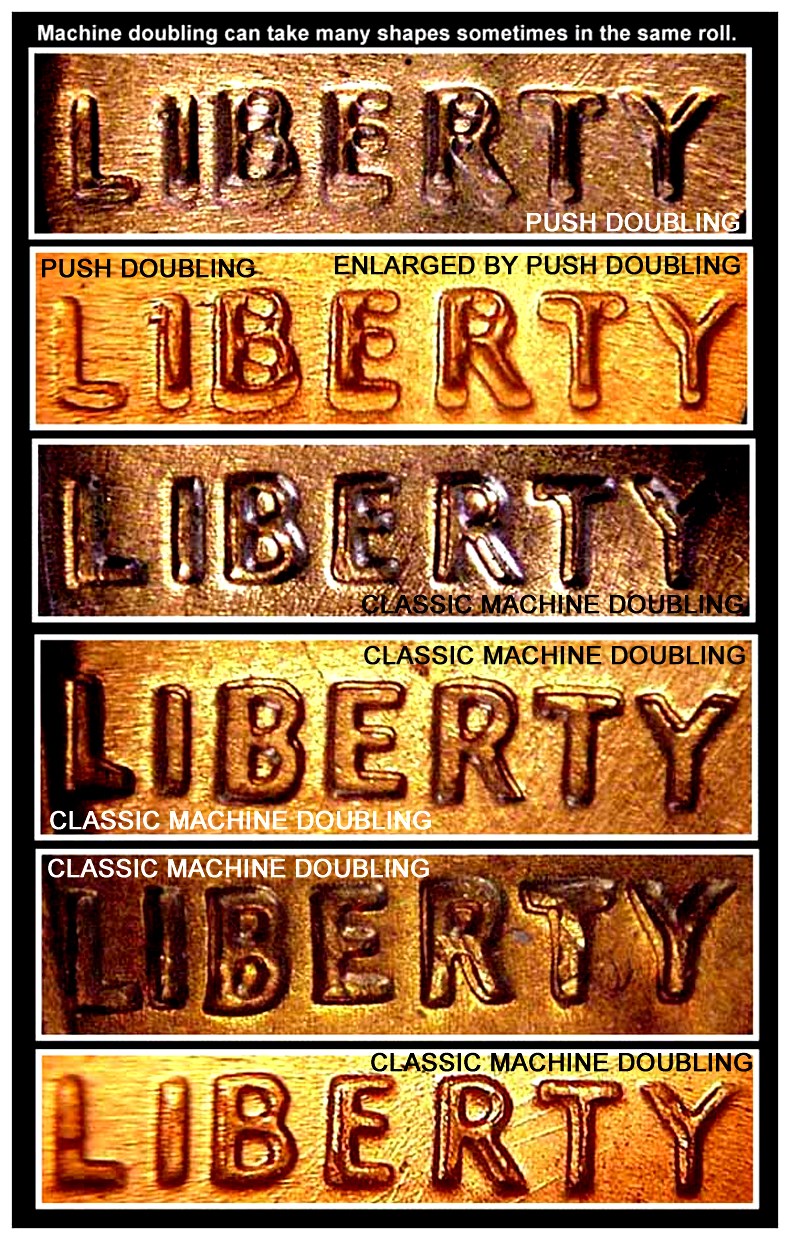 4. Common to find on 1968-1972 cents. Even doubled dies can show Machine Doubling: 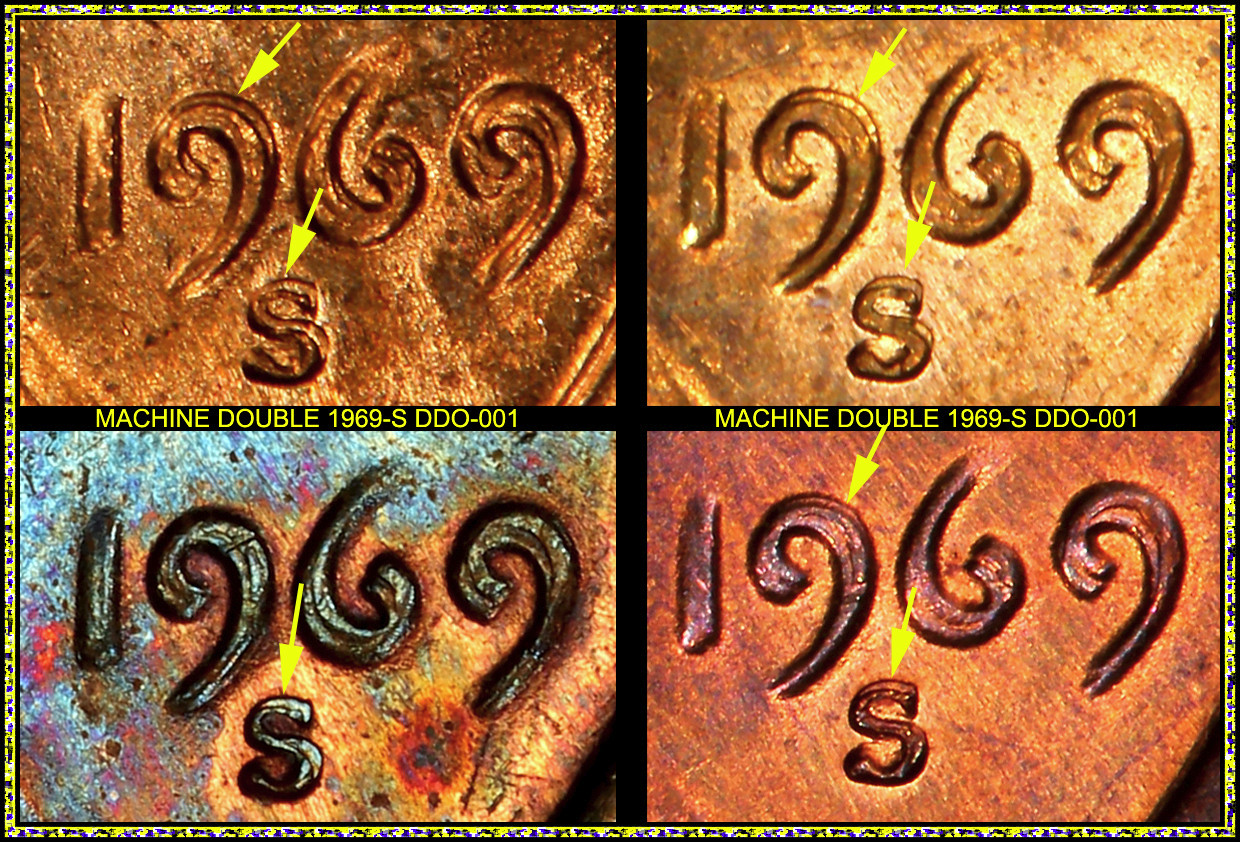 Note the hub doubling just on the Date? But note the yellow arrows and you will see the MD on the date and mintmarks. A doubled die can have Machine Doubling, but Machine Doubling never creates a doubled die. (only a "doubled" die can strike a double die coin. ( Machine Doubling is not preferred to most collectors, even on a doubled die, but sometimes it is there) CoopHome: 4 things seen on Machine Doubling. Machine Doubling is caused by the machine. a doubled die is on the die. so both could happen on a doubled die |
|
Valued Member
United States
157 Posts |
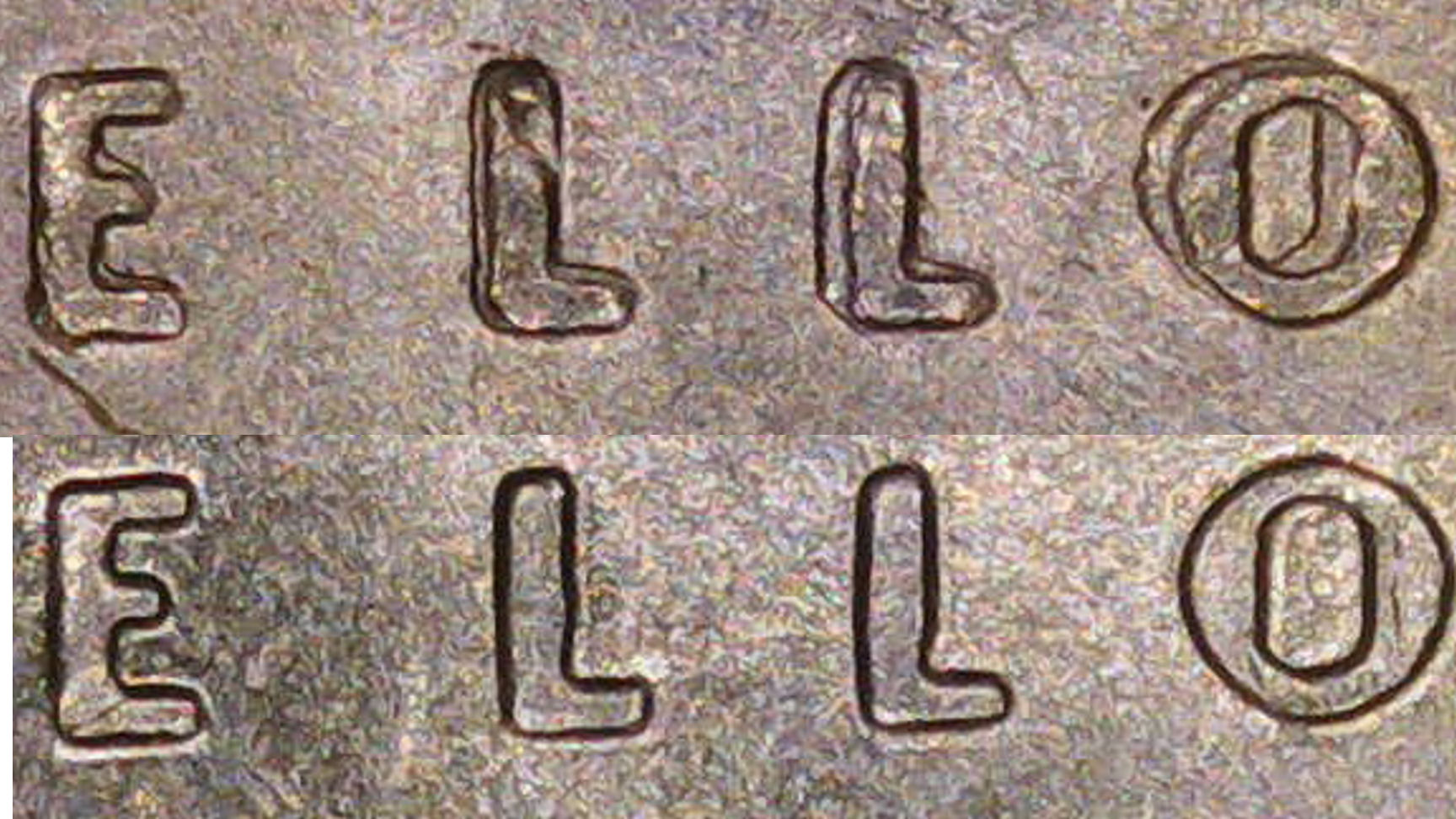
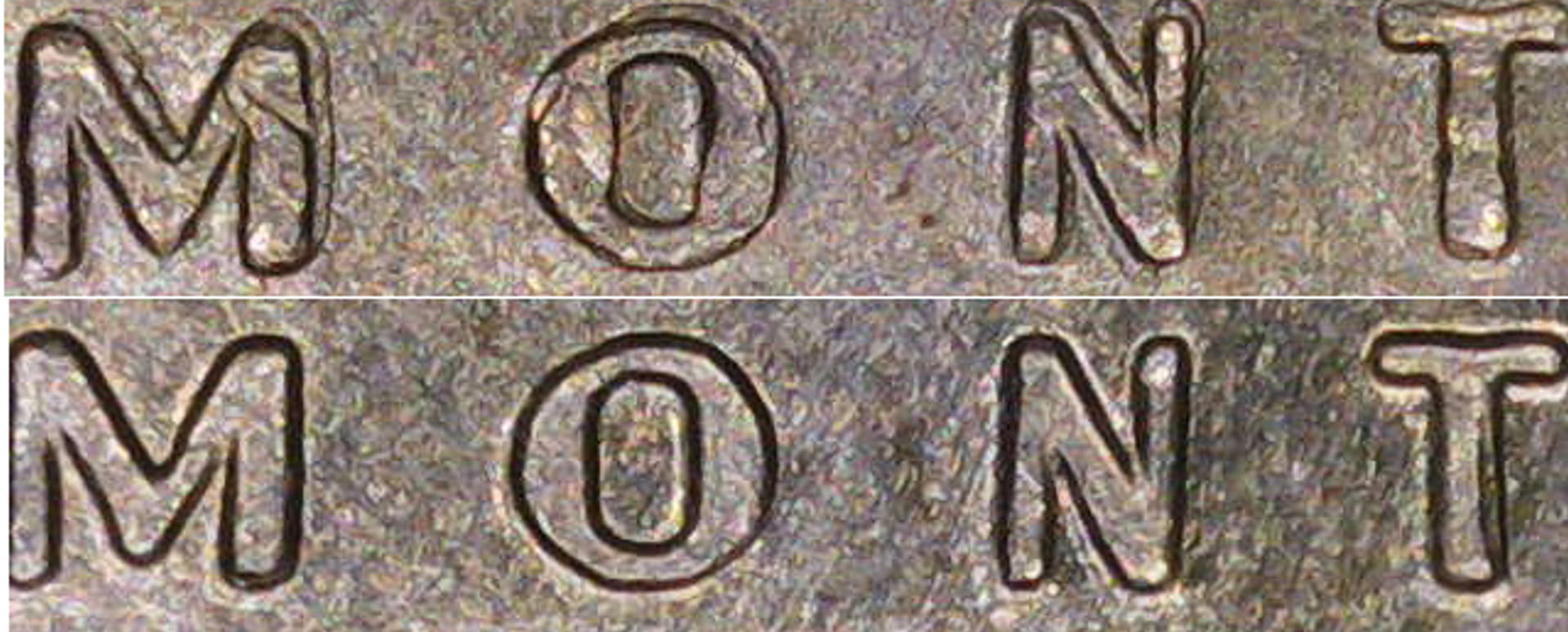
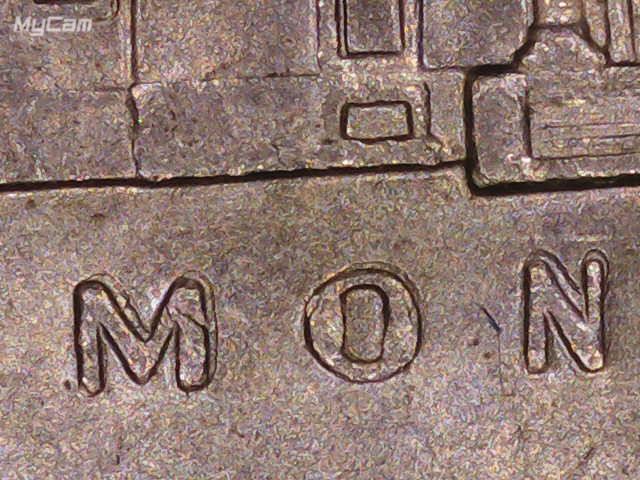
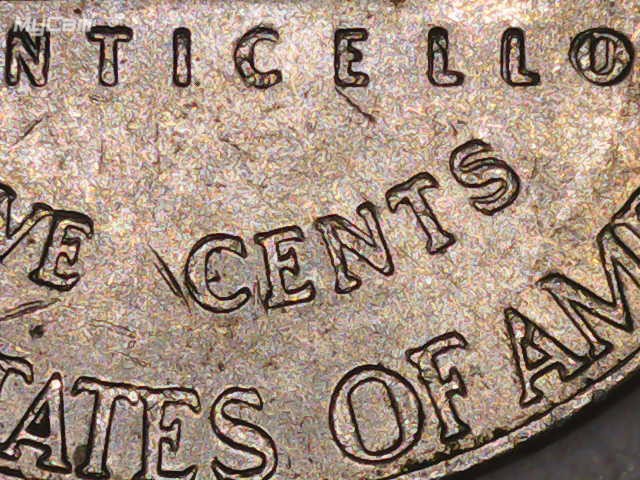
Thanks Coop. Your information says that Machine Doubling always reduces the devices but what I see is the devices look the same. I will get another coin of the same date and mint and compare. It also says the devices will be pushed in the same direction. In the word Montecello, the MON is pushed to the left and the LLO is pushed to the right. Or at least that is what I see. I'll get better photos tomorrow for comparison. |
|
Bedrock of the Community
United States
19527 Posts |
|
|
Pillar of the Community
Canada
6244 Posts |
@HEWART: you are right on this: MON is Right, LLO is Left and N and S in cents is Right.
I didn't comment before because I wait for an explanation of what is really and how was possible to come like this. I am curious to see the end conclusions.
COOP show very well the MD, but here: Maybe we need a buster.
|
|
Valued Member
United States
157 Posts |
|
|
Bedrock of the Community
United States
62064 Posts |
The machine can vary in tightness of the setup. Sometimes it allows a single direction. Sometimes a sweeping direction. It all depends on how loose the machine is. It doesn't have set rules because if it's a loose machine it does what it wants. Sometimes it can vary from strike to strike: 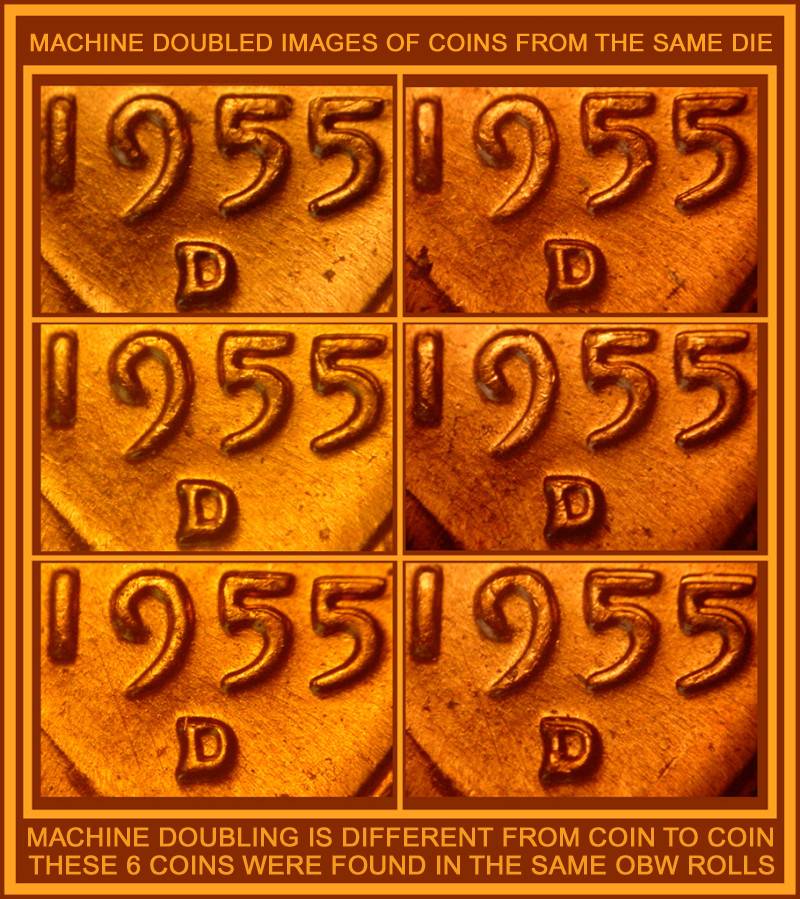 Note on these coins from the same roll, there are different ways the Machine Doubling happens. So it is a loose machine doing what happens on each strike. So the key point is, that it always affects the outside/inside of the devices. A doubled die is enlarged in the center of the devices. Die wear also affects the outside of the devices, but always towards the direction of the closest rim. These are die events. Not a doubled die. |
|
Valued Member
United States
157 Posts |
Thanks Coop. I always thought this was Machine Doubling but this one has some unusual conditions. First, the thought of Machine Doubling reducing the devices makes sense because the shelving combined with the finished element should equal the original size. The device is just pushed to one side. This did not happen here. The device is still the same size as the original. Second, the normal push would result in all devices being pushed in the same direction. This also did not happen. However if the die was loose and a bounce occurred, it could be possible for a die to push one way on the strike and then the other way during a bounce. Just a theory. Regardless of how this happened, it appears to be a bit rare, as I have never seen it or heard of it happening as of yet. As far as the device size is concerned, I have no idea as to how that happened. |
|
Valued Member
United States
95 Posts |
|
|
Pillar of the Community
Canada
6244 Posts |
After some resources' I find that those coins with two opposite direction's is more an combination of a hub doubling and Machine Doubling. At the Mint the studies furnish by specialize firms on quality production and internal studies are in favor of the Hub doubling combine with Machine Doubling. Other studies suggest that could be also an reengraving of the Master die hub deficiencies. No study show that this can occur in just Machine Doubling single strike. Is mention that could occur is two strike coins, but never see at this moment. |
|
Valued Member
United States
157 Posts |
@Silviosi Many thanks for the research. It was driving me crazy. So it appears that I might have a DDR ? This should have some value and I wonder if I should have it graded. I'll look into that. I'll update if that happens and let everyone know what I find. |
|
Pillar of the Community
Canada
6244 Posts |
The problem with the graders is they go by theirs lists and do not do technical analyze or technical grading. The price?!!?. I am not good on this because I am not a dealer, and is depend where you sell and if is demand for. Sorry.
PS: Another consideration is that majority of the peoples look at the coins in the old stile. This mean today we still be reticent of the change of the technology and we apply what was for coins struck on vertical presses to the new coins after 1999 on the horizontal presses which can generate complete opposite varieties or errors then previous presses.
Edited by silviosi
08/31/2022 10:04 pm
|
|
Valued Member
United States
157 Posts |
@Silviosi OK.. I understand. If possible, Could you give me the links on where you got that information ? I would like to follow up and add that to my reference docs. Thanks
|
| |
Replies: 18 / Views: 2,247 |







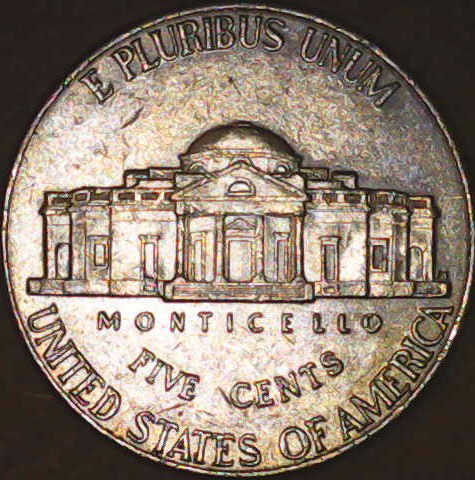
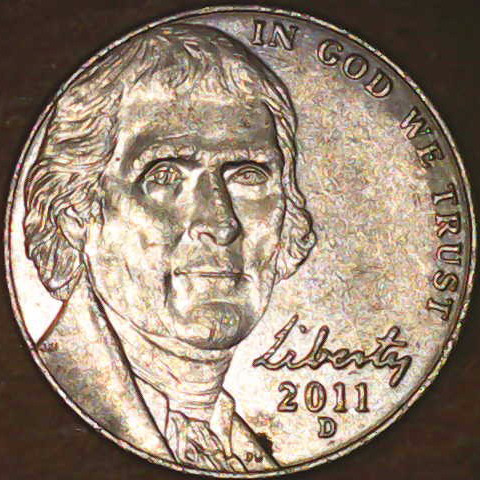
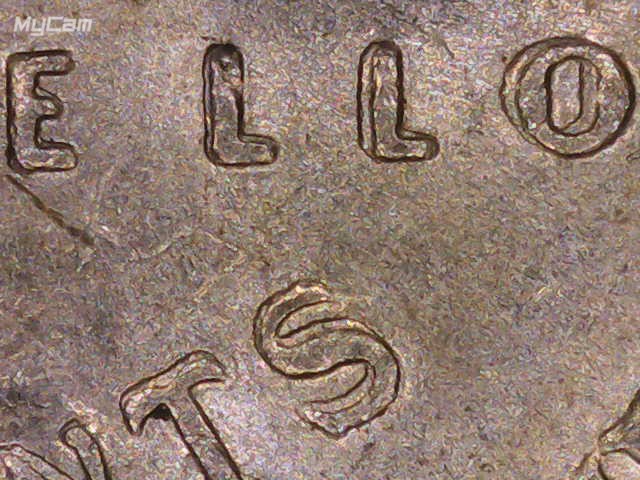


 Posted 08/30/2022 1:25 pm