| Author |
 Replies: 9 / Views: 5,309 Replies: 9 / Views: 5,309 |
|
|
Pillar of the Community
United States
2111 Posts |
"LOVE THE HUNT!"
|
|
|
|
Bedrock of the Community
United States
94367 Posts |
This is a "false error" created by using chemicals.
Edited by Coinfrog
09/28/2022 5:50 pm
|
|
Pillar of the Community
United States
5700 Posts |
|
|
Pillar of the Community
 United States
2111 Posts |
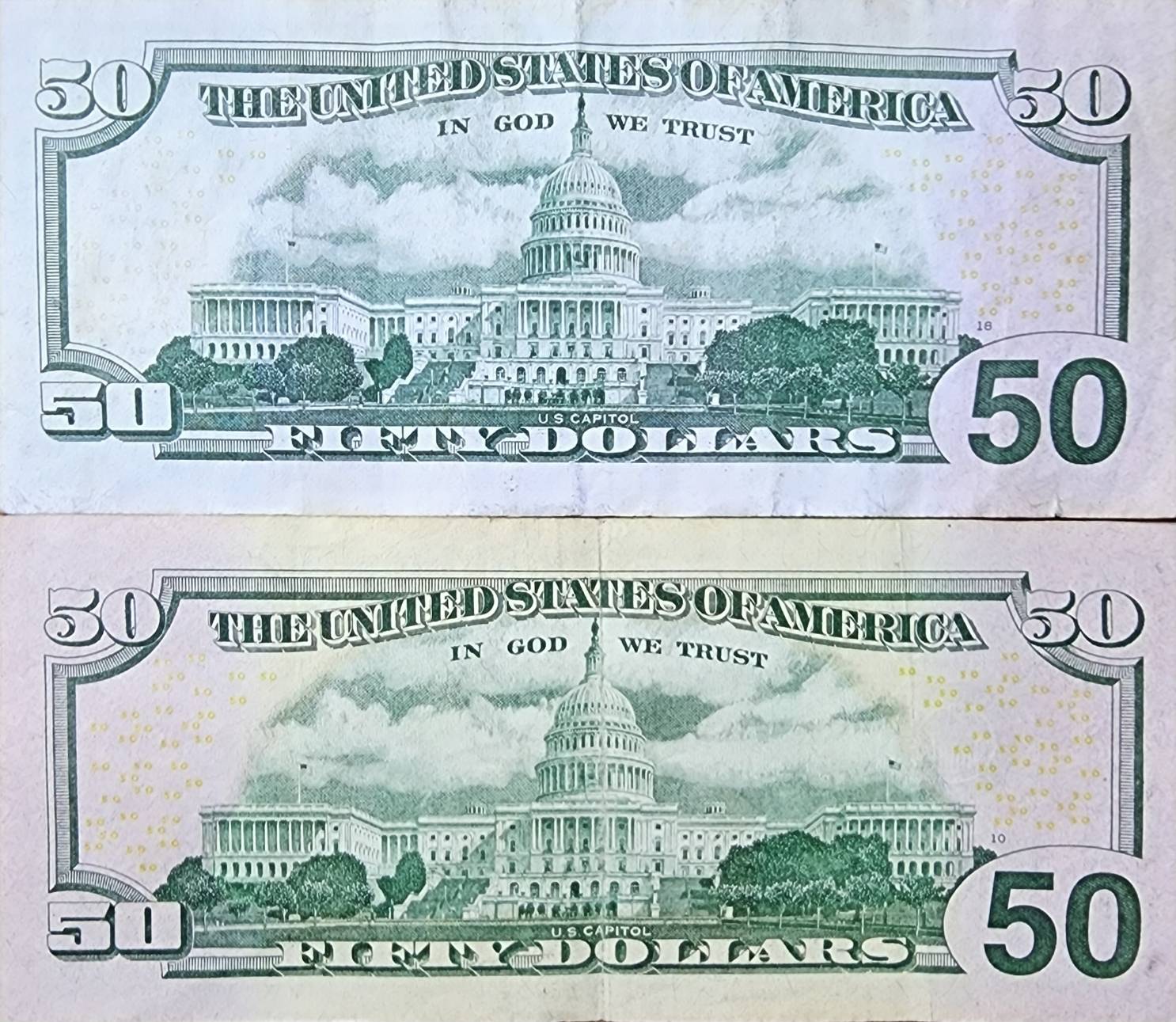
Coin Frog, Do you know how its done? How is the rest of the green ink Not affected. I'm not questioning weather its fake. Trying to figure out how they did it and not affect the rest of the green ink. I just found this article https://www.antiquemoney.com/altere...es-currency/ I have no idea real or fake. This article is interesting though. "LOVE THE HUNT!"
Edited by arby96
09/28/2022 6:07 pm
|
|
Pillar of the Community
United States
1316 Posts |
Don't know about the color but the number on that bottom bill is a good number worth more than face I believe check it out
|
|
Moderator
 Australia
17002 Posts |
Enzymes can be very specific as to what they react with; "accidental errors" where serial numbers and seals change colour, can occur when notes are washed in laundry with enzyme-based detergents. It could also be a deliberately-made error, using chemicals they've found that force the colour change to happen. Certain acids may do this. Quote:
How is the rest of the green ink Not affected. I'm not questioning weather its fake. Trying to figure out how they did it and not affect the rest of the green ink. The two green inks are chemically different. They will therefore react differently when exposed to the same chemical. Back-of-note green ink is chemically similar to the black ink used on the front of the note, and is generally more chemically inert and not as prone to colour changing as the seal ink. It's kind of like the difference between laser printer ink and inkjet printer ink: one is water-soluble and the other isn't, so if a piece of paper has both inks on it and the piece of paper gets wet, the inkjet ink will run and the laser printing won't, even though they're the "same colour". We also know it's not a printing error simply because blue isn't a colour being used on banknote seals these days. So there are no "buckets of blue seal ink" sitting around in the BEP that could get picked up and used by accident. The blue ink they do use, for the subtle background colour, is chemically different and wouldn't work if you put it in the seal printer (just like inkjet ink won't work in a laser printer cartridge). Don't say "infinitely" when you mean "very"; otherwise, you'll have no word left when you want to talk about something really infinite. - C. S. Lewis
|
|
Pillar of the Community
United States
2111 Posts |
Great information, Thank you all.
"LOVE THE HUNT!"
|
|
Pillar of the Community
United States
4637 Posts |
This note (not mine) was sold in 2010 and the error was attributed to inkwell contamination. 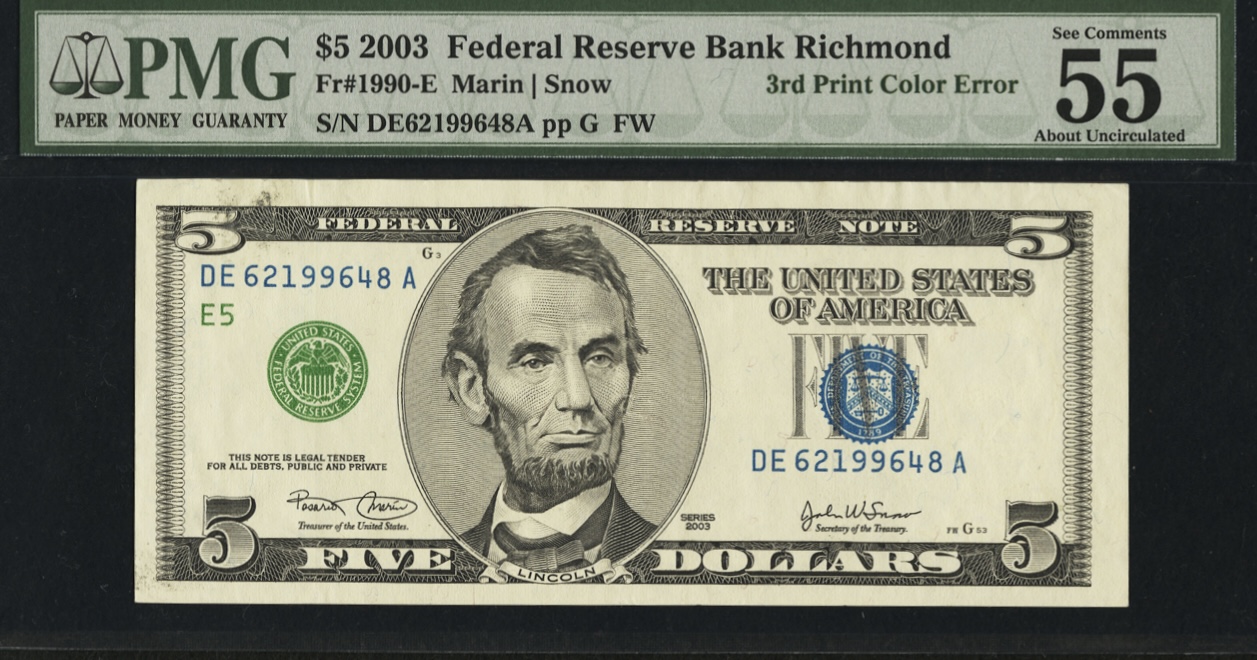 |
|
Moderator
United States
56855 Posts |
arby96, I am no pro ,but I see your note as an inking error done at the BEP.But because of low condition I see little premium. John1  |
|
Pillar of the Community
United States
2111 Posts |
So the 50 May be legit, and the article I posted has merit. Now to confirm if a chemical caused this or Ink Contamination. This bill is not worth sending in to a grading company. I will just stick it in a sleeve and hold on to it. Thanks everyone
"LOVE THE HUNT!"
|
| |
Replies: 9 / Views: 5,309 |
|









 Posted 09/28/2022 5:52 pm





