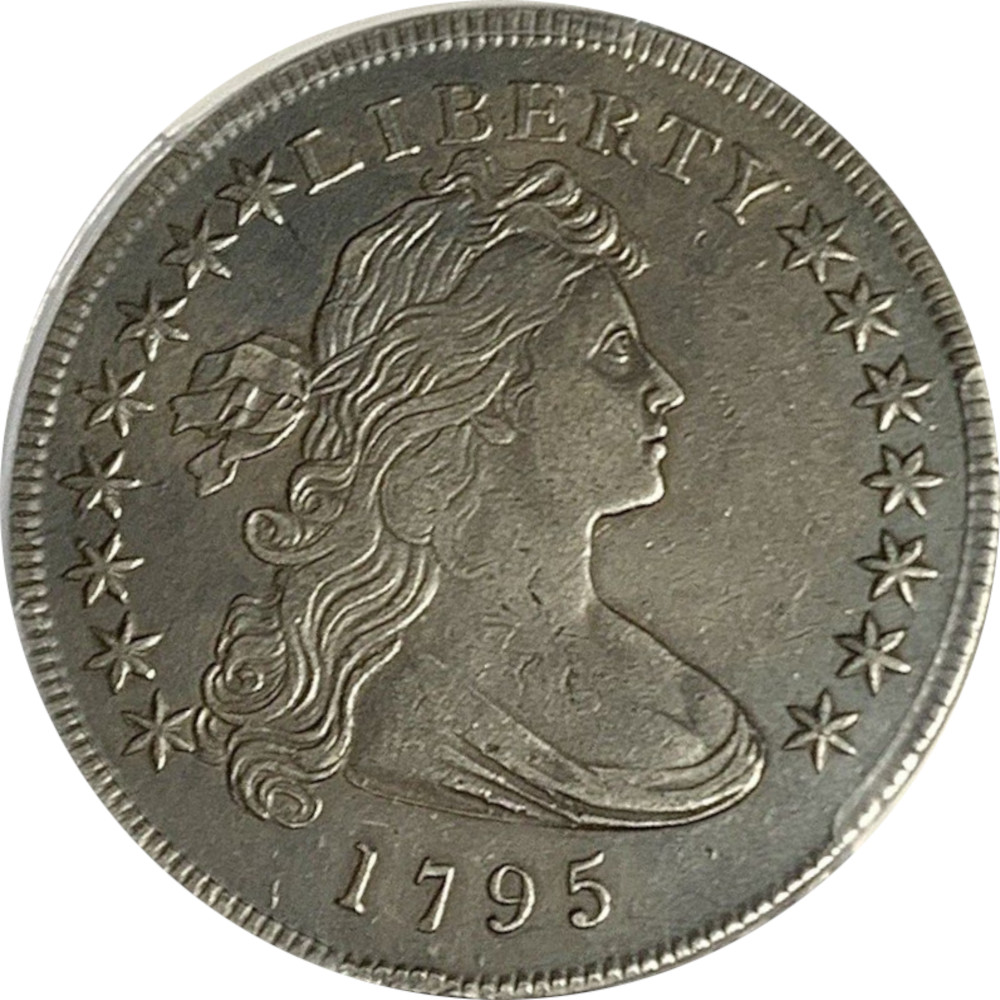
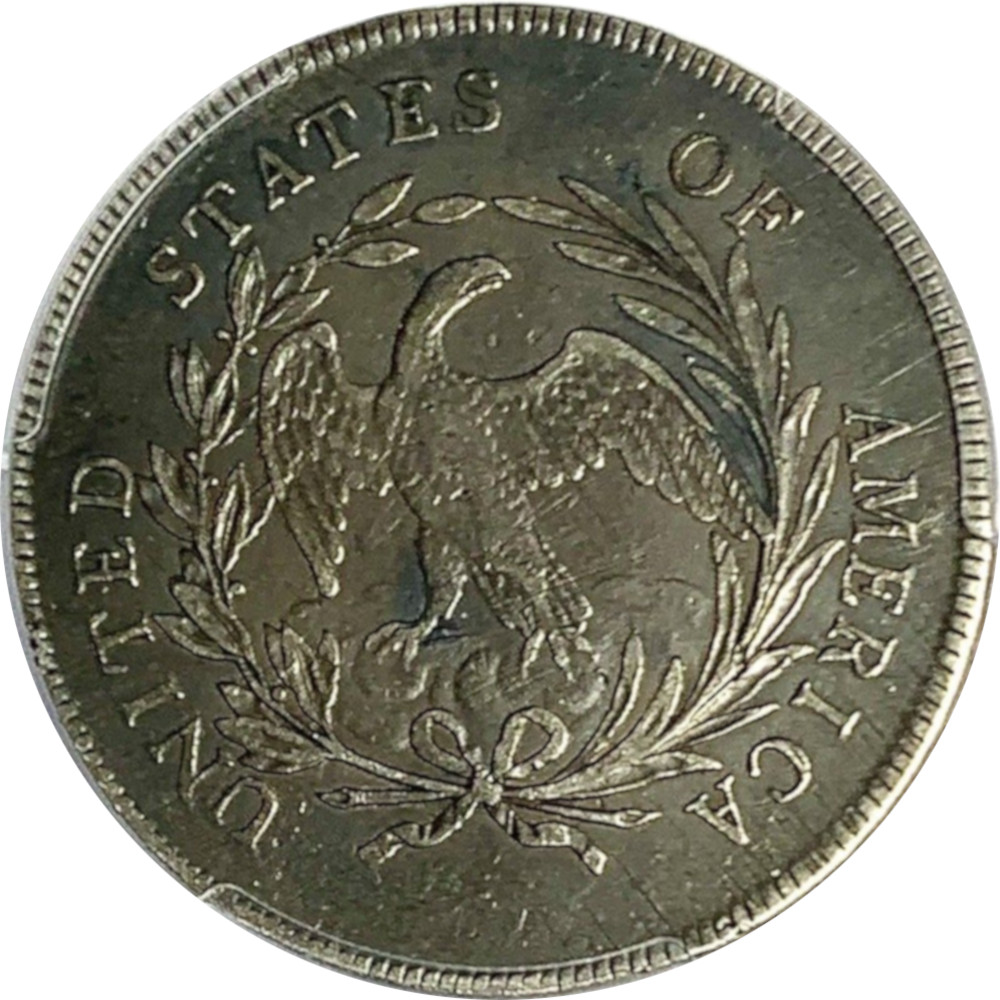
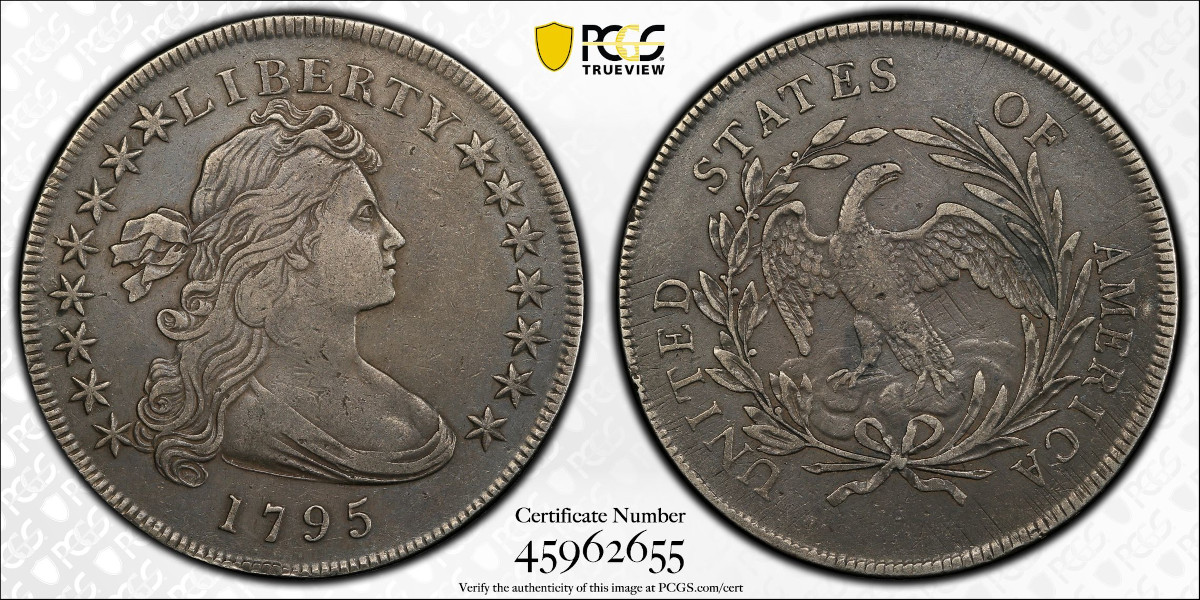
Q. David Bowers and Mike Sherman relate that the 1795 Draped Bust dollar represents the initial appearance of this design in American coinage. In the silver dollar series the obverse motif was continued through pieces dated 1804 (business strikes were last made in 1803, however), while the reverse motif was employed only through early 1798. Among early silver dollars, the Draped Bust obverse combined with the Small Eagle reverse may be the scarcest type. Among the four dates, 1795-1798, while 1797 is the lowest mintage, prices for all four are roughly the same.
When Henry William DeSaussure became Mint Director in June of 1795, he set two goals: to get gold coins to actively circulate and to improve the appearance of each denomination, with particular attention to the silver coinage. The transition from the Flowing Hair motif to this design was instigated by incoming Mint Director Henry William DeSaussure, adding: "Whatever the inspiration for the portrait, and whatever the design process may have been, the obverse and reverse punches for the 1795 Draped Bust dollar far exceeded in quality anything created earlier."
DeSaussure contracted with famed portrait artist Gilbert Stuart to prepare a depiction of Liberty to replace Robert Scot's Flowing Hair bust. Stuart's design was then transferred into plaster models and punches by John Eckstein for Scot. Eckstein also prepared improved versions of the Small Eagle reverse punches that showed the eagle in intricate detail and style. For this work Eckstein was paid $30 in September.
The resulting Draped Bust, Small Eagle silver dollar is often heralded as a masterpiece from the early United States Mint. DeSaussure's tenure at the helm was very short, however; in October of that same year he resigned his position due in part to illness and general dissatisfaction. While only there for a few months, he made a long-lasting impression on the nation's coinage. While the Small Eagle reverse would only be employed until 1798, the Stuart/Eckstein Draped Bust was used for the rest of the series until coinage of silver dollars was suspended in 1804.
Two different die combinations were used for the 1795 Draped Bust dollar. The die pair believed to have been struck first is the so-called Off-Center Bust variety, BB-51, which features Liberty appearing too far to the left from the center, a position used only on this die pair. This positioning was corrected to a more aesthetically pleasing centered location on the second variety, BB-52. The precise number struck and timing of each variety is unclear. Mint records from the time are not as thorough as scholars would like and much of what can be determined is conjecture.
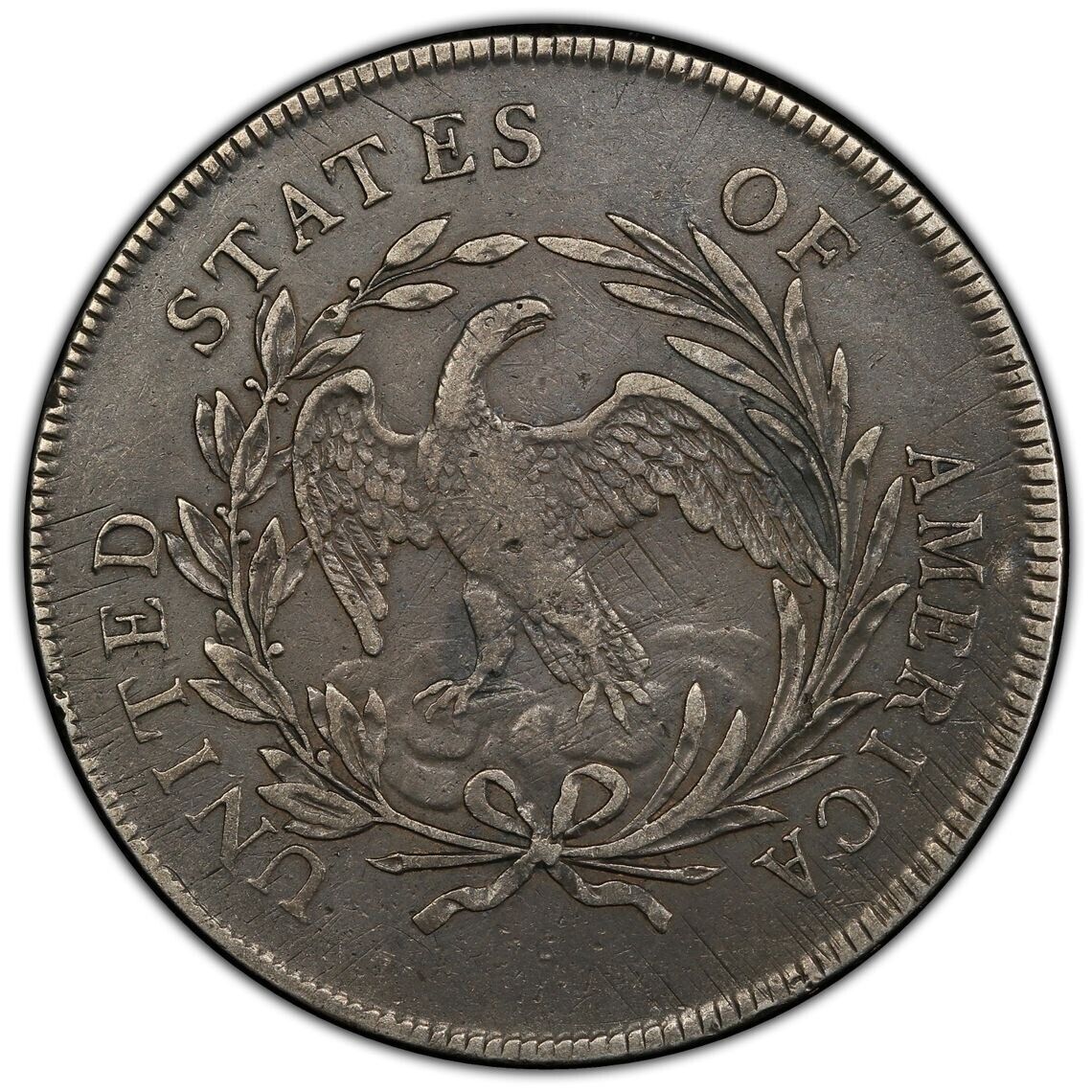
It is believed that 42,738 1795 Draped Bust dollars were struck, consisting of two readily distinguishable varieties. The first type, B-14, BB-51, is known as the Off-Center Bust and seen here. The central device was initially placed too far left on the die and was later corrected. The second variety with the Centered Bust is designated as B-15, BB-52. The 1795 Off-Center dollars are slightly more available, with the BB-52 variety claiming a population about two-thirds the size of the BB-51. Bowers suggests that 1,400 to 2,000 coins are extant in all grades. With the typical survivor grading VF, however, even EF and AU coins are scarce and Mint State examples are rare.
IN NECESSARIIS UNITAS - IN DUBIIS LIBERTAS - IN OMNIBUS CARITAS THE MAN IN THE ARENA, Theodore Roosevelt at the Sorbonne Paris on April 23, 1910: "It is not the critic who counts; not the man who points out how the strong man stumbles or where the doer of deeds could have done better. The credit belongs to the man who is actually in the arena, whose face is marred by dust and sweat and blood, who strives valiantly, who errs and comes up short again and again, because there is no effort without error or shortcoming, but who knows the great enthusiasms, the great devotions, who spends himself in a worthy cause; who, at the best, knows, in the end, the triumph of high achievement, and who, at the worst, if he fails, at least he fails while daring greatly, so that his place shall never be with those cold and timid souls who knew neither victory nor defeat." My coin website:https://fairfaxcoins.com
IN NECESSARIIS UNITAS - IN DUBIIS LIBERTAS - IN OMNIBUS CARITAS THE MAN IN THE ARENA, Theodore Roosevelt at the Sorbonne Paris on April 23, 1910: "It is not the critic who counts; not the man who points out how the strong man stumbles or where the doer of deeds could have done better. The credit belongs to the man who is actually in the arena, whose face is marred by dust and sweat and blood, who strives valiantly, who errs and comes up short again and again, because there is no effort without error or shortcoming, but who knows the great enthusiasms, the great devotions, who spends himself in a worthy cause; who, at the best, knows, in the end, the triumph of high achievement, and who, at the worst, if he fails, at least he fails while daring greatly, so that his place shall never be with those cold and timid souls who knew neither victory nor defeat." My coin website:https://fairfaxcoins.com
this is a beautiful coin from the early years of our countries minting. is the marks across the eagle legs adjustment marks. the seem a little excessive. typically you see these along the coins edges which we see here. it sure does look better than VF. I think its between XF40 and 45
I guess this was one of those "buy the coin, not the holder" moments. To me it seemed like the coin was much better that the opinion rendered by the TPG. The coin does not look cleaned to me in either set of pictures and I thought it had great detail and eye appeal. I don't think I could have bought this coin at this price in a straight grade holder.
As I looked at many examples in straight graded holders, I found many that looked more like it had been cleaned and/or with less eye appeal than this coin. Some examples:
Netnet I think that there are a lot of not very attractive off-center bust 1795 dollars and this one was attractive at least to my eyes. Others may differ.
IN NECESSARIIS UNITAS - IN DUBIIS LIBERTAS - IN OMNIBUS CARITAS THE MAN IN THE ARENA, Theodore Roosevelt at the Sorbonne Paris on April 23, 1910: "It is not the critic who counts; not the man who points out how the strong man stumbles or where the doer of deeds could have done better. The credit belongs to the man who is actually in the arena, whose face is marred by dust and sweat and blood, who strives valiantly, who errs and comes up short again and again, because there is no effort without error or shortcoming, but who knows the great enthusiasms, the great devotions, who spends himself in a worthy cause; who, at the best, knows, in the end, the triumph of high achievement, and who, at the worst, if he fails, at least he fails while daring greatly, so that his place shall never be with those cold and timid souls who knew neither victory nor defeat." My coin website:https://fairfaxcoins.com
Attractive example that certainly looks undergraded to me. I also question the cleaning. The adjustment marks on the eagle seem parallel to the adjustment marks at the edge.
Thank you for your kind replies. This came in. Love the surfaces of this coin. Thoughts? Thanks!
yv-HGpw2DSo
wgdfGrwXcKE
IN NECESSARIIS UNITAS - IN DUBIIS LIBERTAS - IN OMNIBUS CARITAS THE MAN IN THE ARENA, Theodore Roosevelt at the Sorbonne Paris on April 23, 1910: "It is not the critic who counts; not the man who points out how the strong man stumbles or where the doer of deeds could have done better. The credit belongs to the man who is actually in the arena, whose face is marred by dust and sweat and blood, who strives valiantly, who errs and comes up short again and again, because there is no effort without error or shortcoming, but who knows the great enthusiasms, the great devotions, who spends himself in a worthy cause; who, at the best, knows, in the end, the triumph of high achievement, and who, at the worst, if he fails, at least he fails while daring greatly, so that his place shall never be with those cold and timid souls who knew neither victory nor defeat." My coin website:https://fairfaxcoins.com
Thanks CC. Maybe we'll find out down the road as I will probably pop it out of the slab at some point. I just checked the cert and I guess it checks out.
IN NECESSARIIS UNITAS - IN DUBIIS LIBERTAS - IN OMNIBUS CARITAS THE MAN IN THE ARENA, Theodore Roosevelt at the Sorbonne Paris on April 23, 1910: "It is not the critic who counts; not the man who points out how the strong man stumbles or where the doer of deeds could have done better. The credit belongs to the man who is actually in the arena, whose face is marred by dust and sweat and blood, who strives valiantly, who errs and comes up short again and again, because there is no effort without error or shortcoming, but who knows the great enthusiasms, the great devotions, who spends himself in a worthy cause; who, at the best, knows, in the end, the triumph of high achievement, and who, at the worst, if he fails, at least he fails while daring greatly, so that his place shall never be with those cold and timid souls who knew neither victory nor defeat." My coin website:https://fairfaxcoins.com
Disclaimer: While a tremendous amount of effort goes into ensuring the accuracy of the information contained in this site, Coin Community assumes no liability for errors. Copyright 2005 - 2026 Coin Community Family- all rights reserved worldwide. Use of any images or content on this website without prior written permission of Coin Community or the original lender is strictly prohibited. Contact Us | Advertise Here | Privacy Policy / Terms of Use










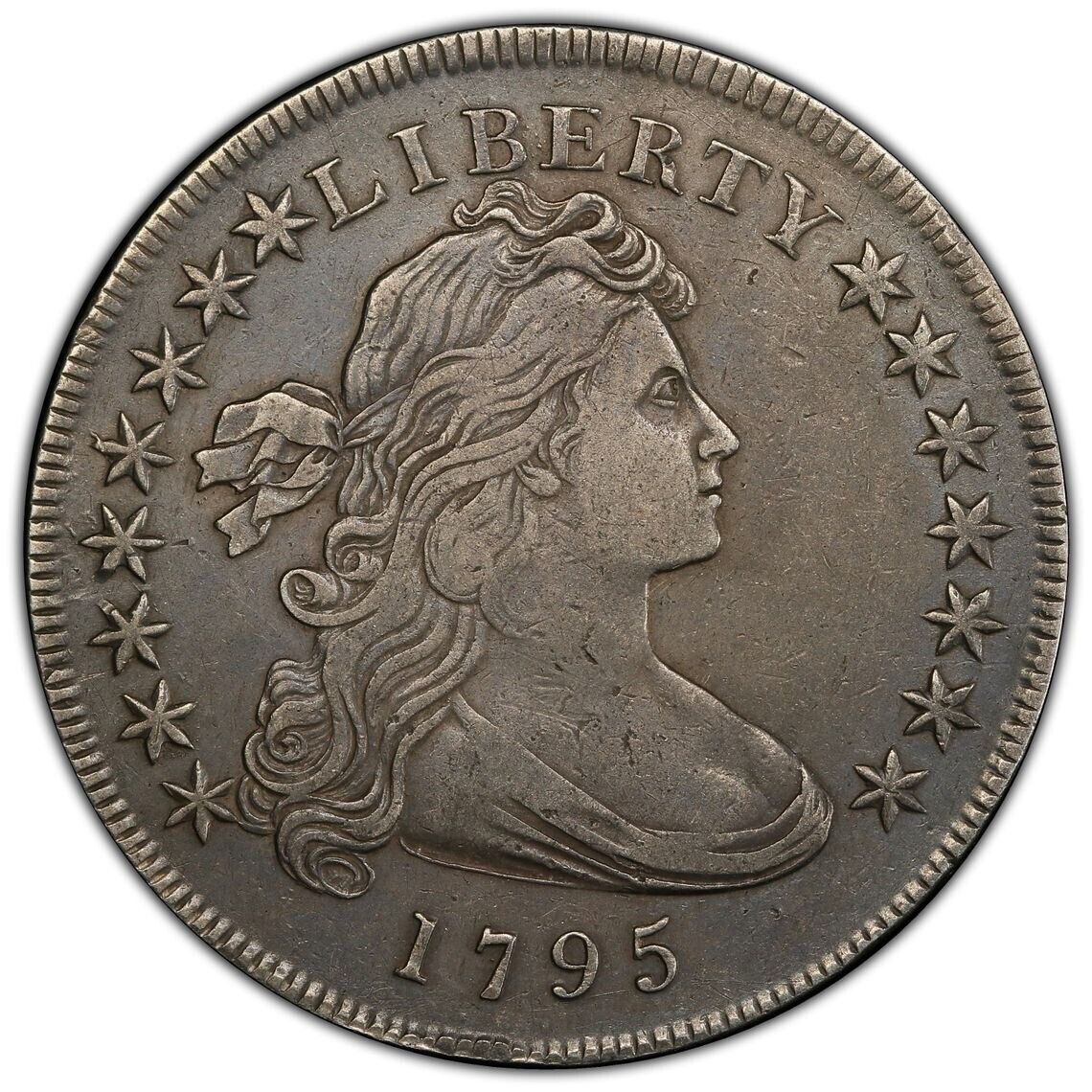


 Posted 12/26/2022 12:36 am


 Adding a couple more pictures.