First Page


 Posted 01/03/2023 11:16 pm


paralyse: for this discussion, we are concerned with coins produced as copies, and not those accepted as struck imitations of contemporary circulating coinage
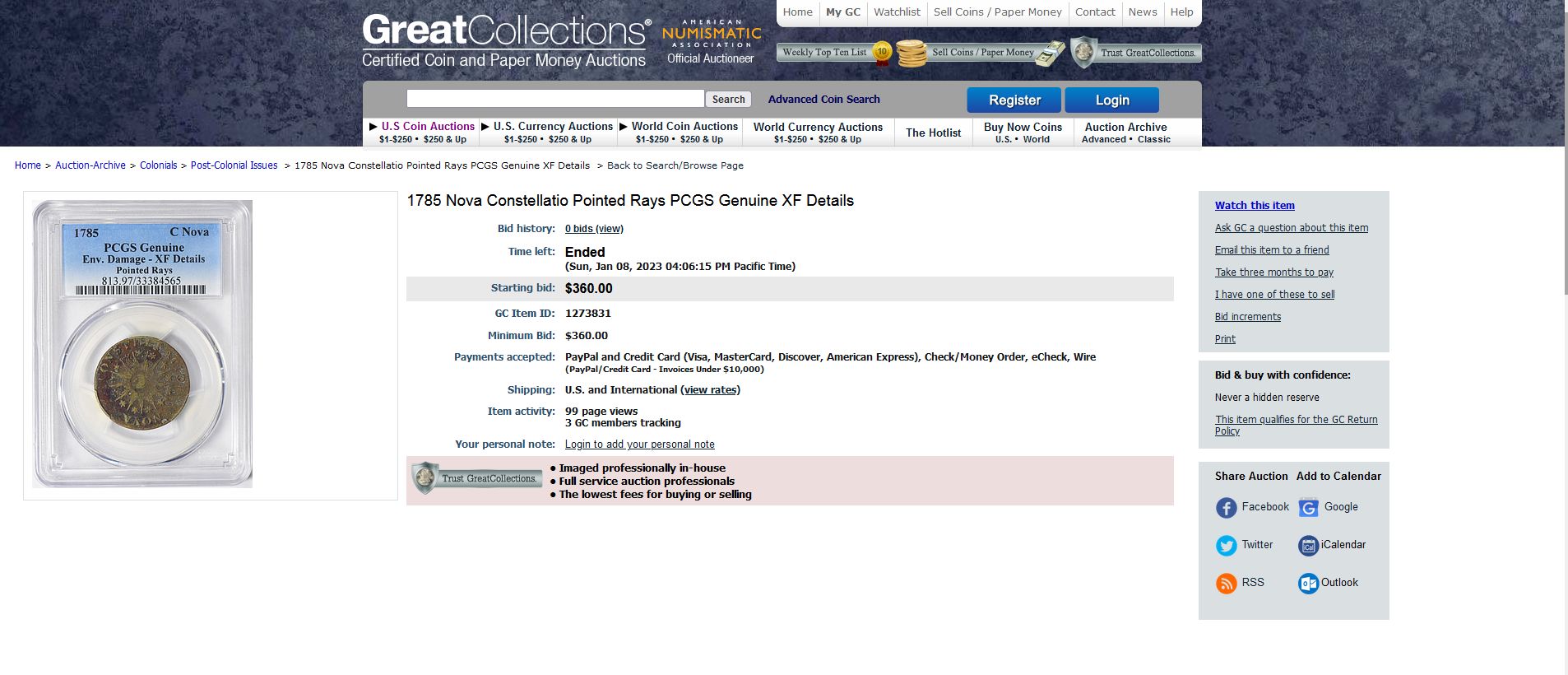
I asked my Friend the Expert about the rolling machinery at Machin's Mill, if it could have produced such planchet stock as this, be discovered in the basket and then being used for coining (would someone really use this as a planchet if he had seen it?), and would such a planchet survive being struck? His answers were No. He didn't want to "get into" its manufacture as seen... so: this is supposed to be a Perfect Die State. If struck, it is the only example seen in this dies state, or later, with bifurcated lettering. Many of the letters are very weak at the rim; again, not seen in struck examples of the die state, etc. The "O" in AUCTORI looks like it is mounded. If this coin were offered as being struck (and managed to not have exploded into pieces), the fissures are then analyzed. They do not have the appearance of being struck in the coin. We can start with that...
I asked my Friend the Expert about the rolling machinery at Machin's Mill, if it could have produced such planchet stock as this, be discovered in the basket and then being used for coining (would someone really use this as a planchet if he had seen it?), and would such a planchet survive being struck? His answers were No. He didn't want to "get into" its manufacture as seen... so: this is supposed to be a Perfect Die State. If struck, it is the only example seen in this dies state, or later, with bifurcated lettering. Many of the letters are very weak at the rim; again, not seen in struck examples of the die state, etc. The "O" in AUCTORI looks like it is mounded. If this coin were offered as being struck (and managed to not have exploded into pieces), the fissures are then analyzed. They do not have the appearance of being struck in the coin. We can start with that...
Edited by Oldgrouchyguy
01/03/2023 11:42 pm
01/03/2023 11:42 pm