| Author |
 Replies: 12 / Views: 2,977 Replies: 12 / Views: 2,977 |
|
|
Valued Member
United States
121 Posts |
|
|
|
|
Bedrock of the Community
United States
94367 Posts |
All 1988 cents exhibit the Wide AM. |
|
Bedrock of the Community
United States
62064 Posts |
On that year there is a year/variety on the reverse on the mintmark area and the AME area. They are valled RDV-005 and RDV-006. The RDV-005 are the common one that year. The RDV-006 is a premium for these. The differences? The AME is different on the RDV-005 with rounded devices: 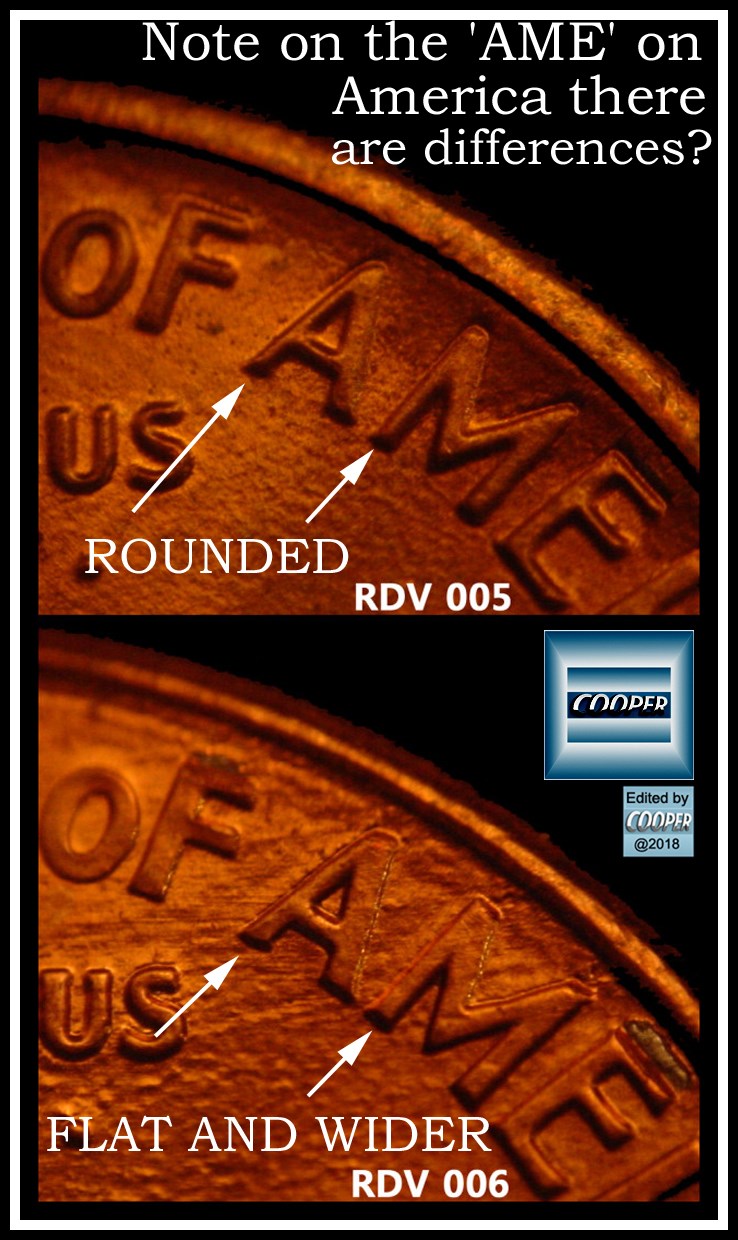 The RDV-006 has the flat looking devices. That is the premium one. It was to be used in 1989 going forward. But the reverses of the RDV-005 dies were wearing out. So these have the weaker devices on the initials ("FG") on them. On the RDV-006 devices the 'G' and locations are different: 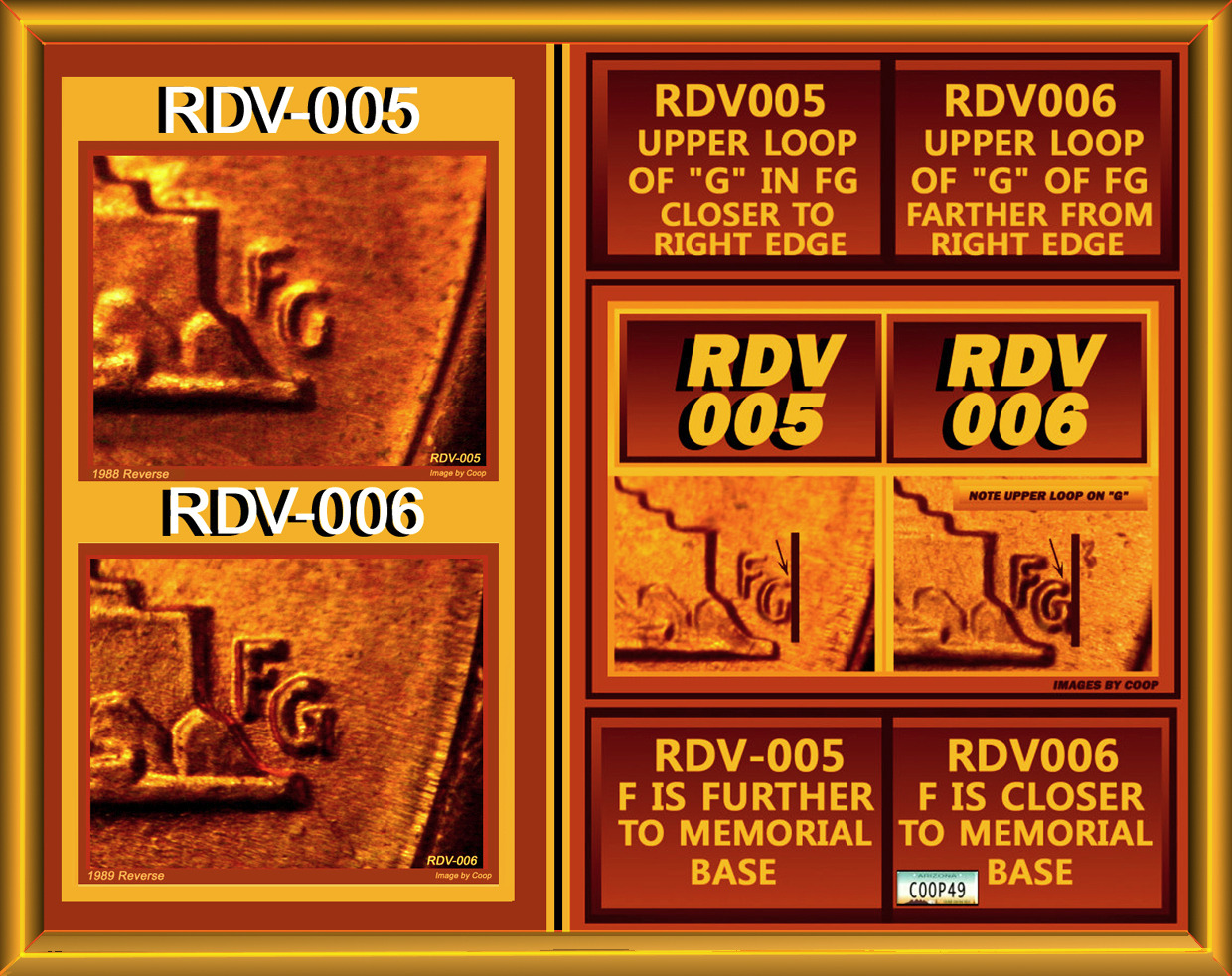 Note the differences on these images. So it the"FG" is weak it is probably a RDV-006 (More desirable example). That is the differences. CoopHome: What does RDV-005 and RDV-006 mean on 1988 cents? they are two different Reverse-Die-Varieties seen on 1988 reverse cents. one is common (RDV-005) and one has a premium for them (RDV-006). know the differences are made easier by the rounded for flat devices on the AME area on the reverse. |
|
Pillar of the Community
 United States
7174 Posts |
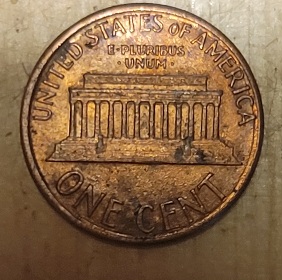
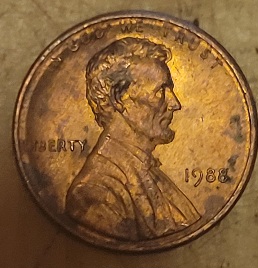
Maybe. Need a closer in focus picture of the FG.
|
|
Moderator
United States
106433 Posts |
Yes, a WAM - normal for this year. (and all other years dated between 1959-1991) |
|
Bedrock of the Community
United States
10635 Posts |
 wrong year to check on all 88s.  |
|
Pillar of the Community
United States
586 Posts |
It's inaccurate to say WAM is normal for all 1988's or that it's the wrong year to check. As Coop points out, the proper diagnostic for the 1988 WAM (FS 901) is the shape of the designer initials and not the distance between the A and the M in America as it is in all the other Wide AM's (1998, 1999 & 2000). It's confusing that it's called a WAM, but it's what we're stuck with. Just remember when looking at a 1988 cent to check the shape and location of the FG and ignore the America spacing. |
|
Moderator
United States
106433 Posts |
Well the discussion is about the WAM, not the FG Variety (which IS something to look for) but this apparently happens only in 1988 - 1 year out of 32 years. So is this coin a WAM? Yes, it is a WAM, is it an FG Variety? Who knows with the given image provided  . |
|
Pillar of the Community
United States
1648 Posts |
Photos and info See https://www.error-ref.com/transitio...rse-of-1989/Some 1988 obverse dies from both the Philadelphia and Denver Mints were paired with the reverse of 1989. The Philadelphia issues are considered scarce while the Denver issues are considered rare. Frank Gasparo designed the reverse side of the Lincoln Cent from 1959-2008. So his letters "FG" appear on the rear of the coin near the right side of the columns. It is referred to as Bold Lettering instead of the thinner lettering. This bold lettering is a mistake. It was intended for 1989 coins. The 1988 D bold lettering is harder to find. Here is the differences in the lettering. The bold FG (top) has a serif on the G. .It is the extra metal that points back and the bold FG is also closer to the base of the monument: 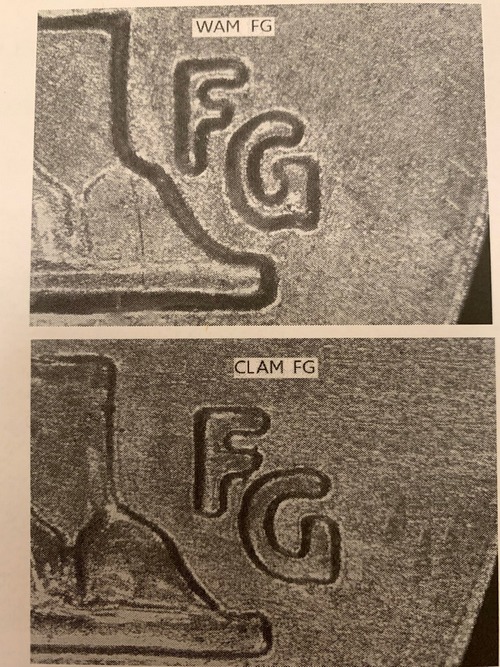 1988 Reverse of 89 Lincoln, p100 strike it rich with pocket change 5th edition book. cherrypickers fs-901, coneca rdv-006, wexler LMRD-006. circulated value 50-75, uncirculated 125-200 Look at FG on reverse of 1988 Lincoln cents. look for bold lettering with strong clear serifs on the G of FG. Also called 1988 Wide AM Bold lettering instead of thinner lettering. 1988-d Reverse of 1989 d harder to find than p. p101 strike. Cherrypickers FS-901, coneca RDV-006, wexler LMRD-006. Circulated 100-125, uncirculated 225-350. Note high grade examples can sell for much more as these are typical pocket change condition values. See coop's post if you need further clarification. Edited by datadragon
01/03/2023 12:33 am
|
|
Pillar of the Community
United States
586 Posts |
Quote:Well the discussion is about the WAM, not the FG Variety The variety in question is known as the 1988 WAM (FS 901). I understand the use of the term WAM in the description of the variety is confusing since what distinguishes the variety is not the " Wide AM" by which other similarly named varieties are identified. However, there is no "FG Variety", only the FS 901 which is known as the " Wide AM". |
|
Pillar of the Community
United States
7174 Posts |
But the FG is different in both cases. Thats how you distinguish the difference. And one big tell is, the reverse of 89 on an 88 will be from an early die state. The die was discovered early enough in the process to not develop into MDS or LDS.
|
|
Pillar of the Community
United States
586 Posts |
Quote:
But the FG is different in both cases. Thats how you distinguish the difference I agree completely and that's why we shouldn't be saying anything about the space between the A & M on the 1988 Wide AM variety. It's not what's used to determine the variety, it's the shape and location of the initials that are key. It confuses everyone that it's called the Wide AM, when the A&M have nothing to do with distinguishing it from other 1988's, but it confuses people even more when we say "Don't check that year" or "All 1988's are WAMs". |
|
Pillar of the Community
United States
1648 Posts |
The Cherrypicker's guide lists this coin in with the Wide AM varieties. Yes, this causes confusion to the newer collectors. The thing is, ALL 1988 cents were Wide AM actually. The reason it is listed there is because of the reverse of 1989 variety - in 1988 rare alternate reverses from both the Philadelphia and Denver mints were produced where the A and the M were Wide as normal but the FG initials were close to the memorial rather than far as they should be for that year. These are 1988 coins with the transitional year reverse of 1989. This variety has sometimes been unfortunately called the 1988 Wide AM even though a Wide AM is normal for that year. Near the end of 1988, there were several dies used to strike the reverse that were actually intended to be for the next year's run, 1989. These have become quite collectible and sought after. 1988 used the RDV-005 reverse design, but there were 7 dies that were RDV-006 and were used for 1988. There is a slight difference in the designers' initials. The RDV-005 is weaker, thinner. The 1989 reverse has enhanced initials with a bolder look. The G is also quite different with a flared look to it as mentioned before. The bold FG has a serif on the G. .It is the extra metal that points back and the bold FG is also closer to the base of the monument: These images are labeled properly to clarify: 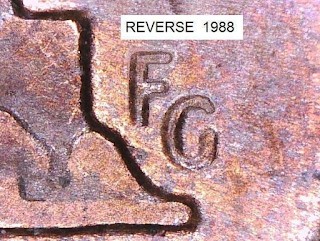 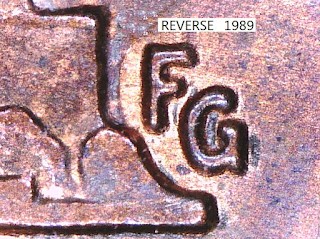 Edited by datadragon
01/03/2023 10:09 pm
|
| |
Replies: 12 / Views: 2,977 |
|











 Posted 01/02/2023 6:18 pm


