| Author |
 Replies: 5 / Views: 665 Replies: 5 / Views: 665 |
|
|
Pillar of the Community
Canada
5293 Posts |
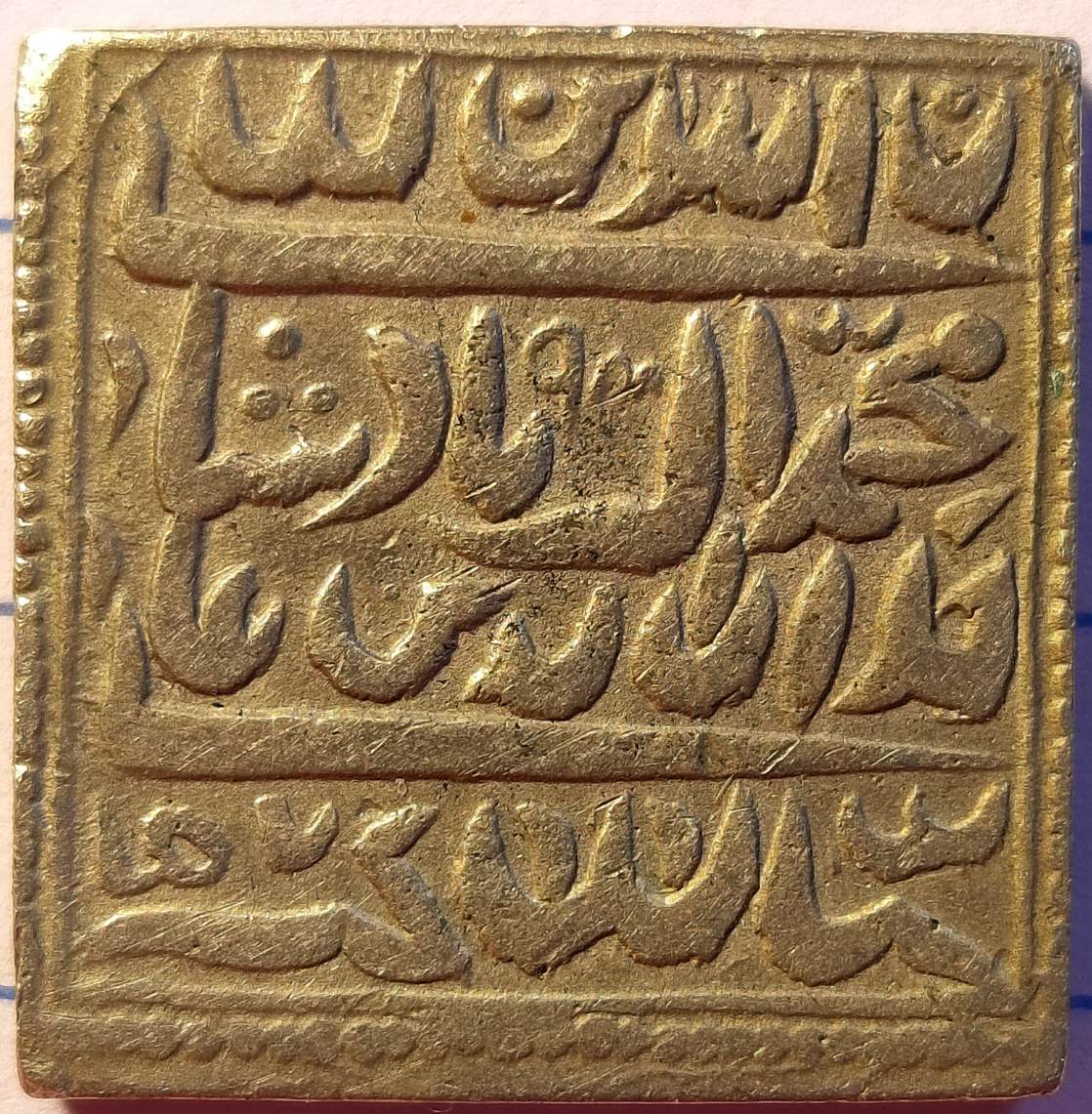 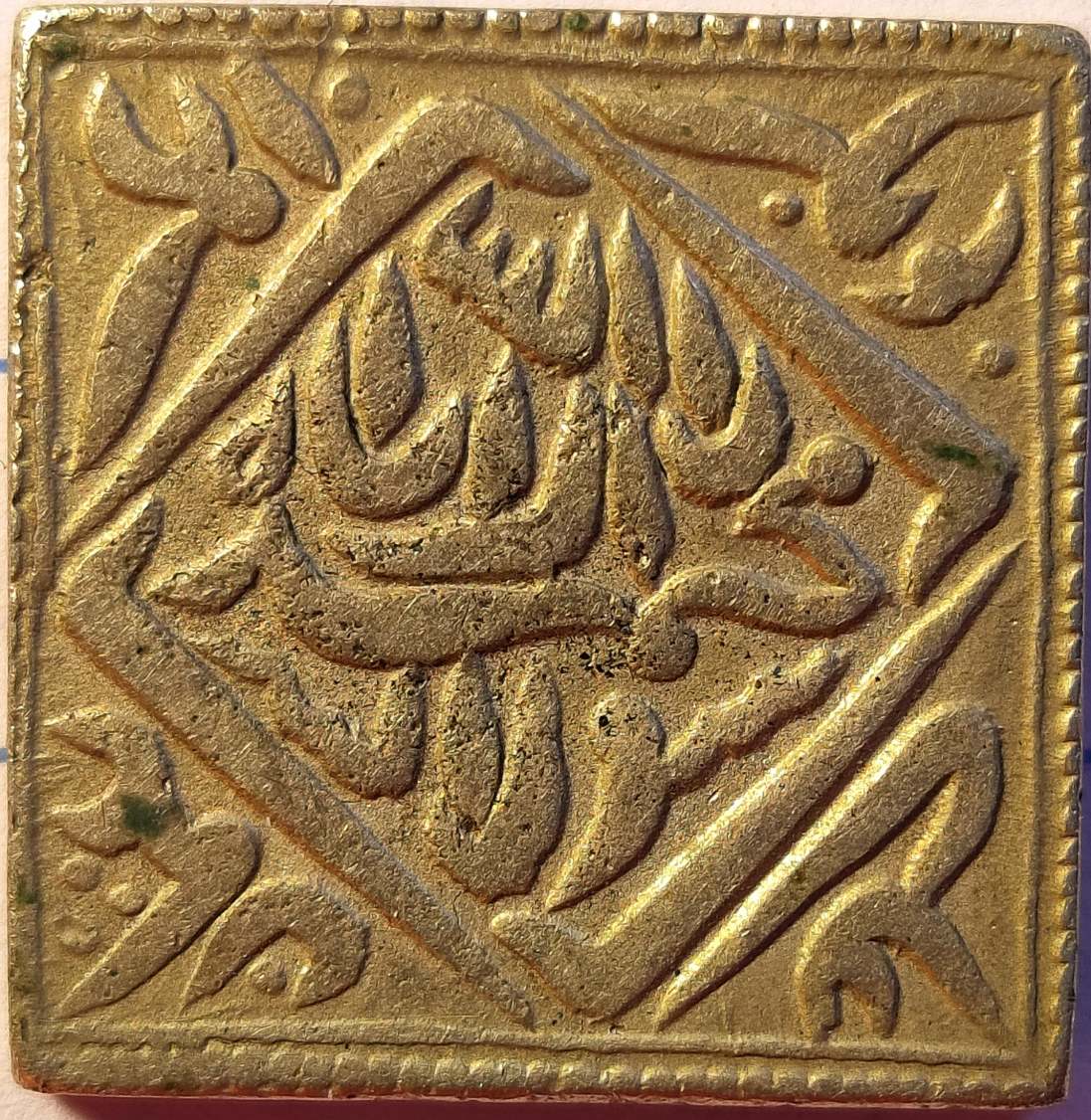 This weighs 12.75 grams, 22 millimeters wide. The yellow colour is an artifact of my light, they really are a silvery colour. I bought a lot of these who said that they were Islamic tokens, made of silver, used (ca) 1900 in place of actual coins. They are clearly in the style of some of the old silver rupees. They were not that expensive; I bought them as a lark and took the chance of them being something less interesting. All of them are similar. What I cannot find out is any information on their actual use or exactly why they were used or what the inscription says. The actual value is not that important, nor is the metal content, although they are still useful bits of information.
|
|
|
|
Moderator
 Australia
17006 Posts |
They are "Indian temple tokens". And yes, we know Muslims don't have "temples", but that's just the general name of the category of object. "Indian temple tokens" come in Hindu, Islamic, Jain and Sikh forms, though the first two are by far the most common. Though Western numismatists slather them all into one broad category like that, their practical uses in India are quite different for the different faiths. Hindu temple tokens are used in household rituals to venerate the gods; Islamic ones are more reminders of their faith, often carried by pilgrims while on the Hajj to Mecca. In neither faith do the tokens have any kind of monetary substitute function, so technically, they're small "medals" rather than "tokens", but it's too late to change the nomenclature now. They are also sold as souvenirs at local holy sites within India, so in that sense they also serve a similar purpose to Western "tourist dollars".
Your token is roughly designed on the square silver rupees of Mughal emperor Akbar, but there are several notable differences. They come in two common variants: one without a date, and one with a fictitious date "988", which was copied from the original rupee. Yours has the "988" numerals on it (top pic, just above centre, looks kind of like "9M"), though the numbers are slightly garbled, as is the rest of the Arabic script. It would of course have been made long after AH 988 (AD 1580), most likely mid-20th century when mass-producing base-metal tokens became fashionable.
Some early temple tokens are made of silver, but most are more modern and made of a nickel-brass alloy that "looks silvery". This alloy often shows up yellowish-tinted in photographs, even though they look silvery in hand, which makes me think that this is the case for your coins.
Don't say "infinitely" when you mean "very"; otherwise, you'll have no word left when you want to talk about something really infinite. - C. S. Lewis
|
|
Moderator
Australia
17006 Posts |
And for info and further examples of Indian temple tokens, see the Zeno.ru index page of Indian Temple tokens. For coins like yours, click Muslim > Tokens imitating coinage of Akbar > with Kalima in diamond-shaped legend. Don't say "infinitely" when you mean "very"; otherwise, you'll have no word left when you want to talk about something really infinite. - C. S. Lewis
|
|
Valued Member
United States
58 Posts |
oriole, Very interesting token. Thanks for sharing!  Sap, Thanks for sharing the info on these. |
|
Pillar of the Community
 Canada
5293 Posts |
@sap, thanks. I was wondering if these were the same as the "temple tokens", but this explanation is the only one that I have seen that provides the necessary clarification.
If they are not silver, I overpaid, but it would be easy enough to test them.
|
|
Pillar of the Community
Canada
5293 Posts |
As a matter of interest, I finally did a density test of this lot (7 of them). 2 of them were silver, 1 may have been base silver, the others were base metal.
|
| |
Replies: 5 / Views: 665 |
|








 Posted 01/03/2023 6:33 pm


