



Coin Community Family of Web Sites Join Thousands of Coin, Bullion, & Money Collectors
Royal Canadian Mint products, Canadian, Polish, American, and world coins and banknotes. Specializing in Modern Numismatics Vancouvers #1 Coin and Paper Money Dealer Shop for APMEX Bullion on eBay!300,000 items to help build your collection! Join Thousands of Coin, Bullion, & Money Collectors Coin, Banknote and Medal Collectors's Online Mall


Username:
Password:
Save Password
Forgot your Password?


This page may contain links that result in small commissions to keep this free site up and running.

Welcome Guest! Registering and/or logging in will remove the anchor (bottom) ads. It's Free!

Different Kind Of Lamination?

To participate in the forum you must log in or register.
Author Previous TopicReplies: 12 / Views: 591Next Topic  
Valued Member

United States
79 Posts
 Posted 01/23/2023  3:02 pm Show Profile   Bookmark this topic Add Satchmo64 to your friends list Get a Link to this Message Number of Subscribers
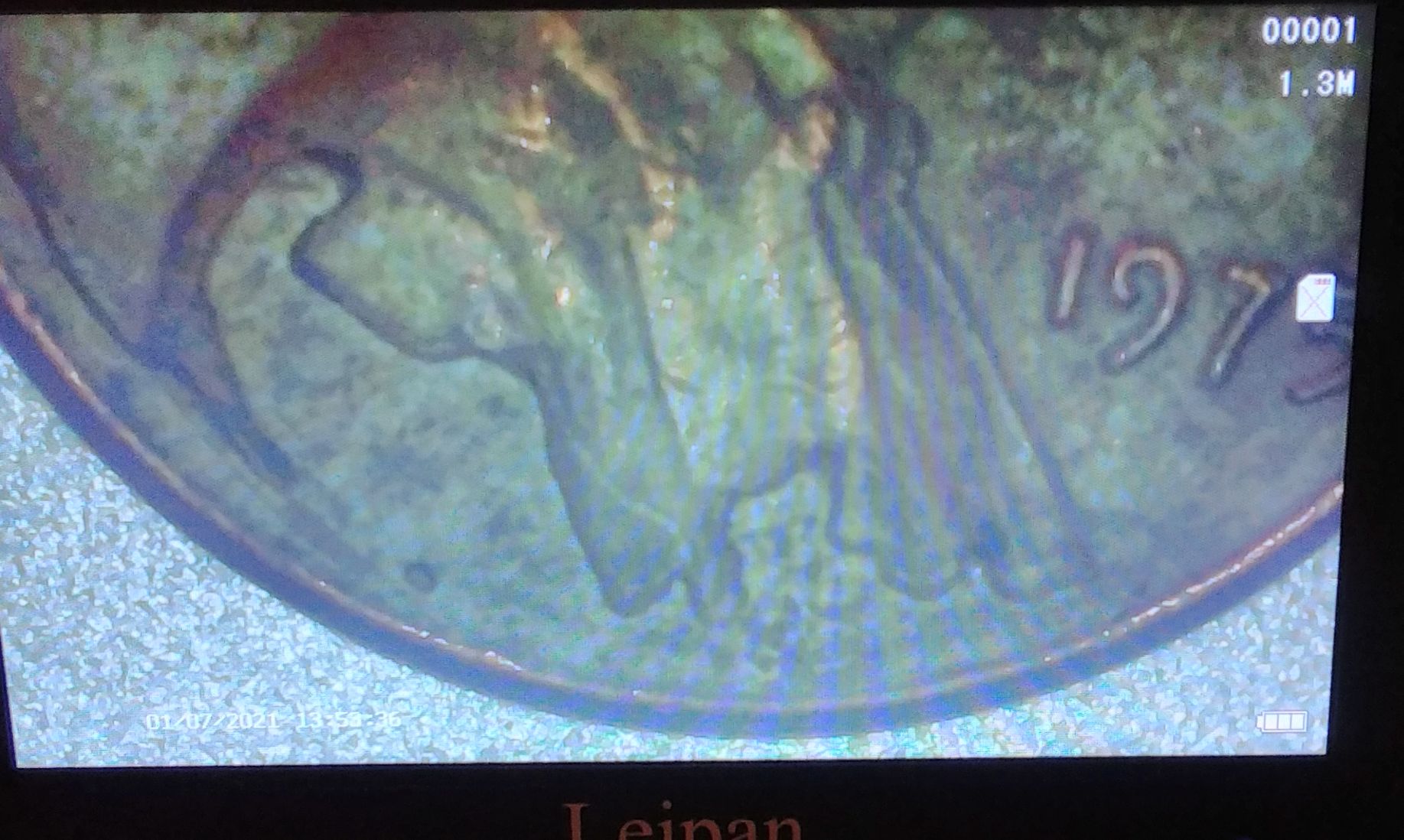
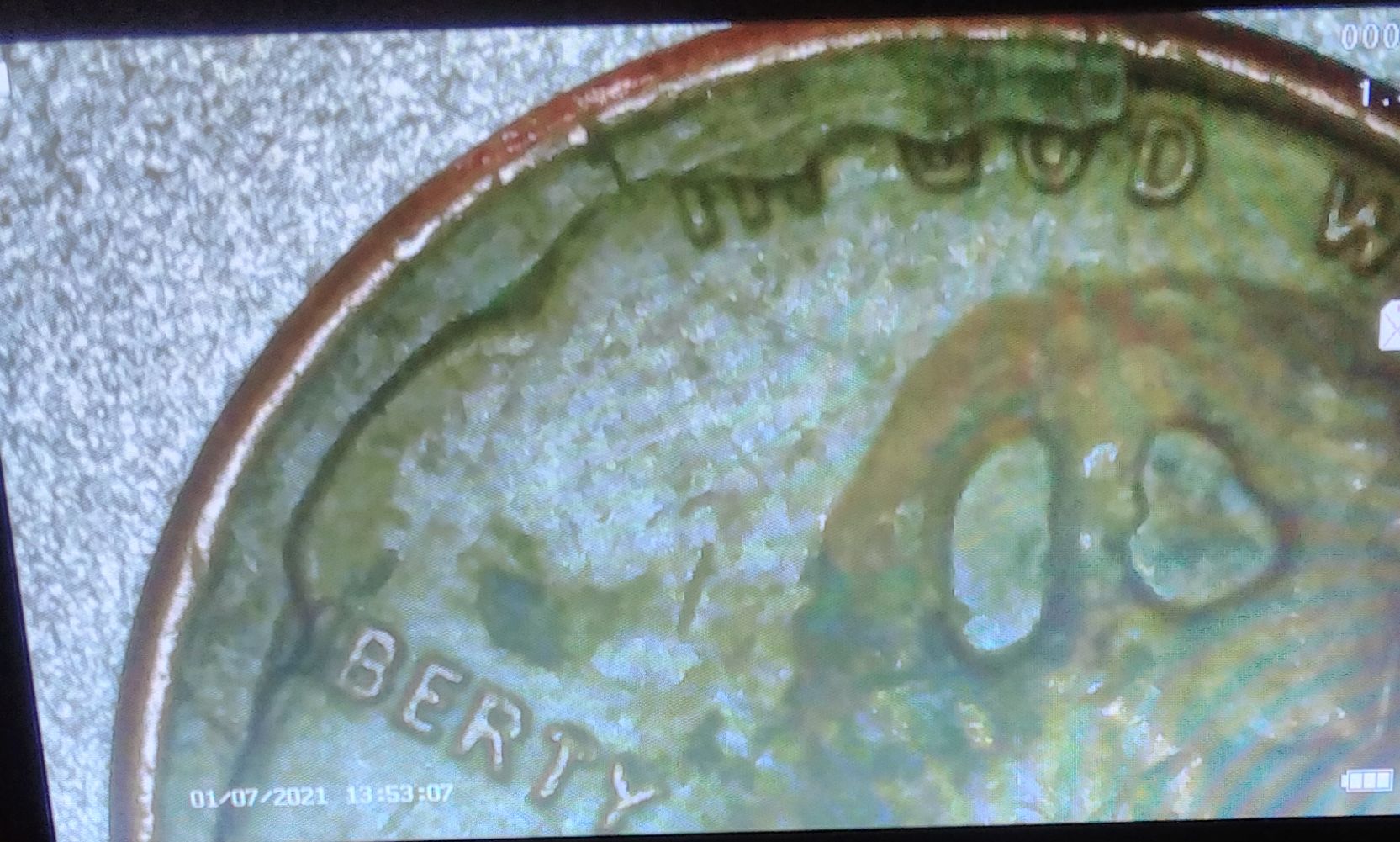
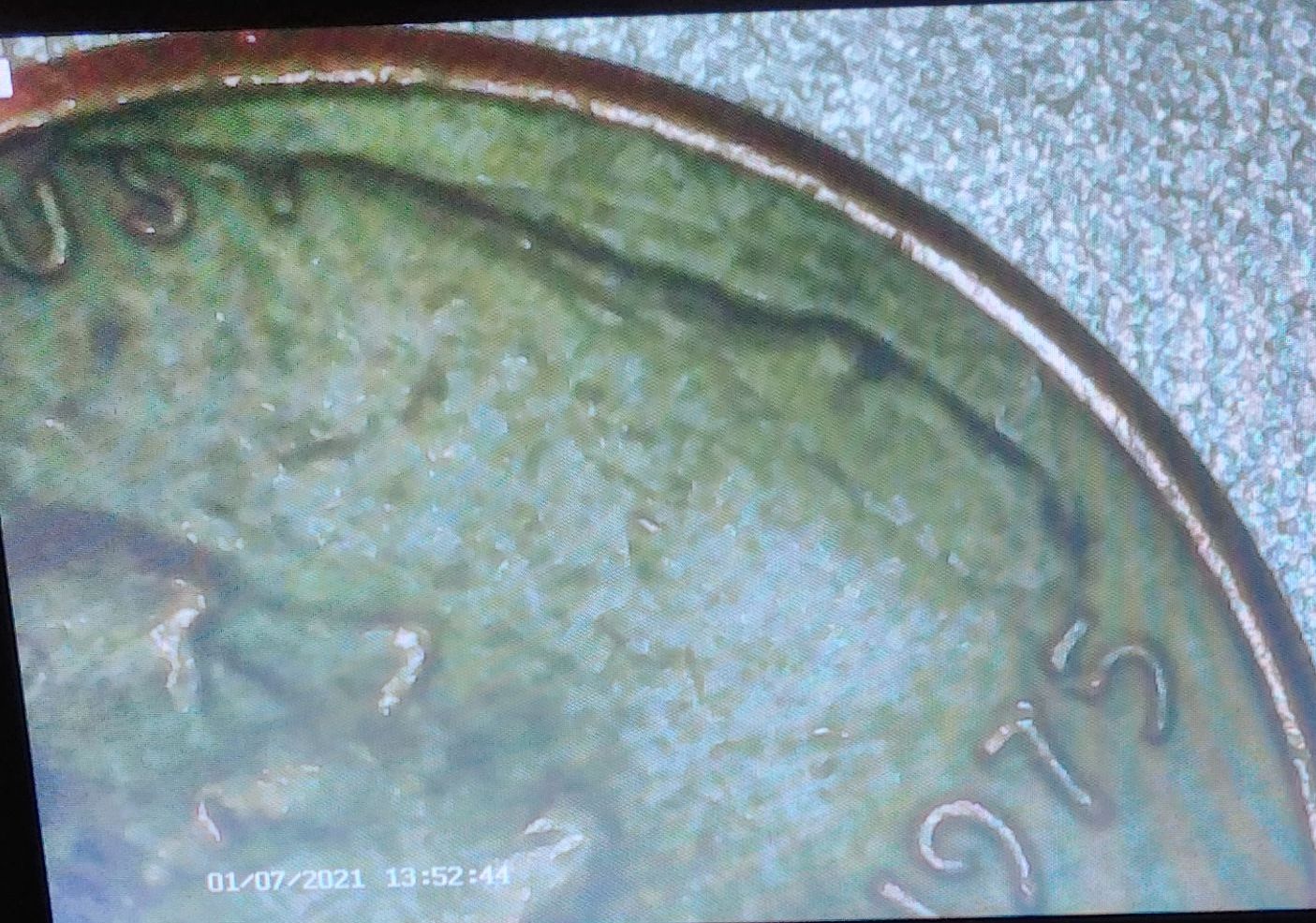
Been roll hunting for quite a while but I never ran across anything like this one. It's not erosion bcuz it's the opposite of erosion. On top above the surface. 75 Lincoln found random search. The other side is just fine. It's not glue or epoxy it's copper. Anyone ever find anything like this. ?
Different-Kind-Of-Lamination?
Moderator
Learn More...
Dearborn's Avatar
United States
95936 Posts
 Posted 01/23/2023  3:06 pm  Show Profile   Bookmark this reply Add Dearborn to your friends list Get a Link to this Reply
That looks like some kind of adhesive (glue, epoxy) or something. If it were copper, it would not be see-through. I can see the lettering of 'IN GOD" and the ST of States, and also the L of liberty under the substance on this coin.
Edited by Dearborn
01/23/2023 3:13 pm
Moderator
Learn More...
Dearborn's Avatar
United States
95936 Posts
 Posted 01/23/2023  3:08 pm  Show Profile   Bookmark this reply Add Dearborn to your friends list Get a Link to this Reply
Also, Please don't up load images of images (screen shots) they are too pixelated for close examination. Upload the actual images your scope takes please.
Bedrock of the Community
Coinfrog's Avatar
United States
94367 Posts
 Posted 01/23/2023  3:26 pm  Show Profile   Bookmark this reply Add Coinfrog to your friends list Get a Link to this Reply
Looks like a foreign substance of some sort.


to the CCF!
Valued Member
United States
79 Posts
 Posted 01/23/2023  3:41 pm  Show Profile   Bookmark this reply Add Satchmo64 to your friends list Get a Link to this Reply
The original pics I had to crop in order to fit the required size They are not screen shot. Sorry about all the pics first time posting and my phone doesn't upload sometimes. Also of course you can see the words bcuz they are not the part that is effected. Just tiny parts of the words. I have this thing under a scope and I always rule out epoxy and glue and other stuff bcuz I go through boxes of pennies and I am quite aware of all those things. The material is copper just like the rest of the coin. I didn't ask what It was I asked if anyone else has one basically. I'm no newb. 58. Been doing this a while.
Bedrock of the Community
coop's Avatar
United States
62064 Posts
 Posted 01/23/2023  3:42 pm  Show Profile   Bookmark this reply Add coop to your friends list Get a Link to this Reply
Glue is not a lamination issue. Post strike altered coin.
Valued Member
United States
79 Posts
 Posted 01/23/2023  3:56 pm  Show Profile   Bookmark this reply Add Satchmo64 to your friends list Get a Link to this Reply
Actually the part in the middle is obviously epoxy of some type but I put the microscope all the way down to get a really close view and it's definitely copper around the edges.
Bedrock of the Community
ijn1944's Avatar
United States
19155 Posts
 Posted 01/23/2023  4:19 pm  Show Profile   Bookmark this reply Add ijn1944 to your friends list Get a Link to this Reply
Suggest giving the coin a long soak in 100% acetone--might not do anything if epoxy is involved, but will reduce most other non-metallic crud.
Pillar of the Community
Chase007's Avatar
United States
7510 Posts
 Posted 01/23/2023  4:22 pm  Show Profile   Bookmark this reply Add Chase007 to your friends list Get a Link to this Reply
It sure is different as mentioned it looks like it is some form of glue/gunk/ foreign substance ,how it got on it is not important, know that it did not leave the mint looking that way....
Pillar of the Community
Learn More...
Cujohn's Avatar
United States
7174 Posts
 Posted 01/23/2023  7:17 pm  Show Profile   Bookmark this reply Add Cujohn to your friends list Get a Link to this Reply
The middle is glue, but the edge is not. Acetone it.
Moderator
Learn More...
Sap's Avatar
Australia
16827 Posts
 Posted 01/23/2023  10:26 pm  Show Profile   Bookmark this reply Add Sap to your friends list Get a Link to this Reply

Quote:
Actually the part in the middle is obviously epoxy of some type but I put the microscope all the way down to get a really close view and it's definitely copper around the edges.

I think Occam's razor applies here.

There are two postulated hypotheses to describe this coin:

1. The coin has glue, varnish or some similar foreign substance attached to it, and this is what is causing the odd lumps in the middle, and the odd lumps at the rims.

2. The coin is some kind of super-disintegrated die error with lots of gigantic rim Cuds, where lots of "extra copper" has been added to the rim yet somehow manages to still preserve some of the details underneath the " Cuds" (such as the L in LIBERTY), and then many years later, the coin was epoxy-glued onto a surface via a blog of glue only in the centre of the coin, on the same side as the weird mint error occurred, in such a way that it kind of looks like "epoxy" is the cause of both defects, but it really isn't.

Occam's Razor says that the "simplest" explanation is the one that's most likely to be true. And clearly, explanation 1 is the "simplest".

Whenever you see any kind of "error coin" or "damaged coin", Occam's Razor says that it's best to assume just a single event has caused all of the apparent damage. Because in 99.995% of cases, it is indeed all caused by a single event. Most coins don't have awesome mint errors on them, and most coins don't get epoxied onto something so that the glue sticks to it. Both events are rather improbable. Having multiple highly improbable coin-damaging events all happen to the same coin is extra-improbable.

I can assure you, that whatever the glop attached to this coin is, that it has caused both the lumps in the middle, and the lumps around the rims.
Don't say "infinitely" when you mean "very"; otherwise, you'll have no word left when you want to talk about something really infinite. - C. S. Lewis
Pillar of the Community
Chase007's Avatar
United States
7510 Posts
 Posted 01/24/2023  11:37 am  Show Profile   Bookmark this reply Add Chase007 to your friends list Get a Link to this Reply
Moderator
Learn More...
Dearborn's Avatar
United States
95936 Posts
 Posted 01/24/2023  12:27 pm  Show Profile   Bookmark this reply Add Dearborn to your friends list Get a Link to this Reply

Quote:
William of Ockham (circa 1287-1347) was an English Franciscan friar and theologian, an influential medieval philosopher and a nominalist. His popular fame as a great logician rests chiefly on the maxim attributed to him and known as Occam's razor. The term razor refers to distinguishing between two hypotheses either by "shaving away" unnecessary assumptions or cutting apart two similar conclusions.


Quote:
To quote Isaac Newton, "We are to admit no more causes of natural things than such as are both true and sufficient to explain their appearances. Therefore, to the same natural effects we must, as far as possible, assign the same causes."


Quote:
The razor's statement that "other things being equal, simpler explanations are generally better than more complex ones" is amenable to empirical testing. Another interpretation of the razor's statement would be that "simpler hypotheses are generally better than the complex ones". The procedure to test the former interpretation would compare the track records of simple and comparatively complex explanations. If one accepts the first interpretation, the validity of Occam's razor as a tool would then have to be rejected if the more complex explanations were more often correct than the less complex ones (while the converse would lend support to its use). If the latter interpretation is accepted, the validity of Occam's razor as a tool could possibly be accepted if the simpler hypotheses led to correct conclusions more often than not.


Quote:
One justification of Occam's razor is a direct result of basic probability theory. By definition, all assumptions introduce possibilities for error; if an assumption does not improve the accuracy of a theory, its only effect is to increase the probability that the overall theory is wrong.

I still say it is glue - Simple.

Edited by Dearborn
01/24/2023 12:27 pm
  Previous TopicReplies: 12 / Views: 591Next Topic  

To participate in the forum you must log in or register.


Disclaimer: While a tremendous amount of effort goes into ensuring the accuracy of the information contained in this site, Coin Community assumes no liability for errors. Copyright 2005 - 2026 Coin Community Family- all rights reserved worldwide. Use of any images or content on this website without prior written permission of Coin Community or the original lender is strictly prohibited.
Contact Us  |  Advertise Here  |  Privacy Policy / Terms of Use

Coin Community Forum © 2005 - 2026 Coin Community Forums
It took 0.38 seconds to rattle this change. Forums