| Author |
 Replies: 8 / Views: 1,576 Replies: 8 / Views: 1,576 |
|
|
New Member
United States
15 Posts |
|
|
|
|
Pillar of the Community
Canada
6244 Posts |
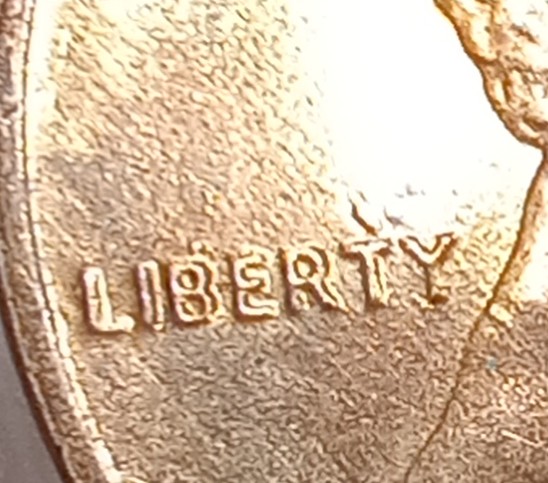
I do not see an error. But A Die event.
Please go to error-ref.com for the definition of a error coin
Edited by silviosi
02/16/2023 03:16 am
|
|
Moderator
 United States
56855 Posts |
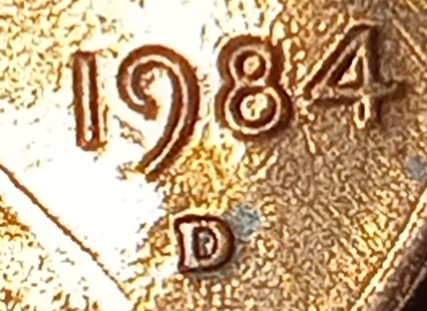
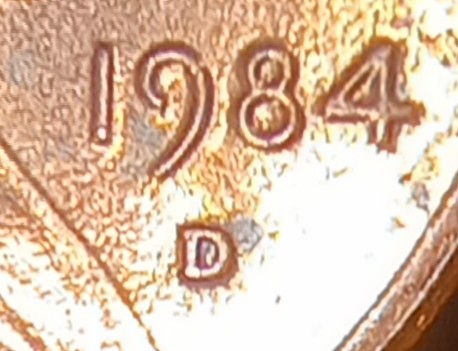
 Above T might be a plating bubble and I see a normal mint mark. John1  |
|
Bedrock of the Community
United States
19310 Posts |
Photos show a bit too much glare. Could be a plating bubble feature above the T. Mint mark could be showing hint of a minor split plating issue. Hard to tell.
|
|
Bedrock of the Community
Canada
21710 Posts |
to the CCF Neither one are considered an an error, just common events. |
|
Bedrock of the Community
United States
94367 Posts |
 to the CCF! |
|
New Member
 United States
15 Posts |
Silviosi, apologies, I am but am amateur. Would you mind terribly, would you define "die event" for me?
|
|
Moderator
United States
100400 Posts |
Way too much glare in the area of concern, I would go on to say possible plating bubbles., but need better images without the glare to be certain. Don't think that this is a 'die event' though. (when something damaged the die that is used to strike a coin - like Feeder Finger Damage, a dent, crack, or something similar, we call it a die event.) Edited by Dearborn
02/16/2023 11:57 am
|
|
Bedrock of the Community
United States
62064 Posts |
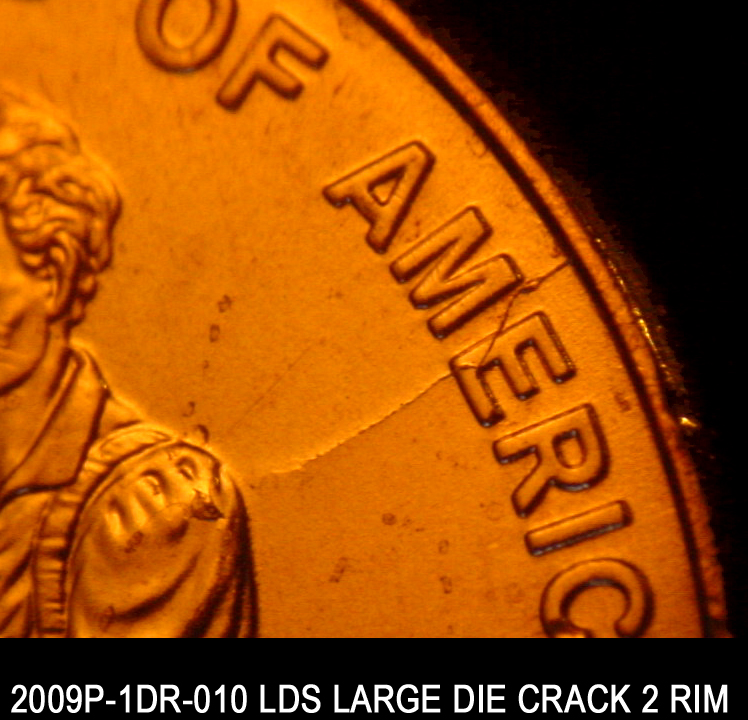
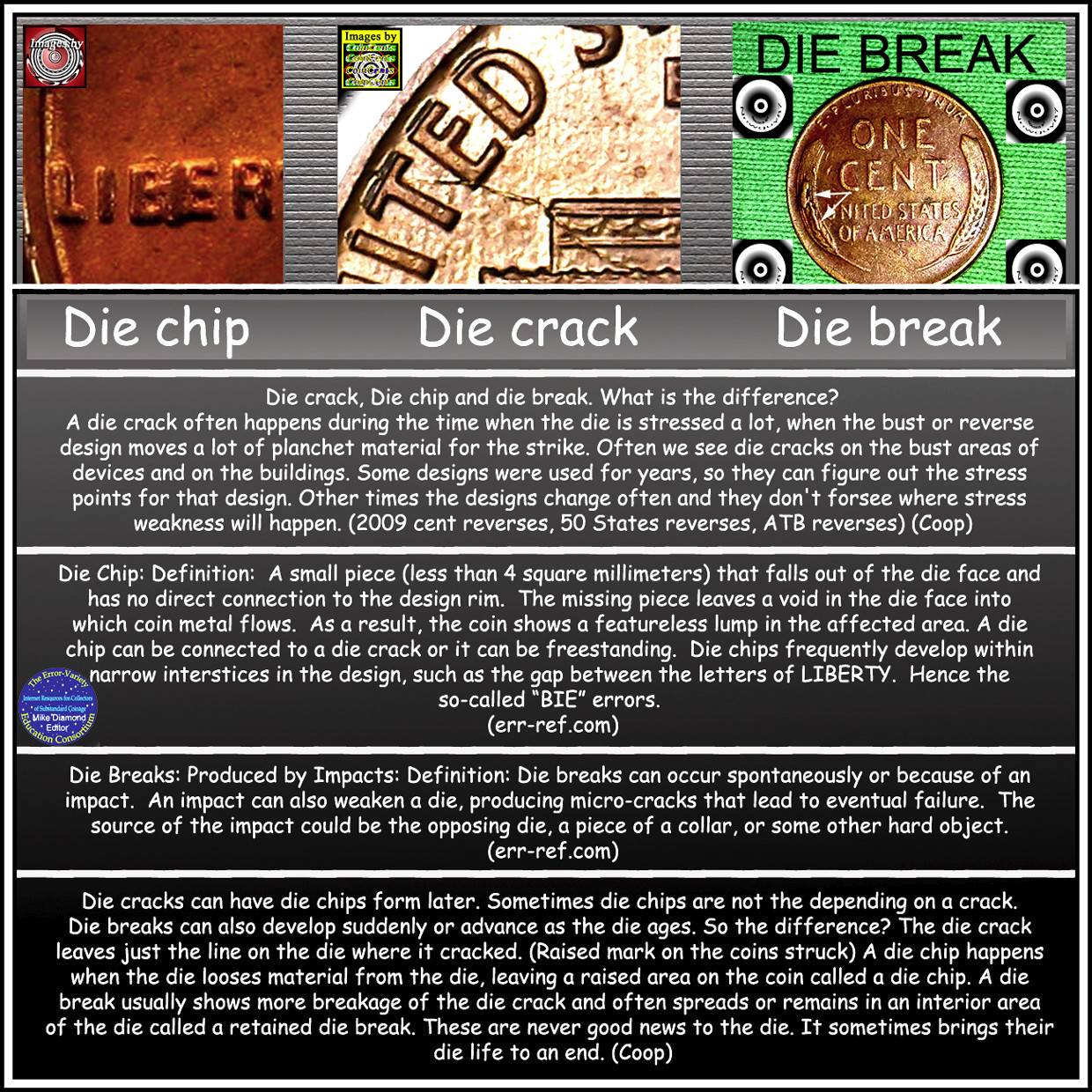
If this is raised on the coin, check to see if it pressed downwards with a toothpick. If so, then it is a linear plating bubble. (This has no issue with the dies) If this is raised on the coin, then it could be a die event. A die gouge making it raise above the fields. Die scratches which are smaller are from die polishing with a rough item like a wire brush. The die die was altered with a die event. Other die events: Die cracks, (the crack leave a void on the surface of the die. This will void will leave a raised area on the surface on the coins, seen on fields and designs, sometimes full across the die and other times looping from one rim to another area of the rim.
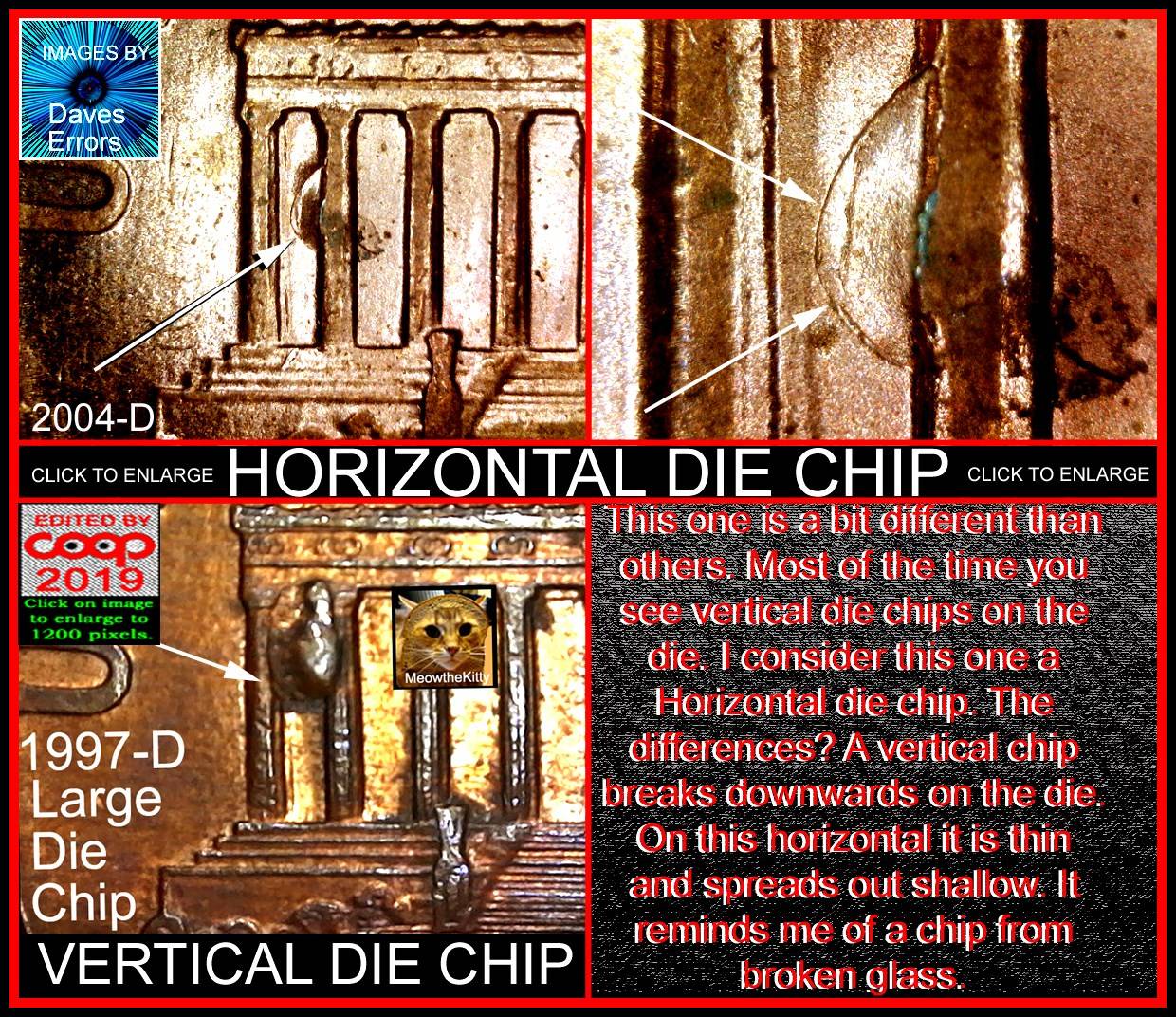
Die chips, These start out as part of the die crack, but develop when a small portion of the die breaks away from the dies surface)
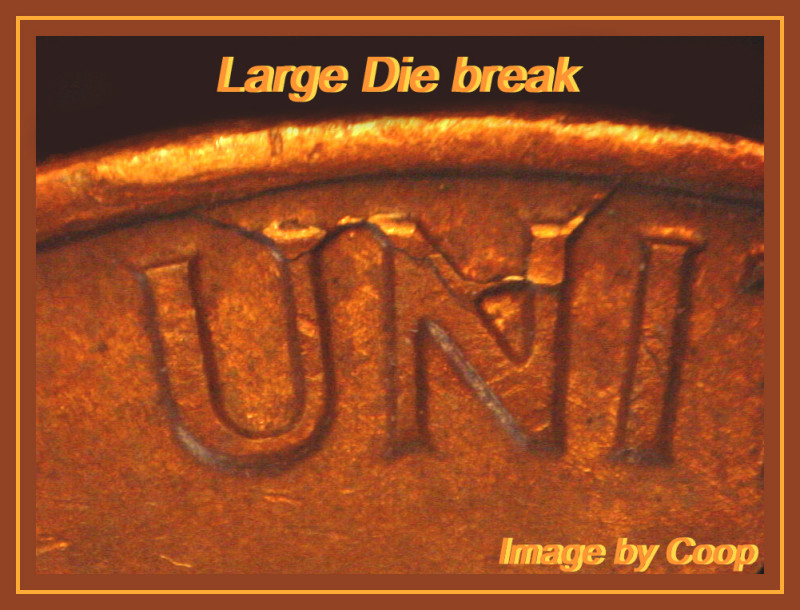
Die breaks, (These start out as die cracks, then chips, but the void on a break shows a larger area of the die loosing die metal)
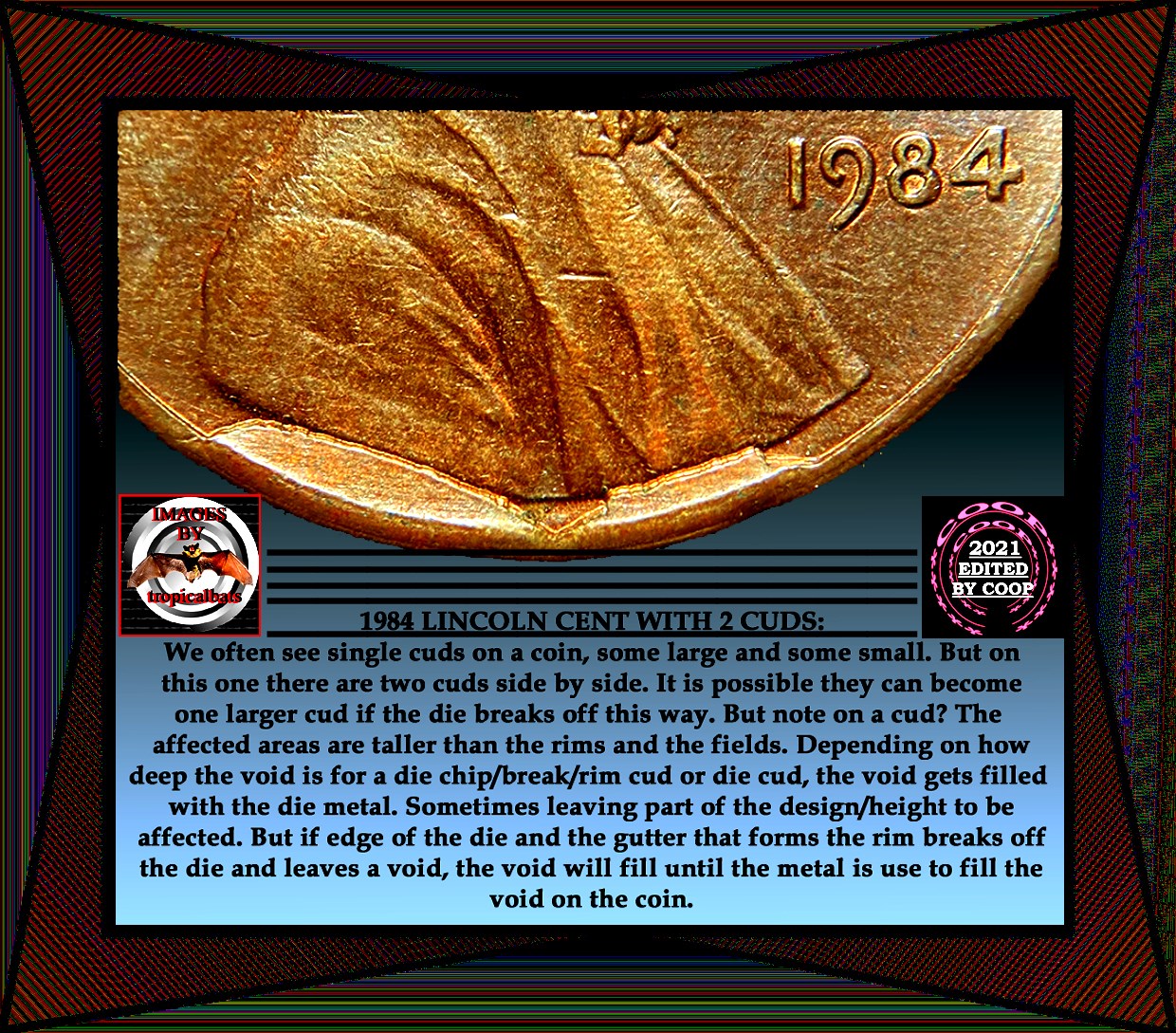
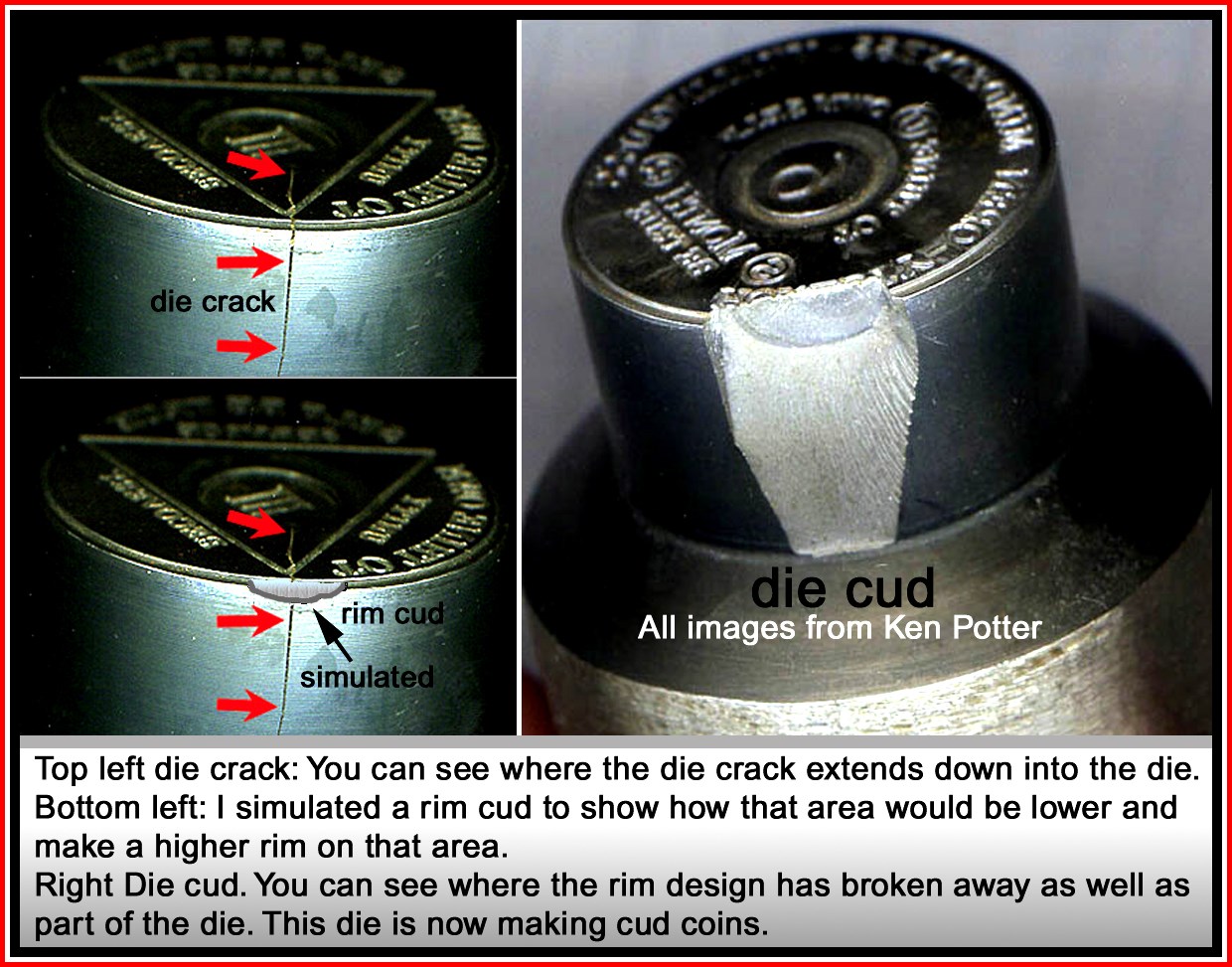
Die Cuds, (The breakway of the outer edge of the die, that will leave a raised area on coins struck with that die on the one side of the coin and the absence of strike on the opposite side of the coin)
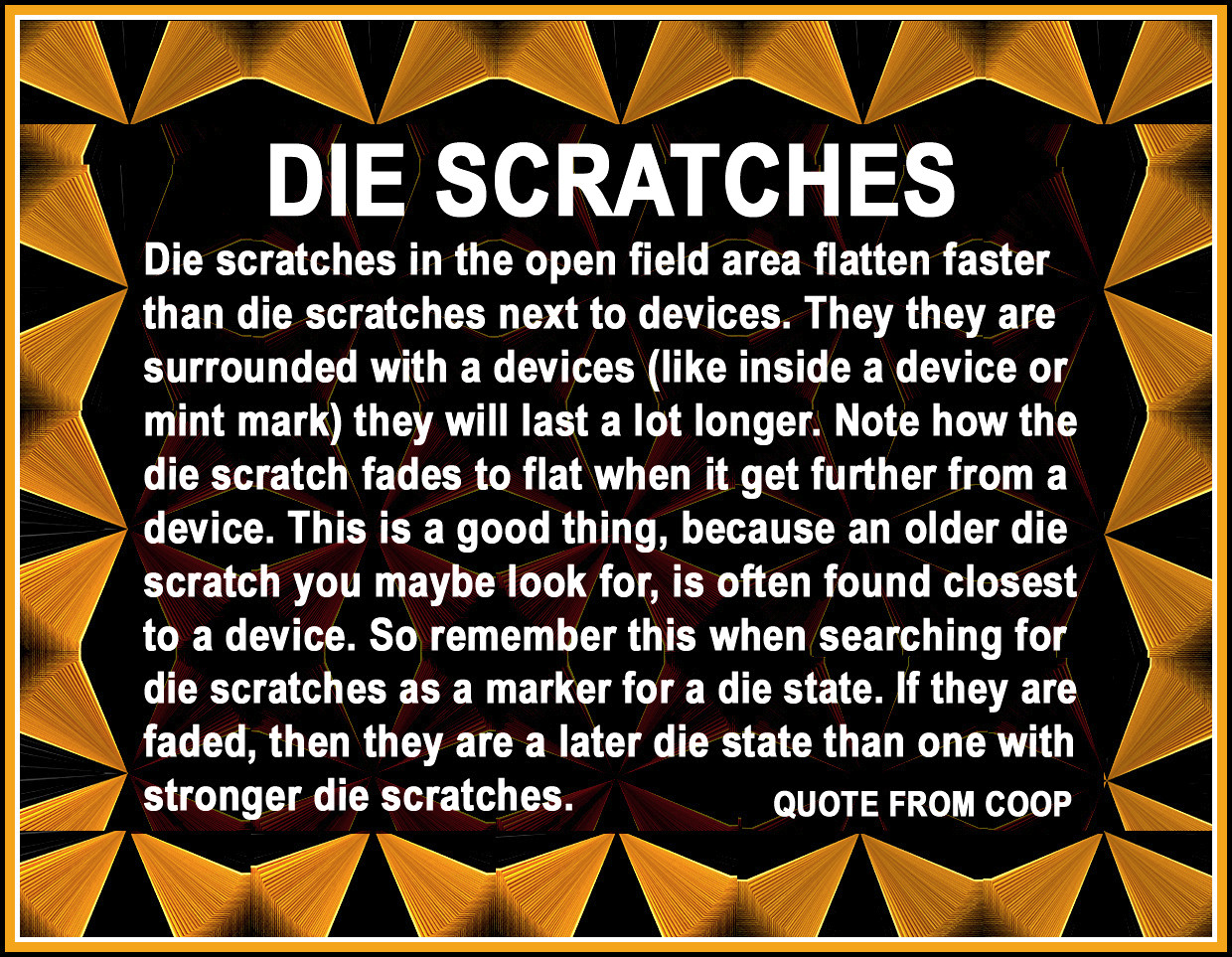
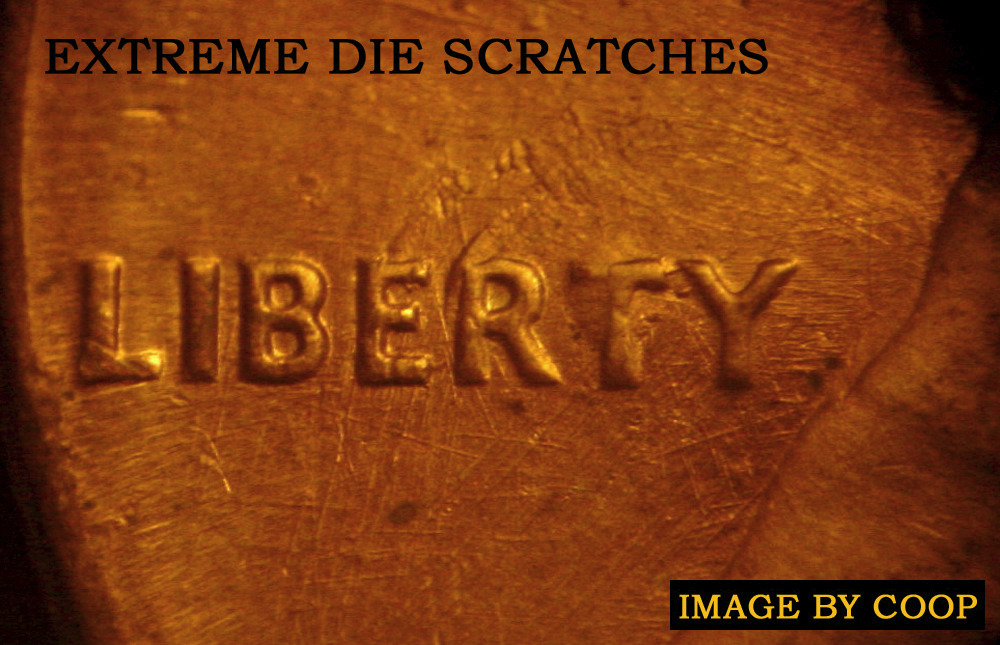
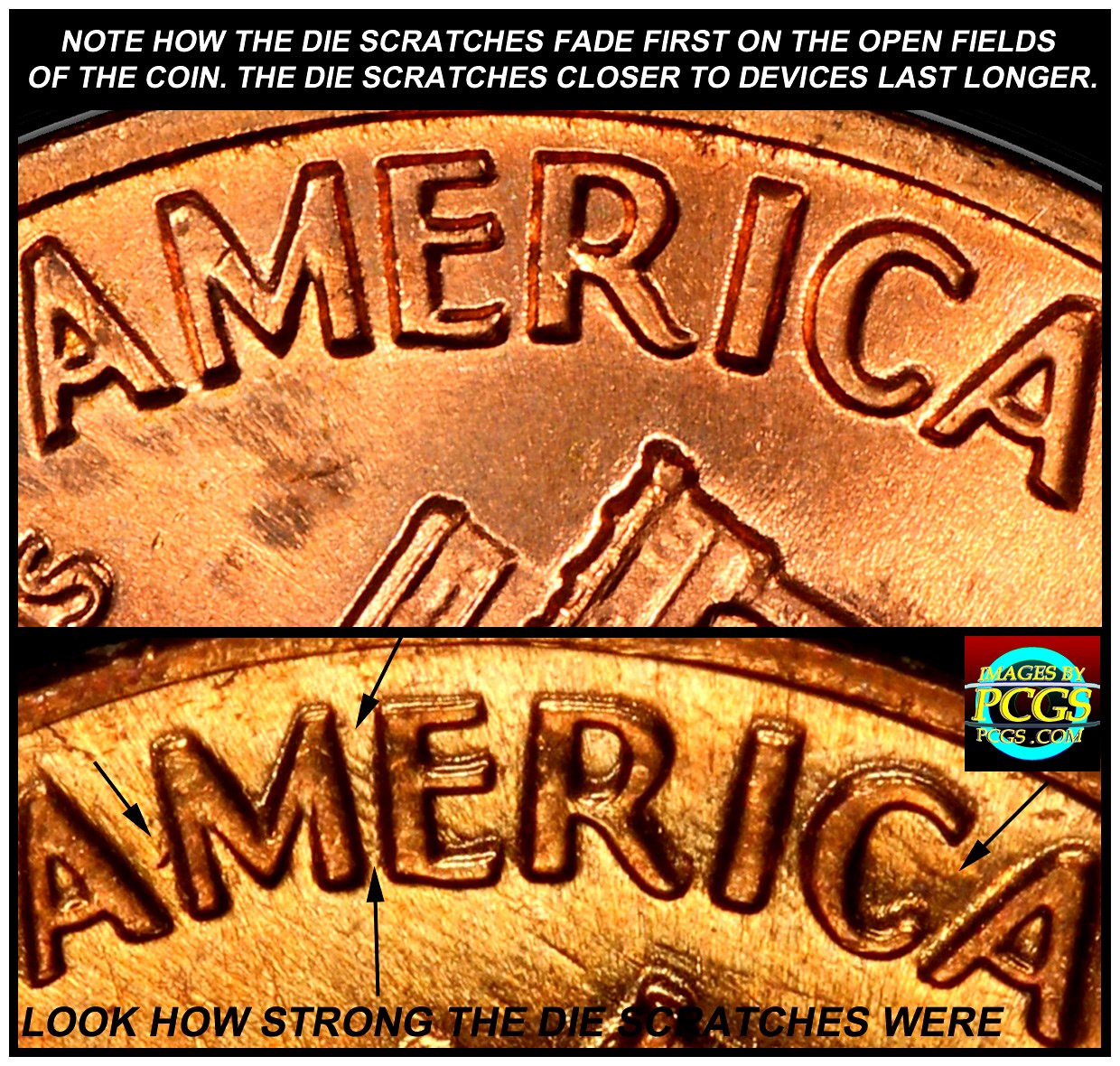
Die scratches, (part of the die polishing process that these fine scratches into the die, raised areas on the fields)
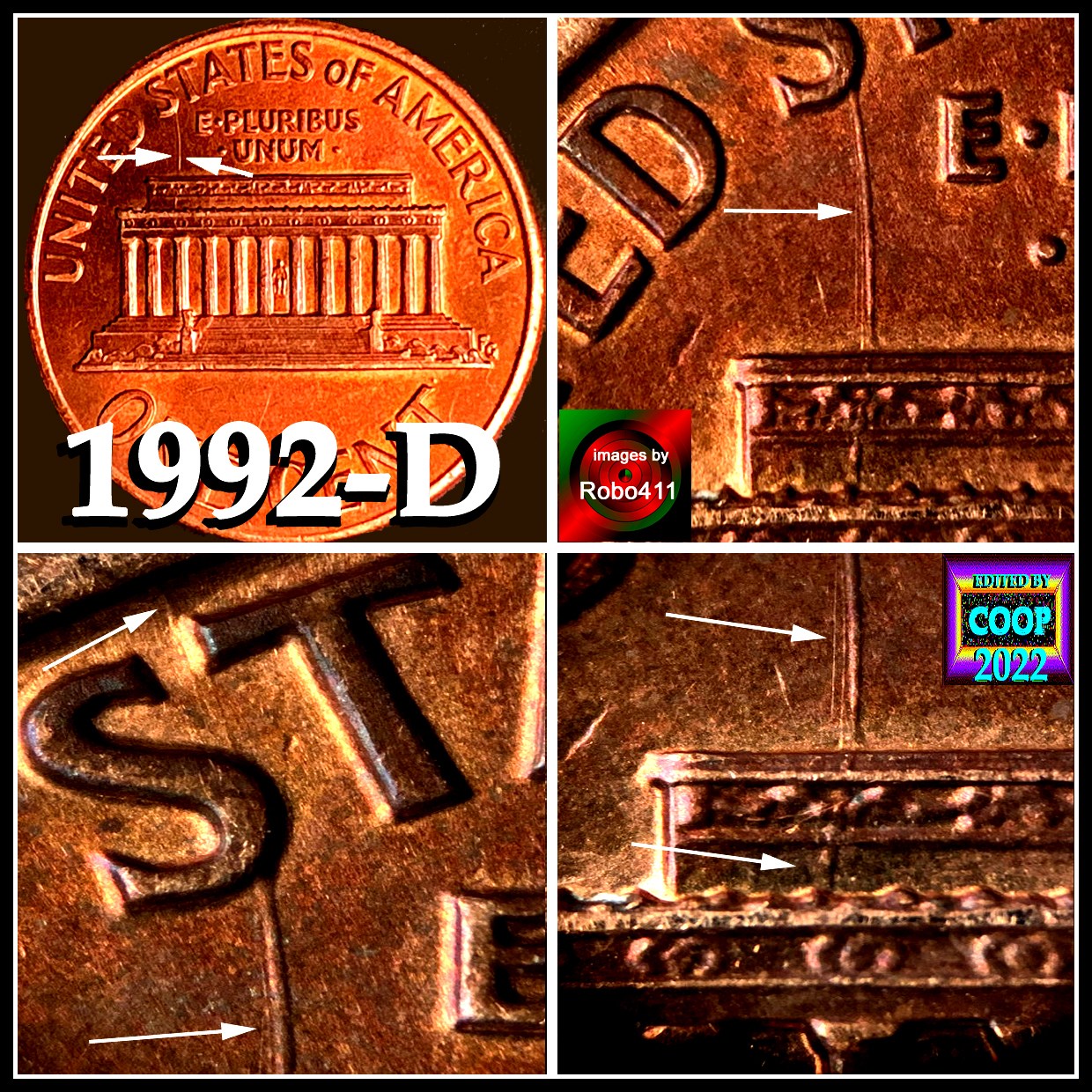
Die gouges, [Incuse marks into the die, that show up as raised areas on the coins)
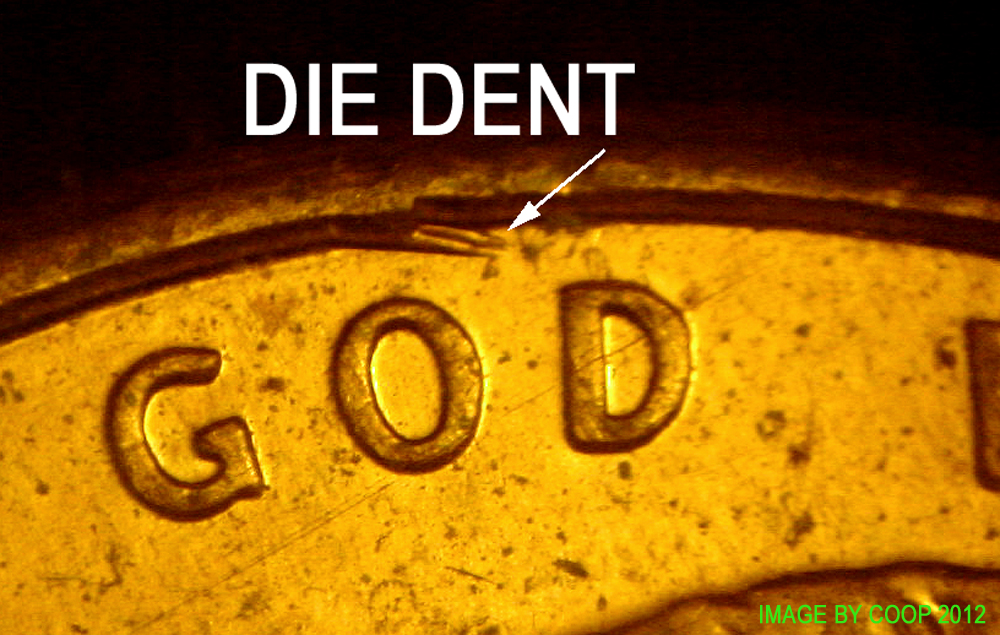
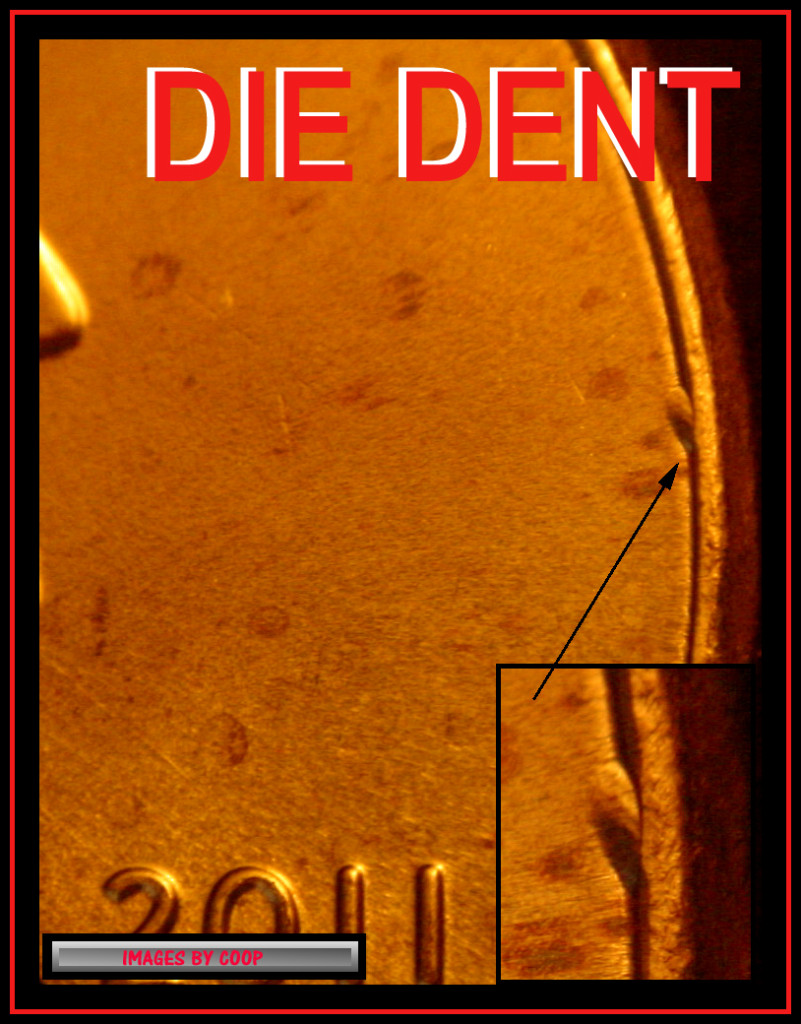
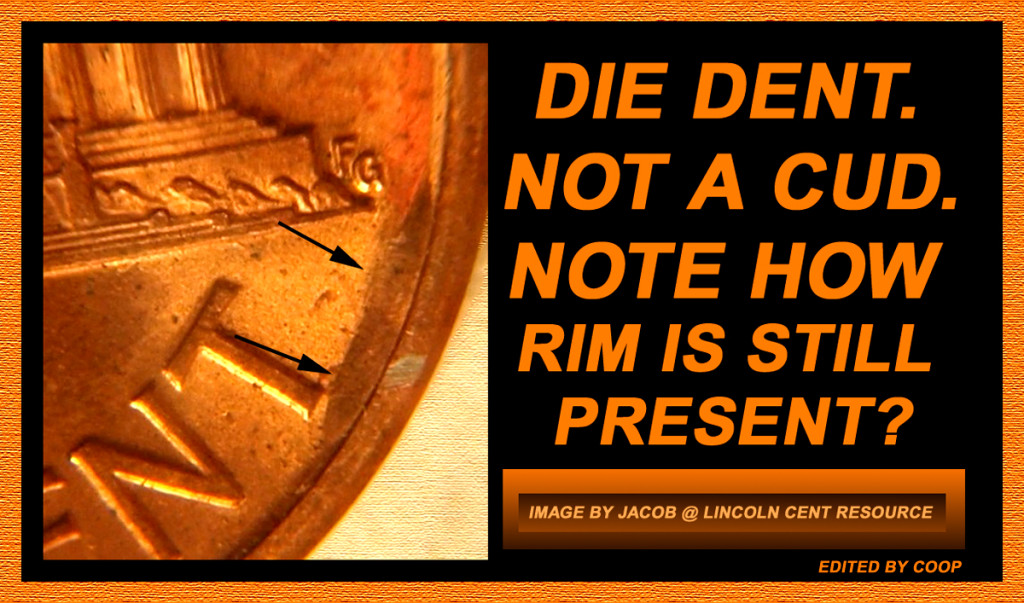
Die dents: (Damage to the die leaving an incuse mark on the die, making a raised area on the coins struck with that die)
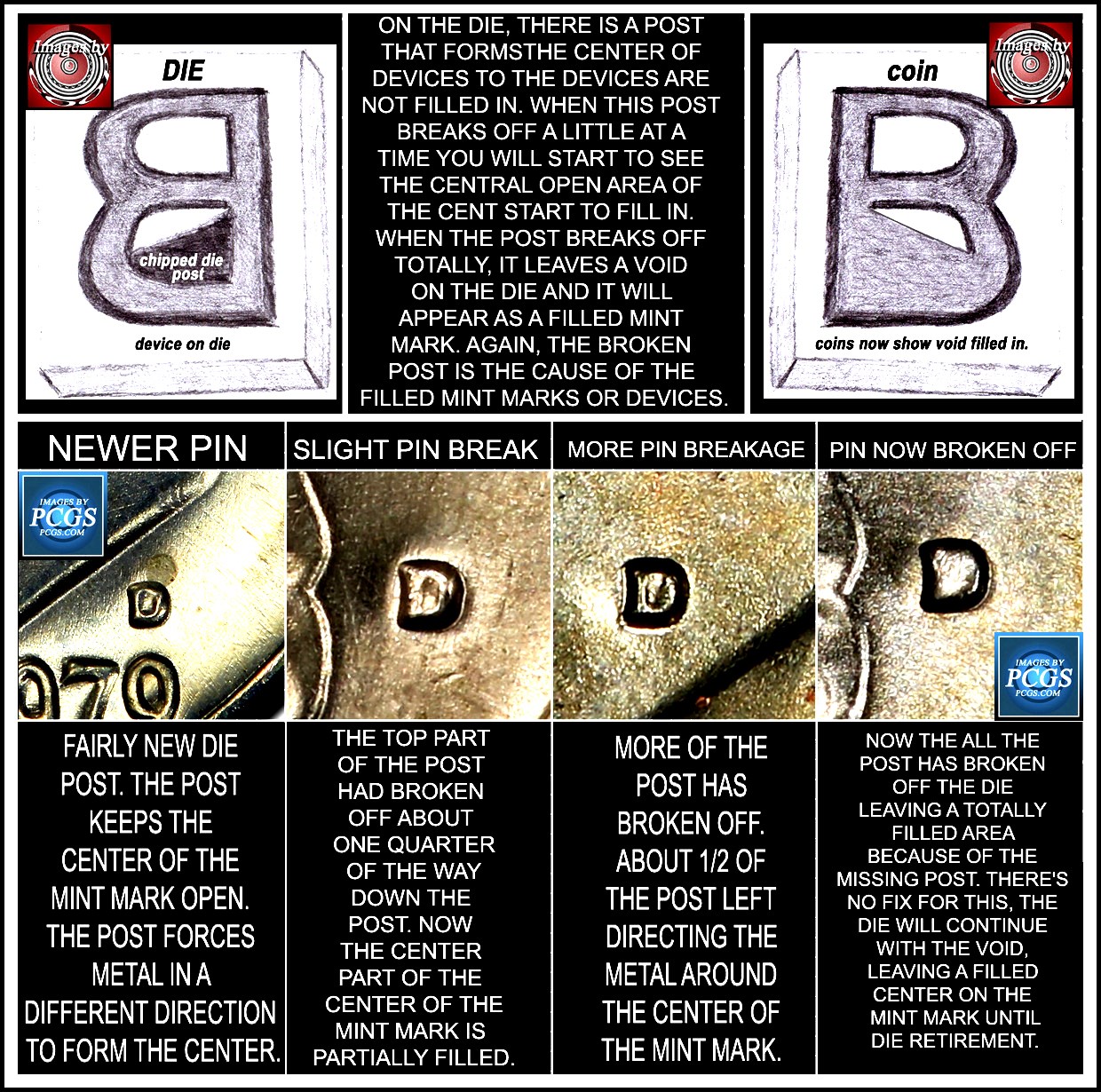
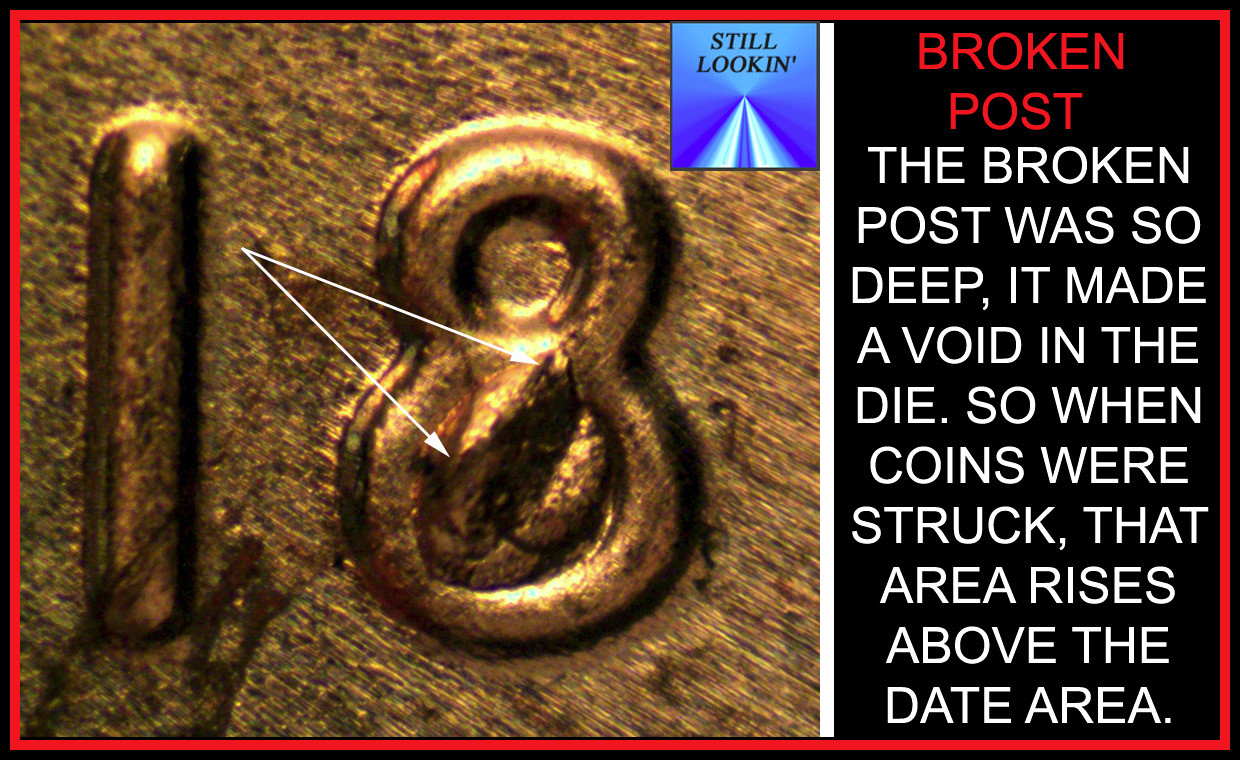
Die post breakaway, (The metal to form the center of a closed device forms the center of the device. This can be a slow break off or total. Even below the fields can rise over the tops of the devices)

Feeder Finger Damage are all terms or die events, that a die does go through doing its job. There are other alterations of the die, events that are not an aging event. Die polishing, die sanding, that are used to rescue a die a event, that could retire a die, or the die can be altered to be used again. Eventually all dies are retired with they have reached their end, or need.If the mark is incuse into the fields, (below the surface of the fields or design) it could be coin damage or a coin event that altered the coin post strike call coin damage. 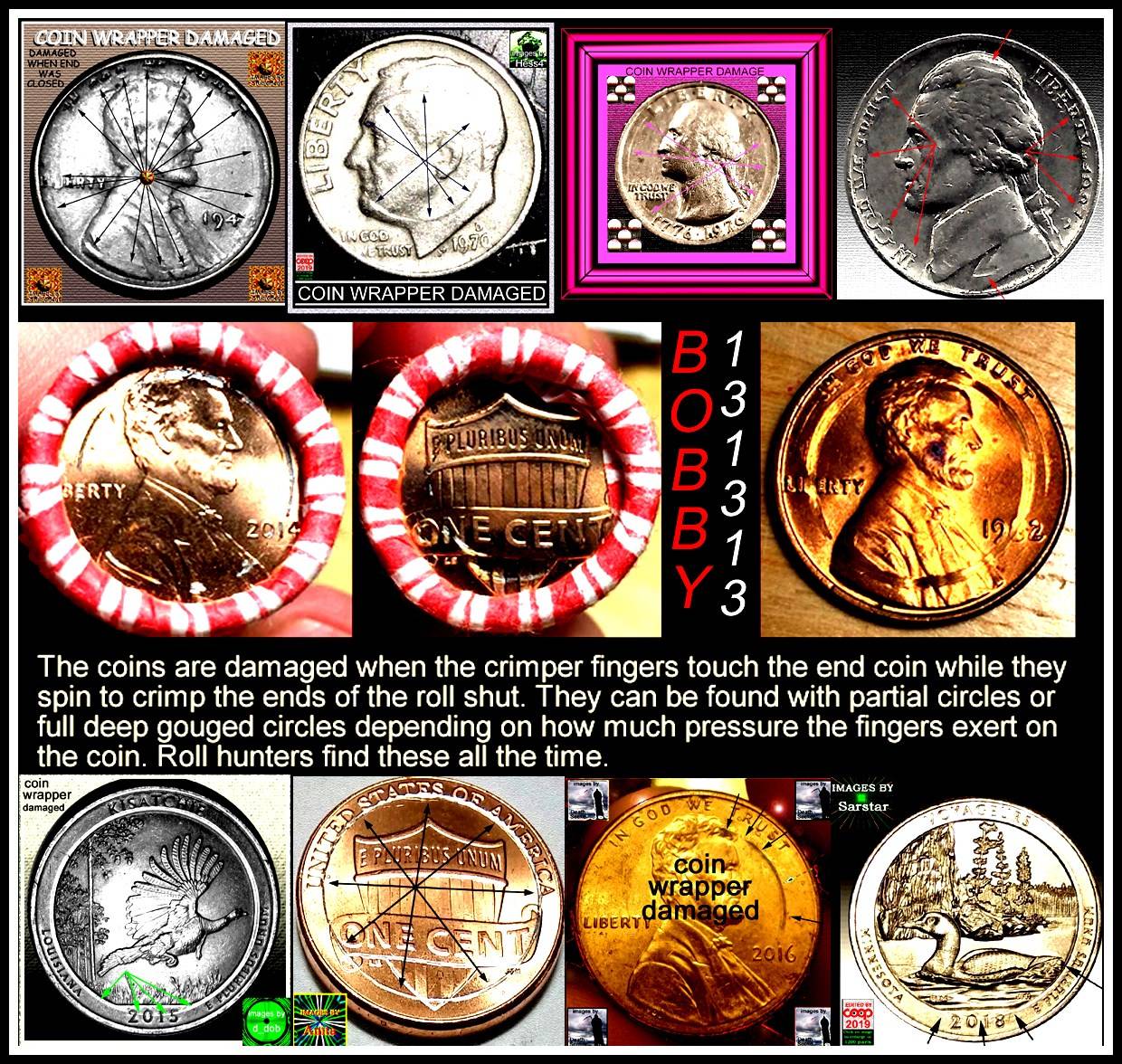 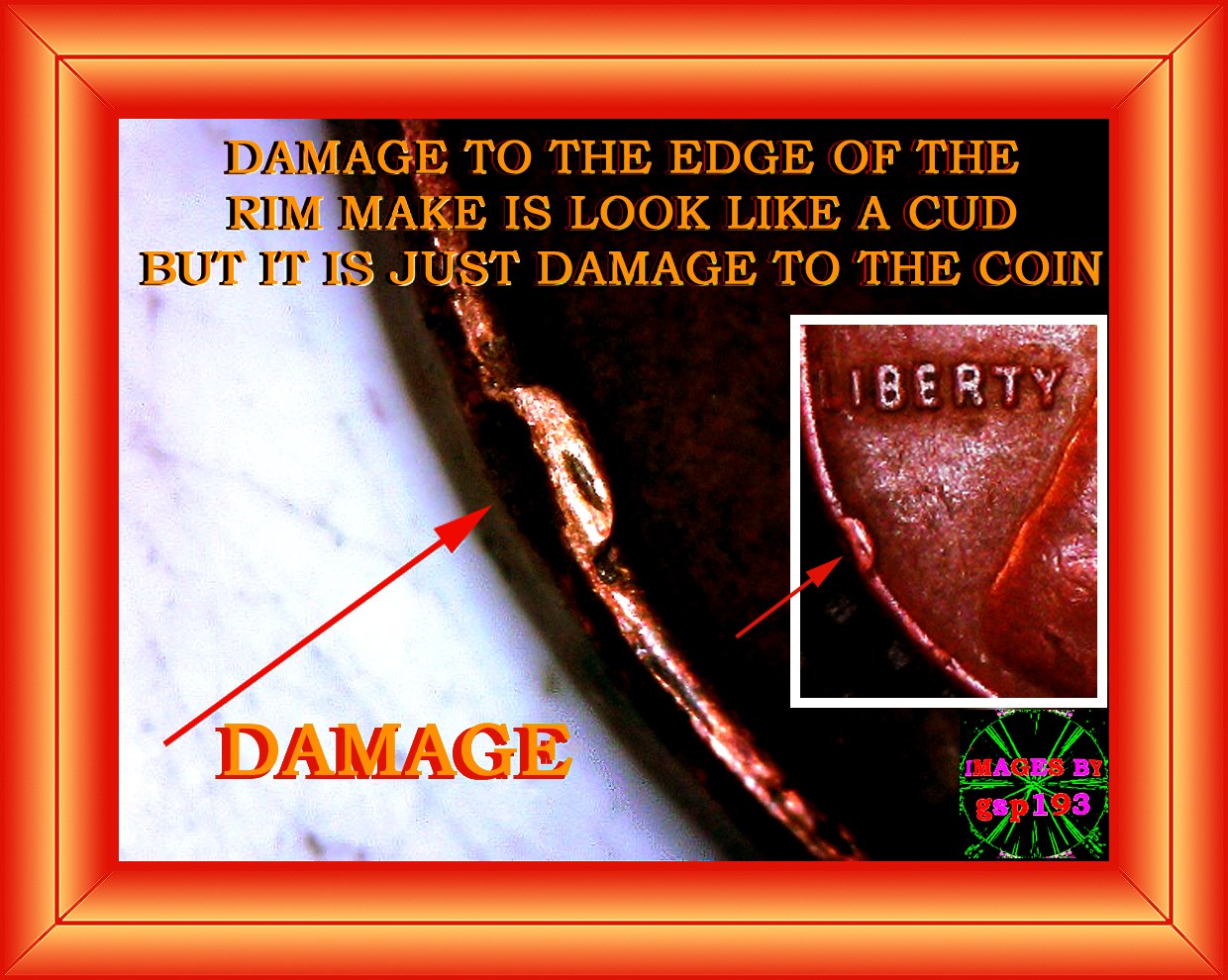 Also Machine Doubling are coin events. These are altered by the machine post strike. Thus the slide, alters the freshly struck devices right after the strike. (Often seen in a single direction, other times multiple directions. Also Machine Doubling are coin events. These are altered by the machine post strike. Thus the slide, alters the freshly struck devices right after the strike. (Often seen in a single direction, other times multiple directions.

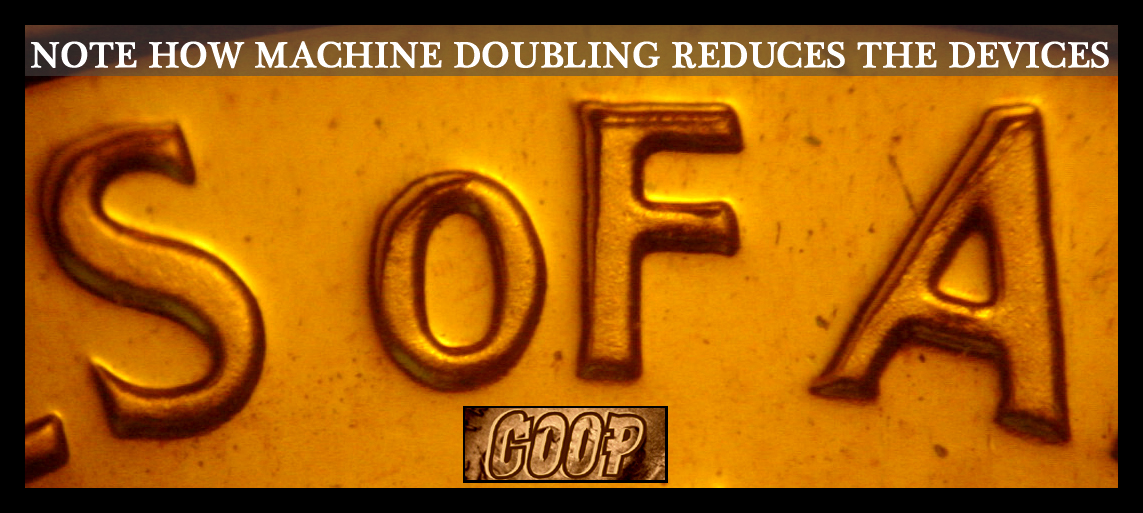
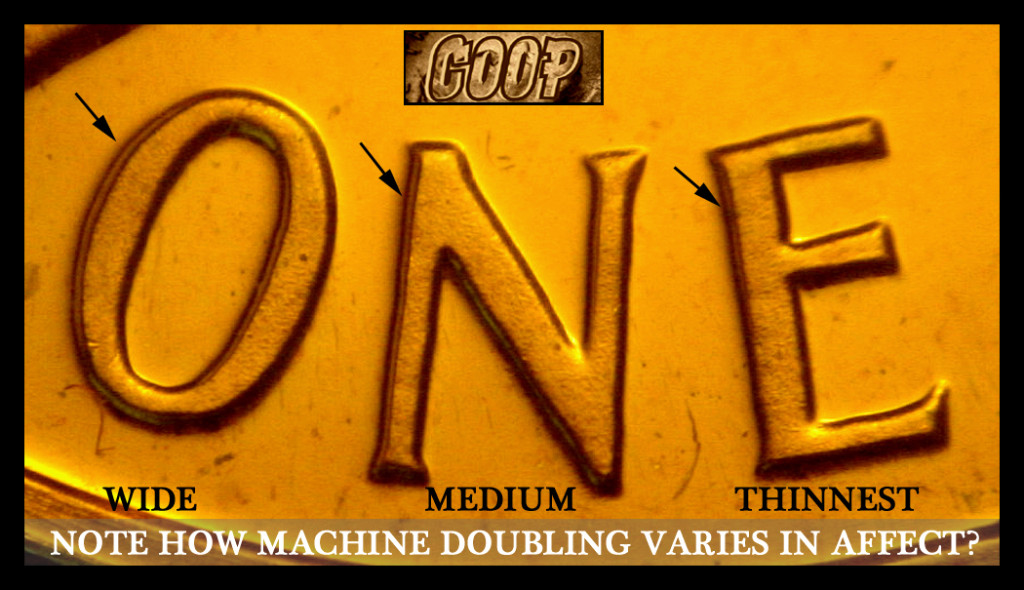
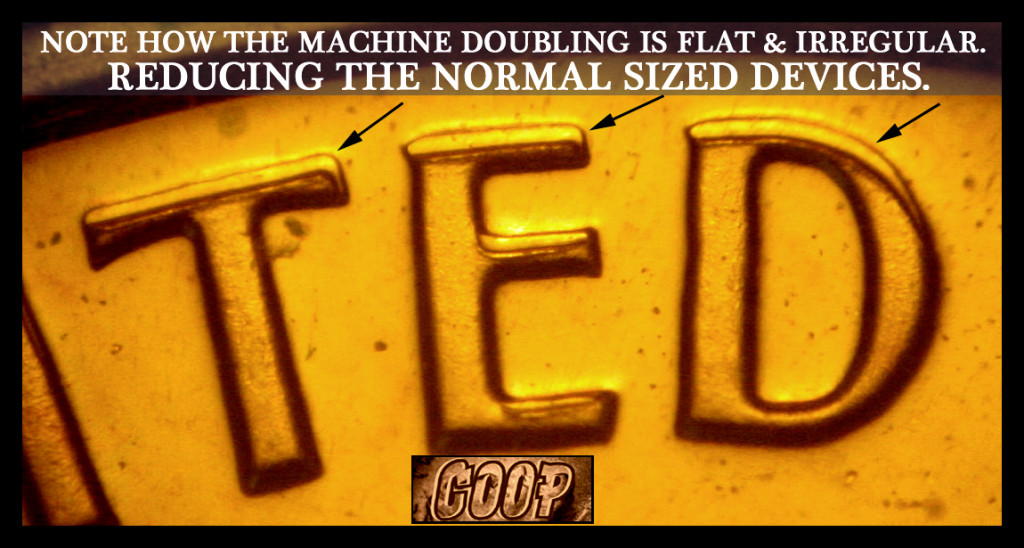
Instead of coming straight up after the strike, if the machine was having even the slightest movement, it can alter these devices at the base of the devices, midway up on the devices called a bounce, or higher bounce that affects 3/4 way up on the devices often called a high bounce, or of extreme movement, on the tops of the devices. (When this is extreme with machine movment, it is also referred to as, Push doubling:

These are not doubled dies, they are post strike events called Machine Doubling. These are flat, removed contour of the devices that show a 90 degree angle on the devices on just one side of the devices.
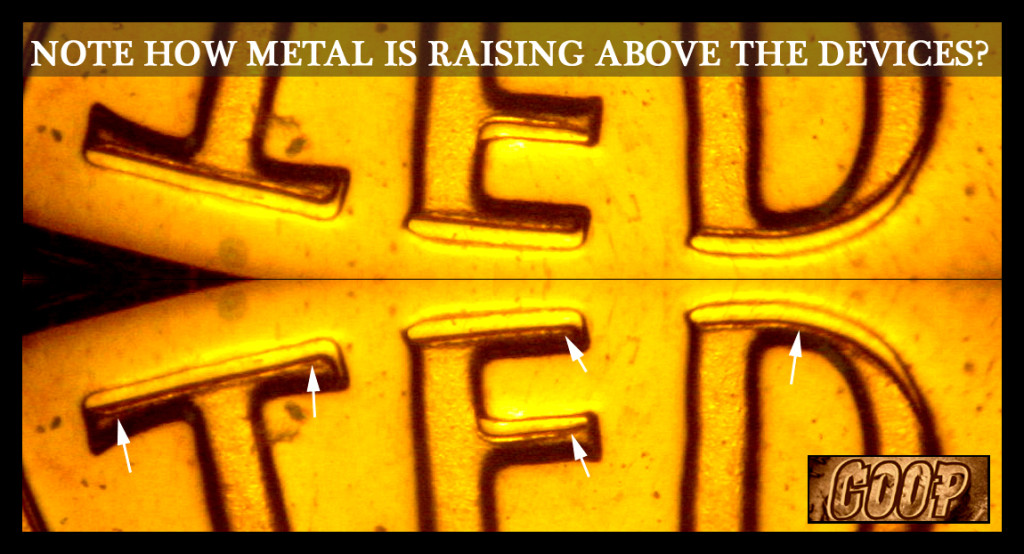
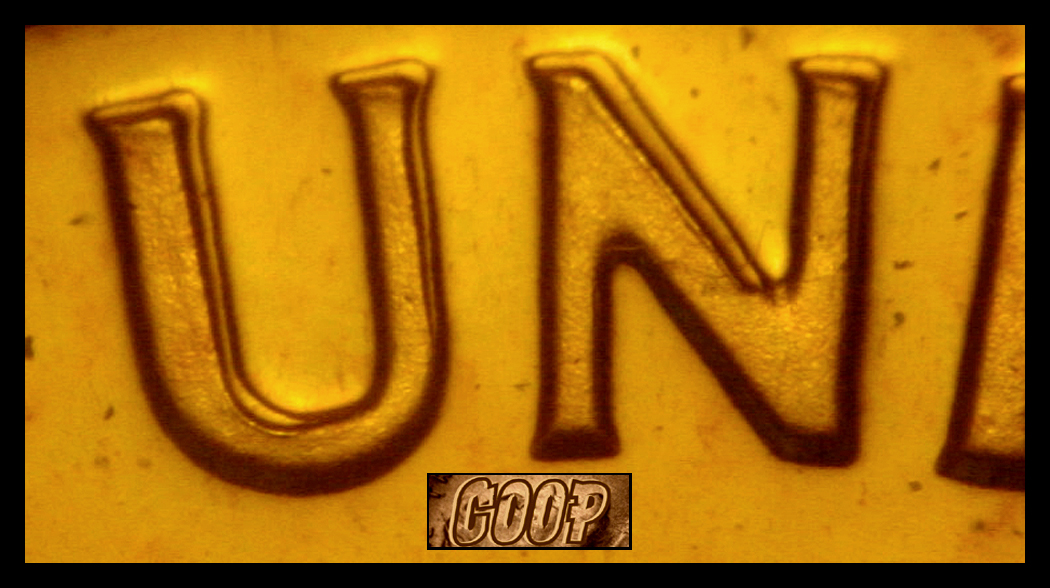
Sometimes when the machine is real loose, it can move in more than one direction with a swing motion. Again these are not doubled dies, as they are caused by the machine.
A doubled die coin comes from a die what has hub doubling on the die that makes the devices affected on the center areas of the devices. This alteration can have a spread on the centers of the devices,
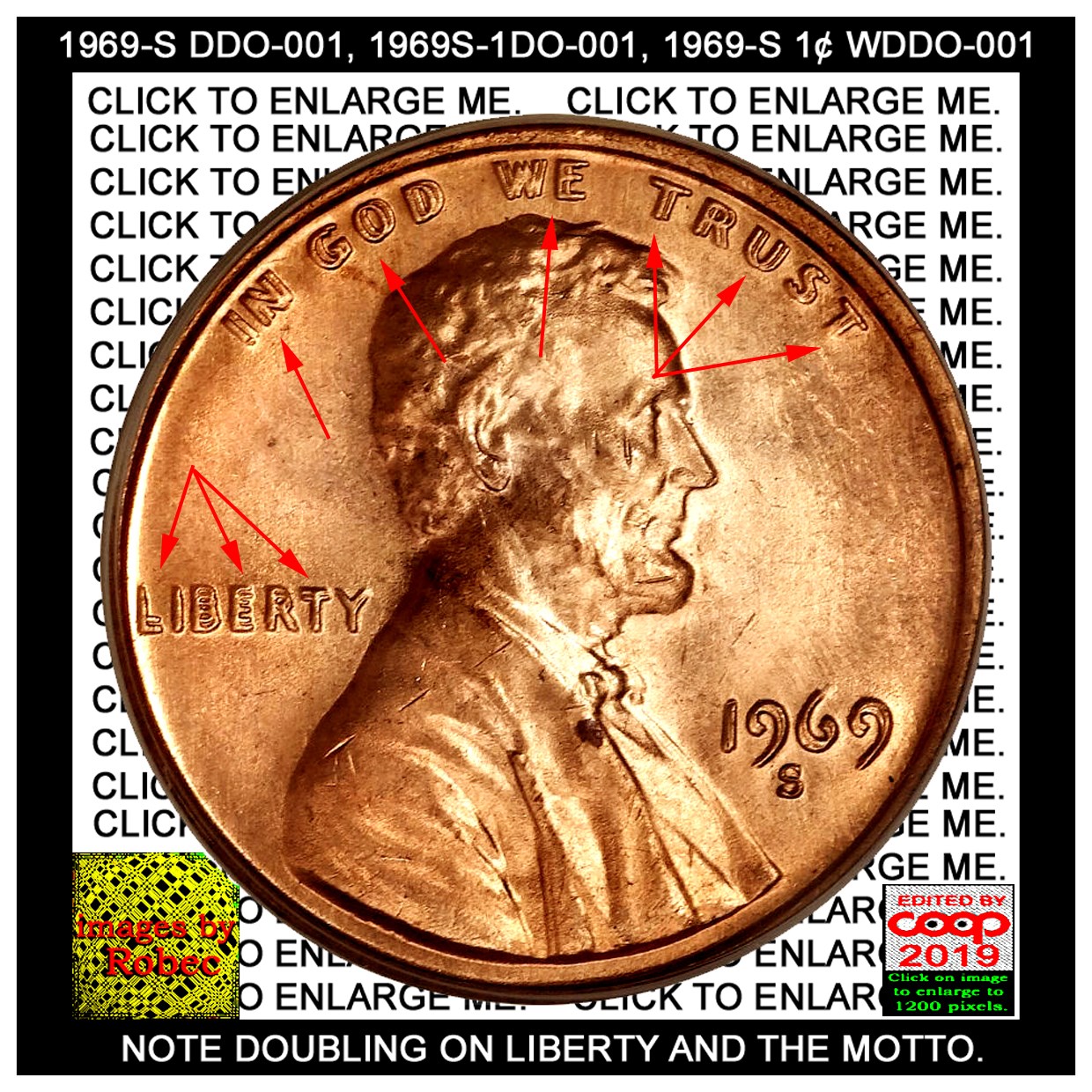
where as Machine Doubling affects the outer edges of the devices.
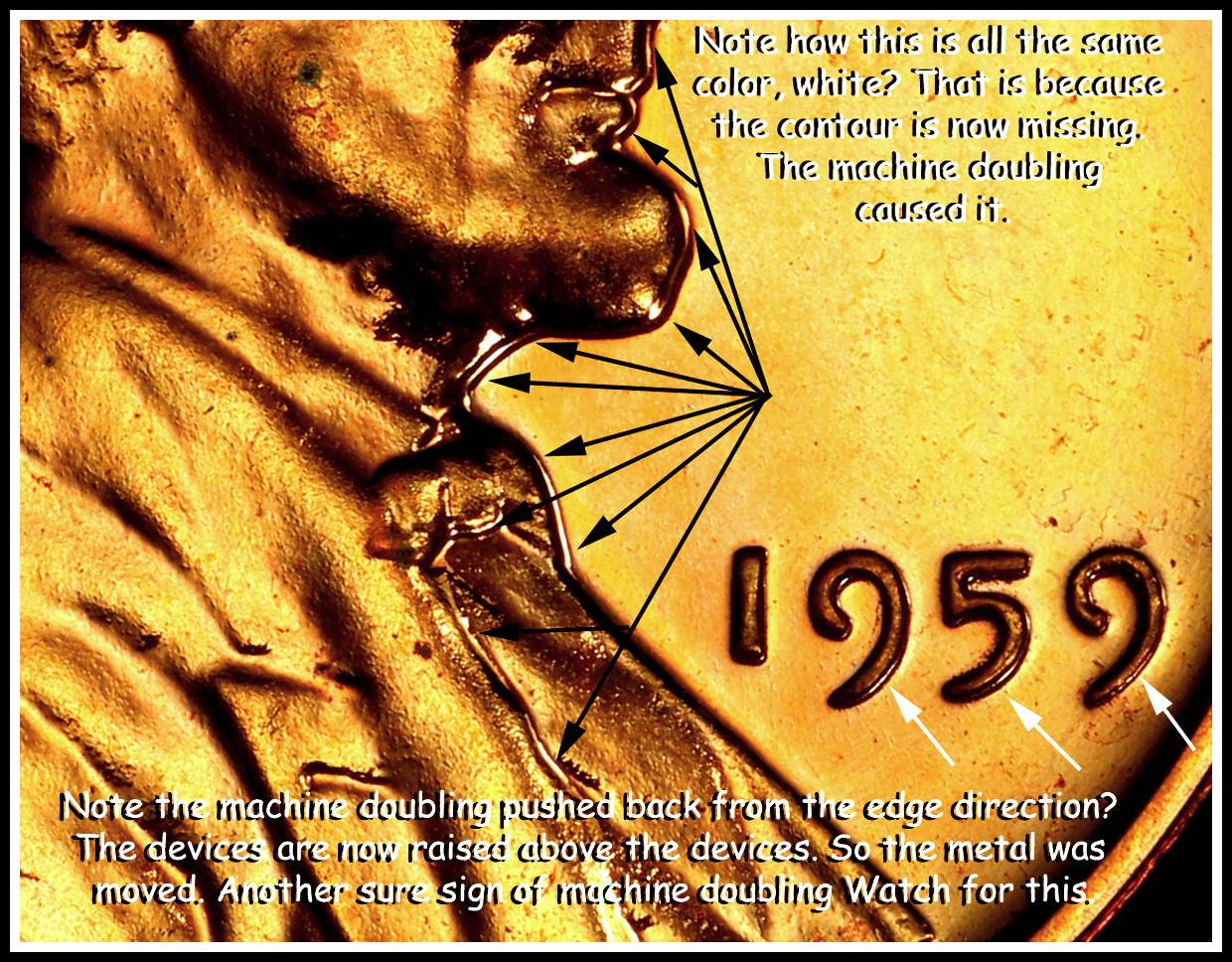
Machine Doubling can happen on a doubled die, if the machine was loose, but Machine Doubling is never part of a doubled die.
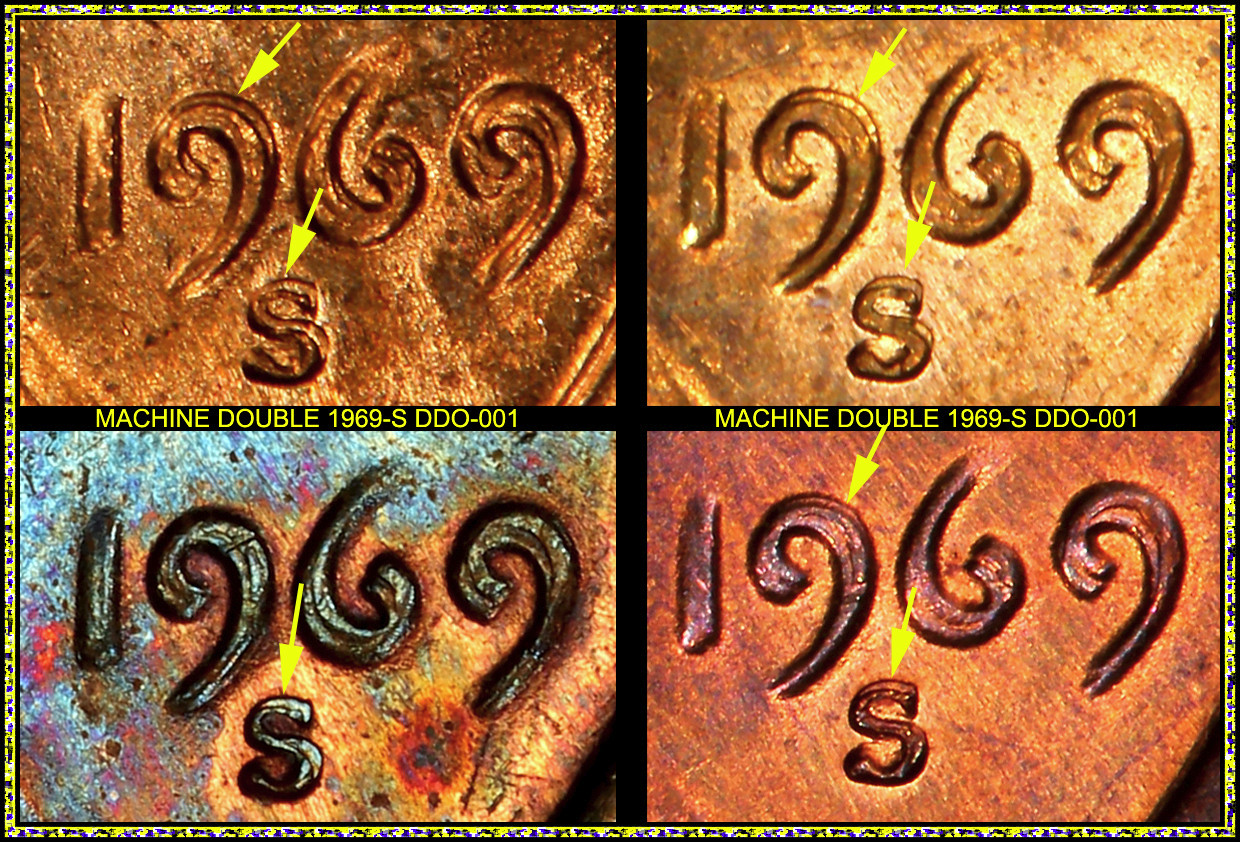
Just the areas affect by the die is the hub doubling. (having both on a coin is not a good thing as most variety collectors do not want a doubled die with Machine Doubling as it is a distraction of the beauty that the doubled die has to that collector.
Hope this helps with your question. CoopHome: What is a die event? How does it affect the coins struck? die events are what all dies go through during the die aging process. The coins will show this breakdown often by raised areas on the coins struck with a die event that happened. some die event are removed other times the dies are retired. these are common events, kind of like the number of years your count your life with today. birthdays are common, but die events are like life events that affect our lives. so these are not good things for us and dies to go through. |
| |
Replies: 8 / Views: 1,576 |
|









 Posted 02/16/2023 03:55 am





