| Author |
 Replies: 8 / Views: 778 Replies: 8 / Views: 778 |
|
|
Valued Member
United States
316 Posts |
First, I hope I'm putting this on the right section. I was curious, how you visually tell that a US coin was stamped on foreign metal?l. I've seen mentions of topics where they said for example and this is just an example... say that a Lincoln Penny was stamped on a Brazilian planchet. How can you visually tell the difference? Is there some kind of testing if you can't visually tell? Is it the weight? Is it the size? Isn't the color or a design flaw? I hope this topic isn't too confusing and if someone is able to tell the difference visually could you post a picture between the two differences I'd appreciate it, I'm just curious Thank you *** Moved by Staff to a more appropriate forum. *** |
|
|
|
Bedrock of the Community
 United States
27488 Posts |
Reno, for the most part (if not all), coins minted for other governments used planchets of different sizes and composition than US coins produced at the same mint. In the rare case of a US coin minted on such a planchet, the error is quite obvious when compared to normal business strikes. Inordinately fascinated by bits of metal with strange markings and figures
|
|
Moderator
United States
106908 Posts |
additionally, getting the terminology correct will help you. Coins are not printed - paper money is printed., Coins are struck not stamped.
|
|
Pillar of the Community
United States
1648 Posts |
Depends on the error, some are struck on other coin planchets like cents struck on dime planchets and these may have different colors or parts of the outer text cut off visually, the weight would be of the coin its struck on (a nickel on a cent planchet might weigh 3.1g as is the weight of a normal copper cent rather than 5g, the weight of a normal nickel). Wrong planchet errors may also occur when the composition of the coin changes. Such situations generally arise when the mint has decided to change the alloy or plating of the coin in the new coinage year, but a few planchets from the previous year—and thus of the previous composition—have yet to be struck. Should the dies be changed for the new year while the old planchets are awaiting striking and not removed, coins using the old composition will be struck with the new year's date. These may have different weights or composition and its known when the change happened so which coins to look at. A famous example is the 1943 copper cent https://www.gainesvillecoins.com/bl...-penny-valueA much rarer error as in your question is a denomination struck on a foreign planchet. This did occur occasionally with United States (and before that American colonial) coinage in the 17th, 18th, and 19th centuries, and then very rarely in the 20th century. These may have different coloring, weight, size, composition, and lists exist that are used to know what planchets it might be that were being struck at the same time at that mint location. You can post photos to this forum and get opinions as one free way to get some possible identification. https://varietyerrors.com/wrong-pla...price-guide/https://coinweek.com/world-coins/fo...orld-war-ii/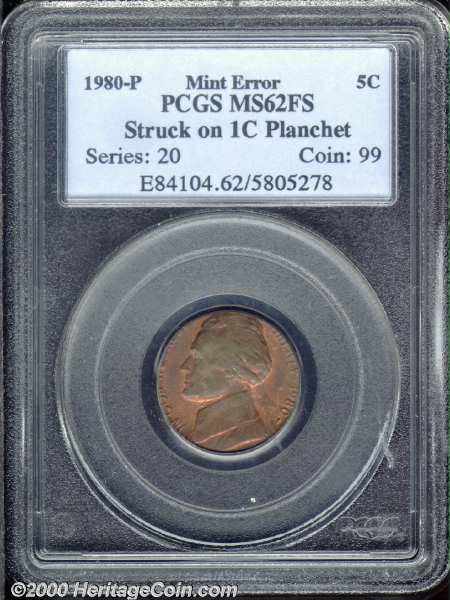 Edited by datadragon
02/21/2023 4:13 pm
|
|
Pillar of the Community
United States
3207 Posts |
off color can be the first clue, and weight is the next easiest thing to check, after that something called XRF can perform non-destructive testing of the surface metal
note that wrong planchet coins are quite rare, and before you find your first true wrong planchet from circulation you'll likely find millions of off color coins that were toned by envrionmental exposure
|
|
Pillar of the Community
United States
2775 Posts |
|
|
Valued Member
 United States
316 Posts |
@Datadragon
Thank you so much for the information you posted. The nickel you posted I actually have four.
@nick10
My nephew actually has one and I know a few other people I may be able to borrow one from. I completely forgot about that and didn't even think about it for coins.
I have so many coins that I have to go through my head is spinning and you think whenever you come across the coin wow this coin is awesome. And then you come to find out that it's just a regular coin. When I look at coins I look at history and so many different ways it brings me joy as well as the joy of memories from a young girl to adulthood.
When I see that some people have found coins that were stamped on someone else's metals I never see or hear how they came across it or how they discovered that it was not ours and someone else's you know and it's just the curiosity that was getting to me as to how I can tell the difference.
Should I ever come across one of my coins that refers to my posted question I will definitely post it. Thank you so much for the comments. I apologize for misspeaking in reference to the word print etc . not using the word stamped as I my terminology offend some people but that's the point of being on here to learn to get insight and so. I don't wish to offend anybody, my apologies again.
Edited by Reno911
02/21/2023 6:20 pm
|
|
Pillar of the Community
United States
2775 Posts |
More food for thought. Thanks, Doug. Quote:
When I see that some people have found coins that were stamped on someone else's metals I never see or hear how they came across it or how they discovered that it was not ours and someone else's you know and it's just the curiosity that was getting to me as to how I can tell the difference. If you're referring to US strikes on wrong blanks or planchets, be it the same composition or not, domestic or foreign coinage is one thing. Weight will suggest a clue. If you're referring to US strikes on blanks or planchets produced for domestic or foreign coinage by producing blanks from the wrong stock is another question. A little math may be needed. https://www.coinworld.com/news/us-c...ting-wr.htmlhttps://www.coinworld.com/news/us-c...ally-ra.html |
|
Pillar of the Community
United States
2775 Posts |
Quote:
additionally, getting the terminology correct will help you. Coins are not printed - paper money is printed., Coins are struck not stamped. More food for thought on "Terminology" and struck verses stamped. I believe coins are stamped on a stamping machine. After being stamped it could be considered as the strike or has been struck. Thanks, Doug. https://www.usmint.gov/learn/produc...n-productionQuote:
Once the Secretary of the Treasury approves a design, Mint medallic artists transform a line drawing into a three-dimensional sculpt. After the sculpt is finalized and digitized, the Mint makes coin dies that stamp the design onto the coins . |
| |
Replies: 8 / Views: 778 |
|








 Posted 02/21/2023 3:43 pm


 Uncirculated American Silver Eagles


