Coin Community Family of Web Sites Join Thousands of Coin, Bullion, & Money Collectors
Shop for APMEX Bullion on eBay!300,000 items to help build your collection! Coin, Banknote and Medal Collectors's Online Mall Join Thousands of Coin, Bullion, & Money Collectors Vancouvers #1 Coin and Paper Money Dealer Royal Canadian Mint products, Canadian, Polish, American, and world coins and banknotes. Specializing in Modern Numismatics


Username:
Password:
Save Password
Forgot your Password?


This page may contain links that result in small commissions to keep this free site up and running.

Welcome Guest! Registering and/or logging in will remove the anchor (bottom) ads. It's Free!

Starting To Try To Understand On How Dies Work With Coins

To participate in the forum you must log in or register.
Author Previous TopicReplies: 6 / Views: 1,140Next Topic  
Valued Member
MetalEarth's Avatar
United States
109 Posts
 Posted 02/27/2023  2:50 pm Show Profile   Bookmark this topic Add MetalEarth to your friends list Get a Link to this Message Number of Subscribers
I'm confused on how 1 letter of maybe 30 letters on one side of a coin will have Machine Doubling but nothing else does? It seems a lot of moving parts are in play, but so far I'm not seeing the answer and my google attempts are failing me. Anyone help.

Hope everyone is well.

*** Moved by Staff to a more appropriate forum. ***
Moderator
Learn More...
John1's Avatar
United States
56855 Posts
 Posted 02/27/2023  3:09 pm  Show Profile   Bookmark this reply Add John1 to your friends list Get a Link to this Reply
Pillar of the Community
datadragon's Avatar
United States
1648 Posts
 Posted 02/27/2023  3:15 pm  Show Profile   Check datadragon's eBay Listings Bookmark this reply Add datadragon to your friends list Get a Link to this Reply
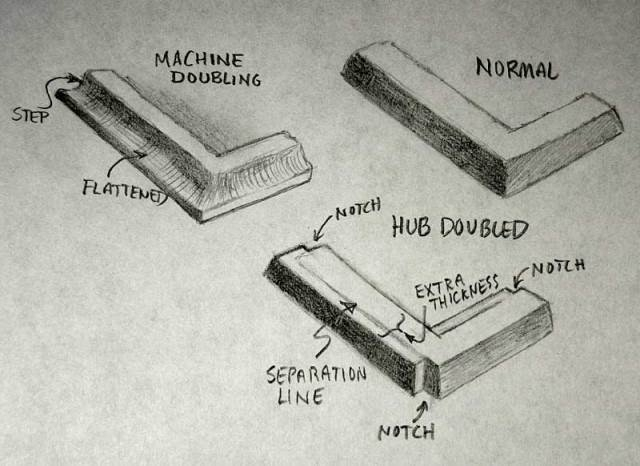
mechanical doubling, Machine Doubling. This common error goes by many names, but it's all the same thing. This type of doubling, which is also known as strike, ejection, shelf or shift doubling, is not the result of the design on the die being doubled. Rather, this type of doubling occurs when the die strikes a planchet. If the die is not properly seated, it can move slightly or bounce during the moment of striking, creating a flat, shelf-like doubling. This effect will be different on all coins struck, so it is technically not a variety, but rather more of a striking error. So as to your q it will be different how it appears and not just 1 letter typically.
https://www.doubleddie.com/144822.html
easier:
https://coins.thefuntimesguide.com/...oubled-dies/
https://www.ngccoin.com/news/articl...ne-Doubling/

On a machine doubled coin, the doubling will appear much more flattish. When lettering is involved, the doubling will appear to be smeared outward from the primary letters. Furthermore, there will be no serif separation from the primary letters. If you still get confused, you could look up the coin such as in Strike it rich with pocket change 5th edition book or doubleddie website or similar and see if a doubled die exists already for that coin to match up.

Visual Reference:
Starting-To-Try-To-Understand-On-How-Dies-Work-With-Coins
Edited by datadragon
02/27/2023 3:20 pm
Bedrock of the Community
coop's Avatar
United States
62064 Posts
 Posted 02/28/2023  12:12 pm  Show Profile   Bookmark this reply Add coop to your friends list Get a Link to this Reply
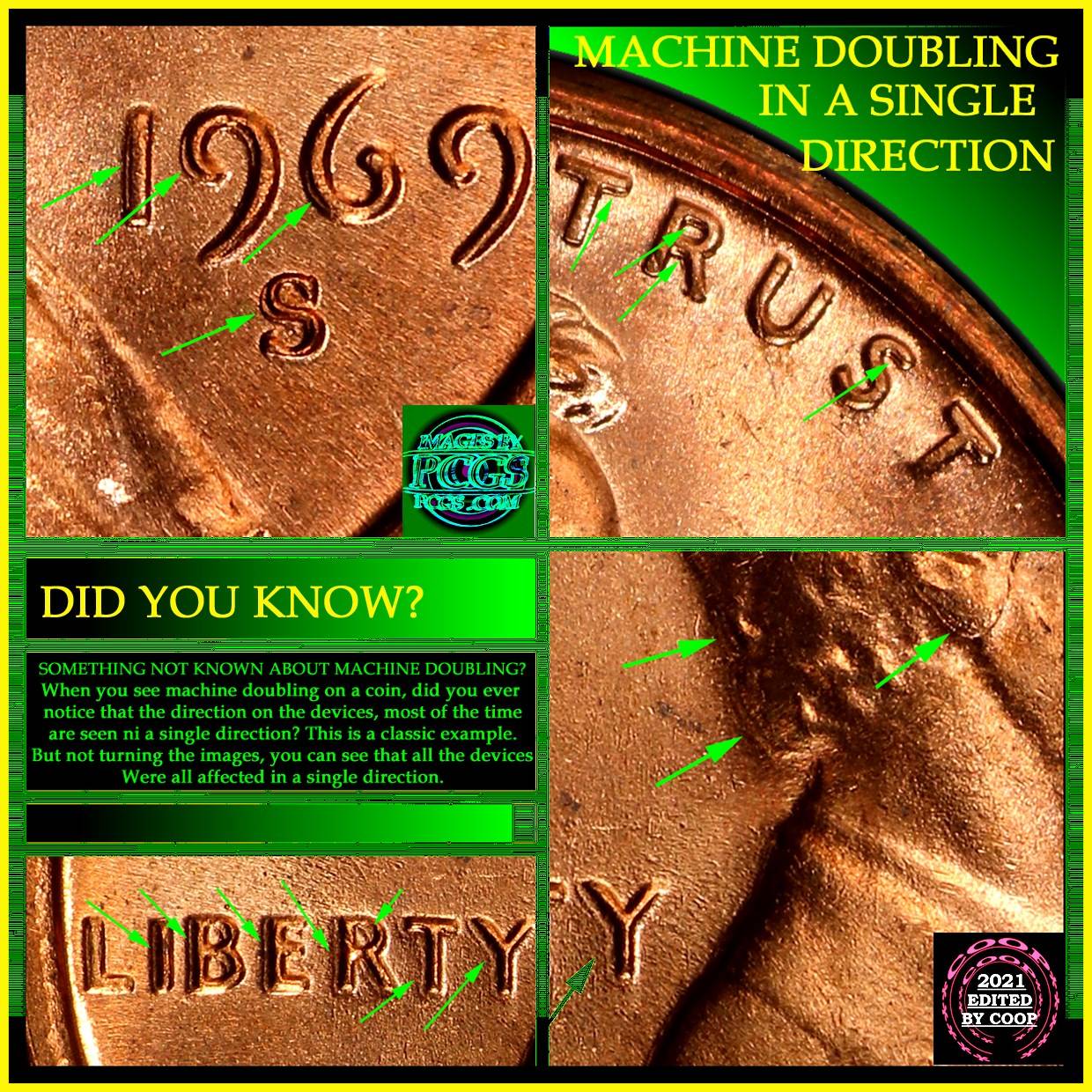
The looseness of the machine post strike alters the devices. Often you can just see the alteration one side of the devices all across the devices the same:
Starting-To-Try-To-Understand-On-How-Dies-Work-With-Coins
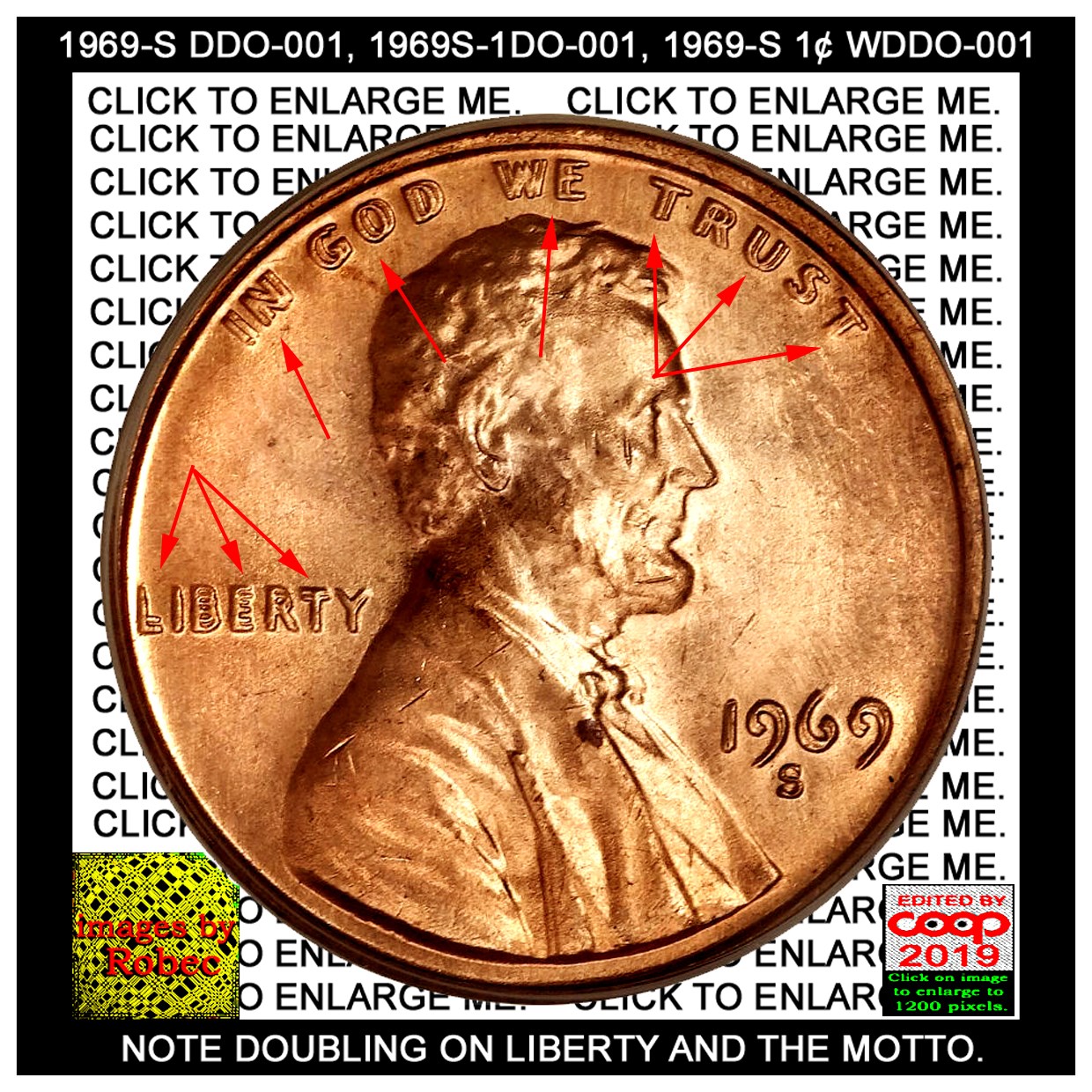
Even the slightest movement will alter these devices. This can happen in one or more directions on the coins, depending on how loose the machine was. If can be a close as the fields push, mid devices, top side areas and sometimes even on the tops of the devices. The machine is not regular. One coin can look altered differently than other strikes:
Starting-To-Try-To-Understand-On-How-Dies-Work-With-Coins
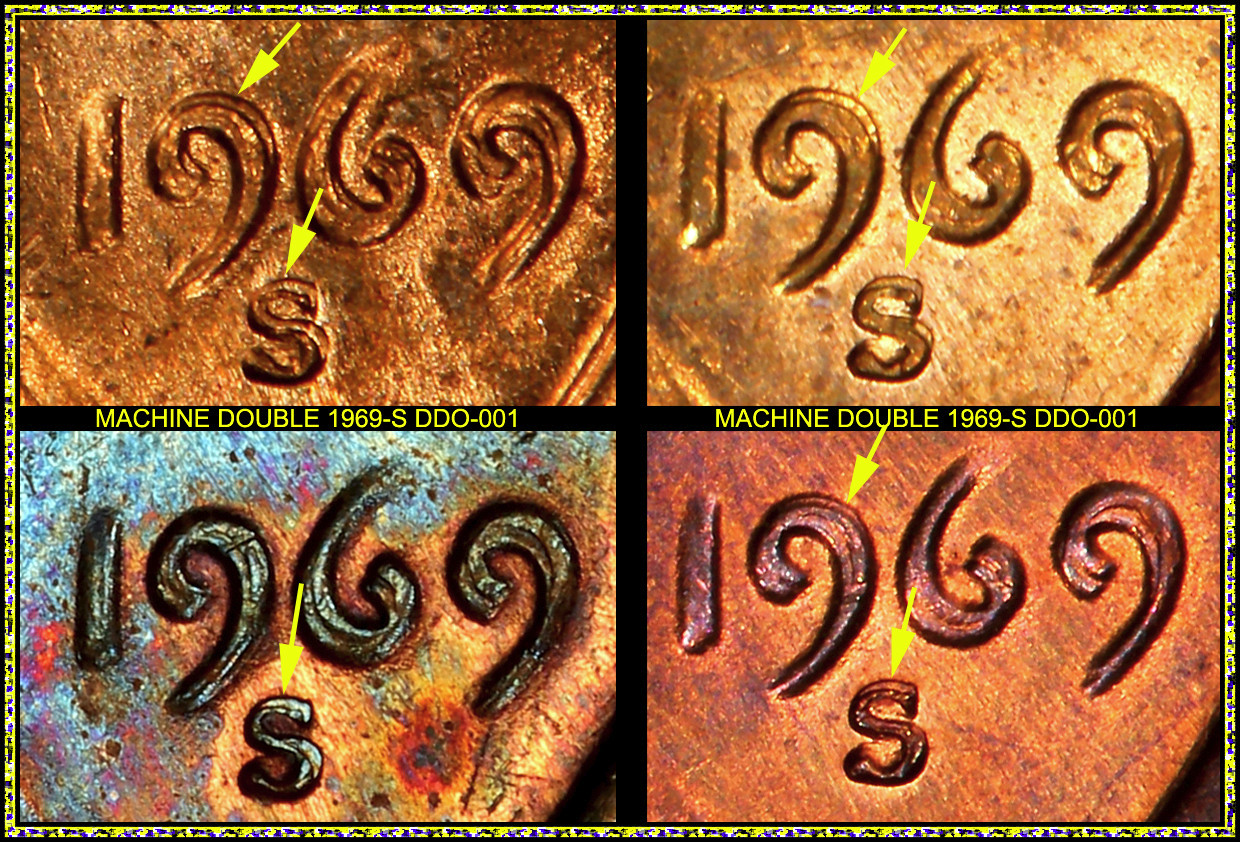
When the machine is loose and we are looking through a microscope, it looks huge, but it is even the slightest movement, that alters these coins, post strike. It is a striking issue with the machine. Always altering the devices (damaging the devices) where as a doubled die will show an enlarging of the devices. On the MD it always reduces the devices. A doubled die can show Machine Doubling, but Machine Doubling never creates a doubled die. Why? Because the machine strikes the coin. The Doubled dies have hub doubling created on the dies. Thus the dies strike a doubled die coin. If a doubled die has Machine Doubling, it is not part of the doubled die. It is Machine Doubling on a doubled die coin. Example?
Starting-To-Try-To-Understand-On-How-Dies-Work-With-Coins
Note all the dates are showing the doubled die. But note the arrows are pointing to the Machine Doubling. Thus the mintmarks should not be showing any alteration. But note these are showing the Machine Doubling on them. This is what the mintmarks will look like without the Machine Doubling:
Starting-To-Try-To-Understand-On-How-Dies-Work-With-Coins
Machine Doubling is common to find on the 1968-1972 cents. But the Machine Doubling is never part of a doubled die. Most collectors prefer to have no Machine Doubling on doubled dies for their collection. It makes the hub doubling/machine doubling look confusing to show to another collector. Hope this this helps.
Pillar of the Community
United States
3207 Posts
 Posted 02/28/2023  2:30 pm  Show Profile   Bookmark this reply Add nick10 to your friends list Get a Link to this Reply
and, as for why all that movement can affect only part of the coin the answer is the dies are not flat but rather slightly convex, so after the dies strike a coin and are retracting, only part of them are touching the struck coin when movement occurs, and that part is where Machine Doubling can happen
Valued Member
MetalEarth's Avatar
United States
109 Posts
 Posted 02/28/2023  4:34 pm  Show Profile   Bookmark this reply Add MetalEarth to your friends list Get a Link to this Reply

Quote:
and, as for why all that movement can affect only part of the coin the answer is the dies are not flat but rather slightly convex, so after the dies strike a coin and are retracting, only part of them are touching the struck coin when movement occurs, and that part is where Machine Doubling can happen


Thank you for that. The thread was turning into how to tell the differences which was not the question. Not that those answers don't help the overall education, it just missed the mark.
Pillar of the Community
dsking's Avatar
United States
2365 Posts
 Posted 02/28/2023  5:01 pm  Show Profile   Bookmark this reply Add dsking to your friends list Get a Link to this Reply

Quote:
If the die is not properly seated, it can move slightly or bounce during the moment of striking, creating a flat, shelf-like doubling.


Perhaps if you think of pressure or uneven pressure you might get it. Just a guess.

Good question!
  Previous TopicReplies: 6 / Views: 1,140Next Topic  

To participate in the forum you must log in or register.


Disclaimer: While a tremendous amount of effort goes into ensuring the accuracy of the information contained in this site, Coin Community assumes no liability for errors. Copyright 2005 - 2026 Coin Community Family- all rights reserved worldwide. Use of any images or content on this website without prior written permission of Coin Community or the original lender is strictly prohibited.
Contact Us  |  Advertise Here  |  Privacy Policy / Terms of Use

Coin Community Forum © 2005 - 2026 Coin Community Forums
It took 0.24 seconds to rattle this change. Forums