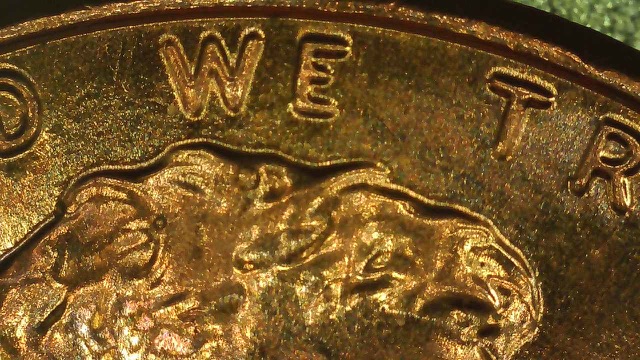
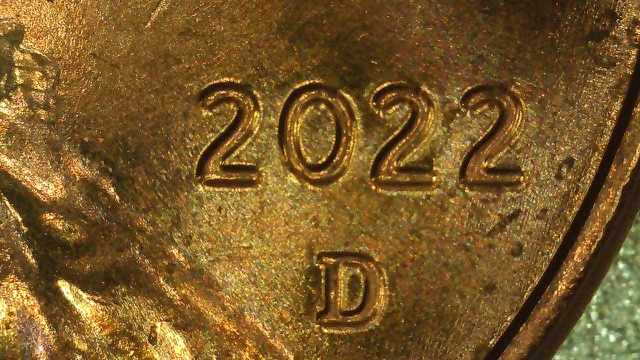
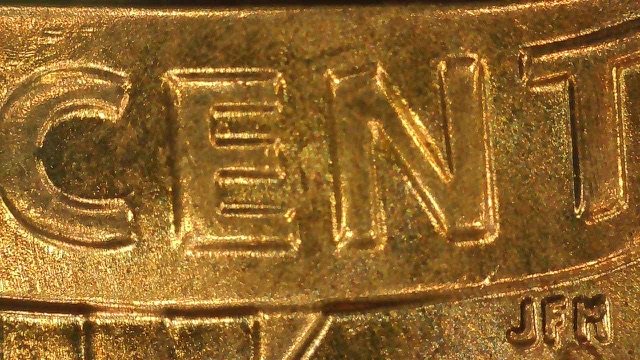
You lighting is showing two light sources. On on the left and a weaker one on the right. When you use two light sources, you remove light and shadows. It creates false hub doubling. The light tries to wrap around the corners. But first note on your coin:
1. All the devices are normal in size. Thus the die was normal. The light is making it look like something is going on, when there isn't.
2.
Machine Doubling will remove the contour off one side of the devices in the direction that the
Machine Doubling alters the post strike coin. That is not going on with your coin. Not
Machine Doubling.
3. Not a doubled die as nothing is enlarged or distorted on the devices. Your coin is normal. The lighting is the problem. Single light sources are better. Also allow the light to fall over the areas affected with hub doubling. The shadow makes it seen even better.
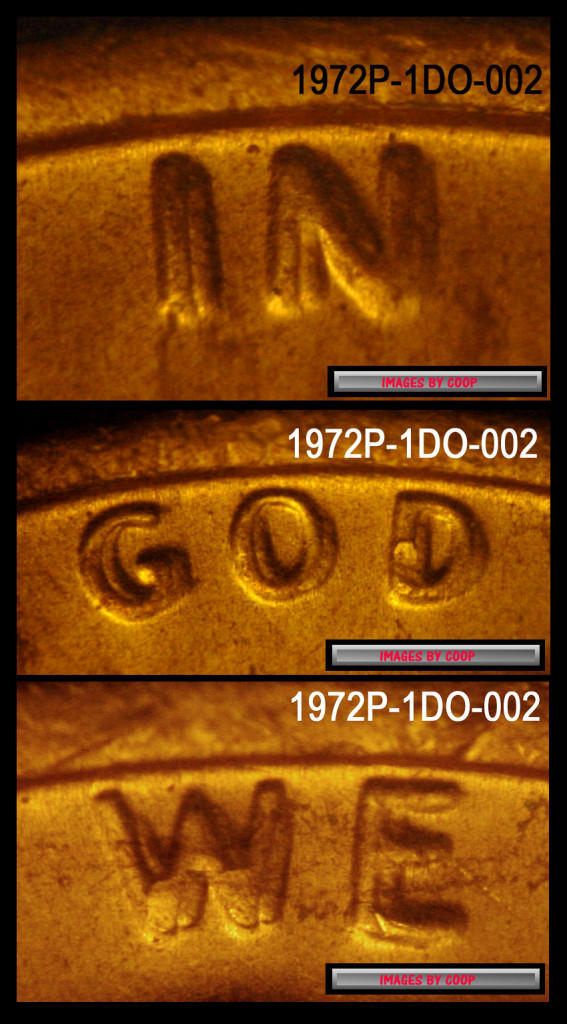
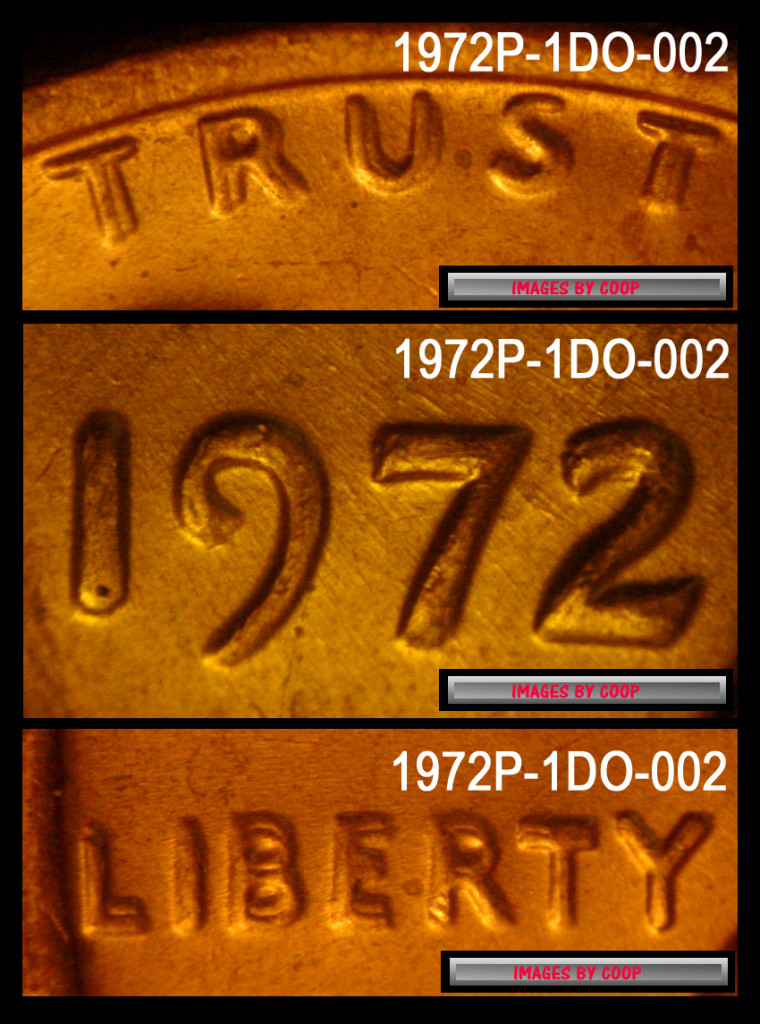
To bright of a light, spotlights the devices and can create glare and hide what you really want to see.
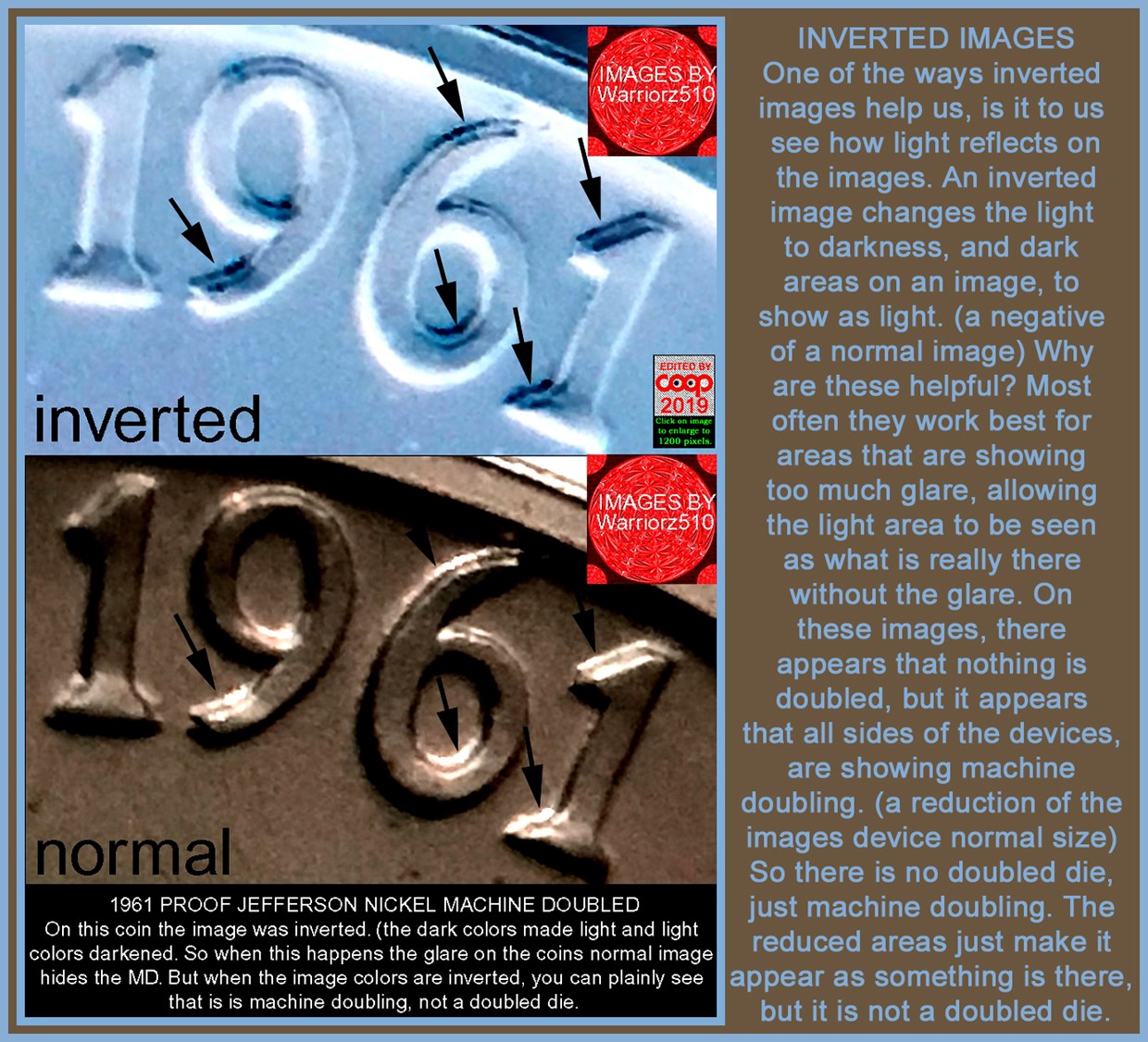
Note on this coin the
Machine Doubling is hidden with glare on the image. Note the inverted color image, it shows what the person is seeing on his coin, but the lighting glare hides it. So why does this happen on
Machine Doubling? Because the affected areas are reduced, flatness hides the MD and causes glare. Lighting too low can also hid this on your images as it takes highlights the sides of the devices, rather than the over head view on coins. So Single light sources are better. Also try to keep over the top areas as it keeps from hiding the glare off the devices. Also diffused light sources help reduce the glare created by an open light source.
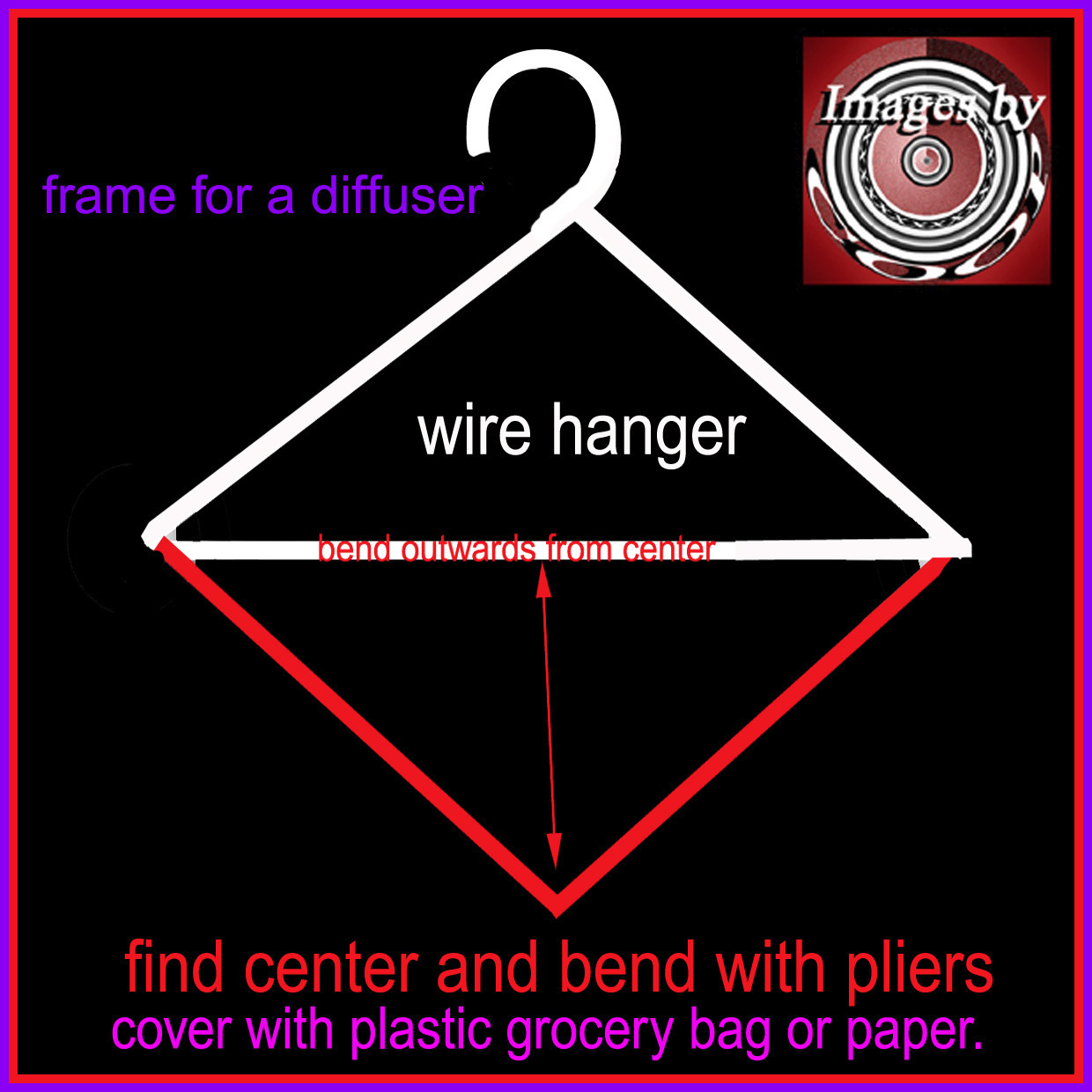
A wire coat hanger can make a curtain to help make a diffuser. On this reshaped wire hanger you can cover it with a plastic grocery bag. A single layer/double layer can reduce the glare from your light source. Allow the light to be filtered with the curtain and it will be remove the unwanted glare. If the light is too strong, then a double layer might be needed. Sometimes even white bond paper can diffuse, remove unwanted light in a direction. (Such as over head room lighting, or sun light from a window. This can be blocked with a small curtain that can be attached to your scope)
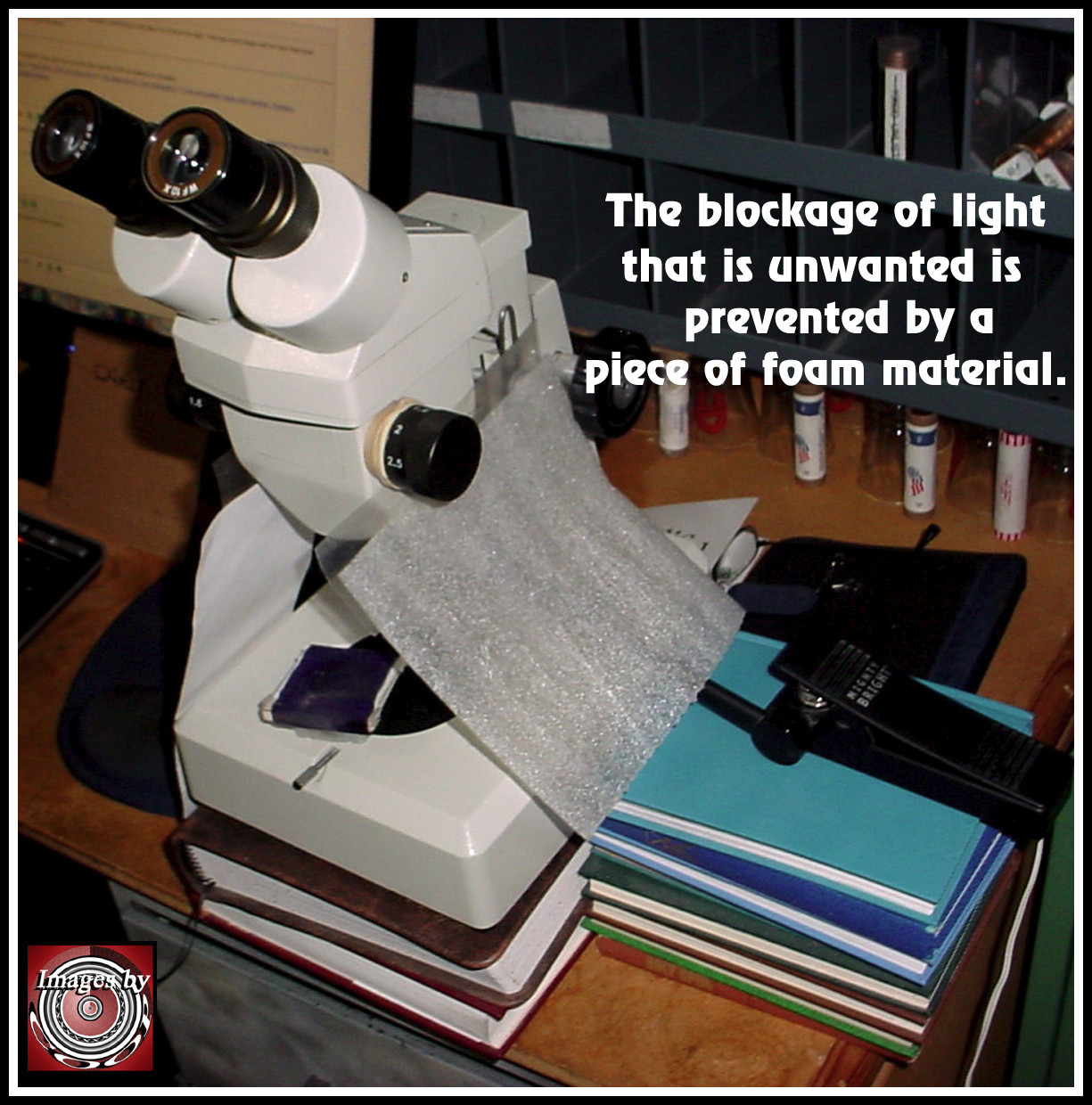
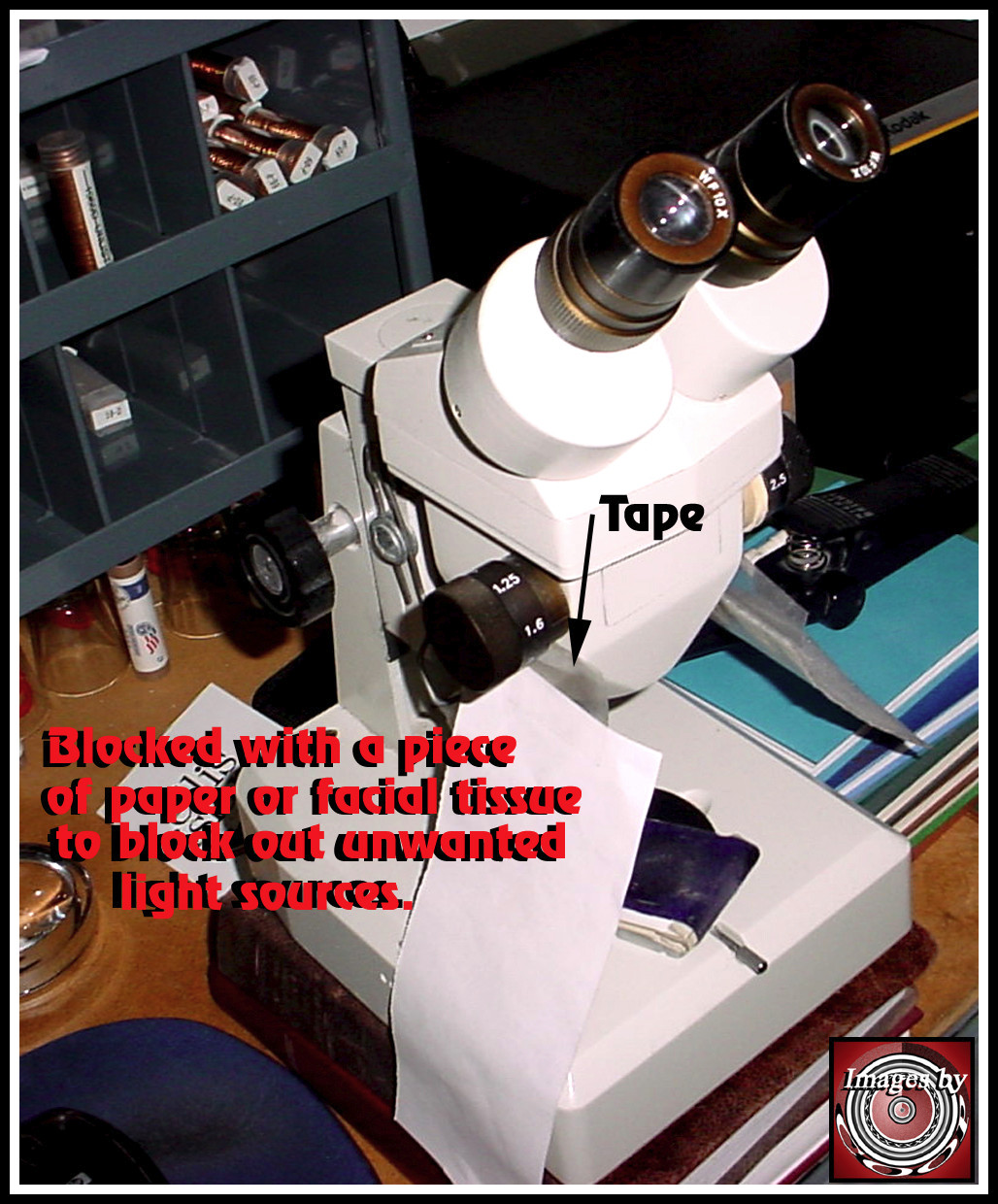
So what works for you can be fixed, if you try to remove the issues you are facing. When you have a question, ask or experiment to try to get the needed results.
CoopHome:
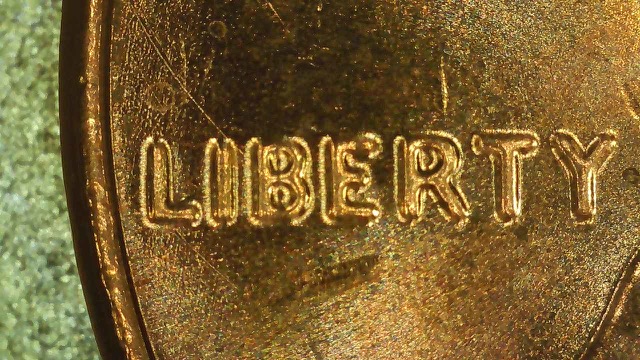
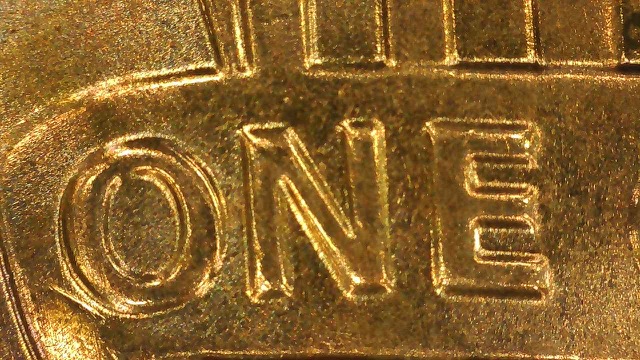
Do you need lots of light when taking micro images? single light sources centered as close over the devices are better. glare is not your friend. too low of a light sources create un-needed distractions. Use the light to enhance and not like a spotlight. you will see more when the lighting is correct.









 Posted 03/09/2023 08:52 am





