| Author |
 Replies: 9 / Views: 1,618 Replies: 9 / Views: 1,618 |
|
|
Valued Member
Australia
338 Posts |
Hi Everyone, Apologies for the poor photo quality, currently travelling. Picked up this interesting 1767 8 Reales. I was wondering if the 8 Reales experts who inhabit this forum might be able to shed some light on this coin. There are quite a few abnormalities with this piece but it does have the correct wight which is quite interesting!  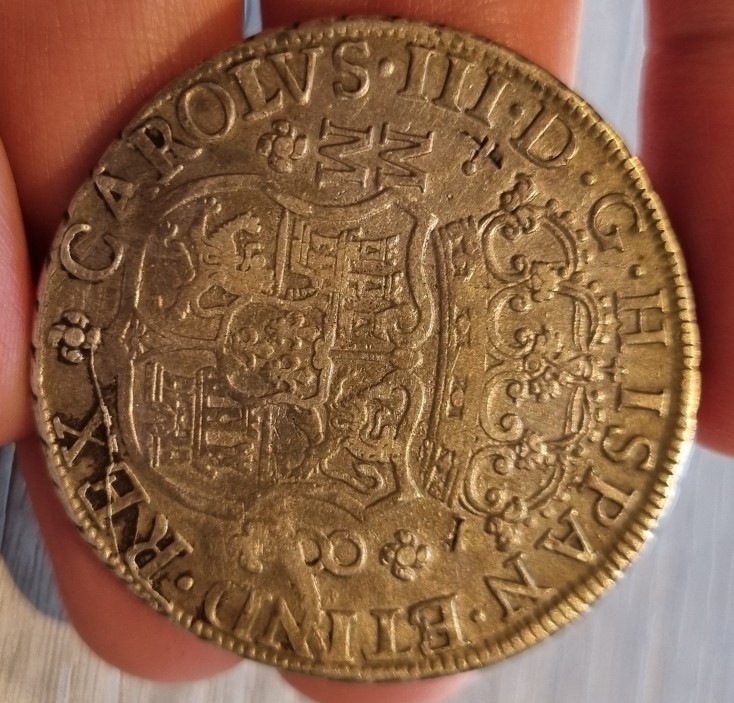 |
|
|
|
Pillar of the Community
United States
5362 Posts |
The coin displays too many deviations from standard to be genuine.
Because of the appearance there is a possibility of it being a counterfeit (CCC) instead of a more common Numismatic Forgery.
I would suggest a check of the density of the coin as a starting point. CCC types from the period when Pillar Dollars were circulating fall into two distinct groups. Crudely cast copies of actual coins and coins struck from false dies. Debased silver would be the normal material used in all cases. Base metal counterfeits do exist but they were never very common and they failed to circulate since most banks and merchants weighed suspicious coins and low weight coins were removed. A coin could be made overly thick to make up for the use of base metal but these can be sorted out using a slot in a sheet of metal to look for a tight fit. Many counterfeit detectors were composed of a scale a slot for thickness and a round hole for diameter.
The coin pictured looks like it was made from a fantasy die pair and was struck. It is a very good candidate for a CCC type.
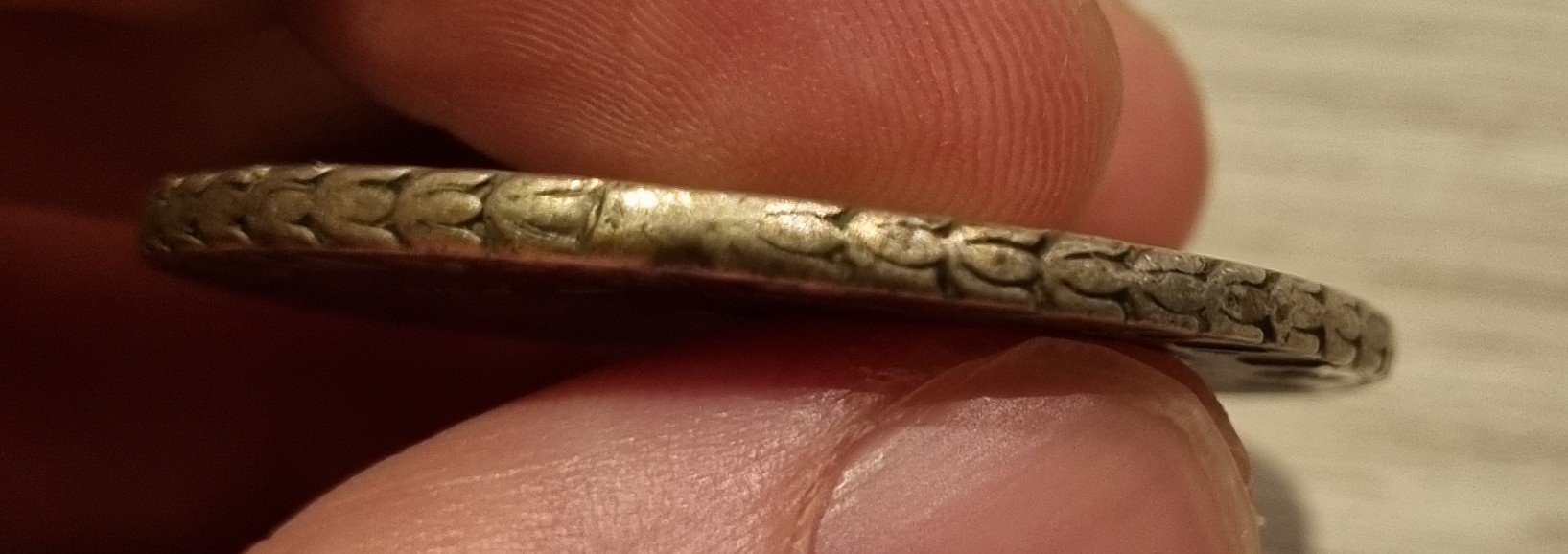
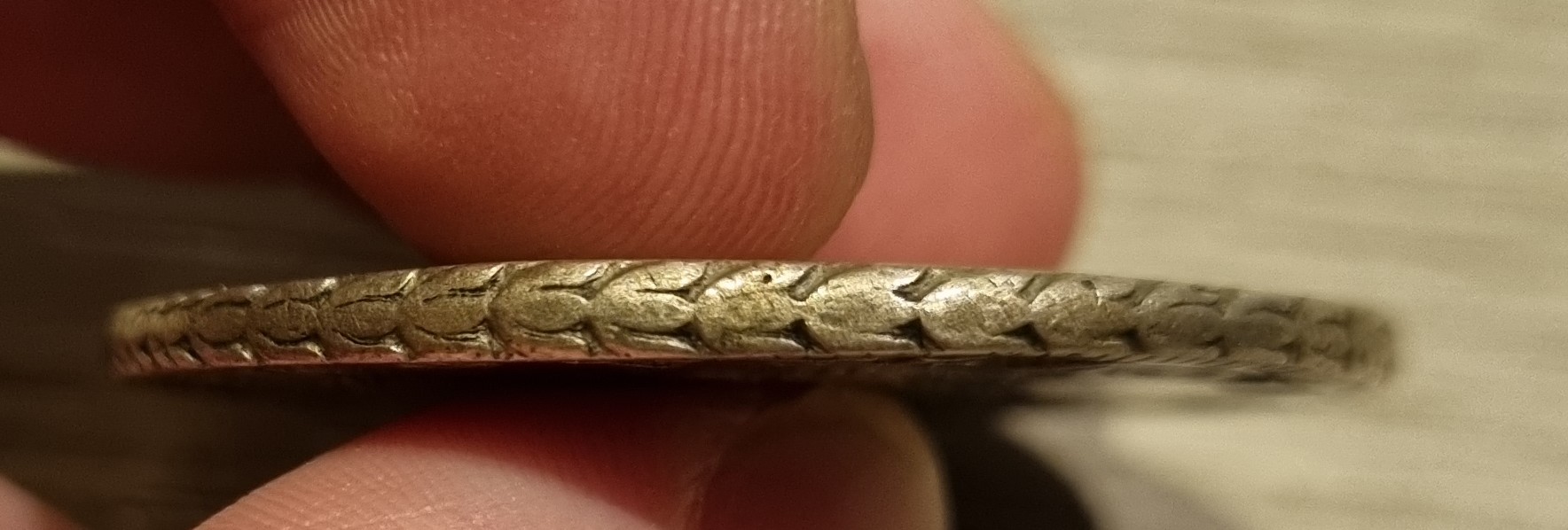
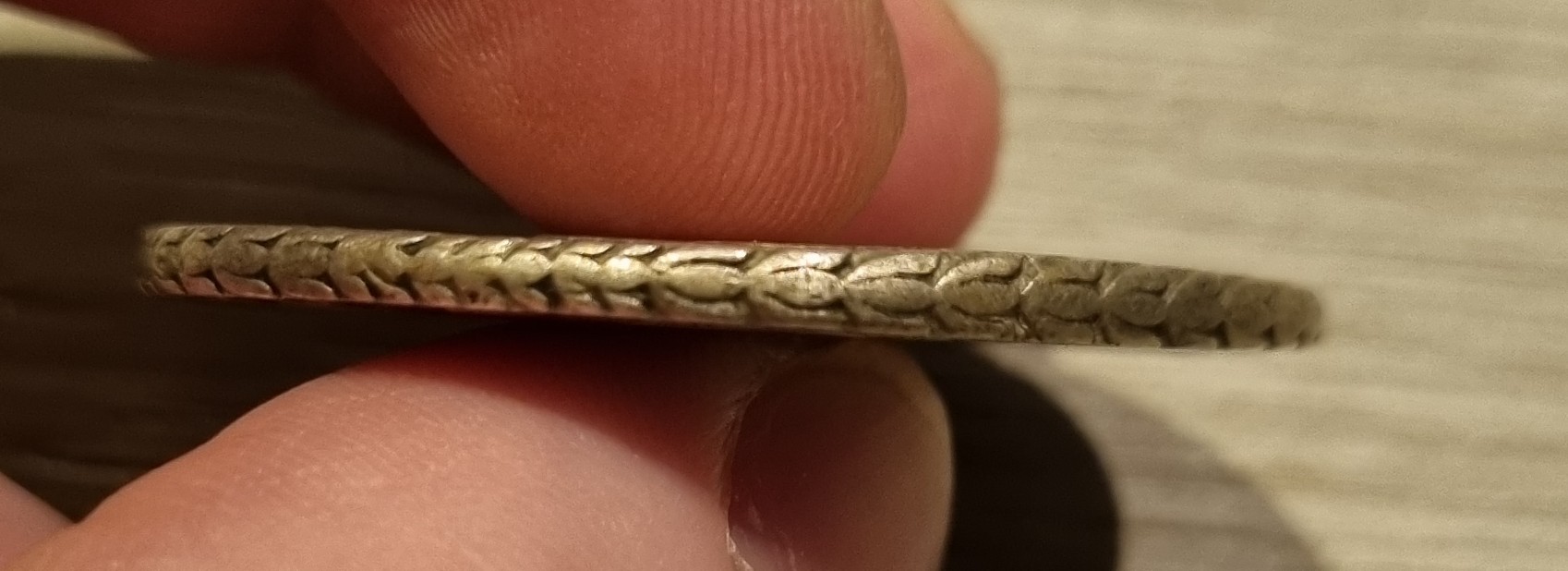
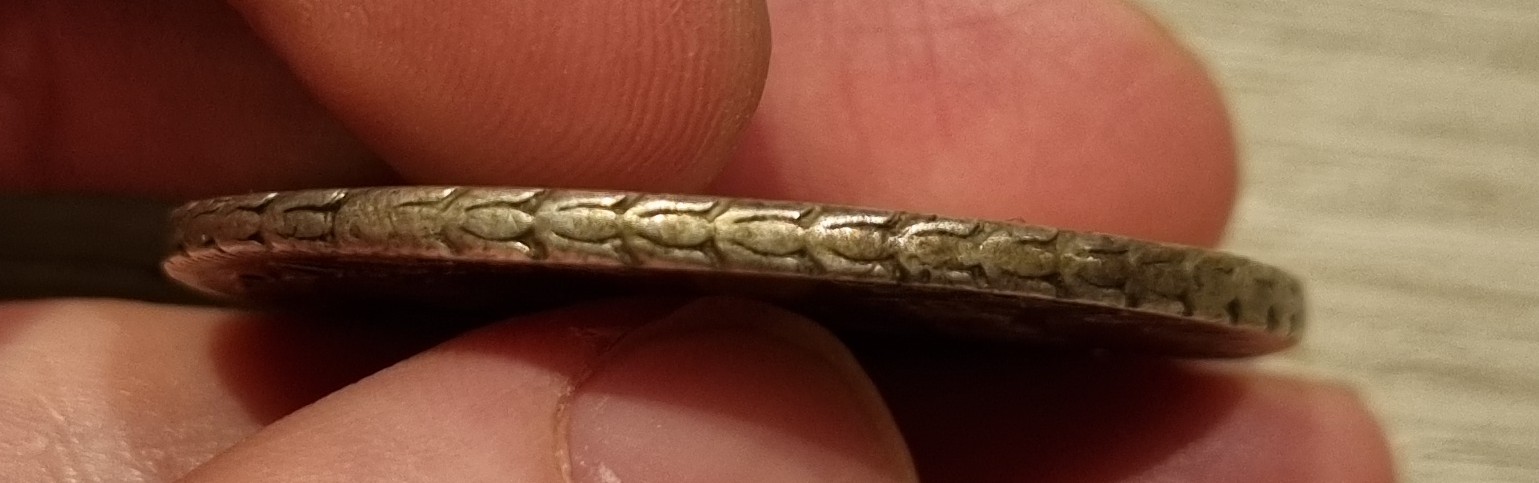
Can you post pictures of the edge? That often tells the tale on age.
|
|
Valued Member
 Australia
338 Posts |
|
|
Pillar of the Community
United States
5362 Posts |
I agree the edge looks like an old counterfeit.
So as long as the coin composition makes sense for the last quarter of the 18th century, I believe you have a CCC.
As a group they are scarce.
|
|
Pillar of the Community
United States
1962 Posts |
As God is my witness... Bob lives and speaks!!!! (I had asked Roman and Jack and they said you were OK).
Great piece, no? Right in the date range of where goofy die-struck pillar CC 8R usually are, but not one I've seen before.
Looks like somewhat debased silver, but not too low?
OneDollarMule, did this surface in Australia or somewhere in Asia? Any other noteworthy background/provenance on it?
|
|
Valued Member
Australia
338 Posts |
The coin was purchase in Singapore from a good local dealer. I suspect he has owned it for many years, my guess is he bought it 30-40 years ago. It looks debased silver but will need to check properly when I'm back in Aus.
|
|
Pillar of the Community
United States
1156 Posts |
We missed you, swamperbob!
|
|
Pillar of the Community
United States
5362 Posts |
It has been a rough few months health wise.
Hitting 75 was like hitting a wall. I am still working toward a book on the C&R counterfeits but I lack the energy most days.
|
|
Valued Member
Australia
338 Posts |
Took the coin to be XRF'd came back 90% Silver 7% Copper and the balance Tin and some Lead!
|
|
Pillar of the Community
United States
5362 Posts |
No gold together with tin and lead would seem to point to England as a possible origin for the coin. England got much of its silver from argentiferous lead deposits so the missing gold is not a serious problem.
If you check the density of the coin you can confirm the overall composition since XRF only reads the surface layers. XRF can be fooled by a thick early Sheffield Silver plate, but density will still pick up an anomaly.
|
| |
Replies: 9 / Views: 1,618 |
|







 Posted 03/28/2023 9:55 pm