

 Posted 05/18/2023 6:57 pm


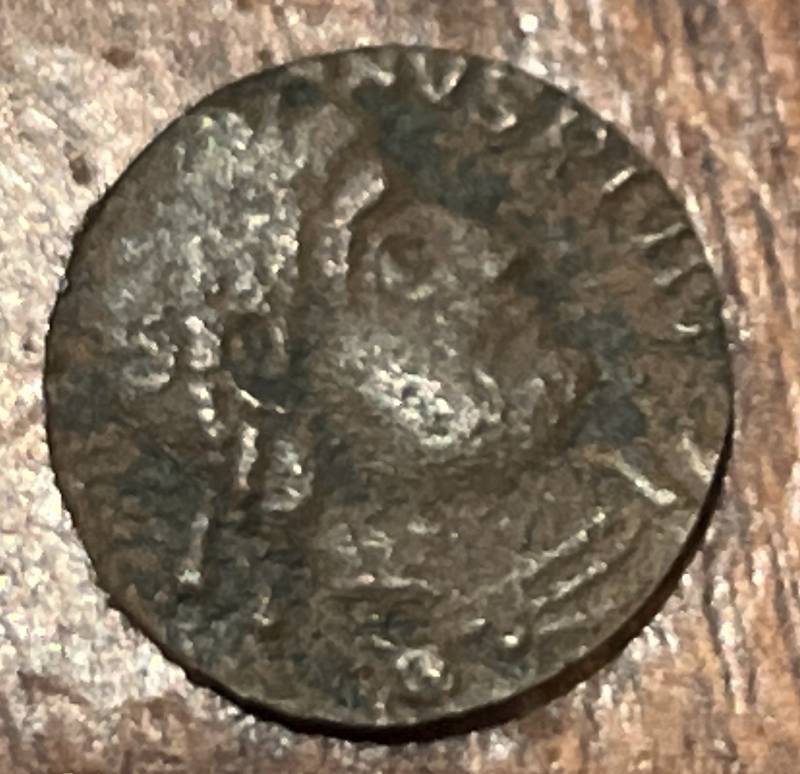
Late Roman Bronze portraits all tend to look much alike; the era of photo-realistic portraiture had long passed by the time this coin was made. Unless an emperor had a peculiarly distinctive feature that made it onto the coinage (such as Julian II's long beard), it's virtually impossible to tell them apart by portrait alone. You need the lettering to help. And the only surviving readable lettering from the emperor's name on this piece is "...NVS". An emperor named "Constantine" is a good match, but so are Valentinian, Gratian and Jovian. Balance of probability, Constantine I or Constantine II are the best bets.
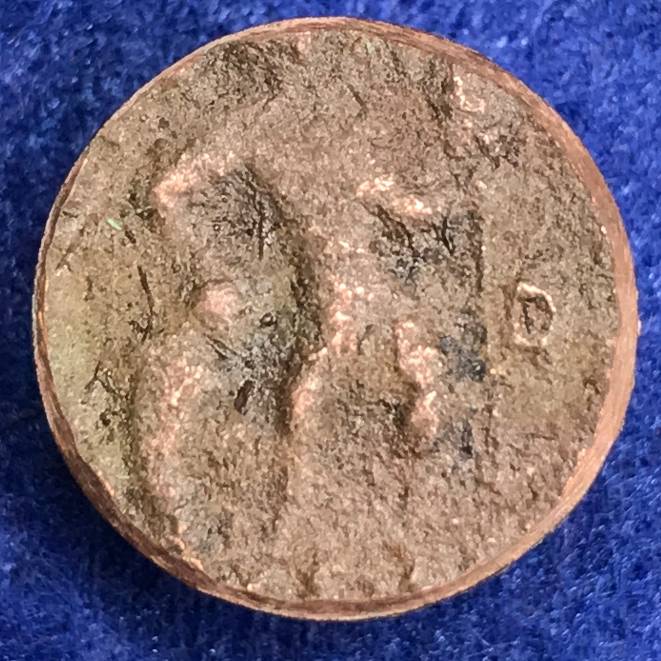
It is much more circular than an ancient coin normally is; it was presumably made round by grinding down the edges, prior to being inserted into the locket. As such, it will be considered "damaged", and of minimal value to a collector.
It is much more circular than an ancient coin normally is; it was presumably made round by grinding down the edges, prior to being inserted into the locket. As such, it will be considered "damaged", and of minimal value to a collector.
Don't say "infinitely" when you mean "very"; otherwise, you'll have no word left when you want to talk about something really infinite. - C. S. Lewis