| Author |
 Replies: 6 / Views: 1,306 Replies: 6 / Views: 1,306 |
|
|
Bedrock of the Community
 United States
27252 Posts |
Several of my ancestors were relocated from France to Nova Scotia in the 1600s, and then their families were evicted by the British in 1755. They made their way to Louisiana. Yes, I am a "Cajun".
I've been attempting, without much success, to determine which coins may have been used by my ancestors during their time in Acadia.
If someone could direct me to resources detailing the numismatics of that period I would be most grateful.
Thank you. Inordinately fascinated by bits of metal with strange markings and figures
|
|
|
|
Moderator
Australia
16964 Posts |
Under French rule, French coins would have been legal tender; under British rule, British coins. However, the remoteness of Nova Scotia meant that very little official coinage was formally shipped across the Atlantic to facilitate trade; as far as both the French and British governments were concerned, the colonists shouldn't need that much money. In practice, the colonists would have used whatever coins came to hand, from anywhere in Europe, or from the Spanish colonies further south. Very little coinage was issued specifically for colonial use. The French were in the habit of "recycling" old, worn-out French coins, counterstamping them with the fleur-de-lys, and sending them off to the colonies (all French colonies in the Americas, including the Caribbean and South America, and not just Acadia and Louisiana). In 1670, some coins were struck specifically for use in the overseas colonies; here's an example of the 15 sols on Numista. These coins are made of billon, a debased-silver alloy that turns black in circulation. The British nicknamed these coins "black dogs". Needless to say, they weren't popular with the colonists either; many of them ended up back in France. In 1721, France tried again, issuing a copper 9 deniers coin specifically marked "Colonies Francoises" so they wouldn't circulate in mainland France. The colonists in Acadia hated them, refusing even to accept them at a discount, and local authorities packed them up in barrels and shipped them back to France. The French eventually sent them to circulate in Louisiana. This website from the University of Notre Dame, IN has some interesting reading: https://coins.nd.edu/colcoin/colcoi...h.intro.htmlDon't say "infinitely" when you mean "very"; otherwise, you'll have no word left when you want to talk about something really infinite. - C. S. Lewis
|
|
Pillar of the Community
United States
683 Posts |
Find a recent copy of Charlton Standard Catalogue of Canadian Coins volume 1. The first 12 pages or so has a listing by type of foreign coins that circulated in Canada from the 1580s thru late 1800's.
There is also a specialty book by Robert Vlack "An Illustrated Catalogue of The French Billon Coinage in the Americas" published by C4 (Colonial Coin Collectors Club) in 2004.
Finally, because regal coinage was scarce in the colony, there are the token issues. Charlton Standard Catalogue of Canadian Colonial Tokens is the catalogue for these.
|
|
Valued Member
Canada
138 Posts |
Although Acadia was initially settled in 1605, coins probably weren't common for several decades afterwards, as population growth was very slow, and barter prevailed.
French coins would have been more common in the mid 1600s. In the early 1700s the British gained control of much of Acadia and would have brought in some British coinage. Many of the English settlers came from Massachusetts and brought some of their coins depicting various trees. Spanish silver and Portuguese gold coins would have also been used. The French continued to hold some areas until the mid 1700s (ie Fort Beausejour and Fort Louisbourg) and archaeological digs have revealed comprehensive lists of lower denomination coins.
I'd recommend the following sources:
1) - Money and exchange in Canada to 1900 by McCullough, specifically chapter 3 Acadia, Ile Royale and Nova Scotia.
2) - Charlton Canadian Coins pages 1-14 (Foreign Coins in Canada)
3) - A Guide to the History and Collecting of Coins, Robert Willey
4) - When Money Talks: Coinage in New France, Peter Moogk (itemizes archaeological finds)
All of these will be informative, but 1) and 4) will likely be the most comprehensive for your request. I didn't list later sources, for example Charlton Tokens, as these were relevant in the 1800s after your specified period.
I have compiled my own lists and notes and would be happy to discuss further if you wish.
|
|
Bedrock of the Community
 United States
27252 Posts |
Thank you, Sap, 1960NYGiants, and cedargrove. You've certainly been of great assistance. Now it's time for me to get to work.
Inordinately fascinated by bits of metal with strange markings and figures
|
|
Bedrock of the Community
United States
27252 Posts |
By the way, I do own a rather cruddy 1721 Colonies Francoise 9 deniers. I don't recall ever purchasing it, so it must have belonged to my father. That's not a coin he would have ever bought, so it's possible that it had been handed down through the generations. 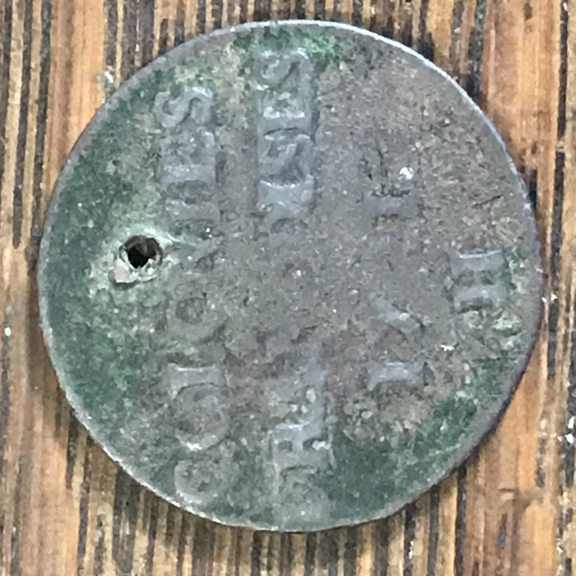 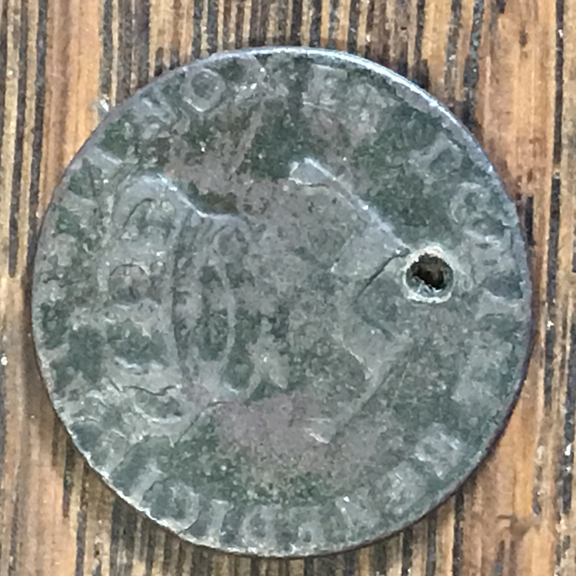 Inordinately fascinated by bits of metal with strange markings and figures
Edited by HondoB
05/24/2023 3:36 pm
|
|
Bedrock of the Community
United States
27252 Posts |
Update: I was mistaken. Going through some records this morning, I purchased this on ebay in 2003 for $25. Inordinately fascinated by bits of metal with strange markings and figures
|
| |
Replies: 6 / Views: 1,306 |
|










 Posted 05/23/2023 10:24 pm


