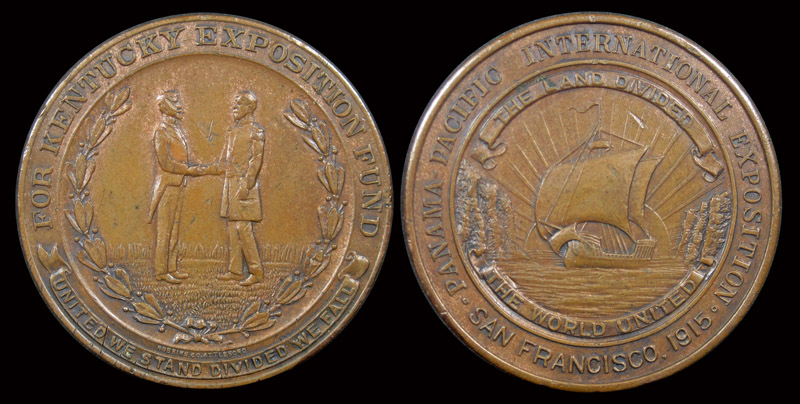
The Panama-Pacific International Exposition ran from February 20 to December 4, 1915; it was hosted by San Francisco, California. The "City by the Bay" beat out New Orleans, Louisiana, San Diego, CA, Baltimore, Maryland, Boston, Massachusetts and Washington, DC for the honor of hosting the Exposition, being selected for the honor by the US Congress on January 31, 1911.
The Exposition was officially held to celebrate the completion and opening of the Panama Canal. It also helped celebrate San Francisco's rebirth after the devastating earthquake that hit the city in 1906.
Exposition Guide Book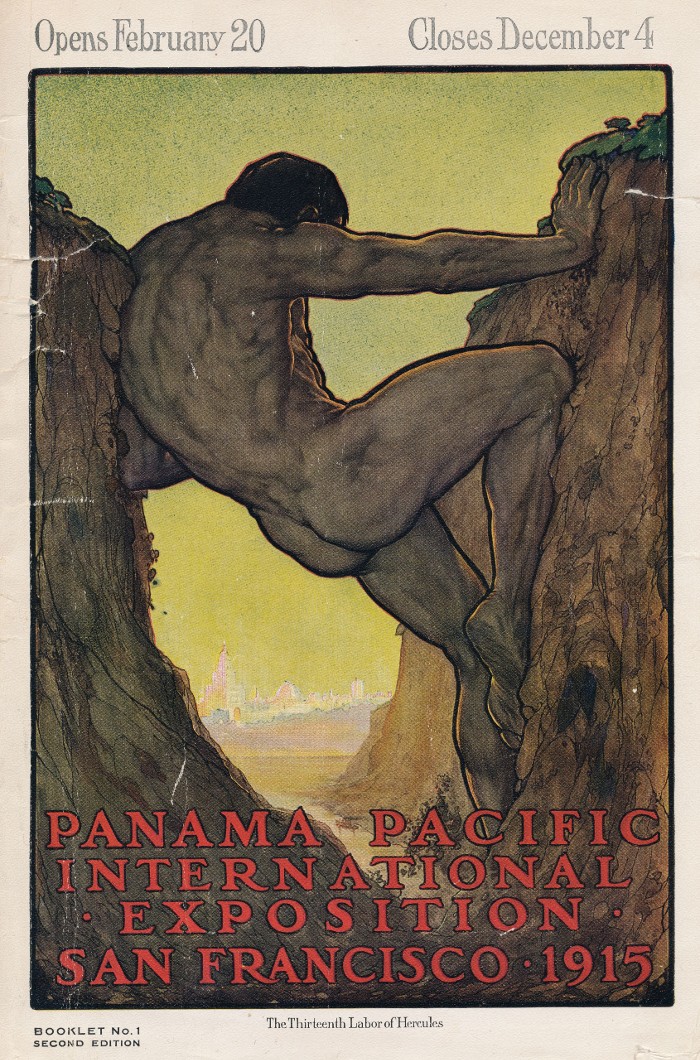
The
Guide Book for the Exposition recalls Heracles/Hercules and the 12 very difficult labors that he performed for King Eurystheus as a penance for killing his wife and children. The use of the Hercules myth was meant to symbolize the huge effort that was required to complete the Canal - the 13th labor.
The Exposition drew ~19 million attendees, with more than 13 million of them paid. It was a large popular success, though just a modest one from a financial perspective due to its high cost of construction and staging. The Exposition Company made good on its promise, however, and donated a portion of its profits to construct the San Francisco Civic Auditorium (today known as the Bill Graham Civic Auditorium). The large influx of visitors to the area for the Exposition certainly helped invigorate the San Francisco economy.
It was truly an international exposition, with 35 nations participating. In addition, 25 US States formally took part. A reported 80,000 exhibits were mounted by over 30,000 exhibitors from around the world.
The Exposition was constructed on ~635 acres of mostly reclaimed land in north San Francisco at a cost of ~$50 million. The ceremonial groundbreaking for the Exposition took place on October 14, 1911 with US President Howard Taft on hand to turn the first shovel of dirt. An estimated 100,000 people were on hand to witness.
Souvenir of Groundbreaking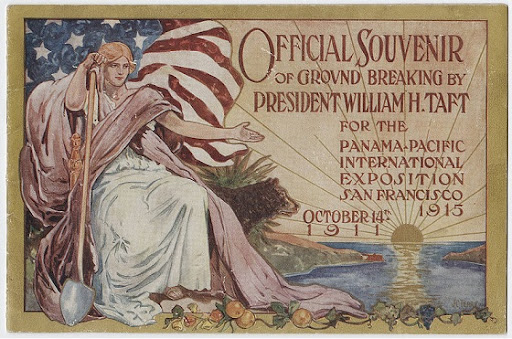
Many beautiful buildings/halls were constructed for the Exposition, including 11 exhibition palaces, 21 foreign nation pavilions and over two dozen buildings for State exhibits. Here's a sampling from a Souvenir Booklet I have:
Aerial View of Panama-Pacific International Exposition Grounds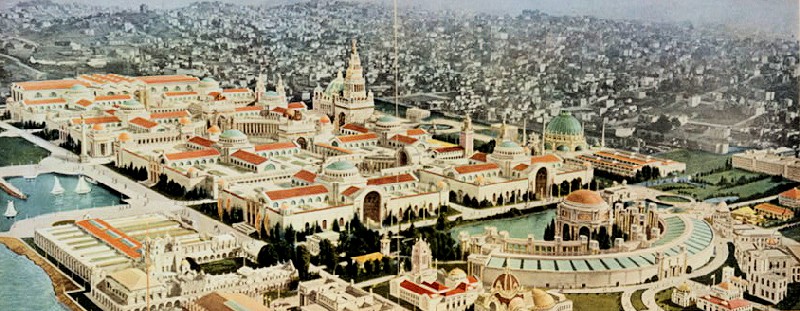 Tower of Jewels & South Gardens Looking West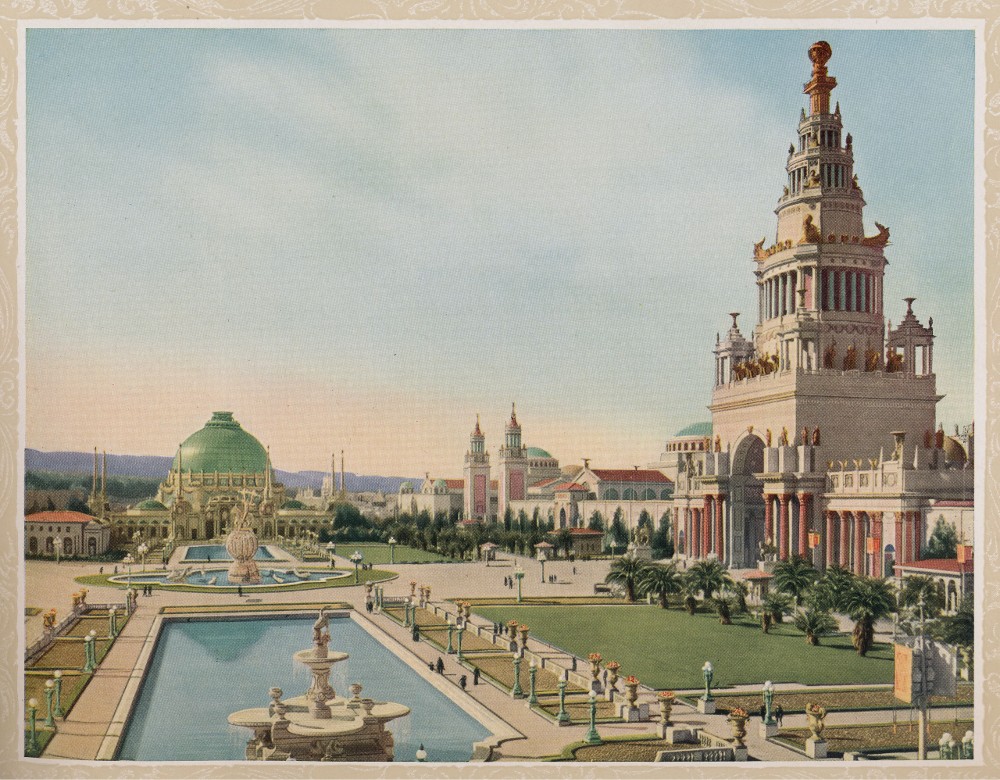
The Tower of Jewels was 435 feet tall and covered with more than 100,000 cut glass "jewels" to reflect sunlight and the shining light of 50+ flood lights at night.
Festival Hall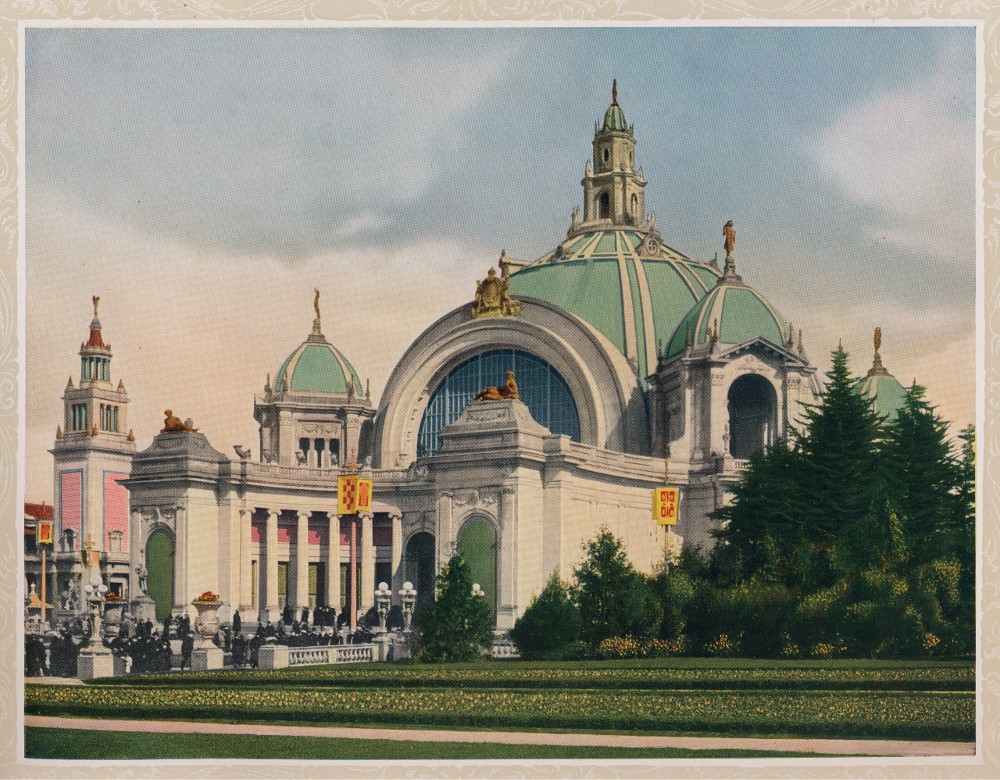
The Hall was host to musical concerts and recitals.
Palace of Fine Arts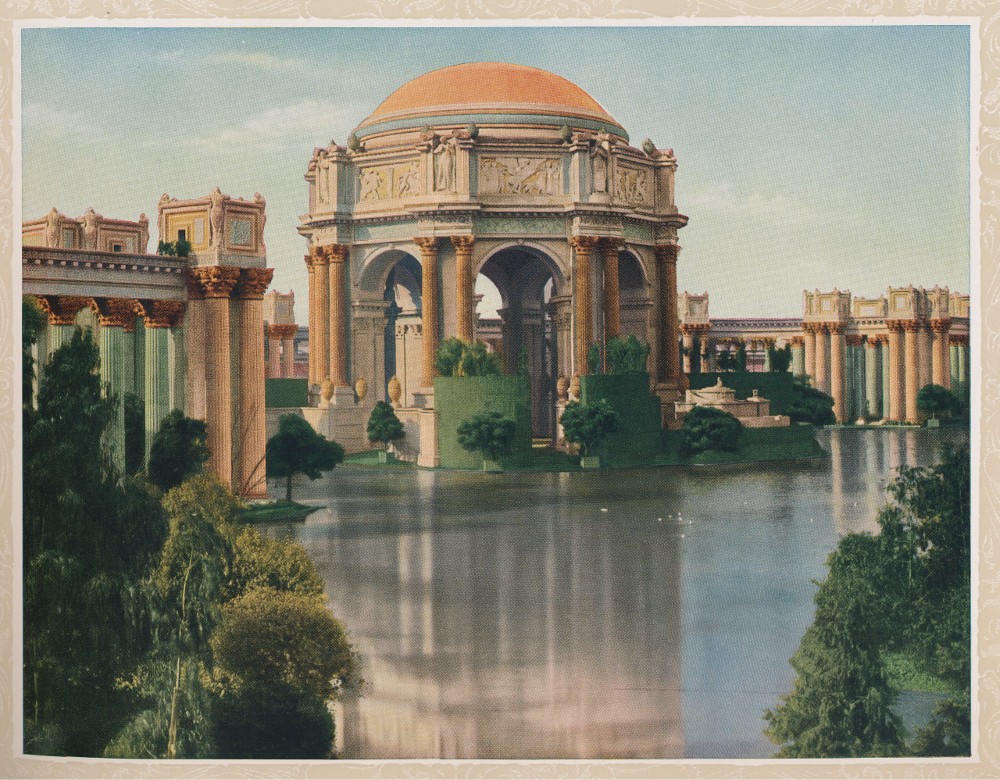
The Palace of Fine Arts housed, as its name implies, works of art - primarily paintings and sculpture. It is one of the few Exposition structures that remain today, though in a reconstructed form.
Palace of Fine Arts - Circa 2012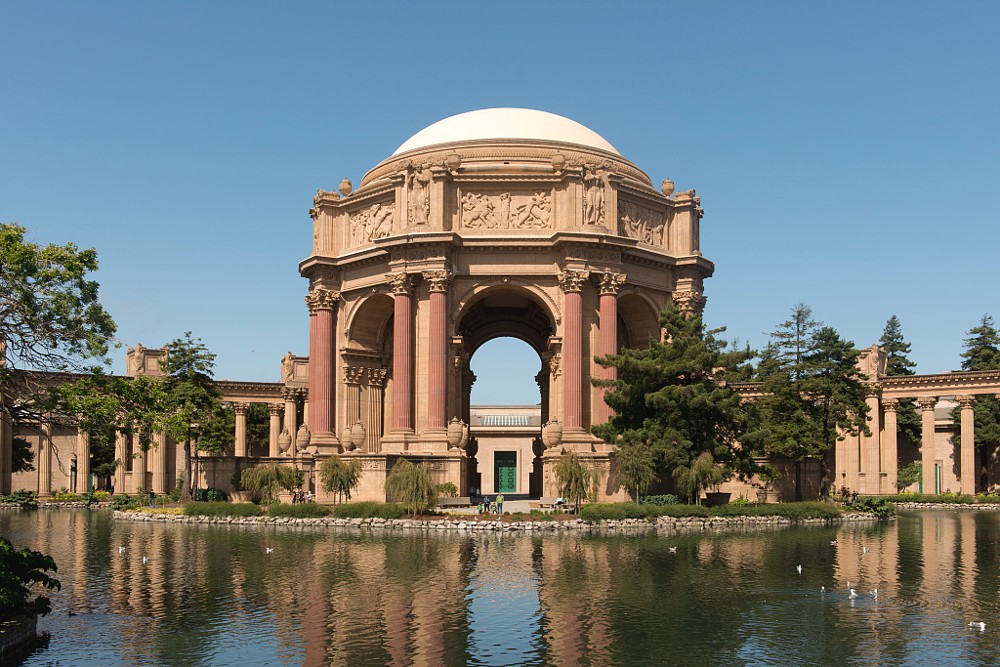 (Image Credit: Library of Congress, Prints and Photographs Division. Public Domain.)
The Palace of Fine Arts was rebuilt in 1965, with additional renovations completed in 2009.
Court of Four Seasons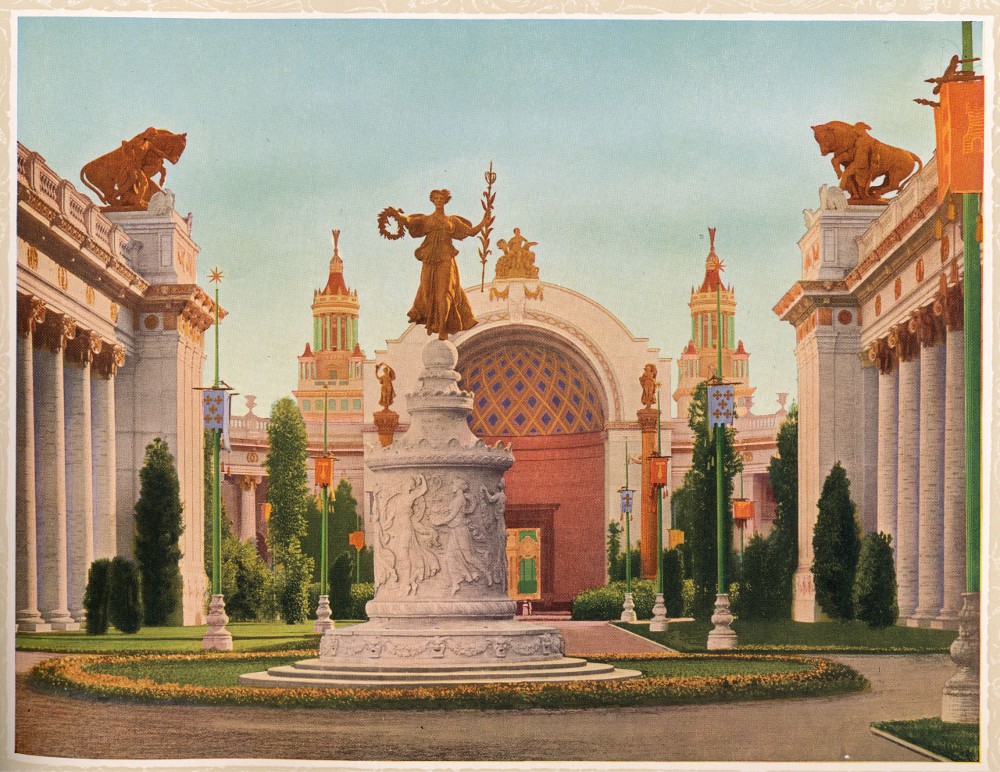 Overlooking the Pre-Bridge Golden Gate
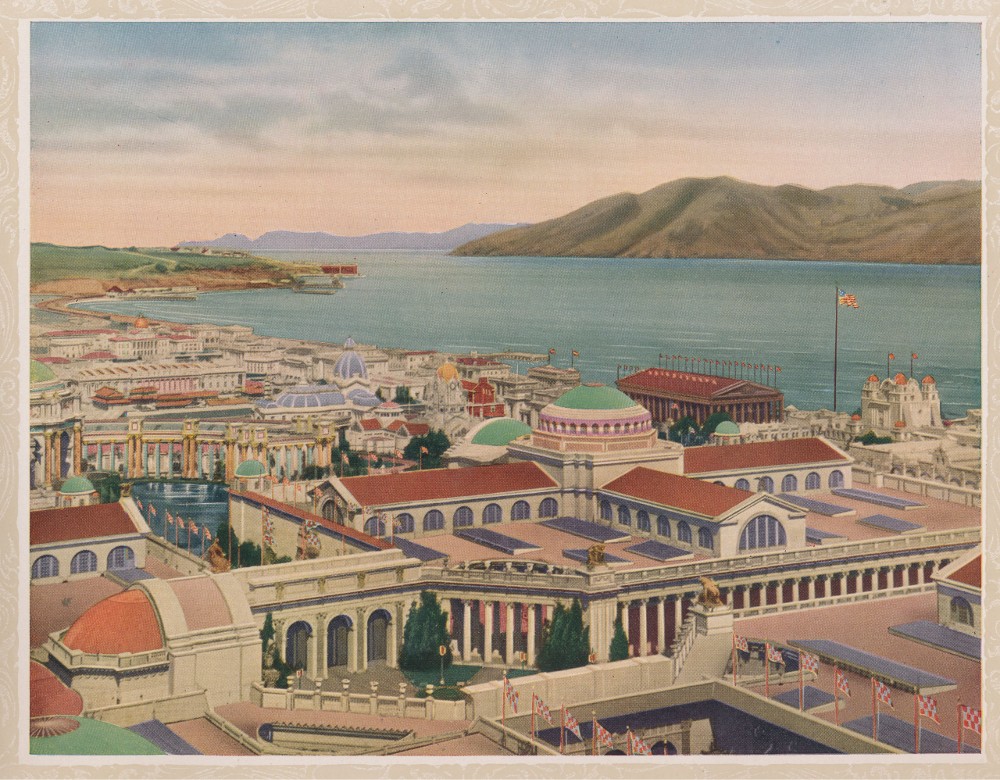 South Gardens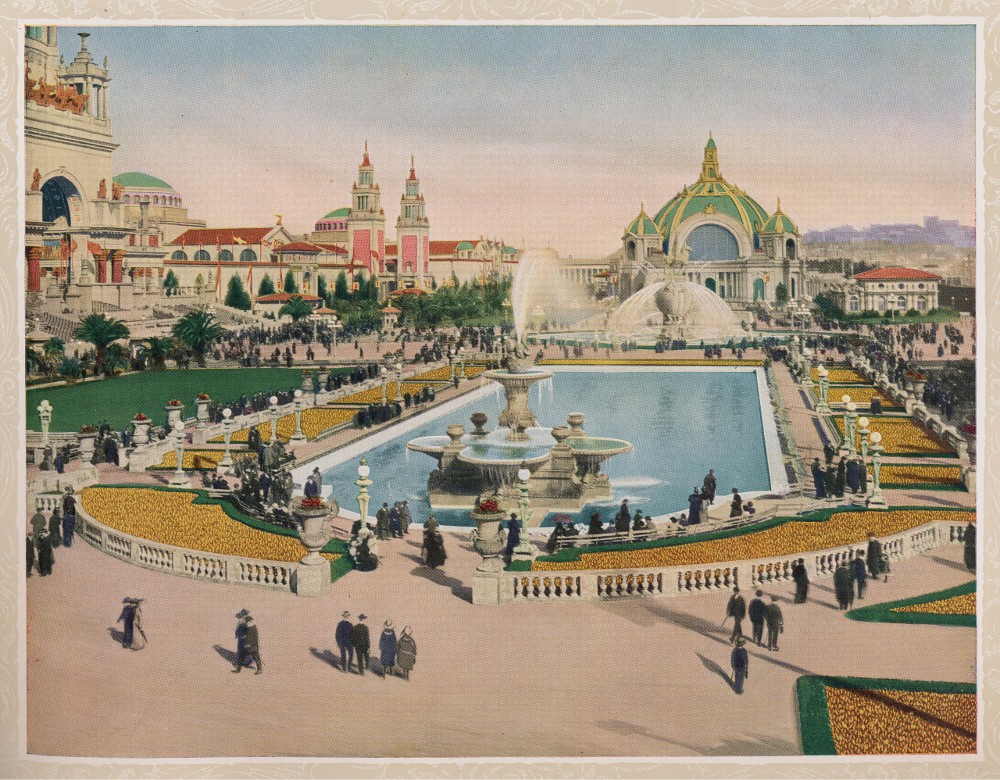
The Fountain of Energy is visible within the pool of the Gardens.
The Exposition at Night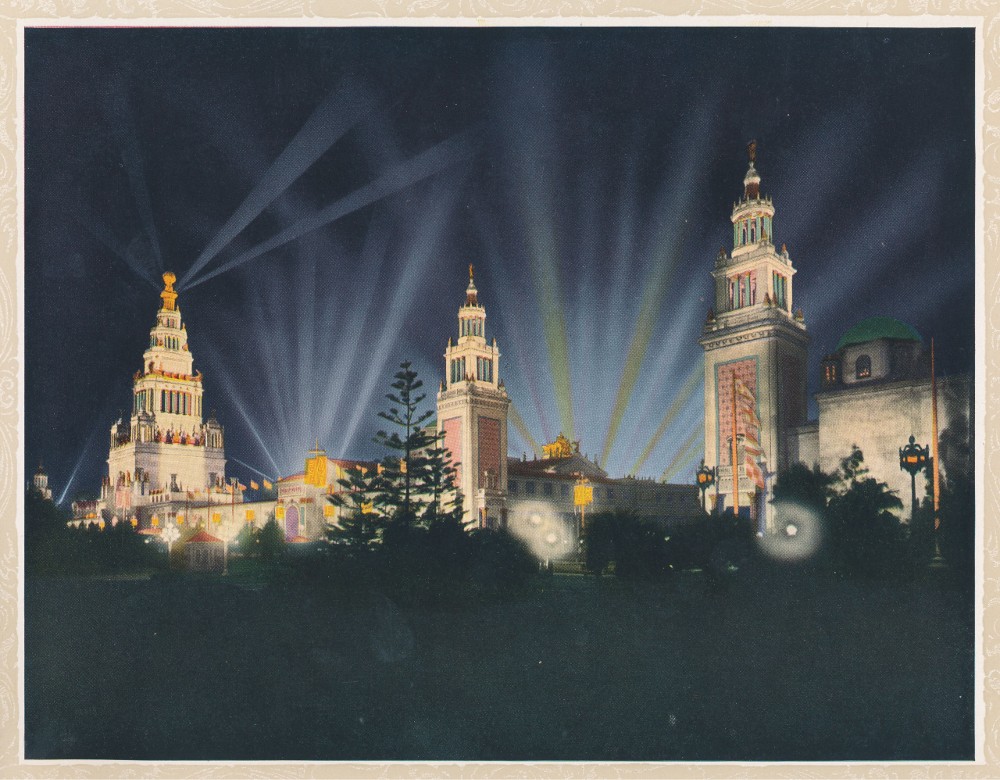 Side Note: The Liberty Bell journeyed from Philadelphia to San Francisco to be part of the Exposition - a trip that - for security and preservation reasons - would not happen today.
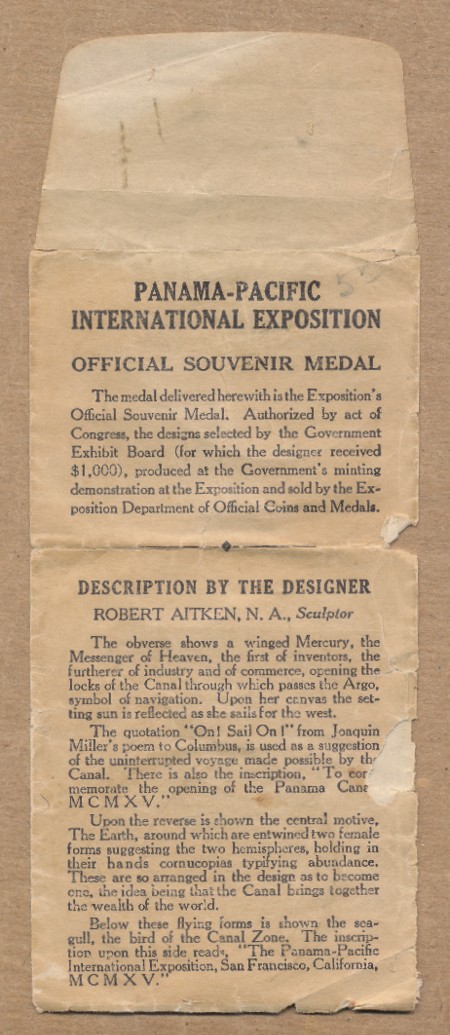
Here are my commemorative medals (aka So-Called Dollars) struck by the US Mint in support of the Panama-Pacific International Exposition.
On the obverse is seen the figure of a Winged
Mercury, the swift messenger of Greek mythology, symbolically opening the locks of the newly-completed Panama Canal to allow
Argo the swift and magical sailing ship of Greek mythology to pass. The
Argo was said to have carried Jason and the Argonauts on their voyage to obtain the fabled Golden Fleece. On the medal, the
Argo was meant to represent the swift sea travel now possible via the Canal.
The reverse design features two female figures that are meant to symbolize the East and West Hemispheres. They are depicted sharing full cornucopias with the earth behind them showing North and South America. Below the figures is seen a seagull, a common bird of the Canal Zone.
The medal was design by Robert Aitken, who also created the designs for the Panama-Pacific gold $50 coins.
1915 Panama-Pacific International Exposition Medal - Silver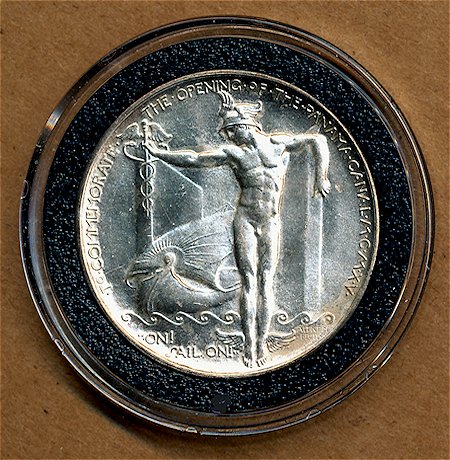
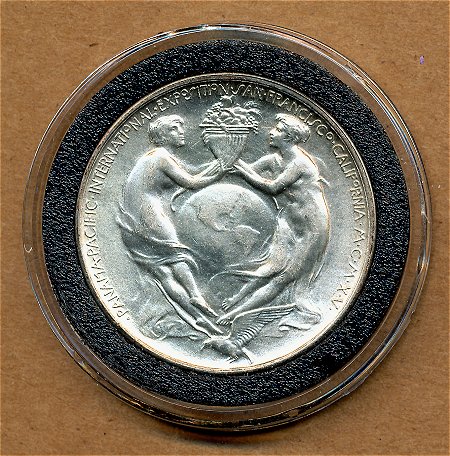
(I need to send it for certification at some point so that it can join my others.)
1915 Panama-Pacific International Exposition Medal - Bronze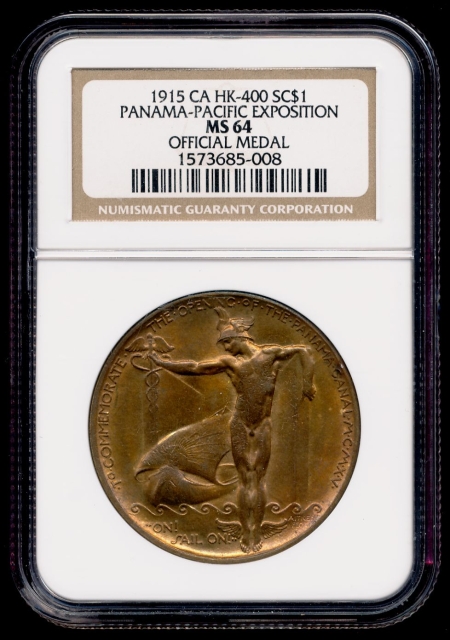
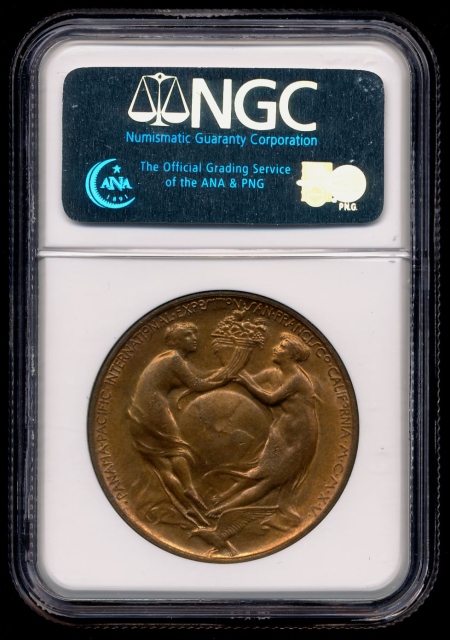 1915 Panama-Pacific International Exposition Medal - Gold-Plated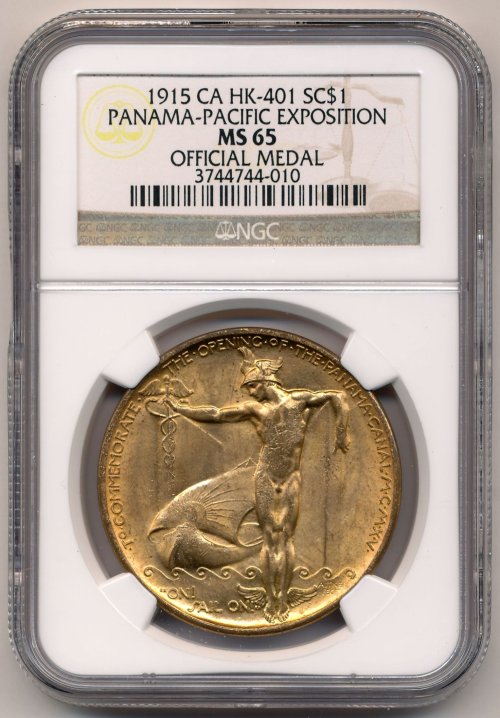
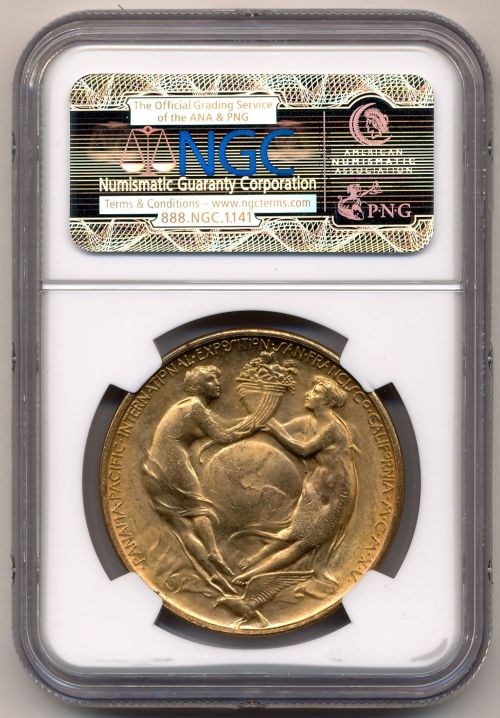
The Exposition was the source of many medals, tokens and other exonumia (and ephemera!) and represents a popular collecting area. While some of the pieces are quite rare and difficult to obtain, others appear iwith some frequency in the marketplace. I would recommend researching the availability/market price of the various "Pan-Pac" items before jumping in to make sure you know the jorney upon which you would be embarking.
For other of my posts about commemorative coins and medals, including more on the "Pan-Pac" issues and other US Mint-struck Exposition medals, see:
Commems Collection.




 Posted 06/23/2023 10:34 am