| Author |
 Replies: 18 / Views: 3,555 Replies: 18 / Views: 3,555 |
|
Valued Member
Canada
59 Posts |
|
|
|
|
Valued Member
 Canada
59 Posts |
|
|
Moderator
 United States
56855 Posts |
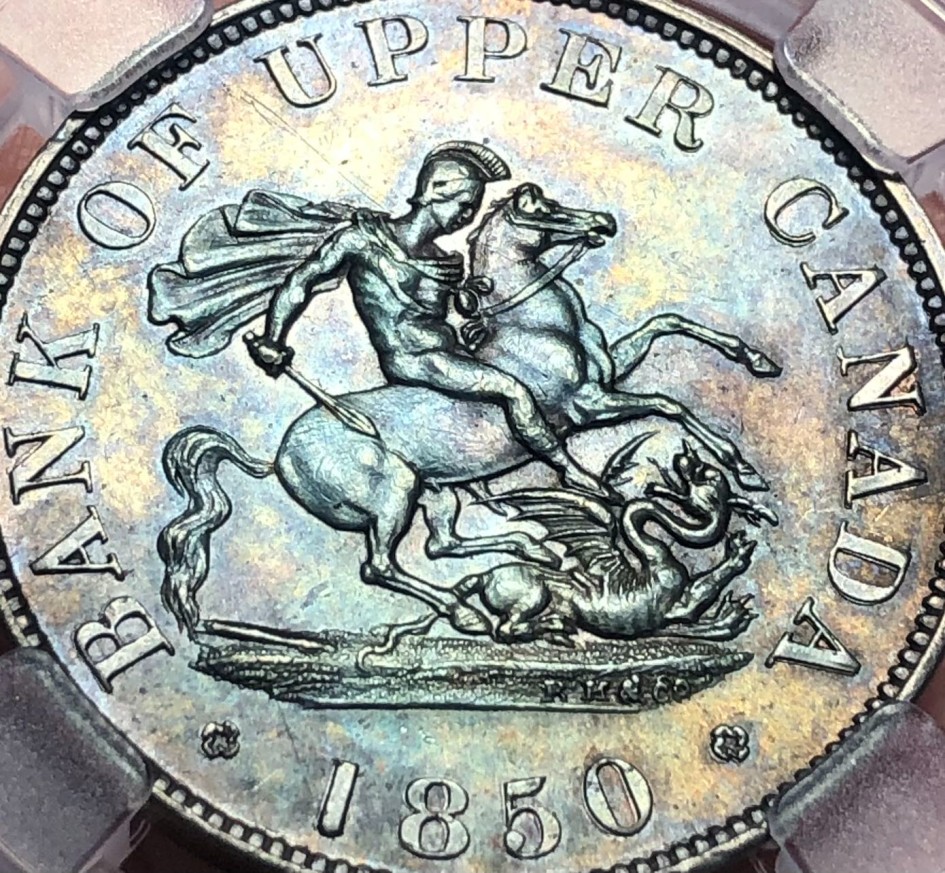
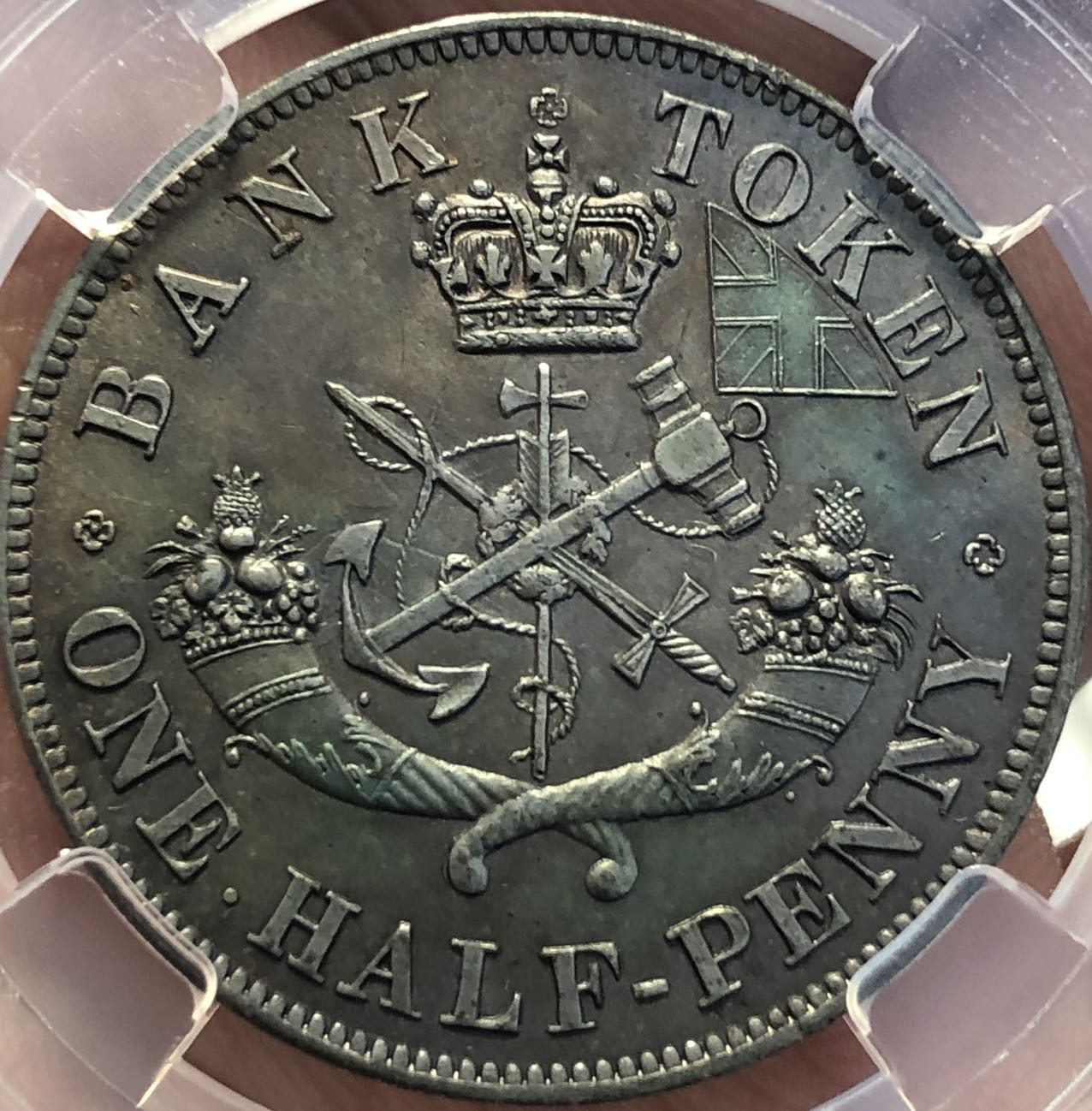
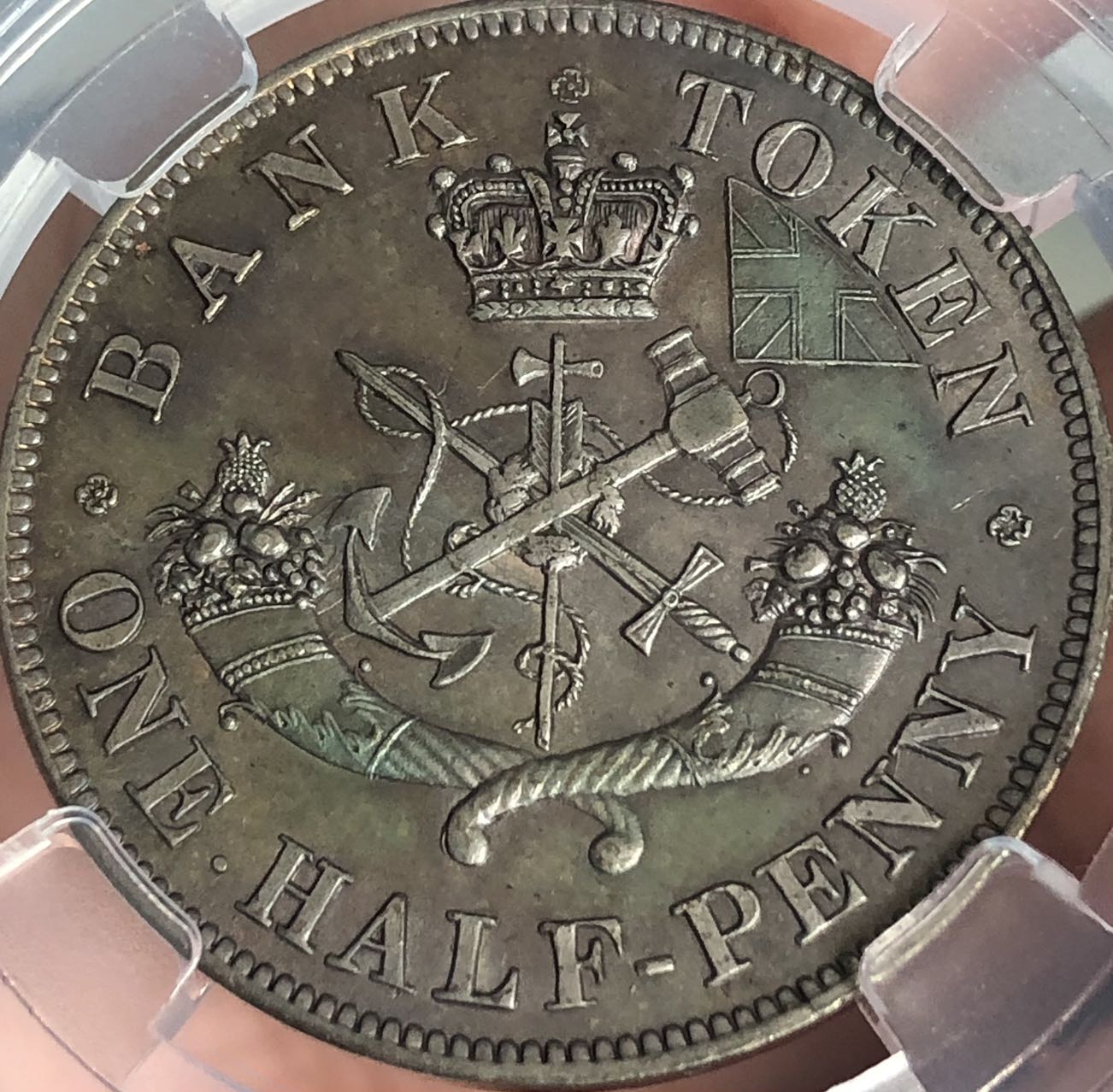
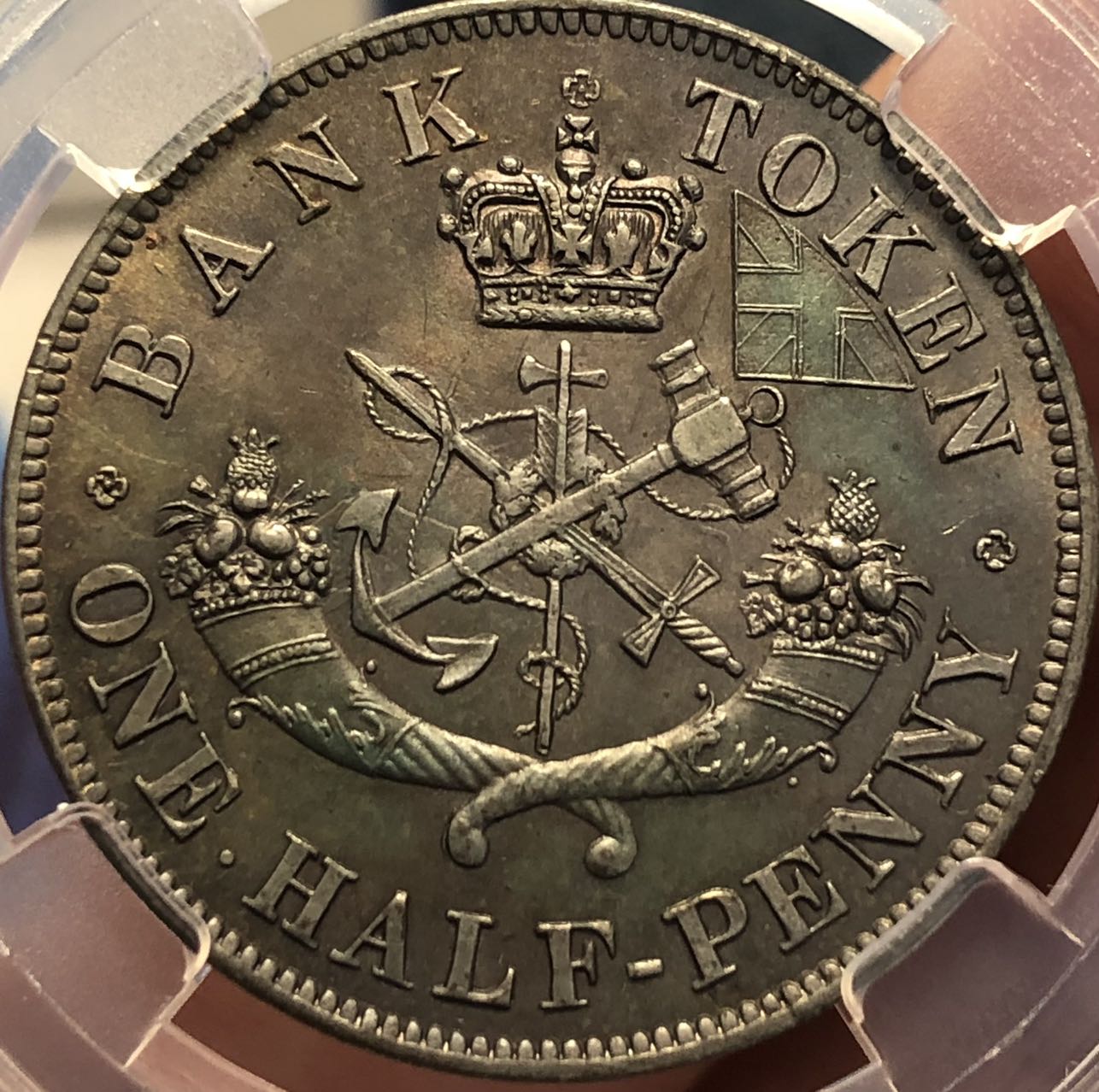
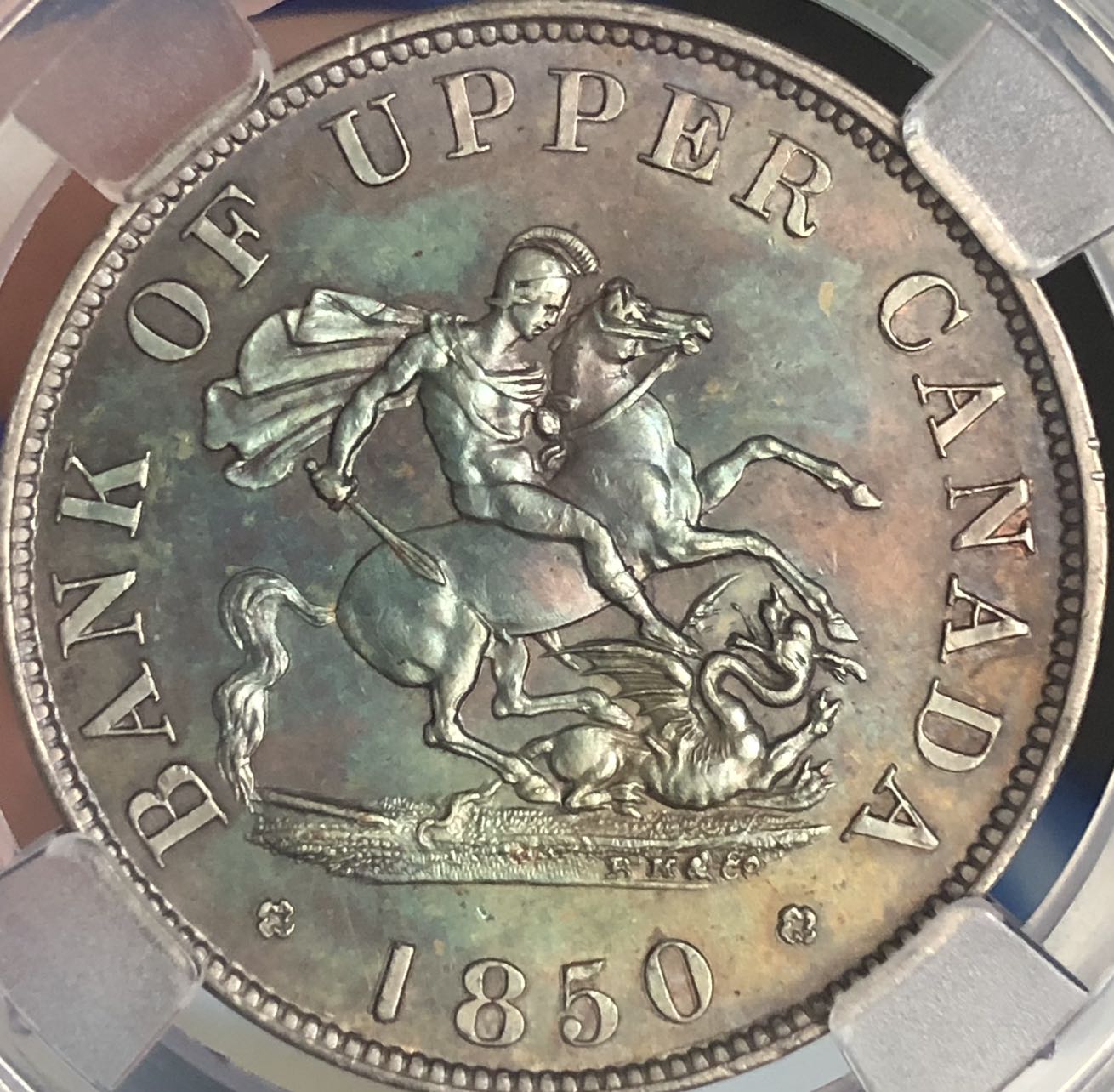
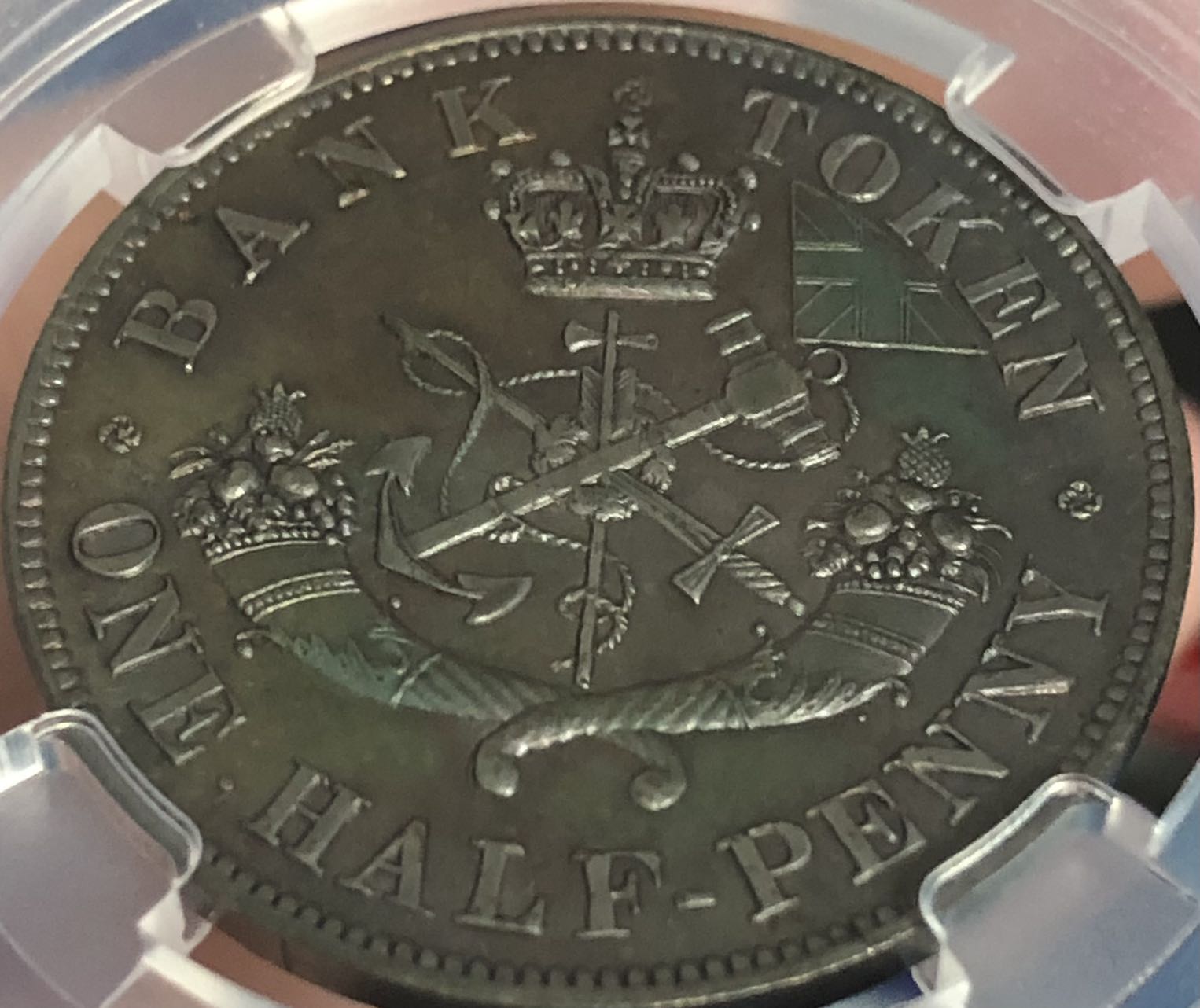
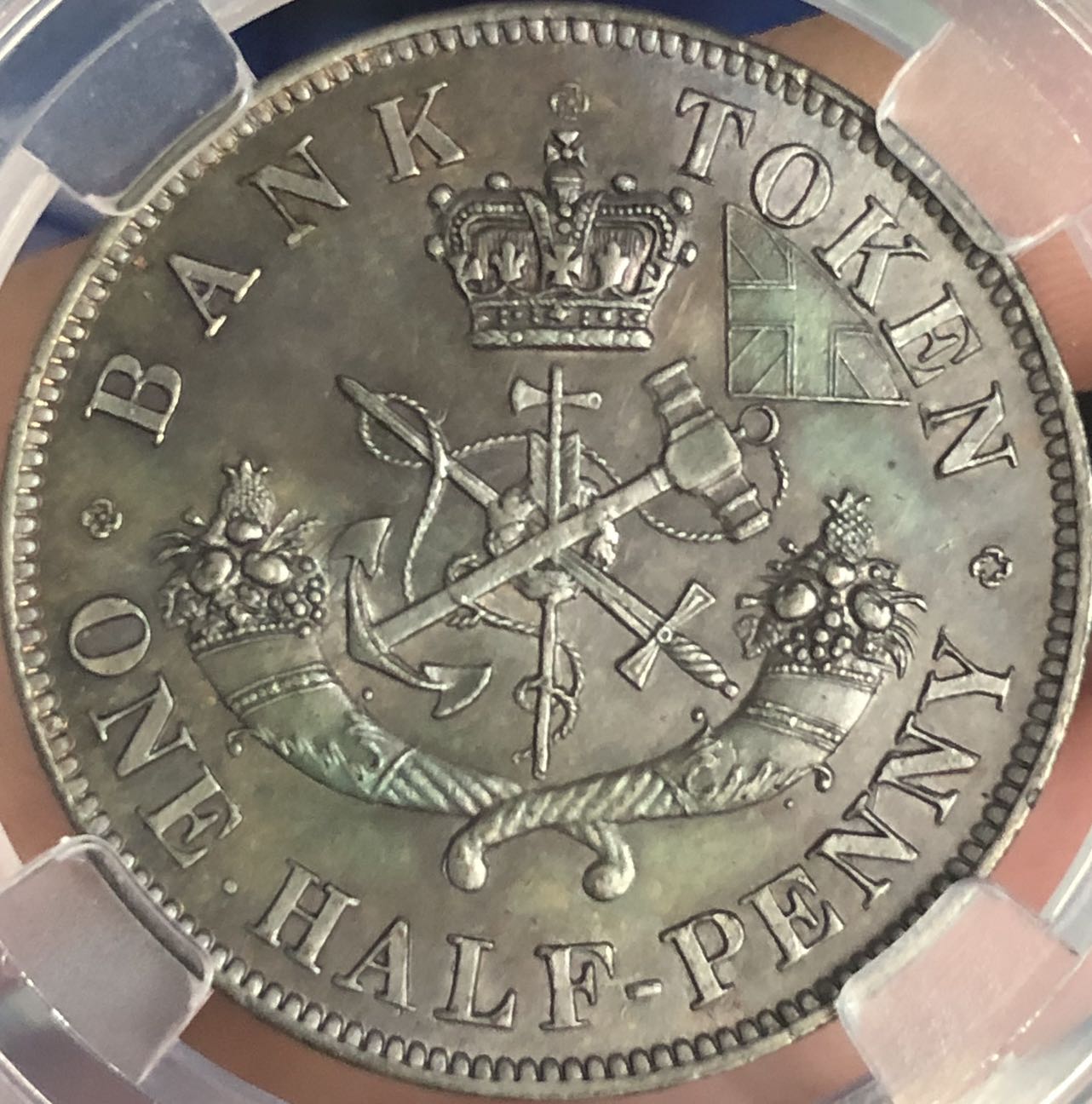
 Great eye appeal. A few too many photos. Sa a general rule start out with 4 photos,one full coin pic obverse and one full coin pic reverse as well as one or two close ups where and when needed. If we need more pics we will ask. John1  |
|
Bedrock of the Community
Australia
21794 Posts |
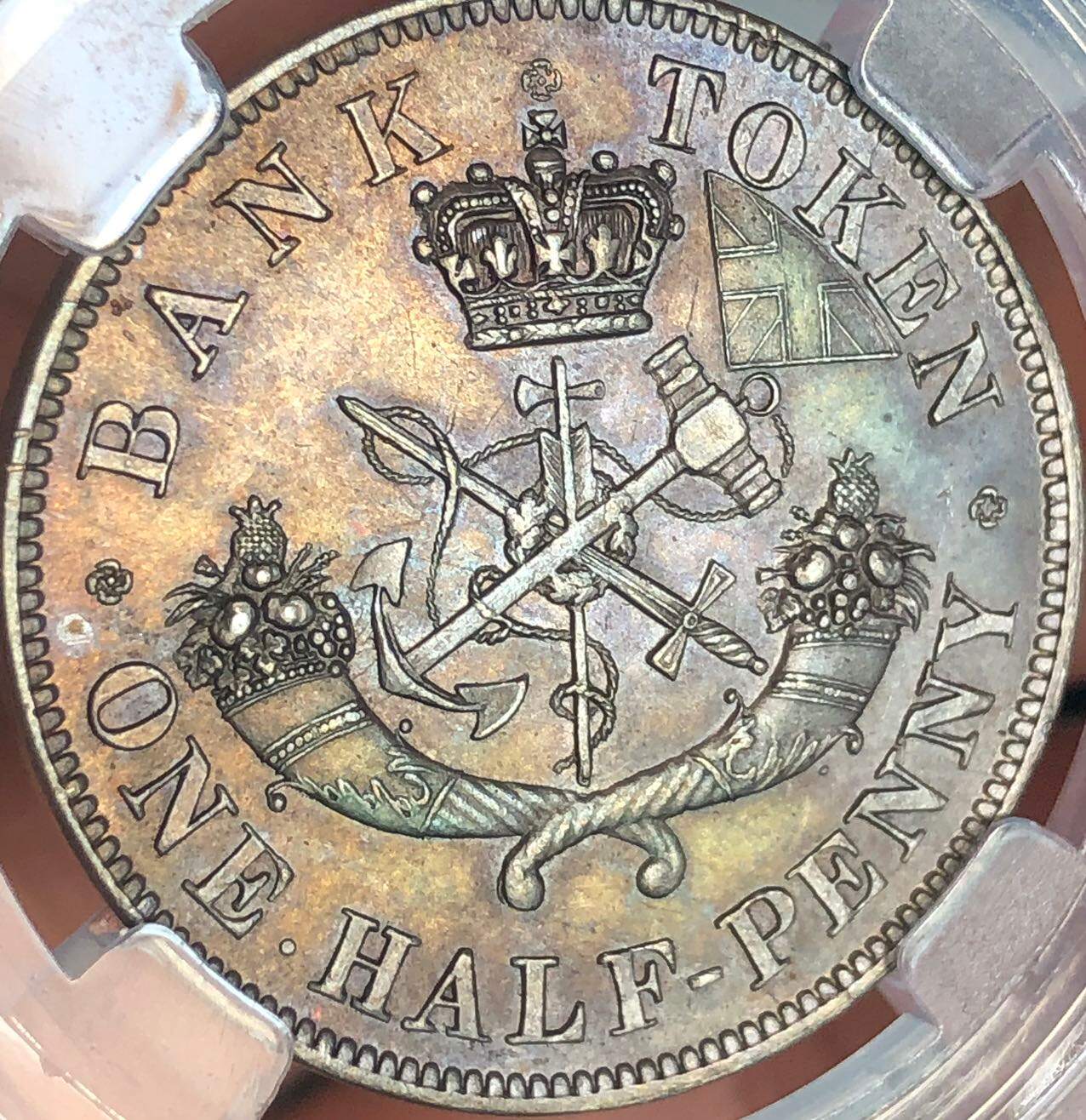
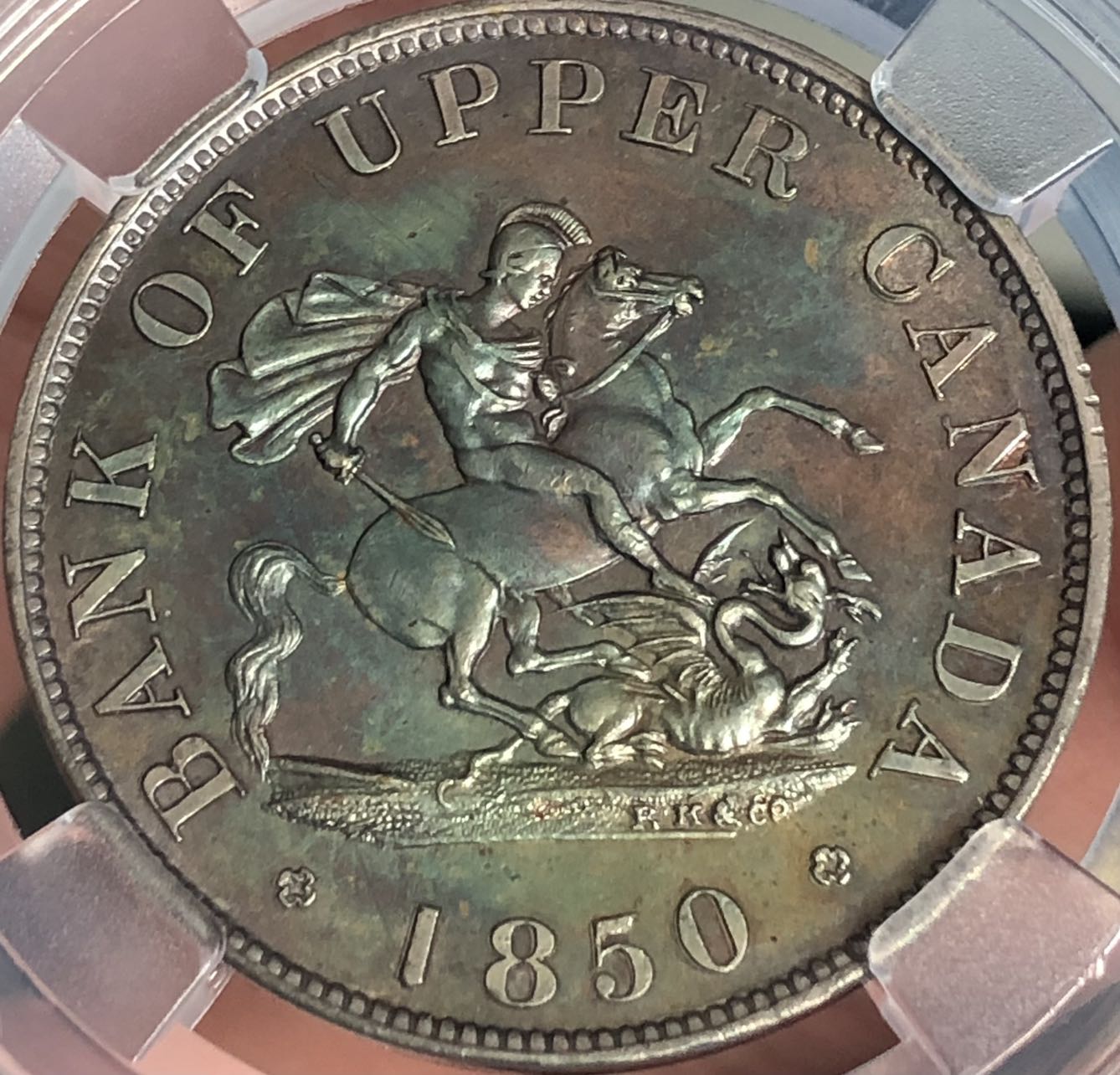
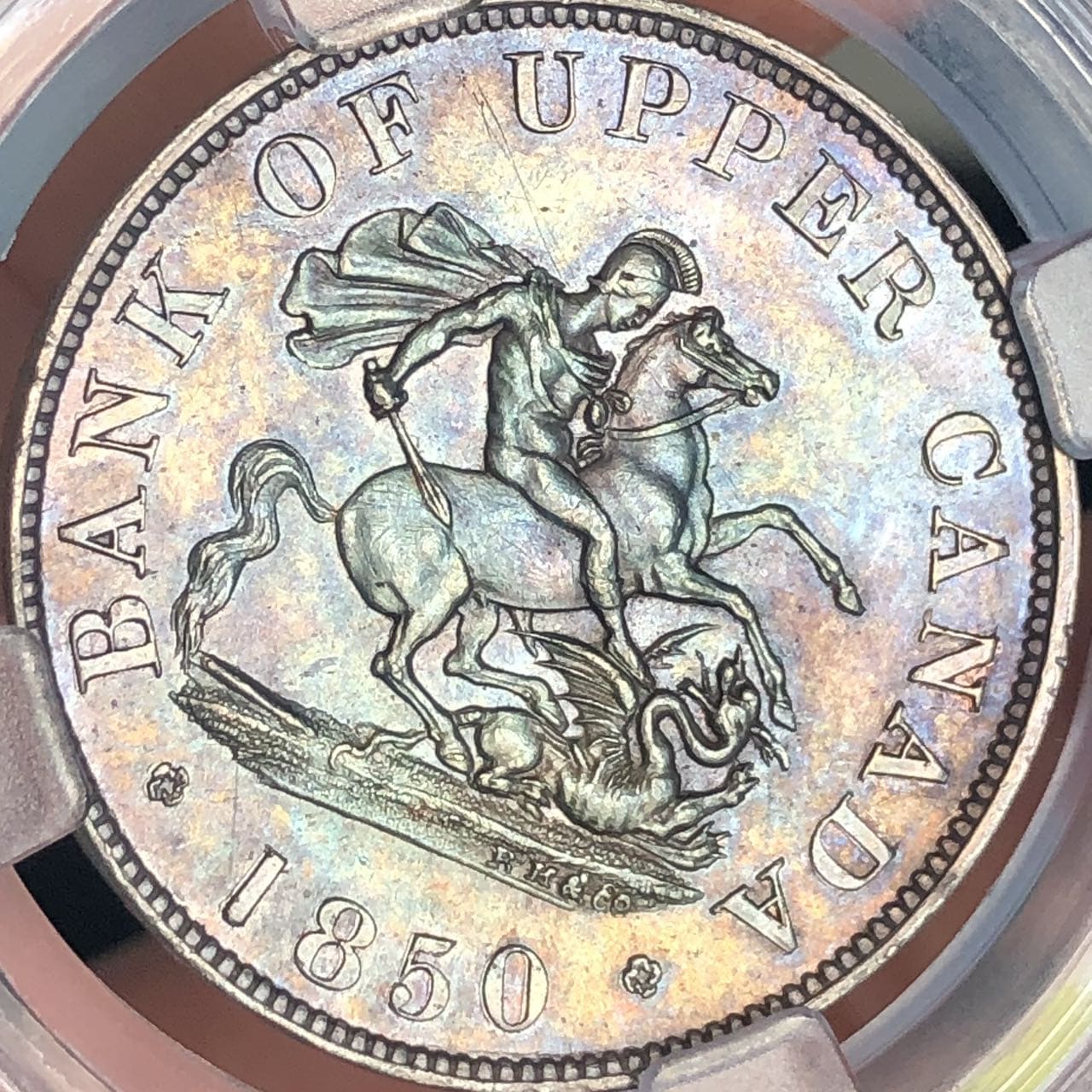
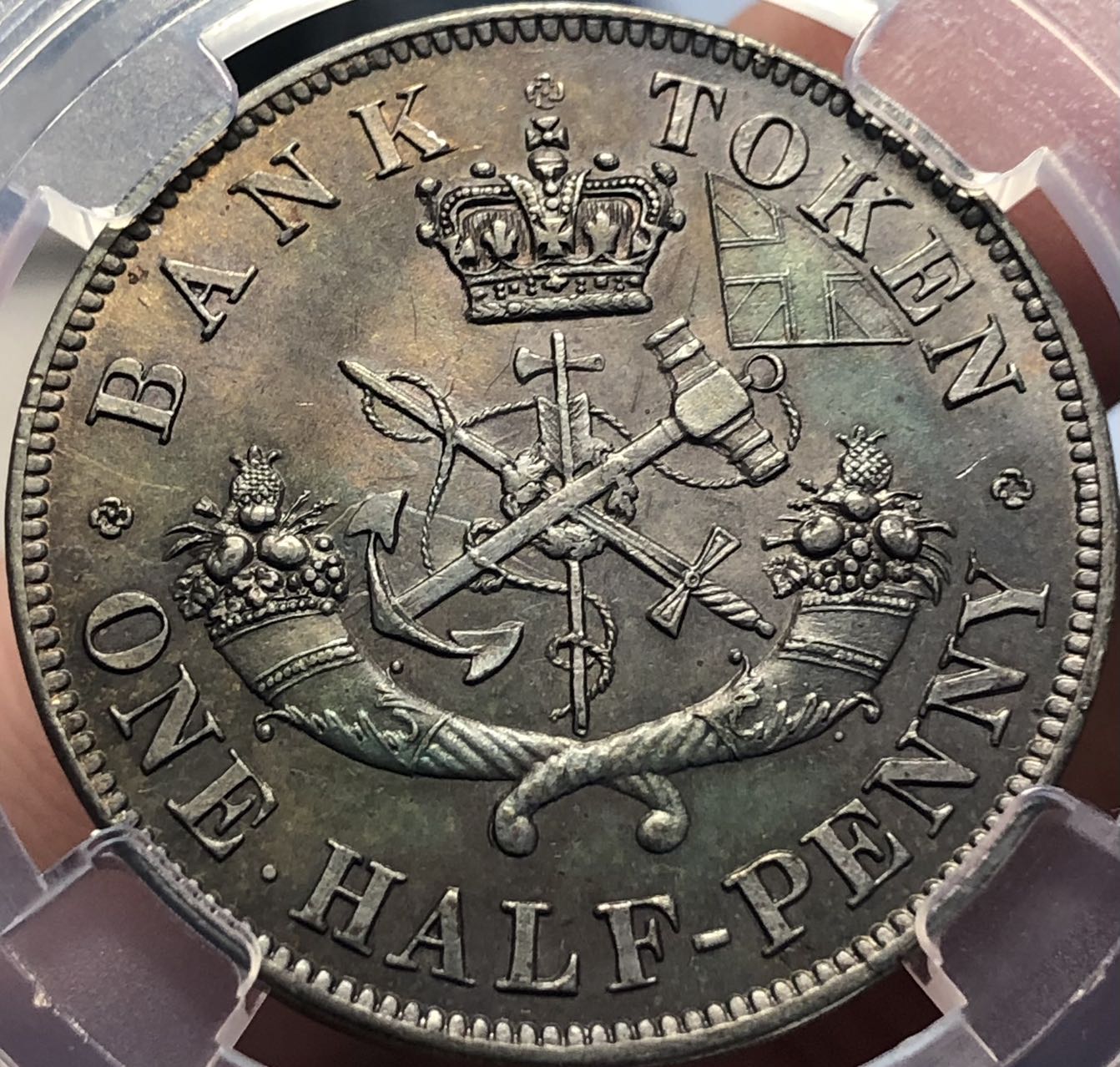
I don't think it is a specimen token, - not enough sharp detail in the tops of the cornucopiae, despite the fact that the lettering is nice and sharp.  , it is a very nice example, with even toning. |
|
Bedrock of the Community
United States
94367 Posts |
Beautiful example! to the CCF! |
|
Moderator
United States
198004 Posts |
to the Community! |
|
Pillar of the Community
 Canada
9913 Posts |
Nice coin!
But not a specimen.
For one the reverse is weakly struck and the rims aren't sharp.
"Dipping" is not considered cleaning...
-from PCGS website
|
|
Pillar of the Community
Canada
2786 Posts |
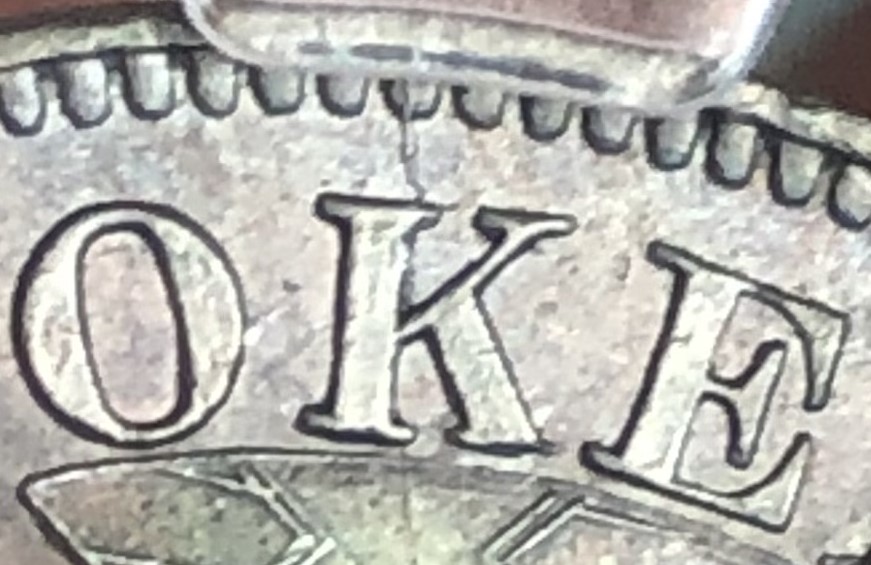
Regular grading standards don't apply to these issues. Dragon Slayers are so deep in detail that XF is often mistaken for MS. Well struck MS's do imitate "regular" coin SP strikes. Yours shows nice details in some areas, but not a SP strike. The die crack in the K in toKen is a dead give-away, along with doubling on the lettering. I am XF40 with environmental damage - that looks like someone tried to scratch off (further damaging the coin). For reference the first was graded MS60 by CCCS (would get 63/64 at NGC) Second is NGC MS64 (proudly the finest known crosslette 4 half penny) 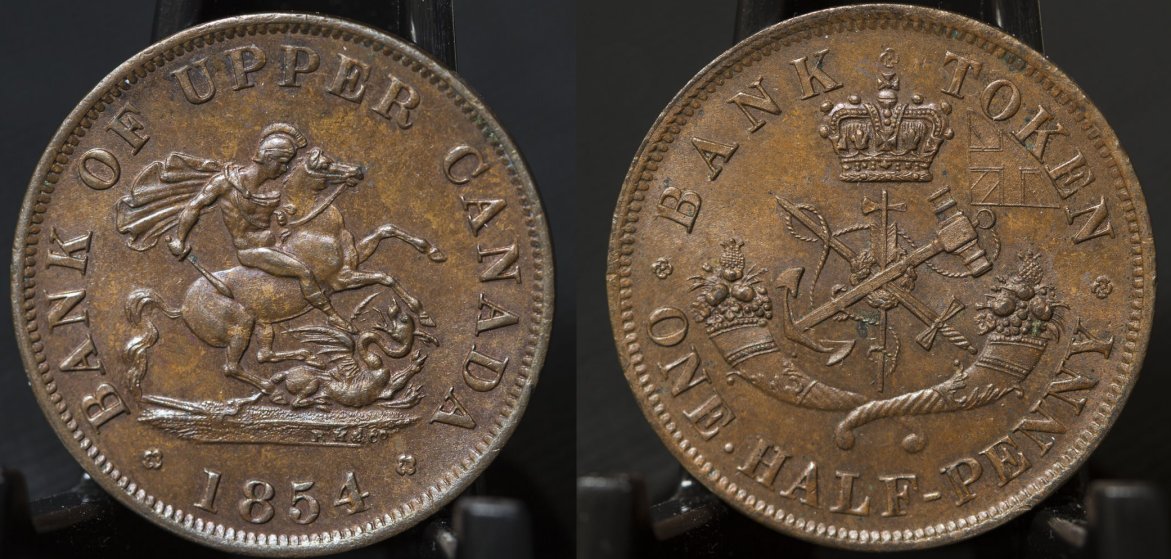 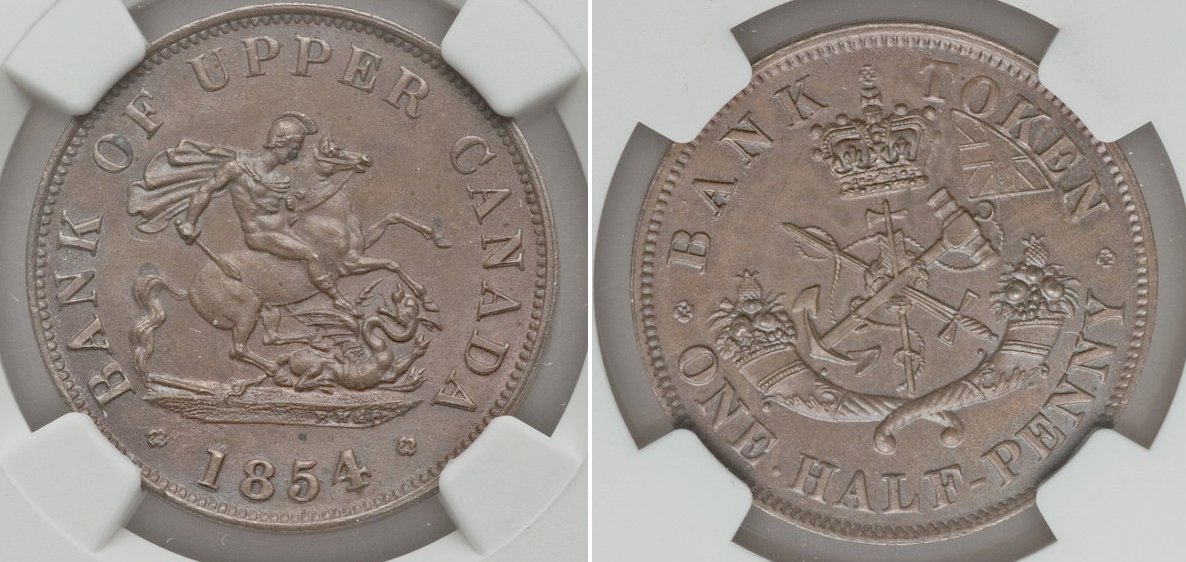 |
|
Valued Member
Canada
222 Posts |
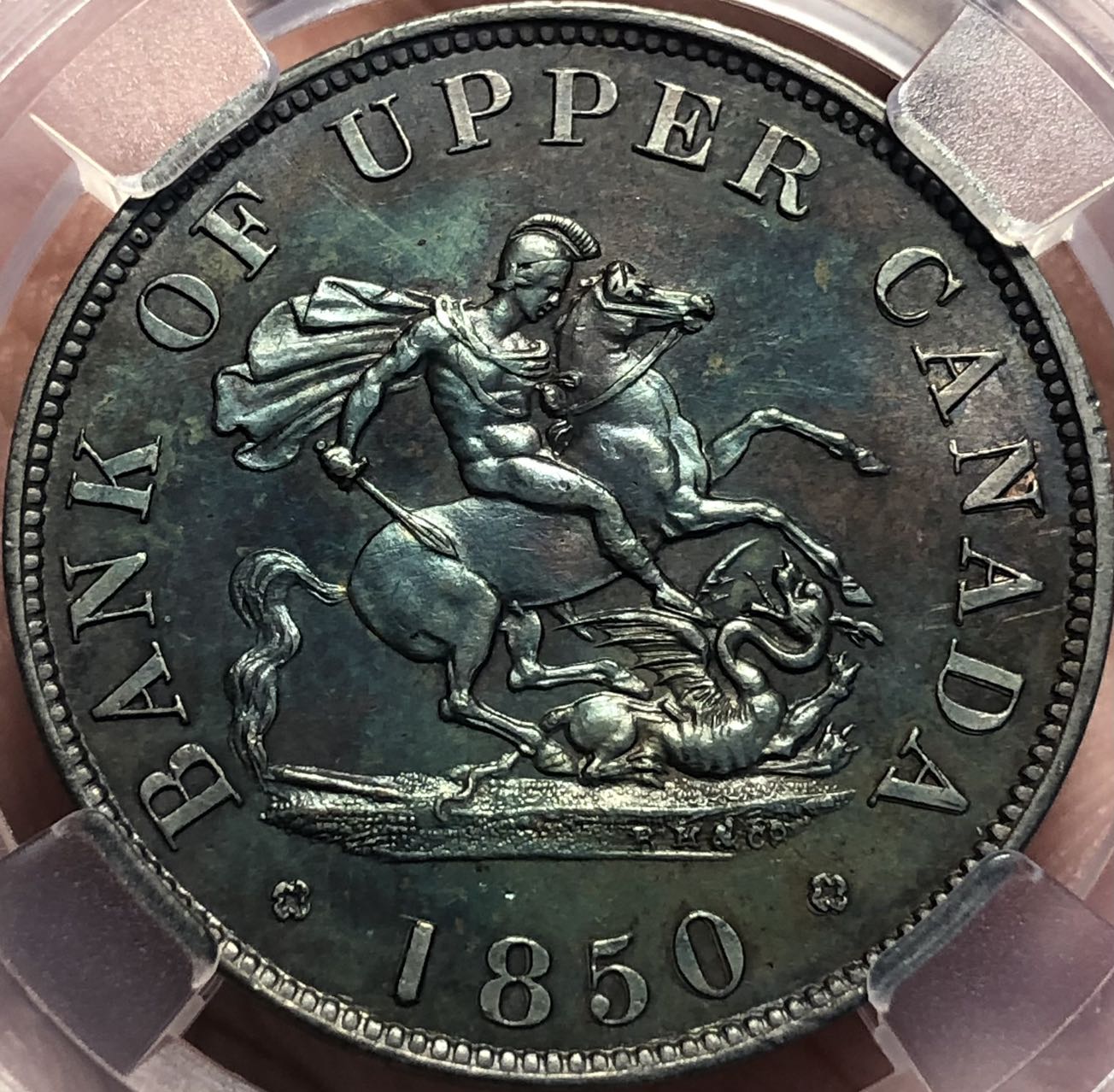
Without having the token in hand, it's always difficult to be categorical. But from your photos, this is a regular strike. The 1/2 Penny 1850 «Proof/Specimen» examples are much more defined and sharp than this ( The Royal Mint had relatively good expertise at the time). Not to mention that the dies of the variety Courteau #007 are not yet known to have produced this type of finish. I'm sorry if my English isn't perfect... I'm learning a little more every day.
Edited by ainsivalavie
07/03/2023 2:15 pm
|
|
Valued Member
Canada
222 Posts |
Quote:
Wade: ...The die crack in the K in toKen is a dead give-away, along with doubling on the lettering... @Wade: For these tokens, both those produced by The Royal Mint and the Heaton Mint, a die crack doesn't necessarily eliminate it being a «Specimen/Proof» strike. One of a number of examples that I observed with this 1/2 Penny 1852 ( Royal Mint / PC-5B1) Proof that was in the Robins collection: 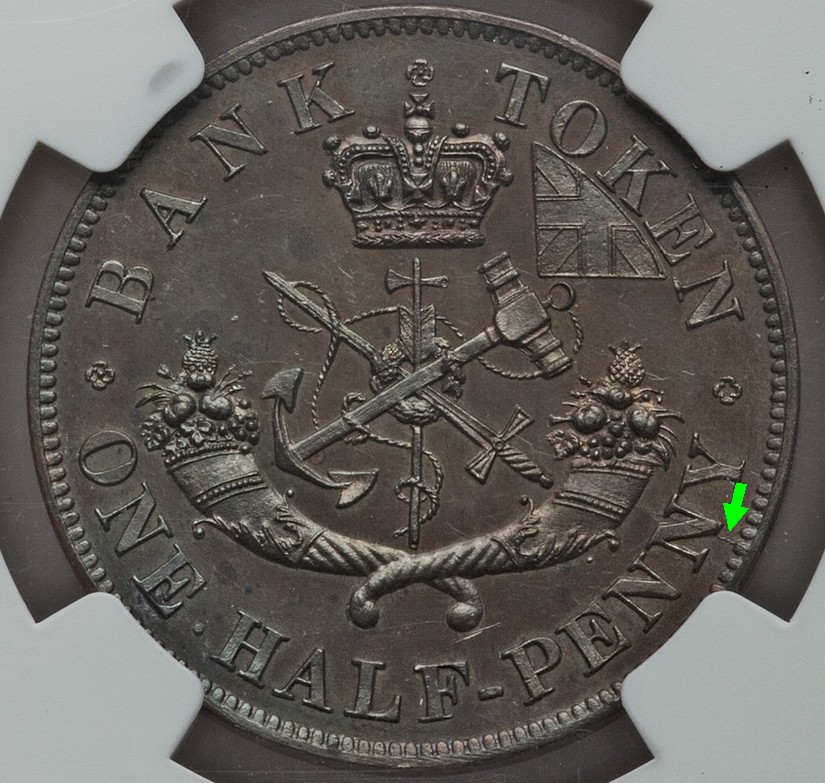 I'm sorry if my English isn't perfect... I'm learning a little more every day.
Edited by ainsivalavie
07/03/2023 2:33 pm
|
|
Bedrock of the Community
Australia
21794 Posts |
Really sharp crown and cornucopie top detail.
|
|
Valued Member
Canada
80 Posts |
Love all the pictures, thanks for sharing!
|
|
Pillar of the Community
Canada
2786 Posts |
Ains, That's very interesting, I never would have thought that after so much care to produce such incredible dies that they would "release" a less than perfect SP strike. Curious, is there any documentation to support that there even were specimen strikes? They seem to pop up every once in a while, but (seemingly always from a US based TPG) wondering if these are all just really early die stages of regular dies? On my own '50 ½p Is there a "circulation" variety that uses the same cracked die? |
|
Valued Member
Canada
222 Posts |
Quote:That's very interesting, I never would have thought that after so much care to produce such incredible dies that they would "release" a less than perfect SP strike. Curious, is there any documentation to support that there even were specimen strikes? They seem to pop up every once in a while, but (seemingly always from a US based TPG) wondering if these are all just really early die stages of regular dies? On my own '50 ½p Is there a "circulation" variety that uses the same cracked die? @Wade:I don't want to go into too much detail, as this is a relatively complex subject, and one for which I've written part of a chapter to be devoted to it in a forthcoming book. So, regarding the example I published the reverse above (PC-5B1), this is a special case whose presentation strike is beyond doubt. Firstly, this pair of dies is not yet known for striking circulating tokens. More importantly, they are in the possession of museums around the world, including two tokens in Australia's Museum Victoria. And in this case, we're lucky enough to know the origin of the tokens. Indeed, since they were produced when Charles W. Fremantle was Director and Controller of The Royal Mint in the 1870s, following requests to present them at the Sydney International Exhibition in 1879-1880, as well as at the Melbourne International Exhibitions in 1880 and 1888 (Rob Turner tackles the subject in his book « Past & Nearly Perfect - The Pattern, Trial, Proof, and Specimen Large Cents of Canada»). Quality control at the time, although much improved, still left much to be desired, and it was not uncommon to find incomplete letters, specks, die cracks and other defects on this type of strike. However, there are other cases where I'm a little more perplexed. I'm thinking in particular of the variety Courteau #303 (1 Penny 1857), for which there are several examples with a magnificent strike, but whose obverse die was completely broken. The TPG have never really made up their minds about them, since from time to time they are designated Proof or Regular Strike. In this latter case, my current opinion is that it's probably not a classic Proof/Specimen strike, but neither is it a regular strike. So I wouldn't know what to call them myself, and more importantly, it's open to debate. I'm sorry if my English isn't perfect... I'm learning a little more every day.
Edited by ainsivalavie
07/14/2023 5:25 pm
|
|
Pillar of the Community
Canada
2786 Posts |
Maybe my thinking is way off, but I assume it takes a lot of use before a die starts to crack. If cracked dies were being used for SP strikes I would think there would be more examples (from perfect dies). But the population of these is so tiny it would mean that the die cracked very early on, and then they quit using it. Interesting about the '57, I will dig up one of mine that shows extensive die cracks. Also, can't wait for the new book, be sure to let us know when it's ready for consumption EDIT: found a pic of my 1857 1/2P with extensive die cracks. Is this the one you're referring to? 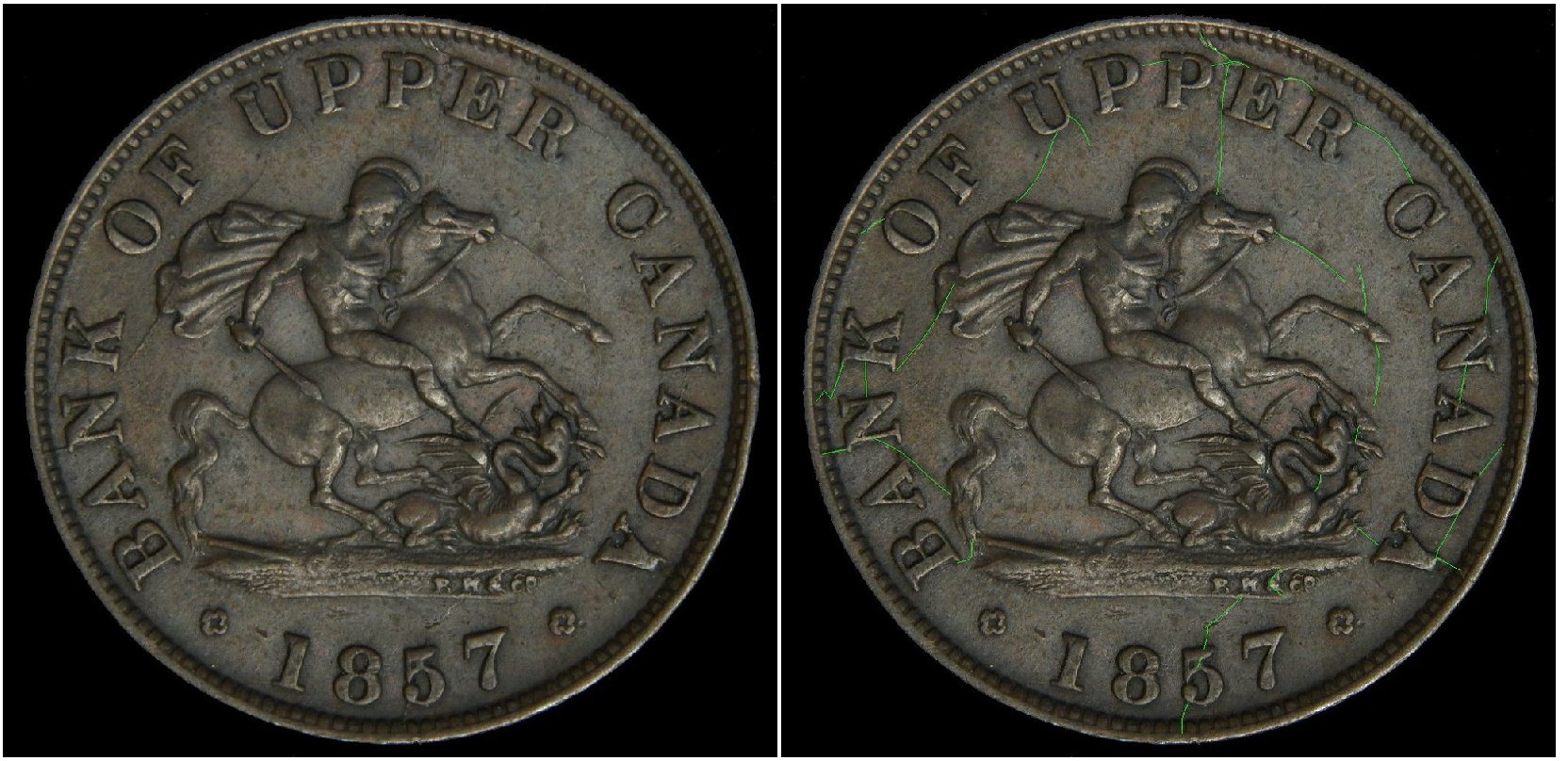 Edited by Wade
07/17/2023 10:17 am
|
|
Valued Member
Canada
222 Posts |
@Wade: The strike pressure used is not necessarily the same, so dies are prone to cracking more quickly. Especially in this case, when it's a single die crack, it can sometimes happen quite quickly (From the hub strike, or to the token strike). I'm talking about the 1 Penny 1857, not the 1/2 Penny. I had previously published on the forum an example that was in Don Flick's collection (The first photo) (But there are even worse cases of this pair of dies) and was graded more than once by PCGS (Currently PR-65 BN, and Ex. PCGS MS-64+ BN). And for the Courteau #303, unlike the 1/2 Penny 1852 pair of dies I mentioned earlier, this one is also known to have struck regular tokens. 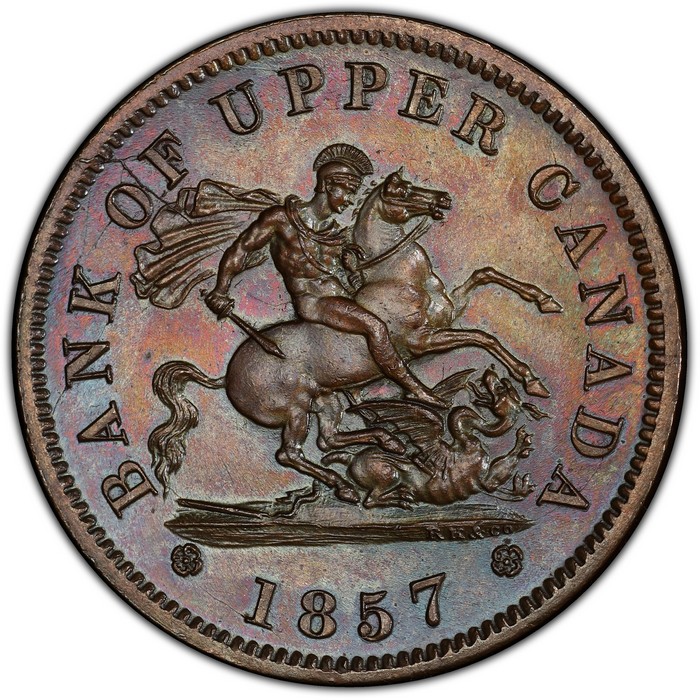 Or this one (Currently NGC MS-66 BN): 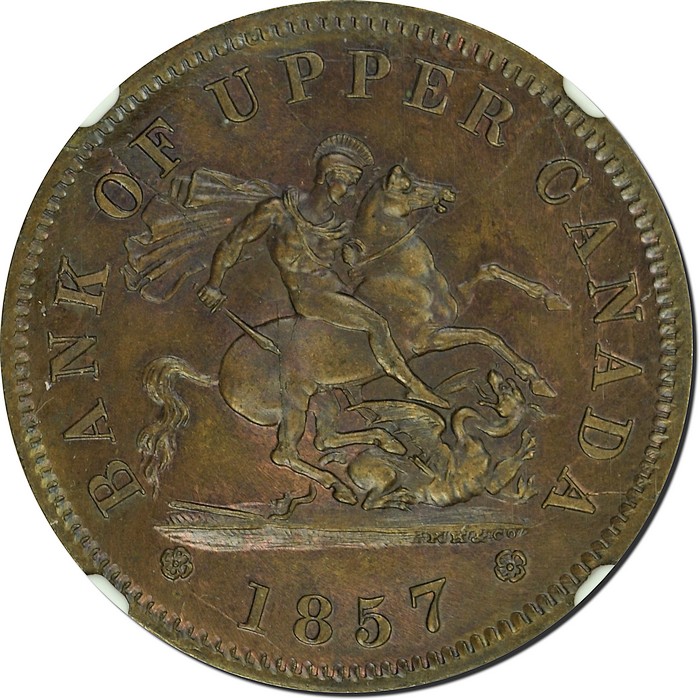 And from the Robins collection (Currently PCGS MS-64 Red): 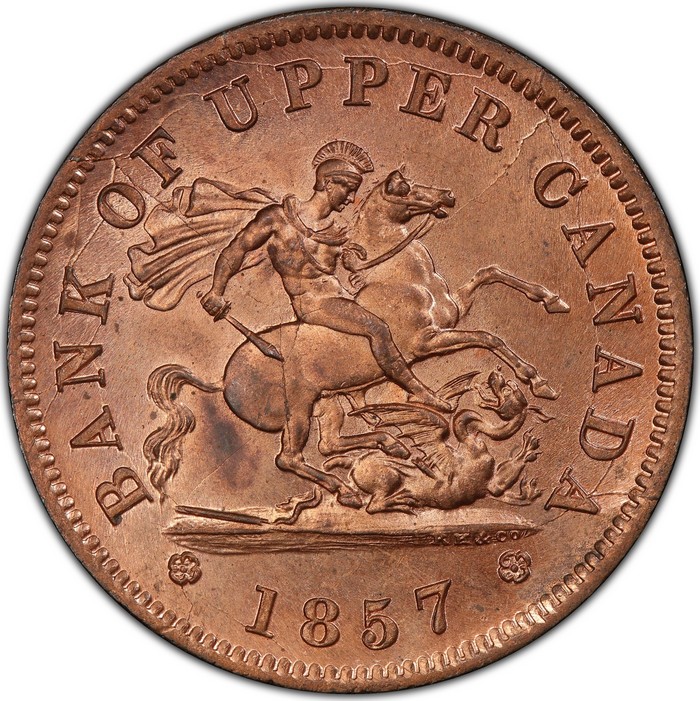 I'm sorry if my English isn't perfect... I'm learning a little more every day.
Edited by ainsivalavie
07/17/2023 12:11 pm
|
| |
Replies: 18 / Views: 3,555 |









 Posted 06/28/2023 06:24 am


