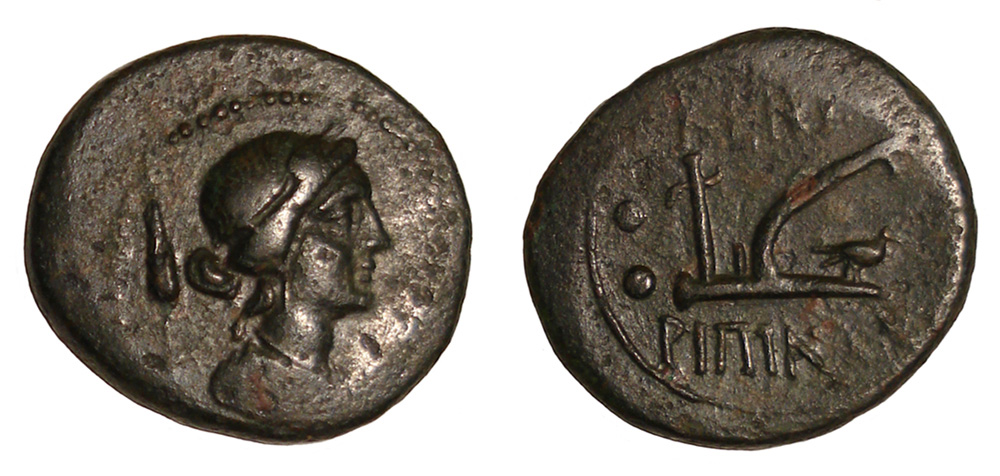
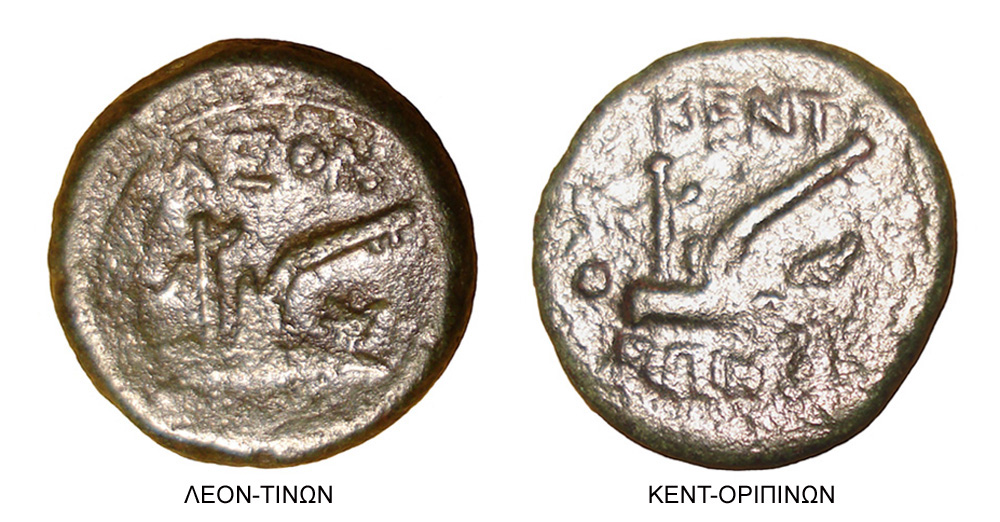
Though it is not obvious, the bird sitting on the interesting representation of the plough on this coin from Leontinoi (Leontini) caught my attention. As there is a description of Leontini on page 15 of "My First Animal On A Coin" thread (Thanks, Bob) I'll keep it brief: The historian Polybius describes Leontini as lying in a valley between two hills, each topped by an acropolis. Located around 6 miles inland, it is virtually the only Greek settlement in Sicily that is not located on the coast. The rich plains north of the city, called Leontini Campi, were some of the most fertile in Sicily and produced abundant crops of wheat. It was the birthplace of Gorgias, "the Nihilist." Leontini never attained much political importance due to its proximity to Syracuse.
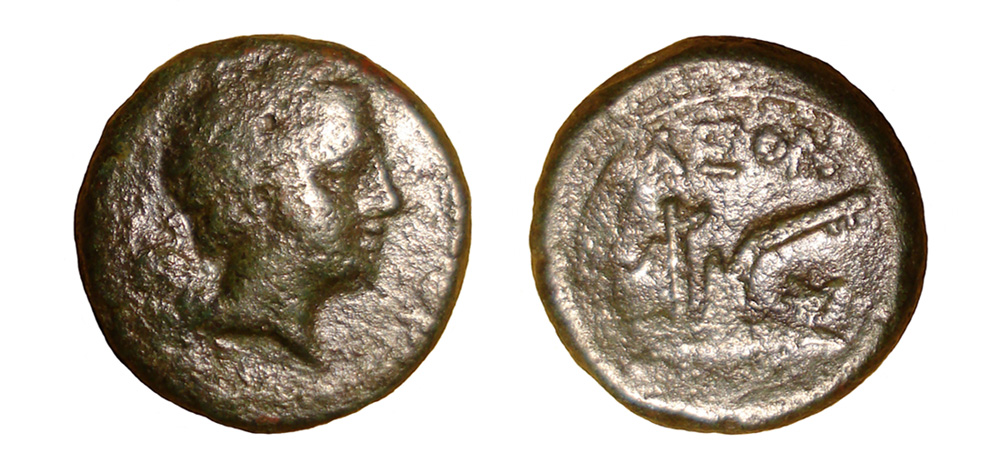
Leontinoi, Sicily. 207-200 BC.
Obverse: Laureate head of Apollo right, quiver behind. Reverse: Plough, bird right on the share. Reverse Inscription: ΛΕΟΝ-ΤΙΝΩΝ. Bronze. Diameter: 13 mm. Weight: 2.47 gr.
Reference: Calciati 18.
While researching the coin I could not find an image of a coin from Leontinoi with an Apollo obverse and a plough reverse. Wildwinds and ACSearch turned up nothing. However using "plough and bird" on ACSearch turned up eleven images of a similar coin, all from Centuripae (Kentoripai) bearing the head of Demeter on the obverse and an almost identical plough reverse. I was lucky enough to secure one of these as well. I was surprised that there were apparently no other coins depicting a plough and a bird apart from these two cities.
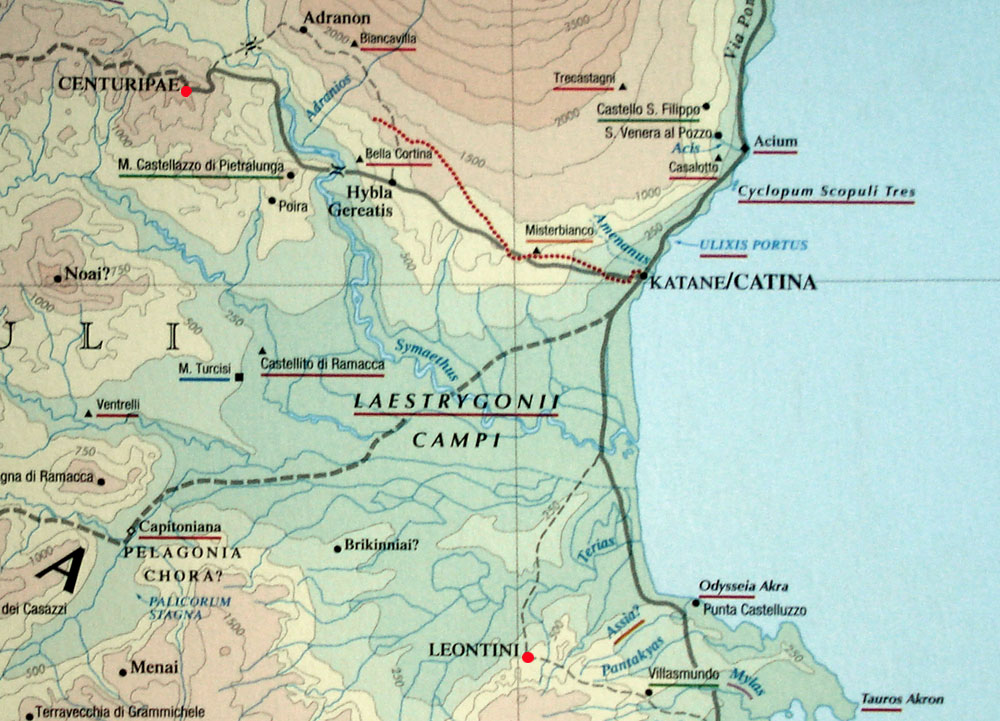
The territory of Centuripae was very productive of corn, and the inhabitants were also farmers on a large scale. Being the Olympian goddess of the harvest and agriculture, Demeter presided over crops, grains, food, and the fertility of the earth. Although she is mostly known as a grain goddess, she also appeared as a goddess of health, birth, and marriage, and had connections to the Underworld. Apollo (on the Leontinoi coin) is also an important pastoral deity, and was the patron of herdsmen and shepherds. Protection of herds, flocks and crops from diseases, pests and predators were his primary duties.
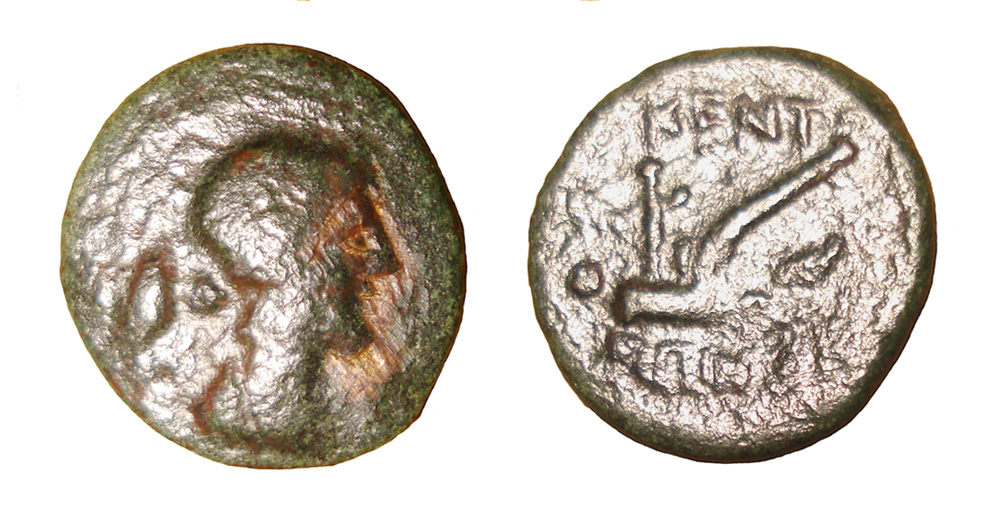
Centuripae (Kentoripai), Sicily. Hexas. 211-200 BC.
Obverse: Bust of Demeter right, wreathed with corn; behind, grain ear. Reverse: Plough right, bird right on the share; two pellets in field to left. Reverse inscription: KENT-OPIΠINΩN. Bronze. Diameter: 16 mm. Weight: 2.51 gr.
Reference: Sear 1084; B.M.C. 2.15; SNG Lloyd 928; Calciati 7; Campana 5.










 Posted 07/07/2023 1:45 pm