|
This page may contain links that result in small commissions to keep this free site up and running.

Welcome Guest! Registering and/or logging in will remove the anchor (bottom) ads. It's Free!
To participate in the forum you must log in or register. | Author |
 Replies: 10 / Views: 942 Replies: 10 / Views: 942 |
|
|
Pillar of the Community
 United States
8041 Posts |
I've been pushing the saints theme in my collection back to earlier in medieval times, and finding (happily) that there are some interesting coins in the Low Countries, which is another theme of mine (though I tend to focus on the southern Low Countries, and the coins I am sharing are from the north). So, here are a couple I've added to my collection recently, which are among the earliest types struck with images of saints from that part of Europe. I've taken the lazy route and used sellers' photos. 1. Bishopric of Utrecht, Groningen mint, denar 1040-1054 Bishop Bernold (or Bernulf), image of Saint Boniface (Dannenberg 558). © Warszawskie Centrum Numizmatyczne Obv: Bust of saint facing, holding crozier and stylized cross of three pellets. Legend (retrograde and degenerate) SCS DONIA.CVS AN (Sanctus Bonifacius) Rev: Mint name in center: CRV / ON.IN / CE (Gruoninge). Around: +: V DEROIDVS EDSOII (Bernoldus Episcopus) Boniface (born Winfrid in southern England in the late 7th century) was part of a wave of Anglo-Saxon missionaries to eastern Frankish lands (modern Western Germany). He is sometimes called the Apostle to the Germans, having been invested by Pope Gregory II with this mission around 717, and the rank of bishop (but with out a physical diocese, though he later was bishop of Mainz). He was slain in Frisia in 754, and his remains brought to Germany (Fulda). According to legend, he held a bible in front of him to dissuade his attackers, and it was pierced by a sword, so a book pierced by a sword is one of the attributes of his iconography (though this was a bridge too far for the engraver of this coin ... or maybe Bernold told him not to waste too much time on such details when there was money to be made!). His cult was strong in both Frisia and Germany in late medieval times. Interestingly, Groningen was part of the territory of the Bishopric of Utrecht at this time. By the 1300s it was a wealthy independent city. Edited by tdziemia
07/08/2023 08:41 am
|
|
|
|
Pillar of the Community
Sweden
2124 Posts |
Interesting, looking forward to the rest!  |
|
Moderator
 United States
34539 Posts |
I knew just by the title that I was going to enjoy this thread. It is interesting to me that the letter R in the mint name looks upside down, or perhaps that is a cimb8nation of poorly struck and some circulation flattening? Either way, I'm looking for ward seeing what else you've added.
"If you climb a good tree, you get a push."
-----Ghanaian proverb
"The danger we all now face is distinguishing between what is authentic and what is performed."
-----King Adz
|
|
Pillar of the Community
 United States
8041 Posts |
Yeah, this type has enormous variation in the quality of the spelling / lettering. Less true for the next one... 2. Bishopric of Utrecht, Deventer mint, denar 1046-1054 Bishop Bernold (or Bernulf), image of Saint Lebuinus (Dannenberg 573). 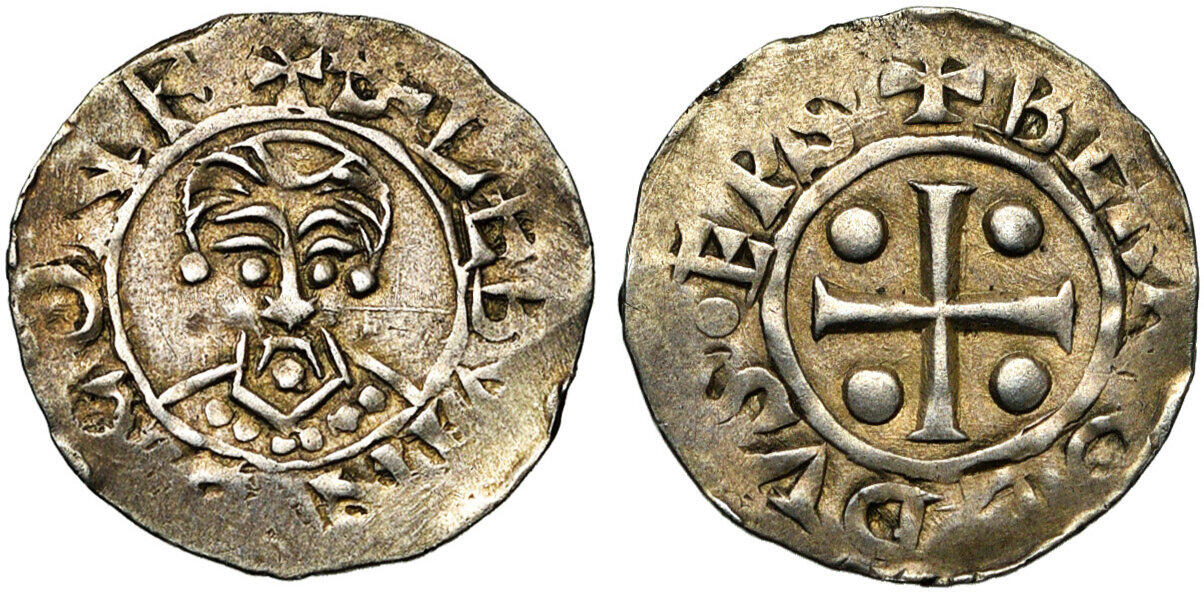 © Jean Elsen et Ses Fils Obv: Bust of saint facing. S LEBVINVS CONF Rev: Short cross with pellet in each corner BERNOLDVS EPS Lebuinus was in the next generation of (British) Anglo-Saxon missionaries to Germany. He was a monk at the monastery in Ripon in North Yorkshire, a part of England that, if I recall correctly, mentioned saints on its coins even before this one! Like Boniface before him, he aimed at conversion of the Frisians, but at least managed to die less violently, in 775 in Deventer, where he is the patron saint. The style of this coin is more "normal" than the first one in my opinion. The reverse is a very standard design for Ottonian/Salian types in this part of Europe. Deventer had already been an imperial mint for the German emperors. Groningen (previous coin) was newly granted minting rights in 1040. Maybe there is a story there? Edited by tdziemia
07/08/2023 9:59 pm
|
|
Pillar of the Community
United States
8041 Posts |
It is not too hard to find the prototype for the Saint Lebuinus coin (this one I do NOT have in my collection): 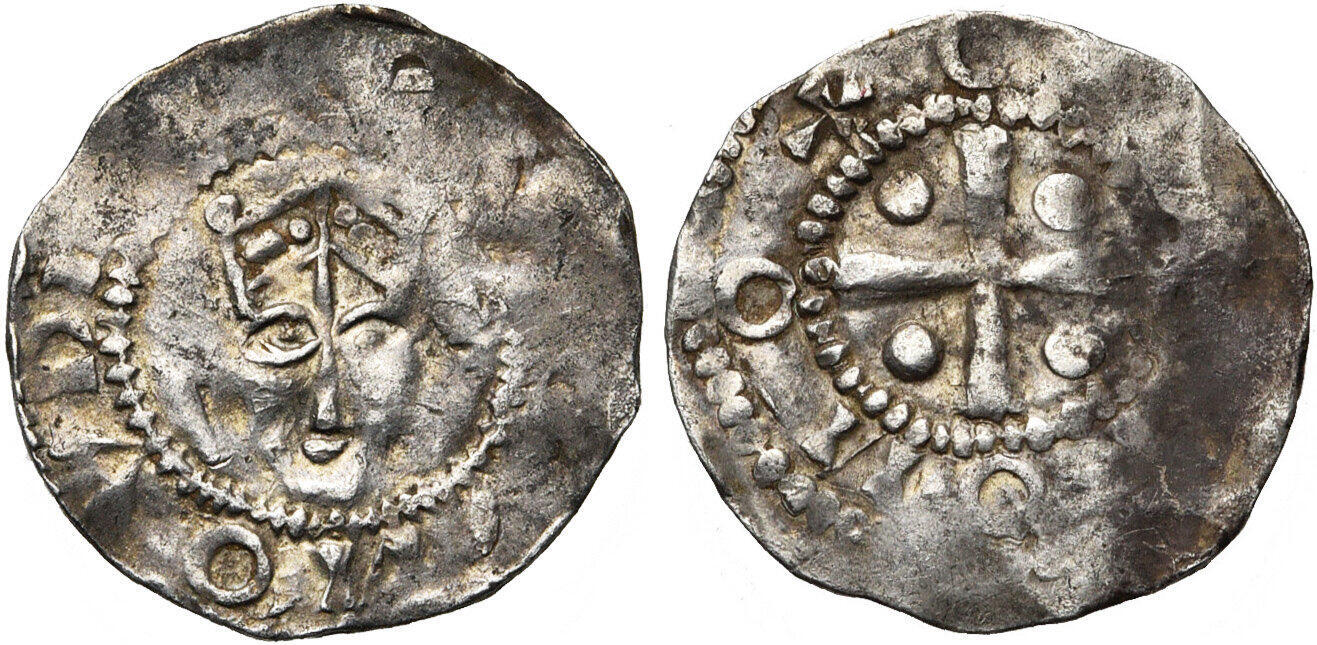 © Heritage Auctions Europe This type was struck at Tiel (modern day Gelderland, Netherlands, just southeast of Utrecht) from the reign of Henry II (began 1002...the images shown are from the next reign, Conrad II), and would have been circulating in both Utrecht and Deventer before those mints were open. If you take the emperor's arched crown and flip it upside-down, you get a beard of the same shape, i.e. the shape of Lebuinis' beard. Based on the large number of Tiel coins that come up for sale at auctions, they were struck in large quantity, and circulated widely. There was a third saint who appeared on Bishop Bernold's coins: Martin, who is patron saint of Utrecht. It's the same Martin who was an early (5th century) bishop of Tours, France, and it's believed his cult was brought to Utrecht in the 8th century by the Carolingian Franks who were in the area on their way to fight the Frisians, and who had Martin as their patron. This is the scarcest of the three (so I do not have one  ), and is probably the prototype for the Groningen Saint Boniface coin, since Utrecht was granted the right to mint a decade or two earlier than Groningen: 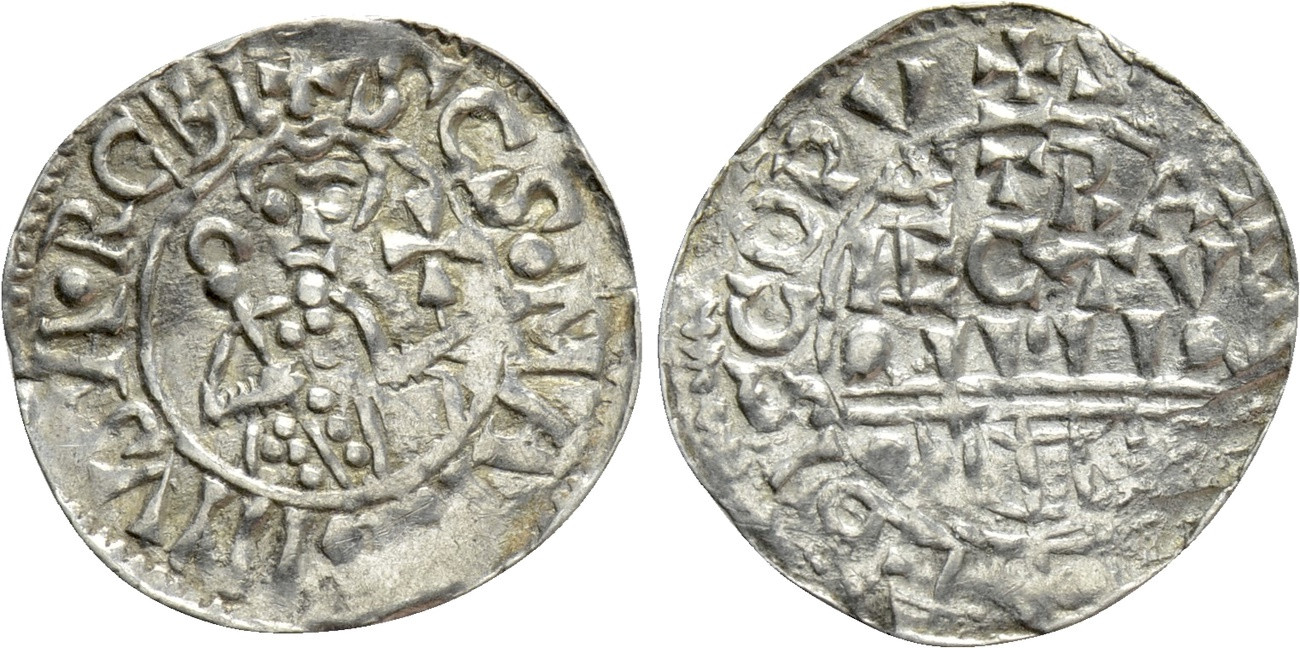 © Numismatik Naumann Edited by tdziemia
07/10/2023 08:52 am
|
|
Valued Member
United States
223 Posts |
I really love threads like these!
Coinage from the high middle ages has always been interesting to me, but I haven't delved much into it. Are there any good numismatic books/references out there covering this general time period in Western Europe, or does one need to piece it all together one region at a time?
|
|
Pillar of the Community
United States
8041 Posts |
I don't have MEC I, but I think that volume goes across all of Europe, but only covers up to about 1000 AD (and it misses southern Italy). Before undertaking MEC, Grierson published a couple of collections of articles on selected topics in medieval coinage: https://www.vcoins.com/en/stores/ch...Default.aspxhttps://books.google.com/books/abou...60UaAAAAIAAJ I was able to borrow a copy of the second one through the OSU library, and while the articles are interesting, they are on narrow themes (i.e. they read like the scholarly articles they are!), and are in the original languages of publication (presumably from conference proceedings?). So it's helpful to be able to read at least Italian and French (I forget if there was something in German). And shame on me for never having looked through the first book that attempted this, Engel & Serrure: https://catalog.hathitrust.org/Record/008696171My impression is that indeed, after 1000 the literature spreads out into regional reference books because the volume and variety of coinage starts exploding, making it nearly impossible for any one person to be expert (hence the idea for MEC volumes 2-14). I don;t know my way around the literature on this era as well as I should, so maybe there are other suggestions. Edited by tdziemia
07/11/2023 08:37 am
|
|
Pillar of the Community
United States
5003 Posts |
What an interesting group of coins tdziemia. Saints are cool idea for a coin collection! I have a few later Medieval coins with saints, but nothing from this era.
|
|
Pillar of the Community
Sweden
2124 Posts |
Quote:
Coinage from the high middle ages ... Are there any good numismatic books/references out there covering this general time period in Western Europe A good overview that covers the 5th to 15th centuries is Coins of Medieval Europe by Grierson, published by Seaby 1991: https://www.vcoins.com/en/stores/ch...Default.aspxIts about 250 pages is of course not a complete account of the coinage over such a long period, but it provides a good overview with plenty of examples from all parts of Europe and also a lot of historical background to the coinage. I have found it very useful to get an overall understanding of the development of the early to late medieval coinage. |
|
Valued Member
United States
223 Posts |
Quote:
A good overview that covers the 5th to 15th centuries is Coins of Medieval Europe by Grierson I do have several MECs, as well as vol 3 of Traite de Numismatique covering the Low Countries. I've just never found that seminal work on all of medieval Europe that would rival the masterpieces of Crosby, Breen, or Bowers... probably because it doesn't exist. The best overview of the middle ages I've found so far is DeWit's auctions from Kunker (in English!), with Torongo's Collecting Medieval Coins as the only real introductory work out there to this field. tdziemia, what reference(s) do you use for the coins in this thread? Your posts here have that DeWit style that's exactly what I'm looking for, yet so hard to find. |
|
Pillar of the Community
United States
8041 Posts |
Quote:
A good overview that covers the 5th to 15th centuries is Coins of Medieval Europe by Grierson, published by Seaby 1991: I wasn't aware of that reference, and will keep an eye out for it. Especially because 250 pages fits my attention span  Quote:
What an interesting group of coins tdziemia. Saints are cool idea for a coin collection! Thanks chrsmat71! Yes, this theme started the same way for me, noticing that the later medieval Italian coins in my collection often had their patron saint, as did a few of my 15th century Low Countries coins, a few from German states, and so on...Curiosity about how far back the trend goes, fueled by a collaboration with another CCF stalwart to write a paper in this field took me to these 11th century types. @samoth, the descriptions and attributions of the coins come largely from Elsen's listings, the dates of the mints opening from the few pages in Van der Chijs Vol. 4 that touch on this, and the history of religion context from other reading. Then it gets whirled around in my mental word processor. I've also got the de Wit catalog downloaded, and used it recently hunting for early German coins with saints' images. So ... one more (purchased in last Elsen auction) 4. County of Frisia, Dokkum mint, denar 1068-1077 Count Egbert II, image of Saints Simon and Jude (Dannenberg 528). 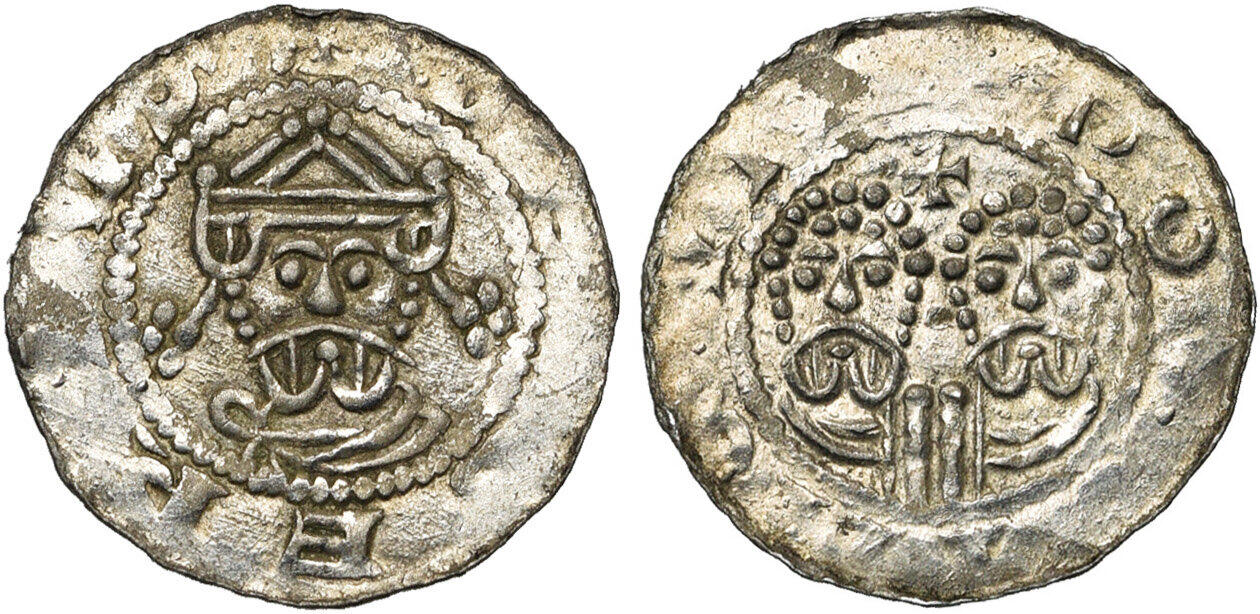 © Jean Elsen et Ses Fils Obv: Crowned bust of Egbert facing. + ECBERTVS Rev: Busts of Saints Simon and Jude facing, beneath small cross. + DOGGINGVN Saints Simon and Jude were among the twelve apostles, and according to tradition, evangelized to the east after Jesus' death, dying in Persia. So, unlike Boniface and Lebuinus, their lives did not intersect with the Low Countries. As best I can tell, they show up on Frisian coins (this same type was struck in six different mints!) because of a German connection. In the 11th century, "middle Frisia" was a fief of the Counts of Brunswick (Saxony). So, Egbert II served concurrently as Count of Brunswick and Count of Frisia. The cult of saints Simon and Jude was prevalent in Saxony because Emperor Henry III was born on October 28, their feast day. He commissioned the construction of a basilica in Goslar (Saxony) in their names in 1040. Brunswick was under the spiritual authority of the Bishopric of Hildesheim, and it goes without saying that Egbert would have known the Bishop of Hildesheim, Hezilo (bishop from 1054-1079). It just happens that Hezilo served as provost of the basilica of Saints Simon and Jude before becoming bishop. So Egbert would have been exposed to the cult of Saints Simon and Jude in Saxony, probably in several ways. I can imagine a conversation where Hezilo pokes Egbert and says "What do you think of those fine coins struck by Bishop Bernold in Utrecht with Saint Boniface and Saint Martin? You know, you could show him up by putting TWO saints ... OUR saints ... on YOUR coins!" Edited by tdziemia
07/15/2023 1:15 pm
|
| |
Replies: 10 / Views: 942 |
|
To participate in the forum you must log in or register.
 
- Need Help Identifying This Ancient Nummus, Follis, Ae4?
- 1955 Lebanon - 10 Piastres W/Peeled Lamination
- 1945 S LWC Improper Alloy Mix And Rim Ding Or Cud?
- Wilma Mankiller P 2022
- Token: The E S CO One S
- Brass Token: 6 (Or 9) Star And Arch
- 1976 Bicentennial Half Dollar Struck On Fragment, 1.61 Grams, CAC MS-63
- Video ANA Academy: Amazing Morgan 1878 By Victor J. Michonski | Dwight N. Manley Numismatic Library
- When You See Your Favorite Bank Teller's Number Flash Across Your Cell Phone
- 1967 Lincoln Cent - Memorial Has A Curtain?
- What Are The Grades Of Thes Three Dimes?
- Constantius II With Write Up From Seller.
- US Mint Releases Special Enduring Liberty Half Dollars With "09-11-01" Privy Mark Into Circulation
- 1799 Draped Bust Dollar, PCGS MS-66, Top Pop
- Undated Jefferson Nickel, 95% Off Center Error, NGC MS-66
- Found Two Morgans This Weekend, Couldn't Find Any Mint Marks?
- Could This Be A 1922 Lincoln Cent Without D?
- Seriously . Why Do I Torture Myself Thus ?
- Circulated Rhode Island Half - Grade Help?
- 1862 One Centime Napoleon III, Laureate Head Bordeaux Fake?
Disclaimer: While a tremendous amount of effort goes into ensuring the accuracy of the information contained in this site, Coin Community assumes no liability for errors. Copyright 2005 - 2026 Coin Community Family- all rights reserved worldwide. Use of any images or content on this website without prior written permission of Coin Community or the original lender is strictly prohibited.
Contact Us | Advertise Here | Privacy Policy / Terms of Use
|
| Coin Community Forum |
© 2005 - 2026 Coin Community Forums |
| It took 0.35 seconds to rattle this change. |
 |
|
| |
| |





 Posted 07/08/2023 3:02 pm


