| Author |
 Replies: 14 / Views: 926 Replies: 14 / Views: 926 |
|
|
Forum Dad
 United States
24230 Posts |
|
|
|
|
Pillar of the Community
United States
7174 Posts |
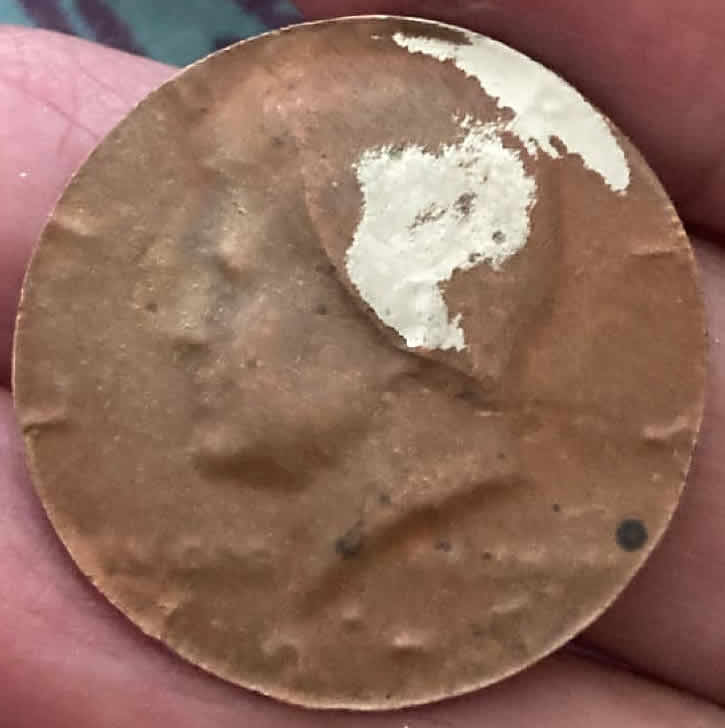
It's been soaking in some kind of acid that effects nickel more than copper.
|
|
Pillar of the Community
United States
2810 Posts |
I agree that this looks like acid damage.
"Pride is yoked with callous behavior, as humility is with compassion." St. Gregory Palamas Top Finds - 1969-S 1c FS-101 http://goccf.com/t/477681 1976 D WQ FS-101 http://goccf.com/t/382777 - 1968 D 1c FS-801 http://goccf.com/t/422254Cool clashed dies - 1972 D 1c http://goccf.com/t/429855&SearchTerms=CCLStruck-In Rim Burr - 1969 S 1c http://goccf.com/t/425587&SearchTerms=burrFloating (Type II) Counterclash - 1978 D 1c http://goccf.com/t/434991&SearchTerms=1978 |
|
Moderator
United States
34553 Posts |
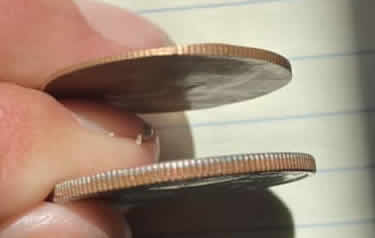
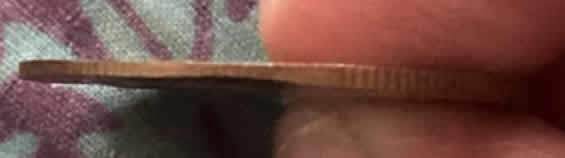
To me, this looks more like it spent a whole lot of time in a corrosive environment to the point where there is pretty much just copper left. There are reeds on the edge so there must have been rims when the coin was struck.
"If you climb a good tree, you get a push."
-----Ghanaian proverb
"The danger we all now face is distinguishing between what is authentic and what is performed."
-----King Adz
|
|
Bedrock of the Community
United States
79187 Posts |
|
|
Moderator
United States
107152 Posts |
acid, maybe sand blasted.
|
|
Pillar of the Community
United States
6901 Posts |
What year is it? Aren't there electro-chemical processes used to preferentially strip the silver from 40% junk halves? Silver recycling is big business lately.
|
|
Moderator
United States
195742 Posts |
I believe the acid explanation is the most accurate one.
|
|
Pillar of the Community
Canada
6244 Posts |
Bobby, you has my list of foreign coins strike.
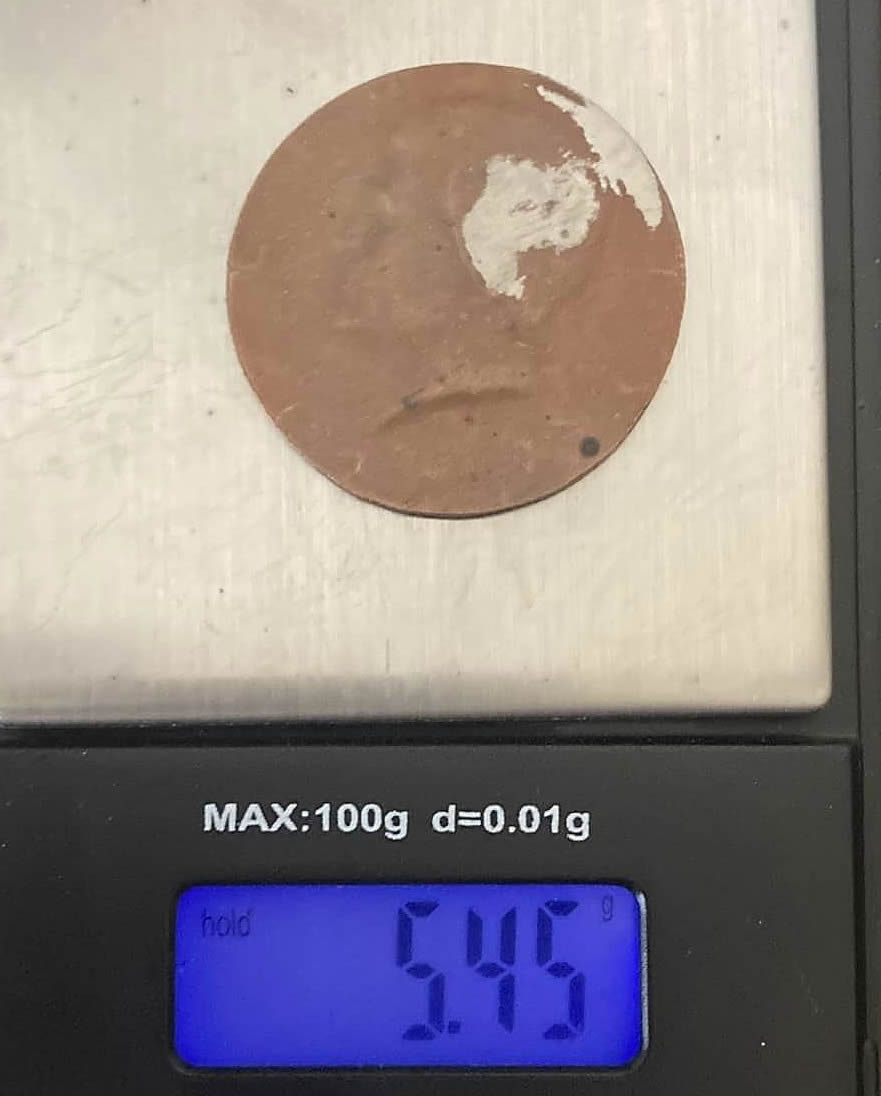
I will say for this more wrong environments then wrong planchet. But if take the thickness of this coin and fit the Dime could be a possibility. I didn't do a precise calculus but it is a possibility. The wait is not far from.
We see the others but my choice it is wrong long term environment.
|
|
Moderator
United States
56855 Posts |
I think acid damage. John1  |
|
Forum Dad
 United States
24230 Posts |
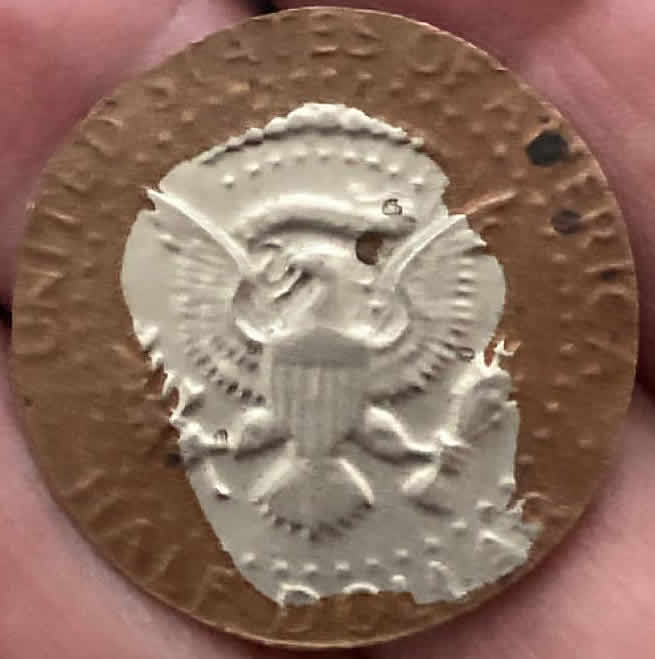
I carefully considered acid damage. I just have a hard time thinking it would take so much off the edges and thickness to still have any cladding left.
|
|
Pillar of the Community
United States
5888 Posts |
Could something like grease or epoxy delay the effects of the acid on the silvery areas?
Words of encouragement are one of the major food groups.
We need to consume them regularly to thrive and grow.
|
|
Pillar of the Community
Canada
6244 Posts |
Bobby: I relook at the coin and seem not to be legitim. Look the remaining Head, do no fit exact with the design. And reverse on the clad why no Rays? If the rays clad will be etch must be Cu.
|
|
Pillar of the Community
United States
6901 Posts |
That super thin film of silvery metal could also be an impurity like tin or zinc that could not be dissolved by whatever process removed the cladding. If we could figure out the 19X7, that would probably tell us a lot. Given that 1970+ halves were clad in cupronickel 75/25, it doesn't seem like a great theory because the copper core remains. My speculation remains that it's probably a 1967 40% silver half (80/20 surface, 21/79 core) that someone stripped with acid to harvest the pure silver. Or stripped it via another method of equivalent harshness.
If someone did it to a cupronickel clad coin, that seems like a lot of work for not very much fun. Unless it was used as a contact for nickel electroplating a large object or something similarly destructive.
|
|
Moderator
United States
107152 Posts |
That arc I see on what's left of the obverse looks to be about the same diameter of another half dollar - I wonder if another coin was partially sitting on top of this one, protecting it (mostly) from the extreme erosion and saved that part on the CuNi cladding before it was exposed to either acid, or possibly sand blasting.
|
| |
Replies: 14 / Views: 926 |
|











 Posted 08/01/2023 3:53 pm


