| Author |
 Replies: 35 / Views: 11,313 Replies: 35 / Views: 11,313 |
|
|
|
Pillar of the Community
Canada
6244 Posts |
|
|
Moderator
 United States
105735 Posts |
Well of course a standard nickel AND the silver composite nickels both weighed 5 grams, so weight is of no real help here.
If confirmed to be a 35% silver planchet left over from the previous years, you would have a very valuable coin.
Careful testing and grading of it would be something I would do for certain.
|
|
Pillar of the Community
United States
6880 Posts |
Be very careful that they do NON-DESTRUCTIVE testing. Some silver tests involve chemicals, scratches, and other damage. Ask them specifically if the test will do even a tiny amount of harm to the coin.
|
|
Pillar of the Community
United States
6880 Posts |
So after reading about the specific gravity of war vs. ordinary nickels, I decided to experiment. All the 10 vintage nickels tested between .54 and .55 on the water displacement test, both ordinary and War Nickels alike. I then returned to Google, only to find several discussions on this forum. The conclusion is that the water displacement SG test is pretty worthless for War Nickels. The density of the silver is balanced out by the much less dense manganese. The Ag-Cu-Mn alloy and the Cu-Ni alloy both have a SG near 9. So it is nothing like testing 90% silver coins against their post-1965 clad counterparts. It does make sense. If you want to keep using your existing coin dies and infrastructure, and you want the resulting coin to be the same mass and operate in vending machines, then you really need a replacement alloy that is around the same density as the original. Apologies for suggesting specific gravity as an effective method of distinguishing War Nickels from normal nickels. It clearly isn't, at least not at the accuracy you can measure with a normal inexpensive coin scale and a cup of water. |
|
Pillar of the Community
Canada
6244 Posts |
Brand do you use one of the following? 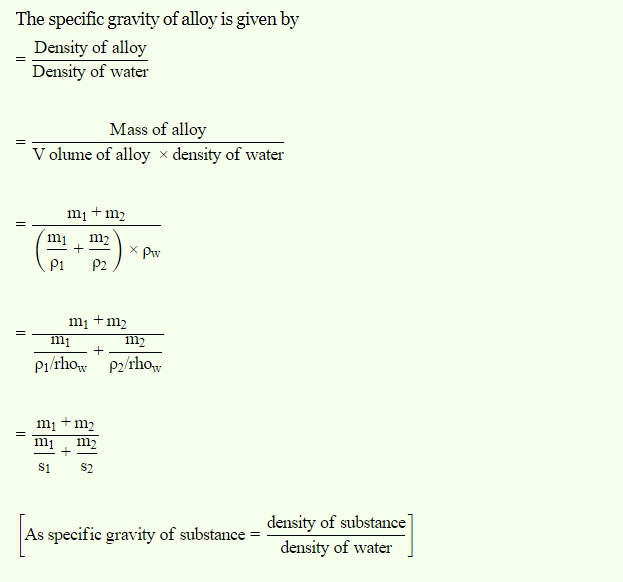 And also the water must be absolute distillated and not deionized. The temperature of the all components and many suspend and has wrong results. We use glass bed of this. Something wrong Brand: War Nickels was 56% Copper, 35% Silver, 9% Manganese and the normal for 1946 was 75% Copper, 25% Nickel, must not give 0.09 or 9 how you took. Edited by silviosi
08/11/2023 03:54 am
|
|
Pillar of the Community
United States
2775 Posts |
Quote:
Ill check a different jeweler tomorrow and post the results Seems like more work. but may satisfy some. Thanks, Doug. |
|
Moderator
United States
15867 Posts |
I'd enjoy hearing the result of a second alloy check.  |
|
Pillar of the Community
United States
6880 Posts |
Silvio, your equations are of course correct. There are two separate things here. 1. I read a prior CCF post that said the specific gravity of an ordinary nickel is 8.92, and a War Nickel is 9.25. I didn't actually fact check that statement, I just accepted it as probably correct. http://goccf.com/t/367674#31554952. My setup was quick and dirty. Pipe temperature tap water in a shot glass on a pocket scale. But if the alloys were a considerably different density, there should have been a repeatable difference regardless of container, scale, medium. If the 8.92 vs. 9.25 number is accurate (and I don't know that it is, but it seems reasonable), then you would need a legitimately precise setup to detect the difference. That imprecision is probably way within the accuracy tolerance of a $10 pocket scale. |
|
Pillar of the Community
United States
2313 Posts |
For what it's worth, this nickel does not come close to passing the eye test for silver composition.
You realize when you know how to think, it empowers you far beyond those who know only what to think.
-Neil deGrasse Tyson
|
|
Pillar of the Community
United States
3207 Posts |
NumismaticsFTW, I'm with you and datadragon, I have plenty of worn 1946 nickels that look just like the OP's, and it's unlikely they were all struck on wartime planchets
|
|
Pillar of the Community
United States
1648 Posts |
Quote:
NumismaticsFTW, I'm with you and datadragon, I have plenty of worn 1946 nickels that look just like the OP's, and it's unlikely they were all struck on wartime planchets Yes, there are 1946 nickels struck in error on obsolete wartime silver blanks. These are quite rare however as only a few pieces (4 +) have been authenticated I believe looking quickly. This error was caused by the same event that caused the 1943 copper cent or the 1944 steel cent. That is, the coin was struck on blanks left over from the previous year so consider its not something that you will generally find. But its not a unicorn at least and so you can at minimum send to cheaper anacs, or if you have a NGC/PCGS account its certainly worthwhile for the payoff if you believe it to be the case. If you happen to have access to XRF as mentioned without spending the same amount for grading thats fine as you dont want to use destructive methods. Good luck to you and nick10. Most just dont even know about these and maybe there are more out there if people are looking. |
|
New Member
 United States
35 Posts |
So I got a guy to use his gun on it and its not silver at all. I decided to go to the first jewelry store and have them retest it for me out of curiosity and this time I watched. They rubbed it on a sharpening stone (it looked like) and dropped acid on the dust then came back and told me again....Yep theres definitely silver in it. I was shocked and just said thank you and walked away
|
|
Pillar of the Community
United States
2775 Posts |
 Thanks, Doug. |
|
Moderator
United States
105735 Posts |
Hmm. could there have been a trace of silver on the sharpening stone?   |
|
Pillar of the Community
United States
1648 Posts |
Quote:
So I got a guy to use his gun on it and its not silver at all. I decided to go to the first jewelry store and have them retest it for me out of curiosity and this time I watched. They rubbed it on a sharpening stone (it looked like) and dropped acid on the dust then came back and told me again....Yep theres definitely silver in it. I was shocked and just said thank you and walked away Thanks for the update which is not conclusive although the XRF is generally known to be accurate if calibrated properly. In the future I would refrain from ever using forms of destructive testing again as this can greatly lower the value of the coin. It works ok for bullion gold/silver and things like jewelry/chains but not good for coins that will be evaluated on its condition. The coin graders do not use destructive testing. I would still submit to check it since the other test came out with silver. Edited by datadragon
08/11/2023 10:55 pm
|
| |
Replies: 35 / Views: 11,313 |








 First Page


 Posted 08/10/2023 10:20 pm


 Uncirculated American Silver Eagles


