| Author |
 Replies: 11 / Views: 1,730 Replies: 11 / Views: 1,730 |
|
|
Pillar of the Community
United States
5014 Posts |
Hey everyone! I recently picked up a coin that has been on my "get list" for quite some time, a Seljuks of Rum "lion and sun" dihram. Islamic coins have lovely legends but don't usually have iconography, but when they do, I love the style. The Artuqids of Mardin also have some really cool coin art also! 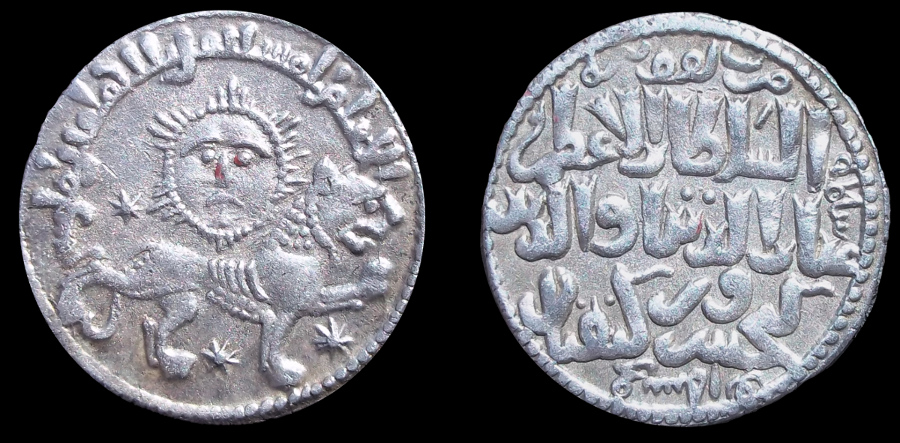 Seljuks of Rum, Kursaw II, Ar Dirham, 1237-1246 AD O: Lion and sun, stars in fields R: Islamic legend 22 mm, 3.0g The Sultanate of Rum (referring to Rome) was began in what is today central Turkey in the 11th century form lands formerly belonging to the Byzantines. They were independent until being defeated by the Mongols and becoming vassals in the 13th century. Khusraw II was the last independent ruler. If you have any Seljuks of Rum coins or any other Islamic coins with neat art, I would enjoy seeing them! Edited by chrsmat71
09/19/2023 9:09 pm
|
|
|
|
Moderator
 United States
34575 Posts |
Really nice remaining detail on this Dirham @chrs!
"If you climb a good tree, you get a push."
-----Ghanaian proverb
"The danger we all now face is distinguishing between what is authentic and what is performed."
-----King Adz
|
|
Pillar of the Community
United States
1554 Posts |
Nice example! In case you don't have the specifics,
it's Qonya mint, dated AH 640, citing the 'Abbasid caliph al-Mustansir.
O: al-imam al-Mustansir billah amir al-mu'minin ("the imam al-Mustansir billah, commander of the faithful").
R: al-sultan al-a'zam / 'izz al-dunya wa al-din / Kaykhusraw bin Kayqubad ("the very great sultan / glory of the world and of the faith / Kaykhusraw son of Kayqubad"); mint and date in margin.
Edited by Kushanshah
09/19/2023 9:26 pm
|
|
Pillar of the Community
United States
7067 Posts |
Well done, Chris!  |
|
Moderator
Australia
17035 Posts |
Quote:
Islamic coins have lovely legends but don't usually have iconography, but when they do, I love the style. The Artuqids of Mardin also have some really cool coin art also! Most Islamic rulers adhere to the strict interpretation of "no graven images" edict, that this means they can't put anything on the coins except inscriptions and floral-like decorations. But apparently, there was a general exemption when it came to horoscopes. This is a horoscope coin: the sultan's favourite wife, the Georgian princess Gurju Khatun, was born in the star-sign Leo, and here on these coins we see the Sun residing in the constellation Leo. The Artuqids had a much more liberal interpretation of the law: their attitude seems to have been that as long as it wasn't Muslims that were doing the "engraving" of the dies, making and using coins depicting human figures were OK. The Artuqids hired Christians to do the die-engraving for them. The lion-and-sun would go on to become an enduring symbol within certain sections of the Islamic community, notably it became the royal badge of the Persian ruling family and thus the national symbol of Persia/Iran itself under the Shah. I have one of these dirhams; it was one of my earliest mediaeval Islamic purchases. 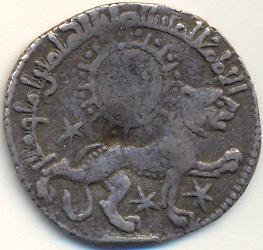 Don't say "infinitely" when you mean "very"; otherwise, you'll have no word left when you want to talk about something really infinite. - C. S. Lewis
|
|
Bedrock of the Community
Australia
21794 Posts |
Well done !
Nice even strike, showing all detail.
These Seljuck dirhams are of numismatic interest, because they are picturegraphic, not just inscriptions.
As such, they have a little more appeal to the non Islamic mind.
|
|
Pillar of the Community
United Kingdom
1607 Posts |
Very nice looking coin, |
|
Pillar of the Community
 United States
5014 Posts |
Thanks for commenting everyone!
Thank you very much Kushanshah! I did not know those detials, I added them to my online record for the coin!
Thanks for sharing you coin Sap! I didn't know about the astrological significance of the coin, that makes this one all the cooler to me!
|
|
Pillar of the Community
United Kingdom
1168 Posts |
A lovely coin with super detail. |
|
Bedrock of the Community
United States
27514 Posts |
Chris and Sap, beautiful coins! Thank you for educating me in this area of numismatics and history.
Inordinately fascinated by bits of metal with strange markings and figures
|
|
Moderator
Australia
17035 Posts |
My favourite astrological/astronomical coin from the Islamic series are the bronze dirhams of the Artuqid ruler Artuq Arslan I. They have the curious depiction of a centaur archer that appears to be shooting an arrow at a dragon growing out of its own tail. A curious image indeed, until you translate the astrological code: the centaur archer is of course Sagittarius, and the dragon is the astrological conventional symbol for a solar eclipse (due to the old myth that eclipses were caused by dragons eating the Sun). In AD 1201, the year Artuq Arslan came to power in Mardin, there was a solar eclipse on 27th November, visible throughout the Islamic world including Artuqid territory; the path of totality passed straight over Mecca - an obviously significant portent for any Islamic ruler. And as any astrologist would tell you, 27th November occurs in the star-sign of Sagittarius. The Sun was actually physically in the constellation Ophiuchus when the eclipse took place; apparently, nobody told the astrologists about the Precession of the Equinoxes that moved the star-signs away from where they were when the ancients had created the zodiac over a thousand years earlier. I don't have one of these coins yet; it's on my wantlist, and they're not too hard to obtain as they were issued throughout Artuq Arslan's reign, not just in the eclipse year. Here's one Stephen Album sold in 2021 for US$190. Don't say "infinitely" when you mean "very"; otherwise, you'll have no word left when you want to talk about something really infinite. - C. S. Lewis
|
|
Moderator
United States
34575 Posts |
Quote:
If you have any Seljuks of Rum coins or any other Islamic coins with neat art, I would enjoy seeing them! I didn't get a chance to post this when you first asked, but hopefully late is better than never. This Dirham is a little later (AH 690 or 1291 AD) and was minted at Bayburt under the authority of Mas'ud II. There is an unfortunate black residue on the obv (melted plastic?) 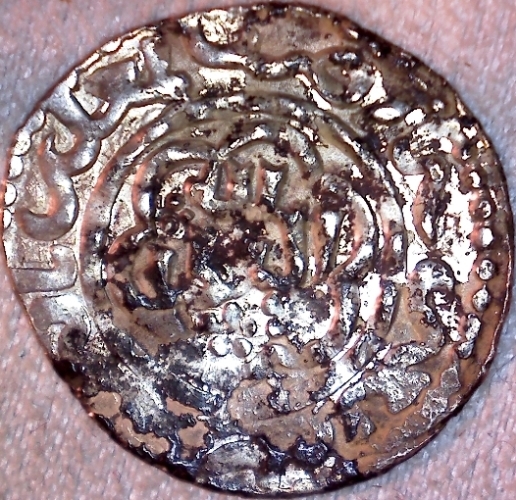 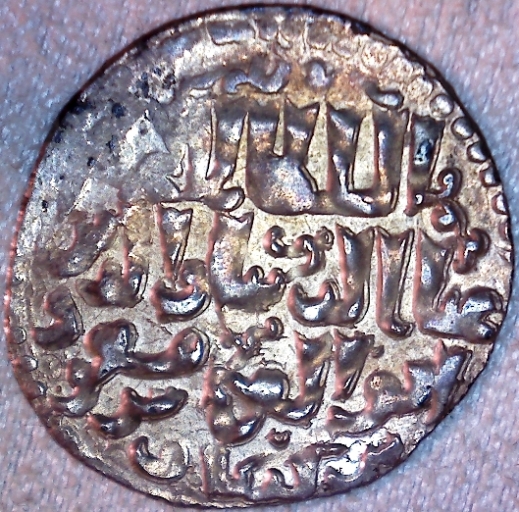 "If you climb a good tree, you get a push."
-----Ghanaian proverb
"The danger we all now face is distinguishing between what is authentic and what is performed."
-----King Adz
|
| |
Replies: 11 / Views: 1,730 |
|







 Posted 09/19/2023 9:25 pm


