| Author |
 Replies: 19 / Views: 1,796 Replies: 19 / Views: 1,796 |
|
Valued Member
United States
160 Posts |
I joined Coin Community about 7 months ago, and I wanted to comment on a few things I've learned since I've been here (i.e., besides answers to questions I've asked directly).
(1) There is a lot of concern about counterfeits these days. I don't know how much of a concern this was back when I was seriously collecting (early '70s thru early '80s), but it's clearly a big one now. Seriously, it makes me glad that I'm no longer actually buying coins. Anyway, I'm pretty sure I've never acquired a fake coin that I thought was real, partly because nothing I ever had was valuable enough to be worth faking in the first place!
(2) There is a lot of interest in coins with errors. Frankly, I've never had much interest in these. I've always liked "normal" coins -- i.e., ones that could simply be described in terms of country, date, denomination & composition.
(3) Cleaning coins is a big "no-no." Honestly, I never knew that before coming here. Edited by SquareCircle
12/15/2023 1:17 pm
|
|
|
|
Pillar of the Community
 Canada
1811 Posts |
SquareCircle - Good points. I also have learned a lot from the Coin Forum, reading & participating in topics of interest. I continue to learn each day, and am surprised how much more there is to know.  |
|
Bedrock of the Community
United States
94367 Posts |
Good points iindeed. Glad you're enjoying the experience.
|
|
Bedrock of the Community
United States
37000 Posts |
Lots to learn here. Many collectors here at CCF have many years of experience and knowledge in the numismatic field.
|
|
Pillar of the Community
United States
4233 Posts |
One comment about #1 - it's not necessarily true. While counterfeits are most often higher value coins, they fake pretty much anything worth more that $2. Lower value coins get less scrutiny and are still profitable.
|
|
Bedrock of the Community
United States
18902 Posts |
i started collecting in the 60's and pretty much stopped in the mid 70's. at that time I had no idea what a details coin was and that cleaning was bad. when I joined CCM it blew my mind and I spent a lot of time since honing my knowledge base on what to look for. also how small damage like rims nicks and deeper marks can also detail a detail a coin. great appreciation for everyone on here that added to that. if I had known it would have saved me on some of my larger purchases like my 90Svdb I bought as XF40 back in the 60's for $120 and was returned XF genuine scratched even though the scratch is minor it now affects the resale price and value of the coin. I believe its the scratch near the MM that caused the grade. lesson learned 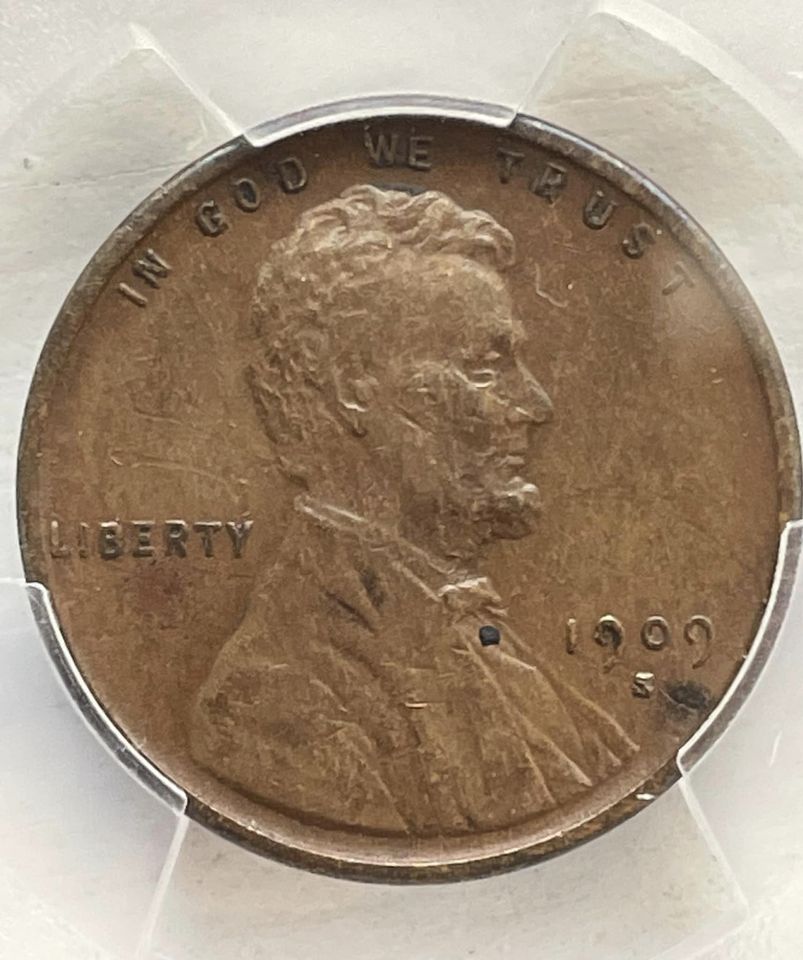 Edited by panzaldi
12/20/2023 2:23 pm
|
|
Valued Member
United States
295 Posts |
Quote:
While counterfeits are most often higher value coins, they fake pretty much anything worth more that $2. This is true - once I won an ebay auction for a $2 coin that ended up being fake. But the cheap fakes tend to be easy to spot, as in my case, the weight was wrong so it obviously wasn't silver. |
|
Pillar of the Community
 United States
6851 Posts |
Quote:
I also have learned a lot from the Coin Forum, reading & participating in topics of interest Check out all the topics. You will learn so much more, I know I have. |
|
Pillar of the Community
Canada
1811 Posts |
So true about kbbpll point: Quote:
One comment about #1 - it's not necessarily true. While counterfeits are most often higher value coins, they fake pretty much anything worth more that $2. Lower value coins get less scrutiny and are still profitable. Just look at the problems concerning the Canadian Toonie (two dollar coin). Counterfeited in the tens of thousands. https://cameltoetoonies.ca/ |
|
Valued Member
 United States
160 Posts |
Quote:
One comment about #1 - it's not necessarily true. While counterfeits are most often higher value coins, they fake pretty much anything worth more that $2. Lower value coins get less scrutiny and are still profitable. Point taken. I still doubt I ever had any fakes, though, partly because I didn't purchase a huge number of coins, never paid a lot of money for any one of them, never bought anything that would be considered "highly sought after," and never had a deal that seemed too good to be true. But I'll never know for sure, of course. Quote:
I had no idea what a details coin was I've never heard the term before and can't seem to find quite what it means. Can someone sum it up? Edited by SquareCircle
12/21/2023 09:39 am
|
|
Moderator
United States
195203 Posts |
Quote:
I've never heard the term before and can't seem to find quite what it means. Can someone sum it up? Any coin that has an issue that prevents it from reaching the technical grade it would otherwise have. Things like cleaning, environmental damage, scratches or other damage, altered surfaces, filled rims, questionable colour/toning, etc. |
|
Valued Member
United States
160 Posts |
|
|
Pillar of the Community
United States
959 Posts |
Panzaldi, your comment about the 09-s was interesting. We've all seen coins with worse scratches than that in straight graded holders. Shows what a crap shoot TPG's can be. I imagine at some point AI will get into the act, which might turn out to be a more objective method for grading. |
|
Valued Member
United States
160 Posts |
Something else I've seen here a lot lately: When it comes to collecting coins, condition really matters.
That would seem to be really obvious, but back in the day -- when I was a kid collecting coins entirely by my own rules and preferences (which is how I did pretty much everything) -- I wasn't generally all that concerned about condition. I just wanted to have coins that I personally found interesting.
I have fond memories from around 1981 of being at a favorite coin shop and rummaging through the $1-per-coin box to see what I could find. One particular coin I found was worn almost totally smooth and was barely identifiable, but I treasured it because it came from a country that only made coins for a short time well over 100 years before. (As someone who was trying to collect coins from a lot of countries, I knew I wasn't likely to find another cheap coin from that country.) I also remember finding a very worn English penny from the late 1600s which I liked because, well, it was old.
|
|
Moderator
Australia
16982 Posts |
I'm glad we've been helpful to you. That's why we're here.  1. Counterfeiting has always been a problem, ever since coins were invented 2600 years ago. Anyone with a large enough coin collection almost certainly has at least one fake coin lurking in it, unknown and undetected. I know I've bought several coins as genuine that years later turned out to be fake. There's nothing anybody can do about that, so I don't really see it as something to get paranoid over. There's been a lot of noise on the forums for the past decade or so about Chinese-made counterfeits, because making fake foreign coins is legal in China and the Chinese fake-makers are churning them out at a much higher rate than traditional counterfeiters. Plus, the Chinese are also learning to make fake slabs, which kind of undermines and nullifies the whole "trust the slab" philosophy that's arisen in American coin collecting over the past few decades. 2. Error coins are going through somewhat of a craze these days, fuelled by the power of the Internet: quasi-truthful social media posts along the lines of "I found this rare $2000 error coin in my change, you can too!". Interest in errors and varieties has come and gone before; where the current craze will lead is anybody's guess. It's also very much a cultural thing - interest in errors in Britain and Europe, for example, remains much lower than it is in places like America and Australia. Until very recently, your typical British coin collector saw "error coins" as defective, and therefore by definition always worth less than a perfect specimen. 3. The negative attitude towards "cleaning" has more or less been the same since the mid-20th century - this isn't a new thing or a fad. Pick up any "how to collect coins" book from the 1960s or later, and they will probably give you much the same advice that we've given here: "don't clean coins unless you really know what you're doing". This is simply because of the lived experience of coin collectors: that it's really hard to clean a coin well enough to make it actually look better, while it's really easy to clean a coin badly and ruin it. Don't say "infinitely" when you mean "very"; otherwise, you'll have no word left when you want to talk about something really infinite. - C. S. Lewis
|
|
Pillar of the Community
United States
6887 Posts |
Quote:
Plus, the Chinese are also learning to make fake slabs, which kind of undermines and nullifies the whole "trust the slab" philosophy that's arisen in American coin collecting over the past few decades. One of the tenets that has been drilled into my brain on these forums is "Buy the coin, not the slab." Because I am interested in variety coins, I have spent the last months poring over PCGS TrueView images while zoomed in. What the TPGs do and do not consider factors in grade has been eye opening. I have seen Kennedy halves with Reed Marks smashed into the face at MS67, and 150 year old coins with tiny rim dings get graded Details. Many straight graded coins have hideous and obviously artificial toning. Other high MS coins have poor strike details from tired dies. Since I focus on nickels in particular, I have been super frustrated that you absolutely cannot trust a Full Steps designation on a PCGS slab, nor (probably) any other TPG slab. Buy the coin not the slab has been a growing concept for me, since the first week when datadragon explained the three grading buckets, and enlightened me that many people would prefer a very nice AU example over a MS60-62 example for many coin types. Woe to those who buy sight unseen, or from grainy auction pictures. I know the Chinese and others will manufacture fake slabs, but slabs should be regarded with skepticism to begin with. |
| |
Replies: 19 / Views: 1,796 |






 Posted 12/15/2023 4:18 pm





