| Author |
 Replies: 12 / Views: 1,294 Replies: 12 / Views: 1,294 |
|
|
Pillar of the Community
United States
6959 Posts |
|
|
|
|
Bedrock of the Community
 United States
10601 Posts |
Could it be like the same phenomenon that affects the Lincoln Cent series? The word "OF" and other surrounding letters on the reverse die was an area of weak die fill on Lincoln Memorial cents caused by being opposite Lincoln's shoulder on the obverse die . |
|
Bedrock of the Community
United States
10601 Posts |
Here is what I was referring to - just found a picture on this forum when I used the search box. 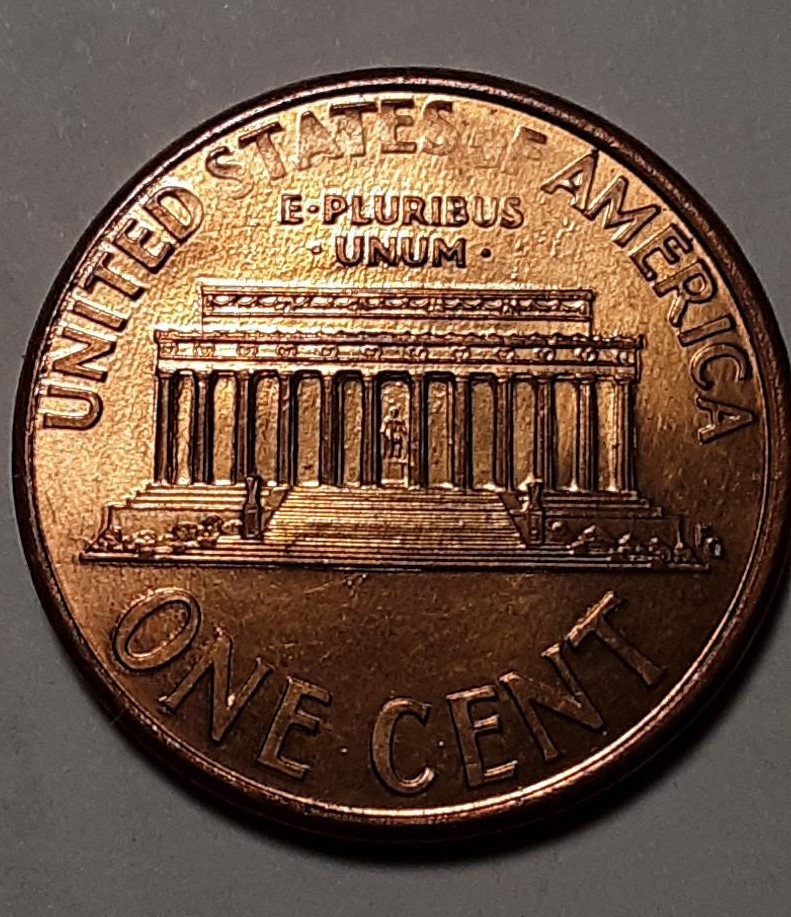 Edited by Marv65
02/27/2024 12:47 am
|
|
Pillar of the Community
United States
1780 Posts |
If you are referring to the bottom weakness of "UNITED STATES OF AMERICA, it appears to be the result of 'struck-through-grease', or 'grease-filled-dies' error, a common occurrence ... on some coins, the details will be all but obliterated, a result of machine grease partially filling the parts of the dies that create the devices ...
Edited by mrwiskers
02/27/2024 08:52 am
|
|
Pillar of the Community
 United States
6959 Posts |
 I am specifically talking about the tops of the letters TES here. They are flattened and wider than their proper shape. My impression is that this cannot be from a Grease Filled Die. I have seen it on many coins on many years, so the phenomenon is repeatable. My first assumption would be Die Deterioration, except that DD spreading seems to happen on all letters, not just a specific repeatable few. |
|
Pillar of the Community
United States
1780 Posts |
...gonna bow out on this topic...very little experience here ... I'll listen to the more knowledgeable & learn ...
|
|
Valued Member
United States
459 Posts |
It's weakly struck from worn dies. Or as I call it, the Peace dollar strike. |
|
Pillar of the Community
United States
4233 Posts |
I think the design also lends itself to a weak strike in specific areas on certain coins. In this case you'll note that a thick area of the lower bust corresponds to the TES weakness. There has to be enough metal in the planchet to fill both sides, and sometimes there isn't. 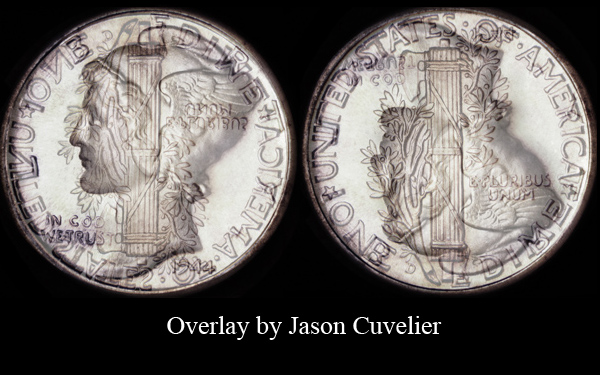 |
|
Pillar of the Community
United States
6959 Posts |
I hadn't considered that possibility, but it's a really good point.
|
|
Valued Member
United States
92 Posts |
Depending on striking pressure, certain areas on a coin will display weakness in areas where there needs to be a lot of metal displacement in areas directly opposite each other. Not having enough metal to fill an area will result in the weakness shown on the coin in question, and other coins with similar problems in cdrtain areas will also lack in detail. One other example is the head area on the reverse of a Buffalo nickel being directly opposite of the top feather on the obverse side. Not enough metal displacement results in the same weakness and is rather common to the issue itself. |
|
Pillar of the Community
United States
4233 Posts |
Die radius or basin has an effect as well. I just ran into this article, which gives a good explanation. https://www.ngccoin.com/news/article/489/An interesting comparison is found in Canadian 1948 50c specimens, where two types are designated convex and concave. A weak strike is evident on the reverse of the convex type (upper left shield, lion's paw, etc). This weak strike is common on the circulation George VI halves. The concave SP version struck the reverse much better. 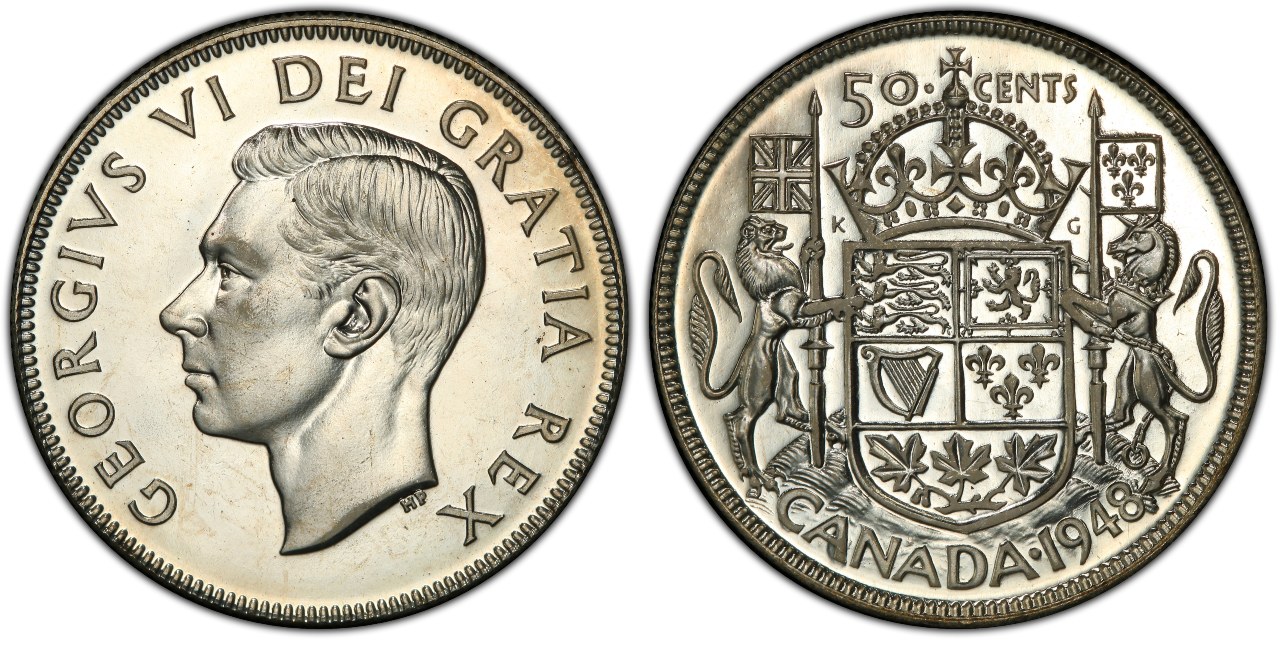 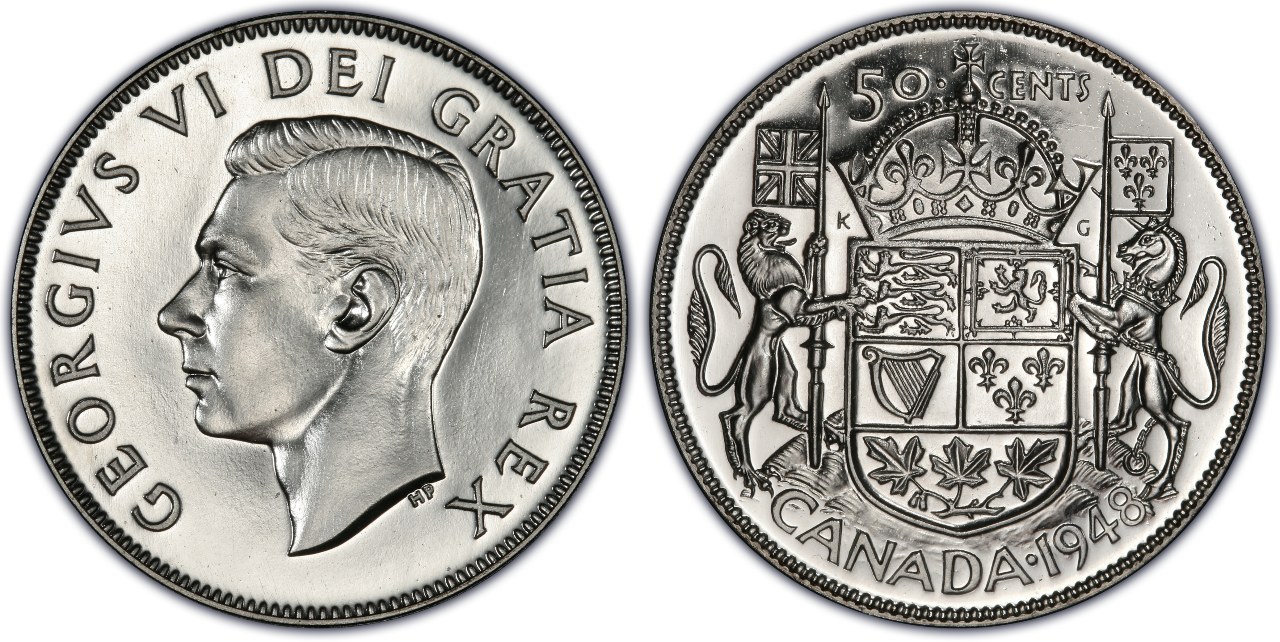 |
|
Bedrock of the Community
United States
12057 Posts |
The predominant force at work is strike pressure, combined with the planchet's metallurgical properties and the relief of the anvil and hammer dies. This determines how much striking force is applied across a given surface area.
@kbbpll pretty much nails it in terms of how varying areas of relief on each die can create proportional weakness on the opposite side. I think that's probably the main reason.
As the dies wear (subsidence) proportionally more strike pressure is needed to obtain a full strike. The displaced metal has to flow more, since it must fill a larger (deeper) area. This tends to result in a worse or "flatter" strike towards the edges of the coin, since more of that metal must flow towards the relieved areas of each die. This leaves its evidence behind on the coin's surfaces in the form of flow lines and "tracing" of the letters in the legends.
Member ANA - EAC - TNA - SSDC - CCT #890 "Most of the things worth doing in the world had been declared impossible before they were done." -- Louis D. Brandeis |
|
Pillar of the Community
United States
6959 Posts |
These are great explanations, and I appreciate the knowledge, guys! Given the discussion, I imagine the answer will be the same phenomenon for the TED in United on the reverse of Buffalo nickels. Whenever I see that flat smearing, my brain immediately triggers for a DDR. For a long time, I thought it was only die state that dictated the distortion, but the other lettering is often perfect on coins in good condition. The TED is directly under the date and shoulder on the obverse, so perhaps that results in those letters being poorly struck and distorted on many coins? https://www.pcgs.com/cert/39580788 |
| |
Replies: 12 / Views: 1,294 |
|




 Posted 02/27/2024 12:20 am





