Coin Community Family of Web Sites Join Thousands of Coin, Bullion, & Money Collectors
300,000 items to help build your collection! Specializing in Modern Numismatics Coin, Banknote and Medal Collectors's Online Mall Join Thousands of Coin, Bullion, & Money Collectors Shop for APMEX Bullion on eBay!Royal Canadian Mint products, Canadian, Polish, American, and world coins and banknotes. Vancouvers #1 Coin and Paper Money Dealer


Username:
Password:
Save Password
Forgot your Password?


This page may contain links that result in small commissions to keep this free site up and running.

Welcome Guest! Registering and/or logging in will remove the anchor (bottom) ads. It's Free!

1520 Spanish "Real" - Questions About It

To participate in the forum you must log in or register.
Author Previous TopicReplies: 6 / Views: 487Next Topic  
Pillar of the Community
Adam590's Avatar
United States
751 Posts
 Posted 04/13/2024  6:17 pm Show Profile   Bookmark this topic Add Adam590 to your friends list Get a Link to this Message Number of Subscribers
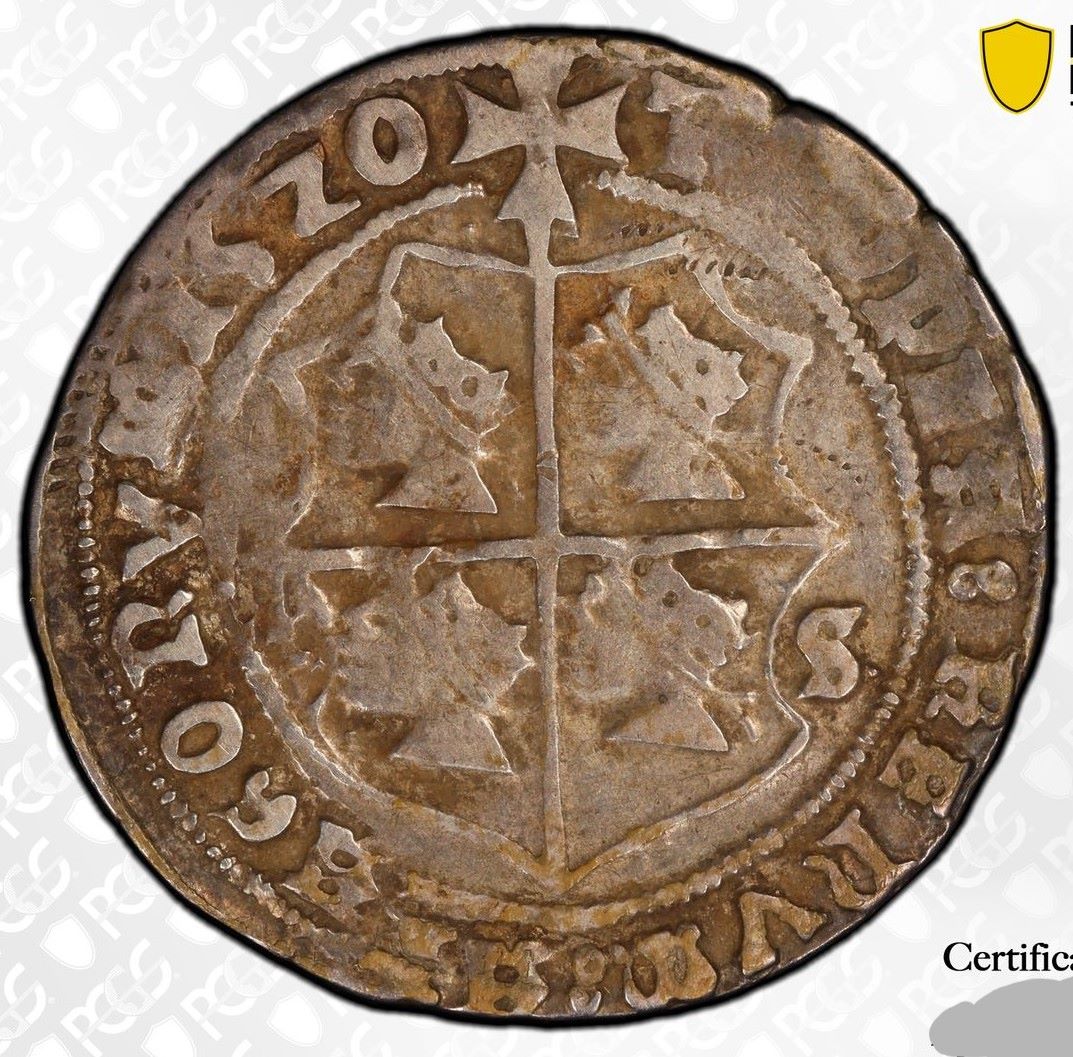
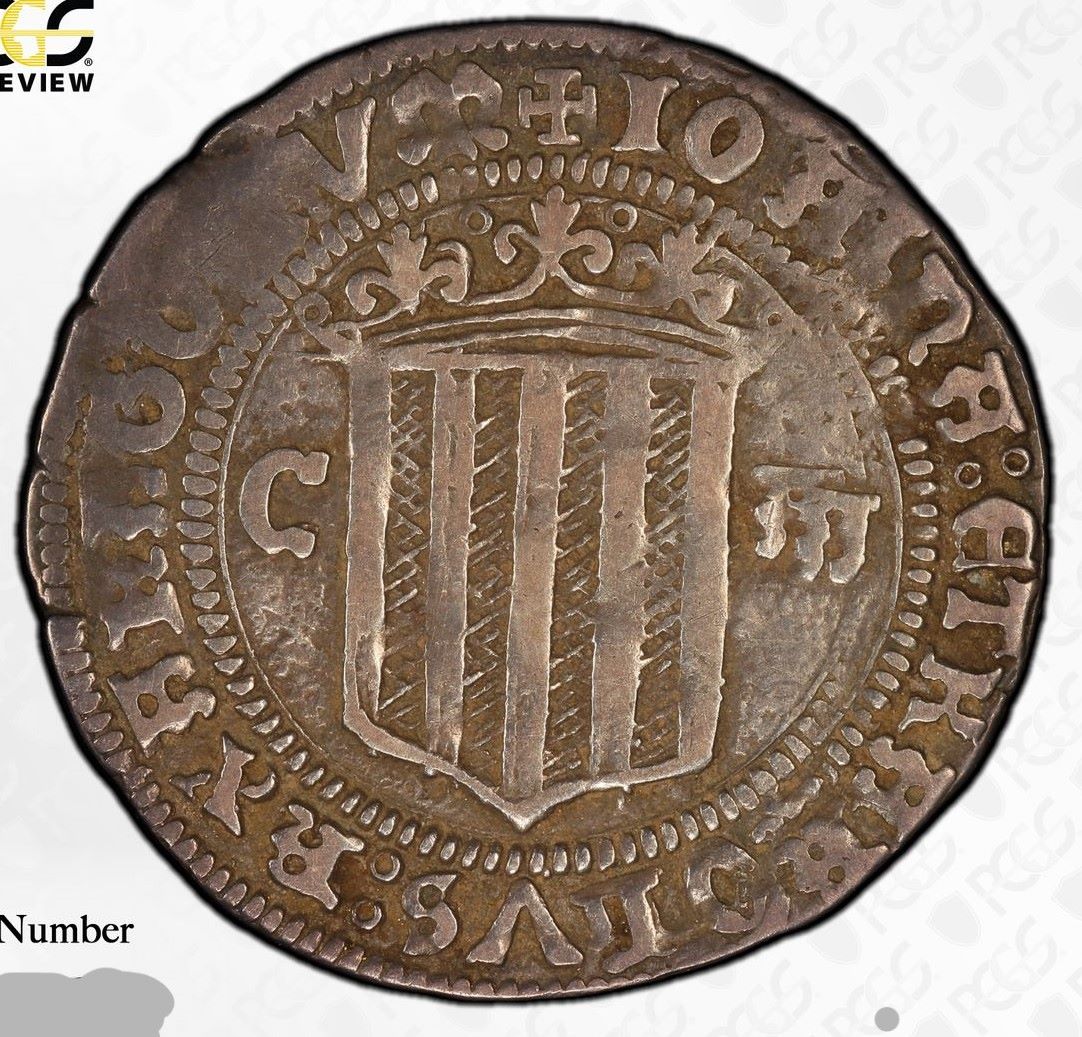
Hello! I have recently been trying to learn more about the Spanish (and Spanish colonial) real coins that predate US coinage. I love the pillar design from 1732-1773, and I am warming up to the Spanish coat of warms designs that reach back into the 1600s. I know the "cobb" coinage that comes before, so this makes me curious.

PCGS identifies this as a real from Spain, saying "Calico-83 Zaragoza" which I assume is the mint. My question about this enigmatic, paper thin coin is this: the size is approximately that of a Spanish 2 Reales coin, which makes me wonder why it's called a "real," instead of "2 Reales," as a bigger coin means more silver, right? And thus more value? This coin is much larger than the "1 Real" coins from the 1600s and on.

My other question--this is clearly not a "cobb" coin. Were there many dated, non-cobb coins from Spain during this time? From my limited knowledge the 16th century seems positioned in the heart of cobb coinage.

If anyone knows the history of this coin, or the answers to these questions, I'd love to hear them. Thanks so much.


1520-Spanish-
1520-Spanish-
Moderator
Learn More...
Spence's Avatar
United States
34397 Posts
 Posted 04/13/2024  9:33 pm  Show Profile   Bookmark this reply Add Spence to your friends list Get a Link to this Reply
Rather than Spain proper, I think that this coin is from the Kingdom of Aragon, which was a Spanish State. Here is the numista link with more info:

https://en.numista.com/catalogue/pieces131052.html


It is hammered rather than milled, but not a cob though.

"If you climb a good tree, you get a push."
-----Ghanaian proverb

"The danger we all now face is distinguishing between what is authentic and what is performed."
-----King Adz
Bedrock of the Community
numismatic student's Avatar
United States
11880 Posts
 Posted 04/14/2024  03:18 am  Show Profile   Bookmark this reply Add numismatic student to your friends list Get a Link to this Reply
Ferdinand II (Fernando) of Aragon and Isabella I (Isabel) of Castilla and Leon, the Catholic Kings [who also financed Columbus' exploration of the New World], largely unified Spain at the tail end of the Reconquista that drove back the Moors from the Iberian peninsula. Isabella was the ruler of a more expansive region in the Iberian peninsula than Ferdinand. When Isabella died in 1504, Johanna (Juana), Isabella's daughter, ascended to the throne instead of Ferdinand II.

Johanna became Queen of the Kingdoms that encompassed most of what is now Spain. But Johanna went insane around 1506 and her husband Philip I (Felipe) was poisoned later that year. Their son Charles I (Karolus) [named in this coin alongside Johanna] was only 6 years old at the time.

Philip I, Charles' father, was the eldest son of Holy Roman Emperor Maximilian I. Because Philip was poisoned, Charles I, son of the unified Spanish monarchs and Holy Roman Emperor effectively became the first Spanish Hapsburg King with holdings throughout Europe.

But Charles I was too young to rule in 1506, so Ferdinand II became Regent for Johanna and Charles until his death in 1516. In 1516, Charles ascended to the Spanish throne and in 1519, his grandfather Maximilian I died and Charles I became Holy Roman Emperor. He ruled over Spain, the Netherlands, Eastern parts of France known as Franche-Comte, Hapsburg regions of Germany, parts of Italy and the expansive discoveries in the New World. At the time, in 1520, Charles I was the most powerful man in Christendom.

The first silver coins minted in the New World by Hernan Cortes in Mexico City around 1536 also bear the names of Karolus and Ioanna (Carlos I and Juana) just like this coin. It was Charles I's court that approved the first mint and coinage in the New World.
IN NECESSARIIS UNITAS - IN DUBIIS LIBERTAS - IN OMNIBUS CARITAS
THE MAN IN THE ARENA, Theodore Roosevelt at the Sorbonne Paris on April 23, 1910: "It is not the critic who counts; not the man who points out how the strong man stumbles or where the doer of deeds could have done better. The credit belongs to the man who is actually in the arena, whose face is marred by dust and sweat and blood, who strives valiantly, who errs and comes up short again and again, because there is no effort without error or shortcoming, but who knows the great enthusiasms, the great devotions, who spends himself in a worthy cause; who, at the best, knows, in the end, the triumph of high achievement, and who, at the worst, if he fails, at least he fails while daring greatly, so that his place shall never be with those cold and timid souls who knew neither victory nor defeat."
My coin website:https://fairfaxcoins.com
Edited by numismatic student
04/14/2024 03:23 am
Bedrock of the Community
numismatic student's Avatar
United States
11880 Posts
 Posted 04/14/2024  04:09 am  Show Profile   Bookmark this reply Add numismatic student to your friends list Get a Link to this Reply
The Spanish Real dates back to around 1350-1366 during the reign of Pedro I (PETRVS). At the time the real was 3.4g of silver with a 27mm diameter. It was larger and thinner that the coin in this thread but approximately the same weight. The first reales from Pedro's reign were undated.

https://en.numista.com/catalogue/pieces94654.html

Even as late as 1651, the real is still 3.4g with a fineness of 0.93 which is about 3.2g of silver. Although the weight didn't change, the diameter shrank to 21mm by 1651.

https://en.numista.com/catalogue/pieces110788.html

It was in 1686 that the 1 real coin decreased in weight to 2.7g.

https://en.numista.com/catalogue/pieces111666.html

The last 1 real coins dated 1833 weighed 3g of 0.93 fine silver.

https://en.numista.com/catalogue/pieces63759.html
IN NECESSARIIS UNITAS - IN DUBIIS LIBERTAS - IN OMNIBUS CARITAS
THE MAN IN THE ARENA, Theodore Roosevelt at the Sorbonne Paris on April 23, 1910: "It is not the critic who counts; not the man who points out how the strong man stumbles or where the doer of deeds could have done better. The credit belongs to the man who is actually in the arena, whose face is marred by dust and sweat and blood, who strives valiantly, who errs and comes up short again and again, because there is no effort without error or shortcoming, but who knows the great enthusiasms, the great devotions, who spends himself in a worthy cause; who, at the best, knows, in the end, the triumph of high achievement, and who, at the worst, if he fails, at least he fails while daring greatly, so that his place shall never be with those cold and timid souls who knew neither victory nor defeat."
My coin website:https://fairfaxcoins.com
Edited by numismatic student
04/14/2024 12:46 pm
Bedrock of the Community
numismatic student's Avatar
United States
11880 Posts
 Posted 04/15/2024  11:32 am  Show Profile   Bookmark this reply Add numismatic student to your friends list Get a Link to this Reply
Charles I of Spain became Charles V when he became Holy Roman Emperor. This is a map of his holdings during his reign.
1520-Spanish-
IN NECESSARIIS UNITAS - IN DUBIIS LIBERTAS - IN OMNIBUS CARITAS
THE MAN IN THE ARENA, Theodore Roosevelt at the Sorbonne Paris on April 23, 1910: "It is not the critic who counts; not the man who points out how the strong man stumbles or where the doer of deeds could have done better. The credit belongs to the man who is actually in the arena, whose face is marred by dust and sweat and blood, who strives valiantly, who errs and comes up short again and again, because there is no effort without error or shortcoming, but who knows the great enthusiasms, the great devotions, who spends himself in a worthy cause; who, at the best, knows, in the end, the triumph of high achievement, and who, at the worst, if he fails, at least he fails while daring greatly, so that his place shall never be with those cold and timid souls who knew neither victory nor defeat."
My coin website:https://fairfaxcoins.com
Pillar of the Community
Learn More...
tdziemia's Avatar
United States
7936 Posts
 Posted 04/15/2024  12:18 pm  Show Profile   Bookmark this reply Add tdziemia to your friends list Get a Link to this Reply

Quote:
PCGS identifies this as a real from Spain, saying "Calico-83 Zaragoza" which I assume is the mint. My question about this enigmatic, paper thin coin is this: the size is approximately that of a Spanish 2 Reales coin, which makes me wonder why it's called a "real," instead of "2 Reales," as a bigger coin means more silver, right? And thus more value? This coin is much larger than the "1 Real" coins from the 1600s and on.


Remember that the denomination/value was based on precious metal content (mass), not size (diameter).
Your Aragon 1 real has about 3.1 grams of fine silver, same as the amount of silver in the Spanish real for at least the next 140 years:
https://en.numista.com/catalogue/pieces111665.html
Pillar of the Community
Adam590's Avatar
United States
751 Posts
 Posted 04/16/2024  4:41 pm  Show Profile   Bookmark this reply Add Adam590 to your friends list Get a Link to this Reply
First of all, wow! Thanks so much for this background information. Your responses provide a narrative that gives this metal relic a rich, three-dimensional story. I imagine the stories our coins have hidden in their features, toning, and other qualities play heavily into why we love this hobby so much. Your reverance for this coin's amazing heritage shines through contagiously.

Thanks, Numistatic Student for being a great teacher here. Spence, thanks for offering me that first dive. Tdziemia, thanks for affirming what I was wondering about. My favorite US denomination is the dime, and the 1 reale coin is in some ways the predecessor to our dime.
  Previous TopicReplies: 6 / Views: 487Next Topic  

To participate in the forum you must log in or register.


Disclaimer: While a tremendous amount of effort goes into ensuring the accuracy of the information contained in this site, Coin Community assumes no liability for errors. Copyright 2005 - 2026 Coin Community Family- all rights reserved worldwide. Use of any images or content on this website without prior written permission of Coin Community or the original lender is strictly prohibited.
Contact Us  |  Advertise Here  |  Privacy Policy / Terms of Use

Coin Community Forum © 2005 - 2026 Coin Community Forums
It took 0.32 seconds to rattle this change. Forums