| Author |
 Replies: 14 / Views: 1,519 Replies: 14 / Views: 1,519 |
|
|
Valued Member
Canada
107 Posts |
Please check the pics. I believe this is a counterfeit. Just the feeling is not right, but I can't tell. Maybe I am wrong. *** Moved by Staff to a more appropriate forum. ***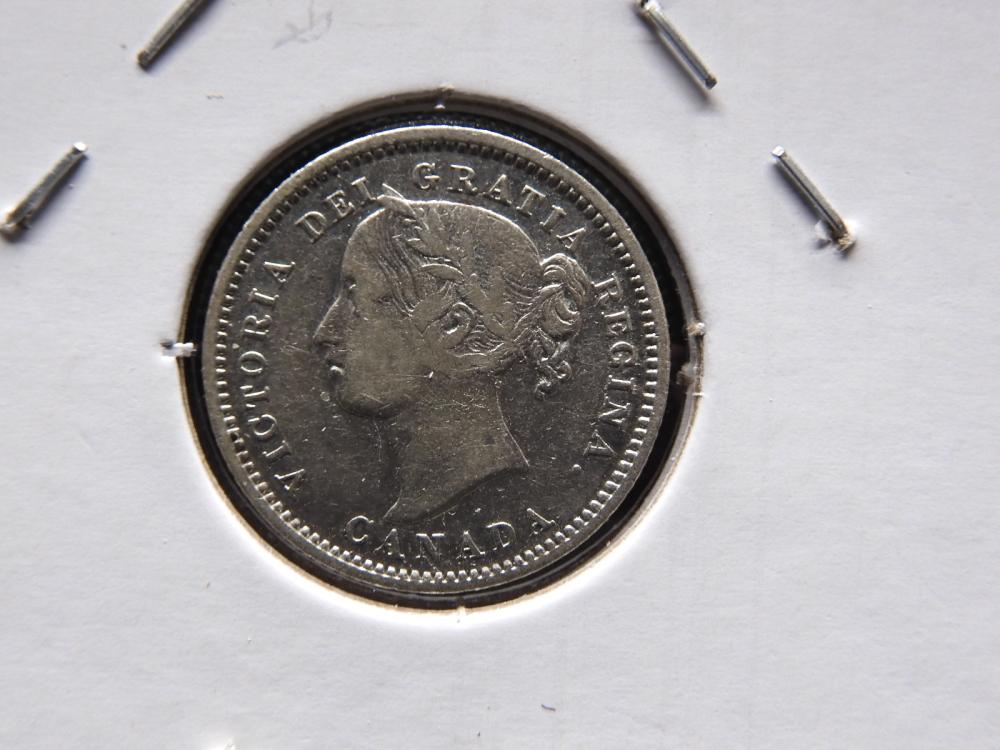 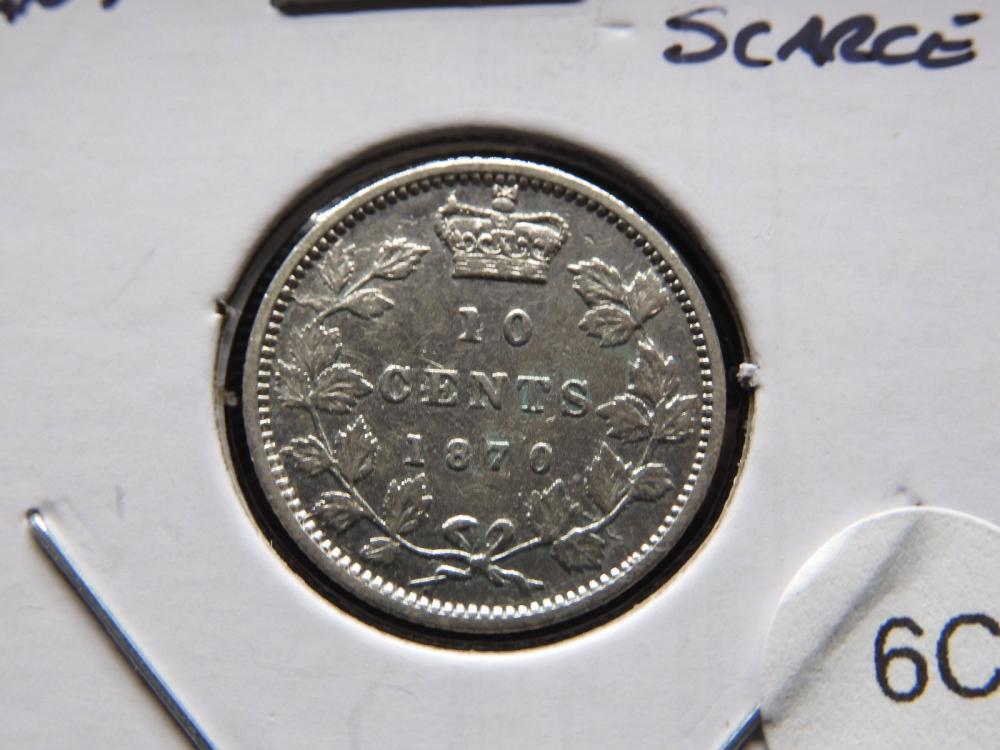 |
|
|
|
Valued Member
United States
238 Posts |
Looks good to me - the narrow 0 type. I would say F15 because of the wear on the braid but looks VF otherwise.
|
|
Pillar of the Community
Canada
1632 Posts |
Looks legit to me too; F-12.
What are you seeing that makes you think its fake?
|
|
Valued Member
 Canada
107 Posts |
It's mainly the inconsistency in the worn-out. The outer rim, the dentils are not worn out much for F grade coin, when the hair and the eye are heavy worn-out.
In the obverse, you can see some greenish stuff; those should be oxidized copper. But for a 925 silver coin, would that be too much?
|
|
Valued Member
Canada
107 Posts |
here is one pic from ebay listing. It's also a F grade 10 cents. The dentils are worn out consistently with the device 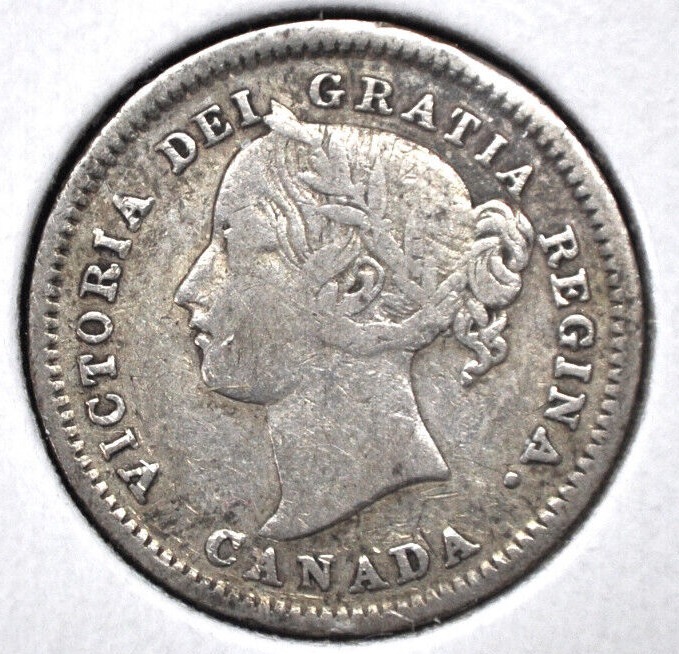 |
|
Bedrock of the Community
United States
94367 Posts |
Can you give us the weight?
|
|
Pillar of the Community
Canada
1632 Posts |
I have an 1858 20c and it has the same wear pattern (i.e., fairly heavy on the queen, not so heavy on the surrounding lettering and denticles)
|
|
Valued Member
Canada
107 Posts |
Is there an explanation to this kind of worn-out pattern? In my imagination, if the device worn-out heavily, it means the coins are heavily circulated, so the dentils would also have the same level of worn-out. Given that the metal hardness is the same and distributed evenly over the coin's body. Unless the coin is a counterfeit, the worn-out is artificial. Or there is another explanation for this worn-out pattern. Also, the only reliable way of testing metal composition is to use those expensive machines. I don't have the weight since that's a coin currently posted on a website for sale.
|
|
Pillar of the Community
 Canada
5643 Posts |
I think that it's a fake. The Chinese use actual coin to electronically scan and feed to the die-making process. The Obverse is vastly different from the Reverse wear. For fakes from China, I usually look at Vicky's eye and the bridge of the nose. The wear is too bad on this coin but fakes normally have part of the detail missing at the bridge. I don't like the wear on Vicky, but much less on the lettering.
|
|
Valued Member
Canada
107 Posts |
Yeah, I agreed with @okiecoiner, moreover, the greenish stuff on the reverse side. I believe it's oxidized copper. A 925 silver coin should not has so much this stuff. However, this is a common way to fake old Chinese coins since ancient Chinese coins are usually made of copper.
|
|
Pillar of the Community
Canada
851 Posts |
Sketchy. Suspect for sure.
|
|
Pillar of the Community
Canada
5643 Posts |
Also, the size of the letters in Canada appear smaller than the rest of the coin. This could be due to the pic being taken at a slight angle, but look at the Canada N compared to the others.
|
|
Valued Member
Canada
107 Posts |
Thanks for all the replies. I believe we have a conclusion that this is a fake.
|
|
Valued Member
Canada
395 Posts |
I think this coin is perfectly fine based on the pictures. The first thing I go to is bridge of the nose and eye just like okie said but that looks absolutely fine to me. The lettering looks more correct then the single well worn F posted which has several hits. I think this is just a better coin then the overt details express maybe VF to VF30 even with the weak braid. I have seen similar wear patterns in manilla envelopes that are not acid free, or paper folders that are also not acid free, then the obverse would have been the side touching the non acid free paper. The green is also ok as we don't know the life of the coin, could easily be corrosion or pvc. This one would be really easy to confirm in hand and I very much doubt it is a fake but we could be missing something in your pictures, most Chinese fakes are far worse then this, if you can bring it to a major coin show you can get your answer pretty quick.
|
|
Valued Member
Canada
107 Posts |
Thanks @talonbat for a new theory to explain the inconsistency of the worn-out pattern between the reverse and the obverse side. Maybe I miss sth. here. Why for the envelopes and paper folders that are not acid-free, only one side would touch the paper but not both sides?
|
| |
Replies: 14 / Views: 1,519 |
|







 Posted 06/26/2024 11:51 am





