| Author |
 Replies: 11 / Views: 632 Replies: 11 / Views: 632 |
|
|
Pillar of the Community
United States
6880 Posts |
Recently, folks have been mentioning "light induced doubling" as a type of mistaken doubling. Can someone please illustrate some examples of light induced doubling, and then explain the cause and how to detect it? I do think it's relevant, as I occasionally order ebay coins that might potentially have some doubling, and then the coin is predictably ordinary in-hand. |
|
|
|
Moderator
 United States
56855 Posts |
You might want to PM mpsrpms. John1  |
|
Valued Member
United States
451 Posts |
Hi, good example. 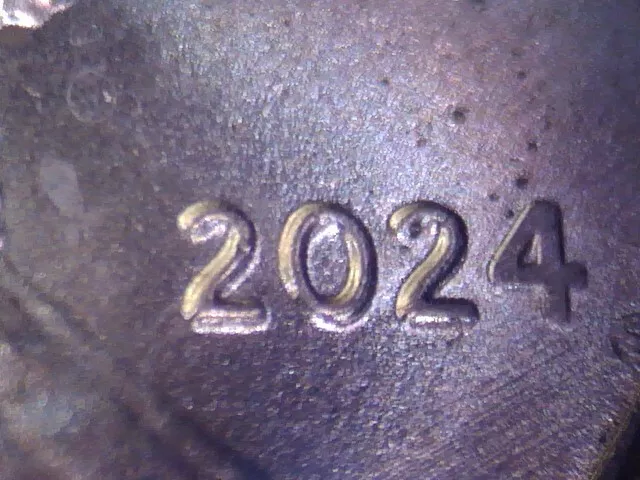 |
|
Pillar of the Community
 United States
6880 Posts |
In that example, it looks like the light might be catching a Die Deterioration shadow? |
|
Moderator
United States
105865 Posts |
quite possible Brand, or the light is reflecting off of the vertical wall of the devices.
|
|
Pillar of the Community
United States
3535 Posts |
I don't have any saved images, but I have noticed mostly on very new, shiny coins. Sometimes just
turning the coin a few degrees will alleviate it. In my experience anywho.
|
|
Pillar of the Community
 United States
8968 Posts |
Brand, I think there are different things that cause it, but in a nutshell, Dearborn nailed it. Whether it's light bouncing off other devices or polishing and deterioration, it's all about the light refracting off other things and coming back on the area that looks doubled. The worst instances are when a scope is used, they are really bad to show this, but I have also noticed it's prevalent with MS coins and proofs, regardless of what lighting is used. I agree that Ray (mpsrpms), would be able to explain it the best though.
-makecents-
|
|
Bedrock of the Community
United States
78529 Posts |
Interesting thread.   Errers and Varietys.
|
|
Pillar of the Community
United States
1324 Posts |
I agree with you E & V. Very interesting. I think we all have a jar full of these coins that give the appearance of doubling.
|
|
Pillar of the Community
United States
1791 Posts |
From my own experience, I find light induced doubling a problem on highly reflective coins and especially on new shield cents. Its not something I find simple to explain but I think its a combination of angle of source light, point of view and geometry of the area (radii in particular) and I point out shield cents in particular because they seems to have a greater radius at the base of lettering that other coins. In the following photo (which is not a great example), the upright between the 2 lower bars has some light induced doubling noticed by glare. You see glare at the top of the letter, the slope down, then glare again at the top of the radius, and another point of glare at the bottom of the radius. Those 2 lower points of glare make it look like there is doubling the is really not there. 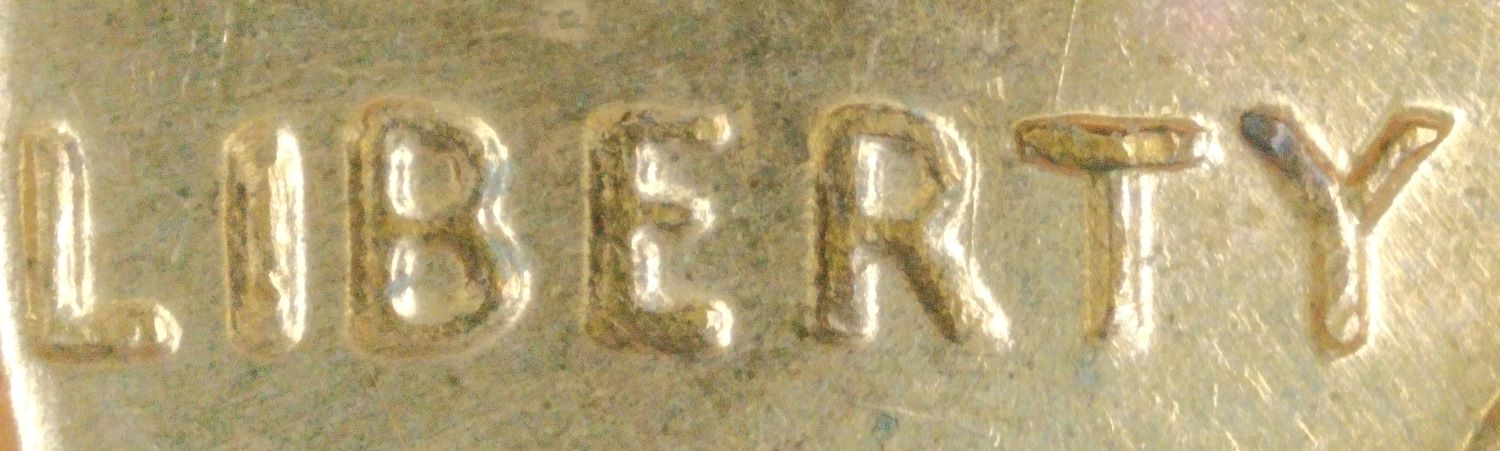 |
|
Pillar of the Community
United States
1791 Posts |
Here is a better simpler example of an eye. Glare at the top and bottom of the feature with the vertical component seemingly slightly angled gives the appearance of doubling that doesn't exist. 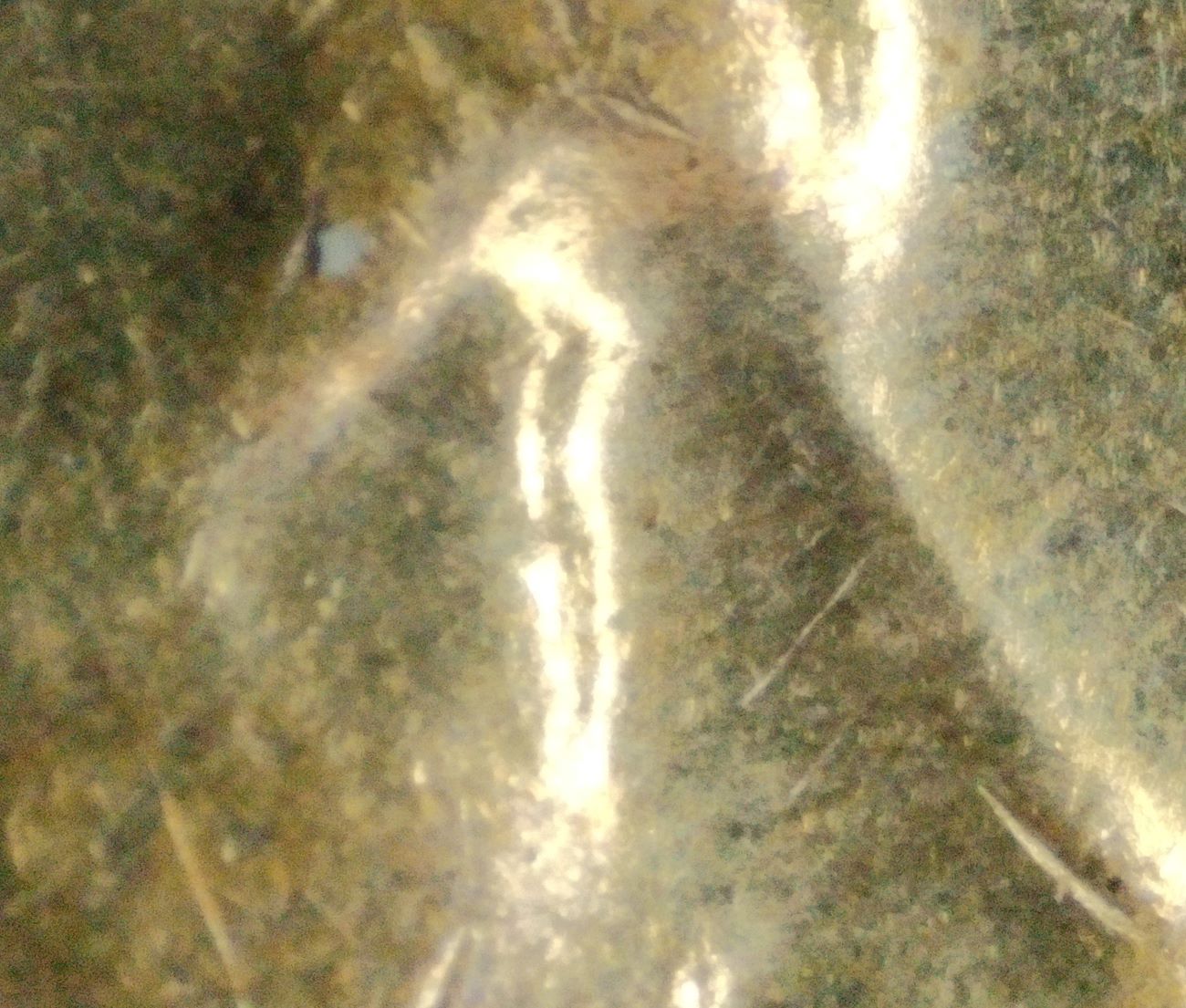 |
|
Pillar of the Community
United States
654 Posts |
It's all about the angle, at a right angle your light will create a shadow with the edge of the coin and make it look doubled, that's my opinion 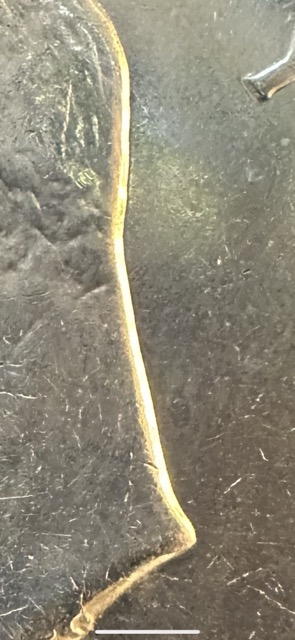 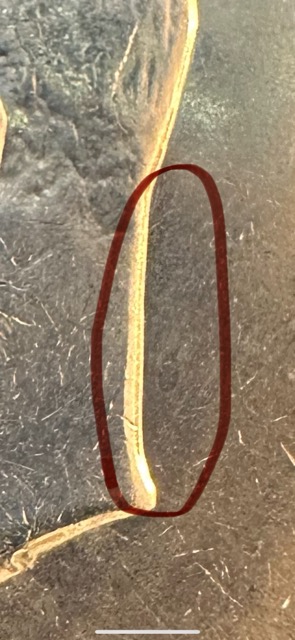 Edited by Alonzowick90
08/04/2024 10:06 am
|
| |
Replies: 11 / Views: 632 |
|







 Posted 08/03/2024 12:58 pm





