I recently listened to a talk given at a numismatic event in Italy (youtube.com/watch?v=idMEq11QePk&t=1460) where an interesting series of discoveries were presented by the Swiss Numismatic Dealers Association which I believe merit being shared.
Being in very nice conditions, with pretty patina and lucent fields, these peaked a lot of interest and some dealers went to look at them in real life; you can see a video here: youtube.com/watch?v=idMEq11QePk&t=1625 (low quality).
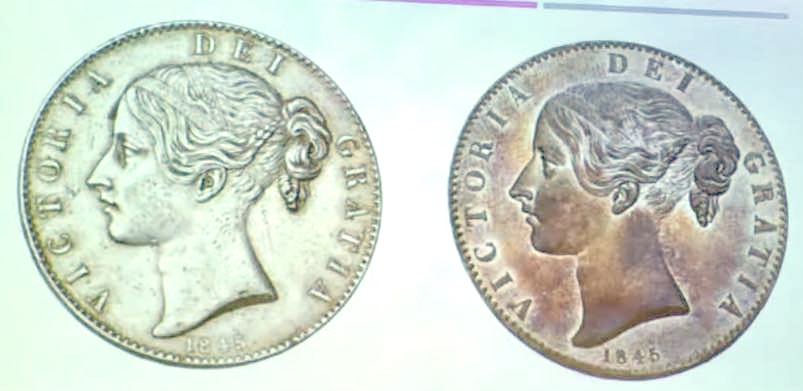
Upon enquiring on provenance, it was noted that all these coins were consigned by a single young man (verbatim translation "Chinese young man") and some further research found that some of these coins were previously sold at other auctions while being in much worse condition. Here's an example:
Coins were then withdrawn from the auction and returned to seller. What had happened became apparent: coins at low(er) conservation were laser-altered to boost conditions, a heavy patina was applied (unsure if as a result of the process or to cover it up) and coins were then re-entered in the market.
Once this was discovered, the dealers started to look at past/current auctions with coins in similar condition and similar heavy patina and saw several examples outside of the auction that started it. In other words: low quality coins bought for few hundreds dollars then laser-altered, patinated and sold for thousands after a while.
They noted that this trend seemed to have started around 2020 and if it weren't for the "mistake" of consigning so many together, they would have probably gone undetected, much like it was for other auctions.
On a particular interesting note, they mentioned that some currently slabbed coins were also found.. so it seems this process did sometime fool the TPGs which slabbed the altered coins without catching the altered surfaces.
Obviously it is worth noting that all coins are 100% authentic despite undergoing this process.
It must be challenging to work in an auction house and need to keep up with "developments" like this in the field.
I have one coin in my collection that seems a bit too attractve for its age of almost 300 years (though the price was very modest, not even 3 figures in dollars if I recall correctly). I wonder if it could have been treated like this, though it does not have the patination seen on those others.
Quote: How does a laser "boost the condition" of a coin?
The talk doesn't really go into details but I believe they are talking about laser tooling, which has been done on ancients for many years. They seem to imply it's a new thing for modern coins and/or in this particular usage.
I personally don't like the toning on both those Victoria Crowns either (the crown above was the one that looked most suspicious and they found the whole ordeal out thanks to it) but I encourage you all to see the video I posted above, those coins looks very nice in real life! They have a very convincing approximation of the classical "coin drawer" patina.
Just copy past this in your browser, it starts at the right time: youtube.com/watch?v=idMEq11QePk&t=1625
Super interesting, but shouldn't really come as any shock. Every single 'collectibles' market that assigns arbitrary value to things suffers from forgers, fakers and deceivers who employ technical talents to alter things to appear as something other than what they are (you should see the lengths they go to with high end art forgeries). There was a time when 'whizzing' was fairly new and smoking 60's/70's collectors, but that's very detectable if you know what to look for.
After a while, it gets into 'my grandfathers axe' type philosophical questions; if these alterations can be done so discretely and effectively that they're truly undetectable at face value... well... like it or not, we're all going to be living with them, because they'll be done and they cannot be detected... and as is the case with all problems like this, we've probably been living with this for longer than we realize.
That was the case with 'coin conservation' that was once considered a taboo, but eventually became accepted once people realized it had always been going on, all along.
Back in the 1990's they had a short rash of alterers using lasers to do a very localized melting of the surface on gold coins to repair nicks and other contact marks on MS gold coins to make them mark free in order to increase their grades Since in general gold coins don't tone there was no patina to disturb. It could only be used on small marks because if you did it to large marks the disruption in the surface luster would be noticeable.
And how many remember the use of putty on gold coins to hide marks. Those actually got into PCGS an NGC slabs and were discovered several years later when th putty discolored.
Disclaimer: While a tremendous amount of effort goes into ensuring the accuracy of the information contained in this site, Coin Community assumes no liability for errors. Copyright 2005 - 2026 Coin Community Family- all rights reserved worldwide. Use of any images or content on this website without prior written permission of Coin Community or the original lender is strictly prohibited. Contact Us | Advertise Here | Privacy Policy / Terms of Use






 Posted 11/23/2024 09:10 am





