I'd like to nominate this coin proposal for the "Most Audacious Request of the Year" award! Let me know if you agree after you've read the story.In July 1975, Charles McCurdy Mathias Jr. introduced a coin bill in the House of Representatives that called for up to 120 million commemorative gold coins! (WOW!) Upon its introduction, the bill was referred to the House Committee on Housing, Banking and Urban Affairs.
So, what are the details?The bill called for the striking of up to 60 million each of two gold coins. The size, composition and denomination of each were all left to the Secretary of the Treasury to determine. The bill did stipulate, however, that the gold fineness of the coins had to be a minimum of 0.667 fine.
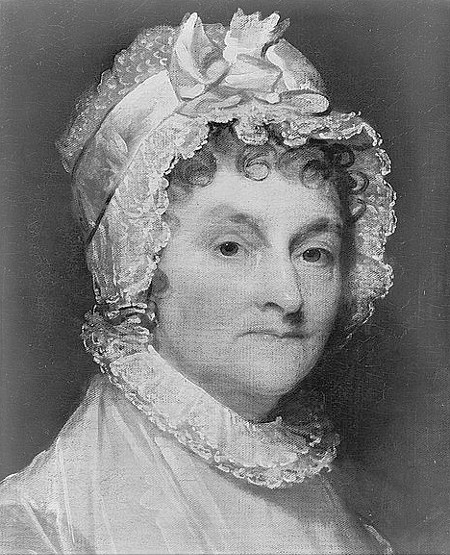
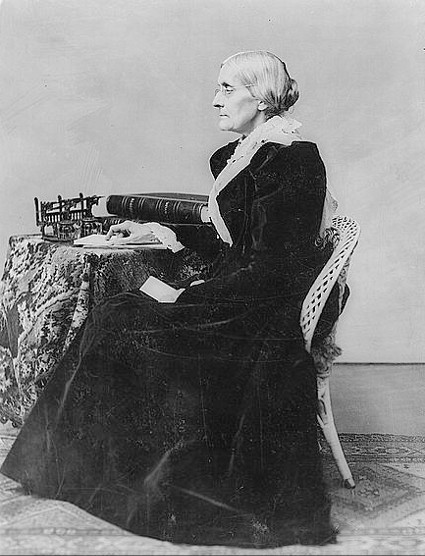
The coins were to bear the likenesses of Abigail Adams and Susan B. Anthony. From the bill's language, the two figures were to appear together on each coin vs. Adams on one gold coin, Anthony on the other. Conjoined portraits? Facing portraits? Two-headed coins? It's impossible to say based on the language of the bill.
The coins were to be "legal tender for all debts, public and private, public charges, taxes, duties, and dues." The Secretary was authorized to sell the coins to the public, but limit the number an individual or group could purchase.
No sponsor/beneficiary was identified in the bill, and no surcharges were outlined. The bill's provisions appeared to have been designed to authorize gold coins that would financially benefit the US Treasury vs. a third-party organization, but that's me reading "between the lines" as no such specific language one way or the other was included. Other than specifying the women to appear on the coins, the maximum mintage of each coin and the minimum acceptable fineness for the gold used to create the planchets, the proposed legislation was quite vague.
My thinking is that the bill's "vagueness" was intentional, such that the Treasury Department had plenty of flexibility to create the gold coin program that it thought best and could be the most successful and responsive in the market.
Why were Abigail Adams and Susan B. Anthony chosen as subjects?Both Adams and Anthony were leading voices in support of Women's Rights during their lives.
"Abigail Adams was one of the first advocates of women's equal education and women's property rights. Adams had strong feelings about marriage and believed women should take more part in decisions rather than simply serve their husbands. Adams believed that women should educate themselves and use their intellect to manage the household affairs, as well as be a moral guide for the family.""Susan B. Anthony is perhaps the most widely known suffragist of her generation and has become an icon of the woman's suffrage movement. Anthony traveled the country to give speeches, circulate petitions, and organize local women's rights organizations."Both of these biographical quotes are from the
Women's Rights National Historic Park web site. You can read more about each woman here:
-
Abigail Adams-
Susan B. AnthonyIn ConclusionMathias' bill went nowhere. It was never reported out of Committee, considered by the House or followed up with additional commemorative gold coin proposals featuring Adams and Anthony. It died for lack of action.when the 94th Congress adjourned.
In the 1980s, legislation was enacted that created the American Arts Gold Medallions program (For more, see:
1980-84 American Arts Gold Medallions) and the Gold American Eagle bullion coin program. The proposed Adams/Anthony gold coin program is a direct ancestor.
I'm planning a post about a similar gold commemorative coin effort that was to recognize the American Revolution Bicentennial Administration (ARBA). Keep an eye out for it!
Now, about that "Most Audacious" award...For other of my posts about commemorative coins and medals, including more What If? stories, see:
Commems Collection.









 Posted 03/01/2025 10:12 am


 Both women were certainly worthy of commemoration, there's no doubt about that. But wow, what a mintage limit!
  Audacious for sure.


