Coin Community Family of Web Sites Join Thousands of Coin, Bullion, & Money Collectors
300,000 items to help build your collection! Royal Canadian Mint products, Canadian, Polish, American, and world coins and banknotes. Specializing in Modern Numismatics Coin, Banknote and Medal Collectors's Online Mall Shop for APMEX Bullion on eBay!Join Thousands of Coin, Bullion, & Money Collectors Vancouvers #1 Coin and Paper Money Dealer


Username:
Password:
Save Password
Forgot your Password?


This page may contain links that result in small commissions to keep this free site up and running.

Welcome Guest! Registering and/or logging in will remove the anchor (bottom) ads. It's Free!

Need Help Spotting Cleaned Barber Half Dollars - 1913-P Example

To participate in the forum you must log in or register.
Author Previous TopicReplies: 7 / Views: 957Next Topic  
Valued Member
1949-S's Avatar
United States
56 Posts
 Posted 06/19/2025  6:03 pm Show Profile   Bookmark this topic Add 1949-S to your friends list Get a Link to this Message Number of Subscribers
I'm trying to get better at spotting cleaned coins and welcome your comments on my observations and anything else I might have missed.

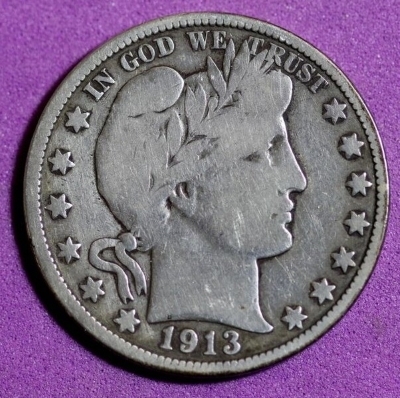
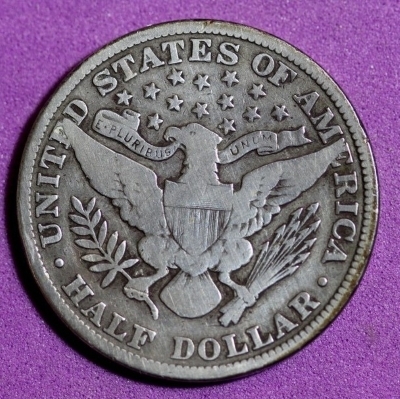
Based on original images from ebay I suspected that the coin below had been cleaned but wasn't quite sure. The obverse seemed to have lots of fine lines running in the 5 - 11 o'clock direction and the reverse to a lesser degree seemed to have the same.

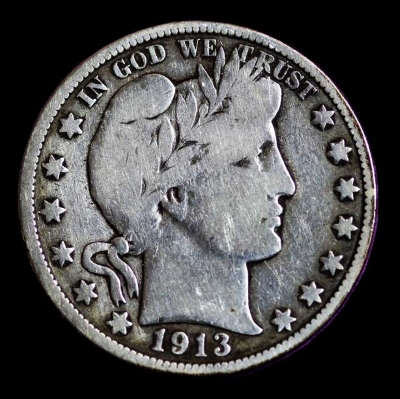
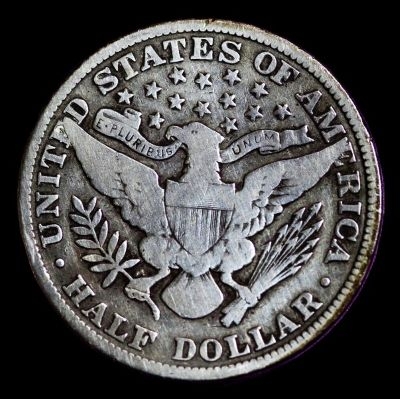
While composing this post I was preparing images taken from ebay to insert. During that process I happened to change the image contrast to 100% and it solidified my opinion that this coin had been cleaned. What process typically causes this? Is there anything else I missed?

Are there any other tricks like changing the image's contrast that you use to spot cleaned coins. I'd love to hear some!

Standard Contrast Images:
Need-Help-Spotting-Cleaned-Barber-Half-Dollars---1913-P-Example

Max Contrast Images:
Need-Help-Spotting-Cleaned-Barber-Half-Dollars---1913-P-Example

Even though I seem to have answered my initial question on whether this coin had been cleaned, do you have anything else to add on detecting cleaned coins?

*** Moved by Staff to a more appropriate forum. ***

Bedrock of the Community
Errers and Varietys's Avatar
United States
74196 Posts
 Posted 06/19/2025  10:02 pm  Show Profile   Bookmark this reply Add Errers and Varietys to your friends list Get a Link to this Reply
When spotting a cleaned coin, look for dull surfaces, abrasive scratches, and muted luster.
Errers and Varietys.
Bedrock of the Community
Learn More...
Marv65's Avatar
United States
10541 Posts
 Posted 06/20/2025  01:34 am  Show Profile   Bookmark this reply Add Marv65 to your friends list Get a Link to this Reply

Quote:
do you have anything else to add on detecting cleaned coins?

Besides what E&V stated - also look for when the coin starts to retone - usually it is not the nice subdued colorful toning but ugly dark spots and "splotches".
Pillar of the Community
United States
1489 Posts
 Posted 06/20/2025  10:14 am  Show Profile   Bookmark this reply Add halfamind to your friends list Get a Link to this Reply
I do agree the obverse had a harsh cleaning in the past, maybe to the point of being a details coin. Scratch marks and abrasions are a dead giveaway. More subtle older cleanings are sometimes market acceptable b
Pillar of the Community
fortcollins's Avatar
United States
3647 Posts
 Posted 06/20/2025  11:30 am  Show Profile   Bookmark this reply Add fortcollins to your friends list Get a Link to this Reply
Die polishing creates scratches on the surface of the die, which become raised marks on the coins. Coin cleaning creates scratches that are depressions on the surface of the coin. Online photos (especially closeup shots) sometimes make it difficult to distinguish recessed marks from raised marks.

In the 1960s, it was common to see silver coins cleaned with baking soda and copper coins cleaned with pencil erasers. Many of those coins are still on the market.

That's where it's helpful to study patterns of die polishing for each coin series, and for particular dates and mints within those series, too. The PCGS population report galleries are a valuable tool for doing this. When you see the areas and types of die polishing for the series and for the dates and mints of interest, scratches in photos outside of those areas will catch your eye quickly.

There are some coin series that can have extreme die polishing that at first glance looks like cleaned coins. Buffalo nickels are notorious for heavily abraded dies, especially the branch mint coins. Lincoln cents during the 1920s through mid-1940s have some years with exceptionally abraded dies (1922-D, 1924-D, 1934, and 1941 are a few examples). Coins struck shortly after the die abrasion can be mistaken for cleaned coins in photos.

One thing to look for to distinguish abraded dies from cleaned coins is the point where the design begins and the field ends. On one side of the central device, the die abrasions will have a gap, where the wire bristles skipped over the edge before striking the surface again in the recessed area of the die. On the other side of that device, the bristles may have a small skipped area just on the field beyond the edge. Another thing to look for is the shape of the scratch. Die polishing tends to be straight lines or "J" shaped lines (like a J-stroke when paddling a canoe). Coins cleaned with abrasives will tend to have scratches running parallel to and on the raised devices, rather than skipping a portion of the devices. They also will have thumb-sized areas of scratches heading in different directions.

Like you said, playing with the photos helps. Color saturation, exposure, and contrast tools are some good detective friends.

Just a couple thoughts.

Pillar of the Community
jacrispies's Avatar
United States
3848 Posts
 Posted 06/20/2025  12:30 pm  Show Profile   Bookmark this reply Add jacrispies to your friends list Get a Link to this Reply
I would recommend every numismatist looking at 10,000 coin photos online to naturally get the idea of what a cleaned vs original coin looks like. That was my strategy and I feel that purchasing from [poor] online photos is a strong suit.

Sometimes you win some, sometimes you lose some. It's ok to study and do research, but the field work will build most of the skill.

Well done adjusting the contrast to see the hairlines, that seems like a very useful skill.
Suffering from bust half fever.
Want to learn how to attribute early half dollars by die variety? Click Here: http://goccf.com/t/434955
Shoot me a PM if you are looking to sell bust halves.
Valued Member
1949-S's Avatar
United States
56 Posts
 Posted 06/20/2025  1:27 pm  Show Profile   Bookmark this reply Add 1949-S to your friends list Get a Link to this Reply
WOW!! I'm impressed. Thanks everyone for helping me better understand this facet of coin grading.
Bedrock of the Community
Learn More...
panzaldi's Avatar
United States
18665 Posts
 Posted 06/21/2025  09:30 am  Show Profile   Bookmark this reply Add panzaldi to your friends list Get a Link to this Reply
learning about cleaned coins is an art and I think mandatory for any collector/investor in coins. the difference in price can sometimes be extensive. this is where a novice can easily lose money and sometimes a lot.

there are so many ways to clean a coin. what happened with this one? I don't think you can be 100% certain other than someone wiped it with something abrasive to cause the hairlines.

just keep in mind that a cleaned coin does not need to exhibit hairlines. I.E. over dipping a coin would not display these however, all the original surfaces would be removed leaving a dull flat surface that just doesn't look right. comparing a similar coin with around the same grade side by side is one way to tell.
  Previous TopicReplies: 7 / Views: 957Next Topic  

To participate in the forum you must log in or register.


Disclaimer: While a tremendous amount of effort goes into ensuring the accuracy of the information contained in this site, Coin Community assumes no liability for errors. Copyright 2005 - 2026 Coin Community Family- all rights reserved worldwide. Use of any images or content on this website without prior written permission of Coin Community or the original lender is strictly prohibited.
Contact Us  |  Advertise Here  |  Privacy Policy / Terms of Use

Coin Community Forum © 2005 - 2026 Coin Community Forums
It took 0.34 seconds to rattle this change. Forums