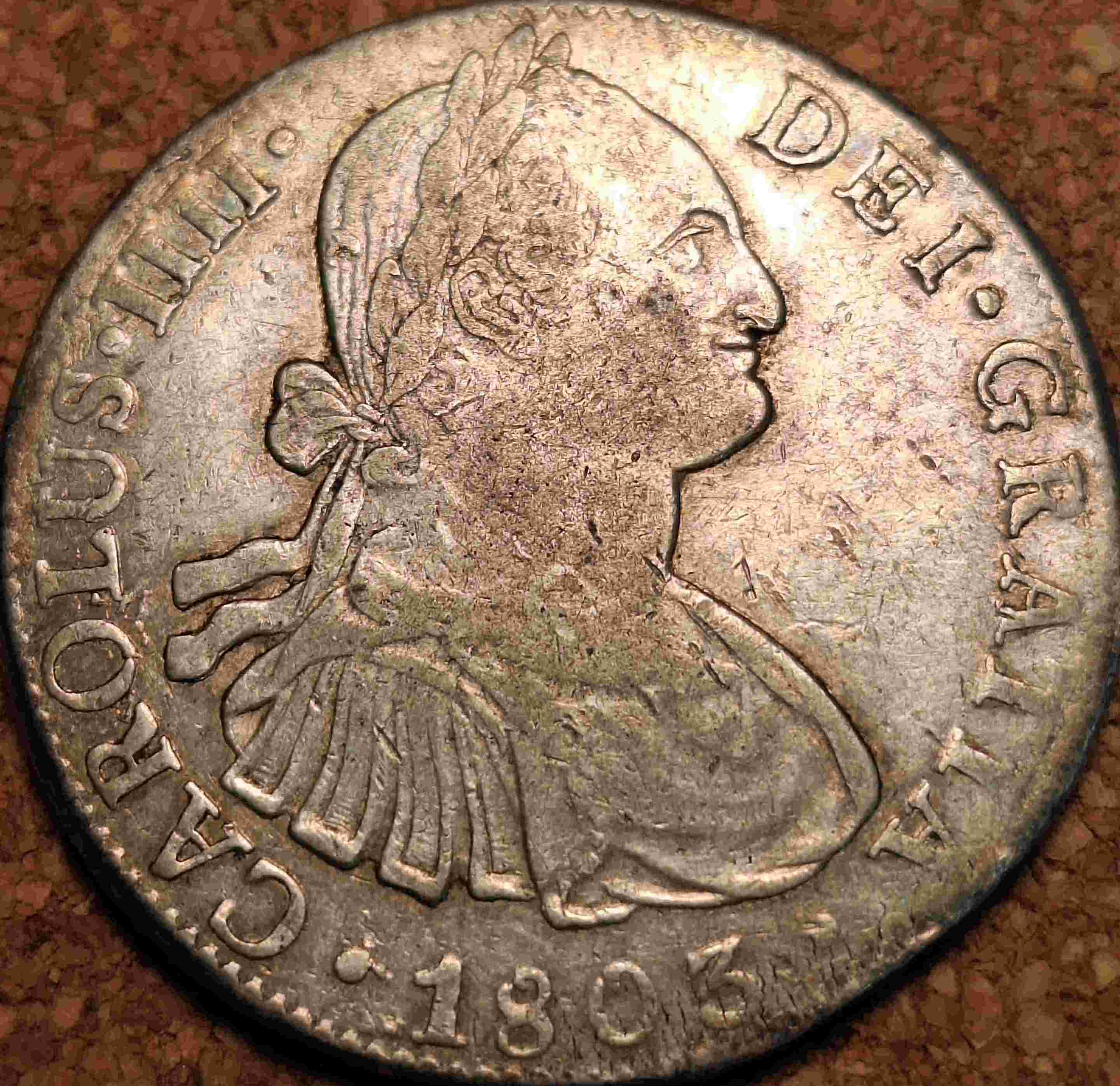
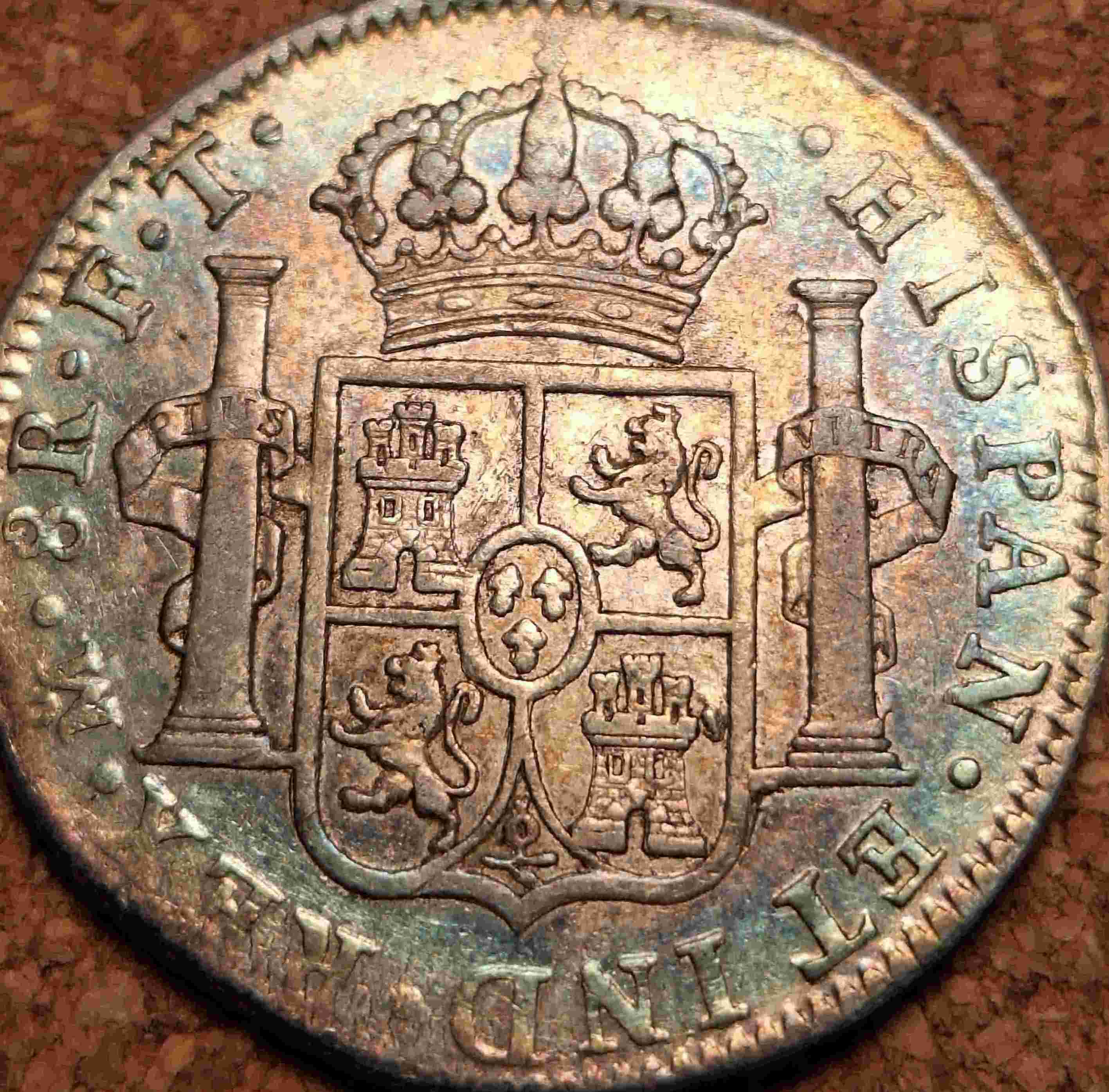
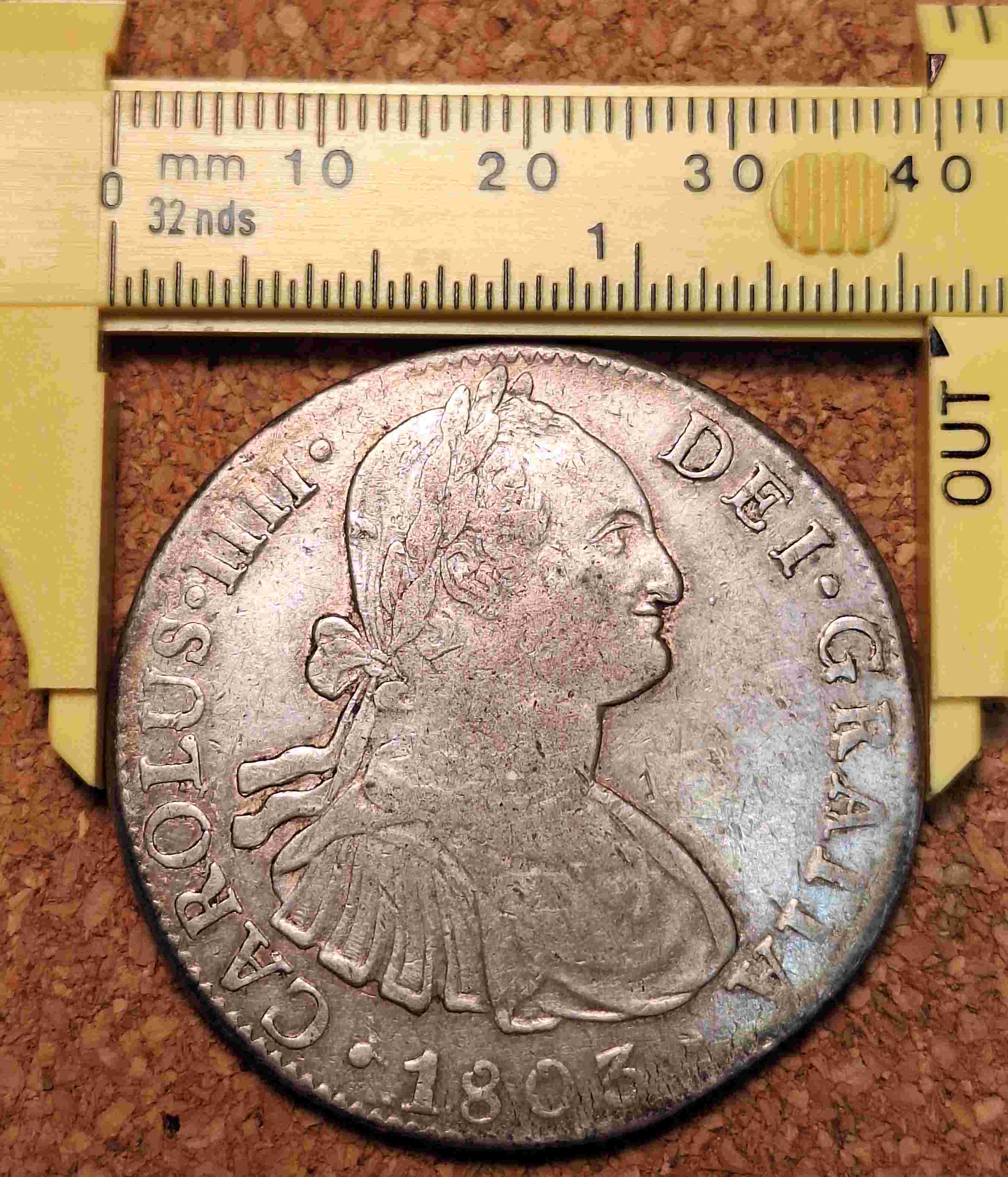
Another interesting observation - what caused those fissures by the date area? Metallurgical Mechanism Behind the Fissures
- Lead-Induced Embrittlement: Lead (Pb), when present even in trace amounts, can segregate along grain boundaries in silver alloys. This weakens intergranular cohesion, especially during thermal cycles like annealing or striking.
- Silver's Susceptibility: Unlike copper, silver is particularly vulnerable to Pb-induced embrittlement. The result? Brittle fracture zones that manifest as planchet fissures, often radial or linear, and frequently near high-strain areas like the date or bust truncation.
#129514; Historical Context and Alloy Behavior
- Colonial Minting Practices: Spanish colonial mints often used recycled silver — including melted-down coinage, jewelry, and even ecclesiastical silver — which could introduce lead contamination from solder or refining residues.
- Poor Alloy Homogenization: Inconsistent mixing and primitive refining could leave Pb-rich inclusions, especially in lower-quality planchets struck during periods of economic strain or war.
Lead's Role in Silver Ore Refining
- Smelting Phase: Silver ores, especially those rich in galena (PbS), were smelted with lead to form a metallic mixture. The silver dissolved into the molten lead, forming an argentiferous lead alloy — a convenient intermediary.
- Cupellation: This alloy was then heated in a porous crucible under an oxidizing environment. Lead oxidized to litharge (PbO), which was absorbed by the cupel or evaporated, leaving behind metallic silver.
- Efficiency Boost: Adding lead deliberately (even when the original ore wasn't rich in Pb) helped extract silver more completely. Lead acts as a solvent for precious metals, facilitating separation from base materials.
#127994; Historical Practice Insights
- Spanish colonial smelting sites — particularly in Zacatecas and Potosí — routinely added lead to help recover silver from complex ores. The practice was well documented in 16th-19th century mining manuals.
- Poor control over the Pb quantity or cupellation residue could leave trace lead in the final silver product, which, as you've noted, contributes to embrittlement and fissures in later-struck coinage.
So yes, not only was lead present — it was often purposefully introduced into the metallurgy chain. If you're mapping coin metallurgical anomalies to refining methods, this link is worth spotlighting. Want to dig into Saiger Silver extraction next for contrast?
Lead's Role in Silver Ore Refining
- Smelting Phase: Silver ores, especially those rich in galena (PbS), were smelted with lead to form a metallic mixture. The silver dissolved into the molten lead, forming an argentiferous lead alloy — a convenient intermediary.
- Cupellation: This alloy was then heated in a porous crucible under an oxidizing environment. Lead oxidized to litharge (PbO), which was absorbed by the cupel or evaporated, leaving behind metallic silver.
- Efficiency Boost: Adding lead deliberately (even when the original ore wasn't rich in Pb) helped extract silver more completely. Lead acts as a solvent for precious metals, facilitating separation from base materials.
#127994; Historical Practice Insights
- Spanish colonial smelting sites — particularly in Zacatecas and Potosí — routinely added lead to help recover silver from complex ores. The practice was well documented in 16th-19th century mining manuals.
- Poor control over the Pb quantity or cupellation residue could leave trace lead in the final silver product, which, as you've noted, contributes to embrittlement and fissures in later-struck coinage.
So yes, not only was lead present — it was often purposefully introduced into the metallurgy chain.
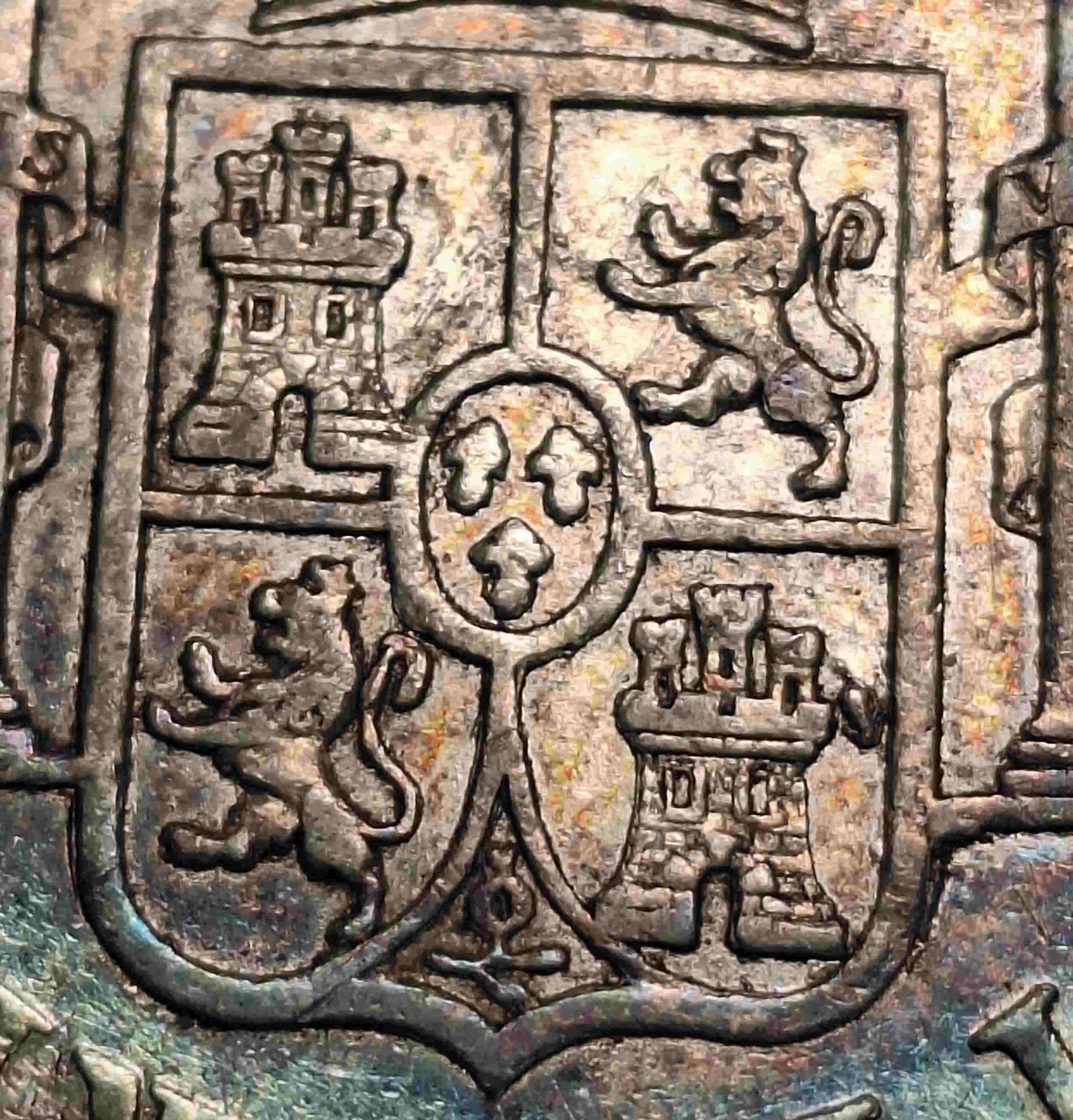
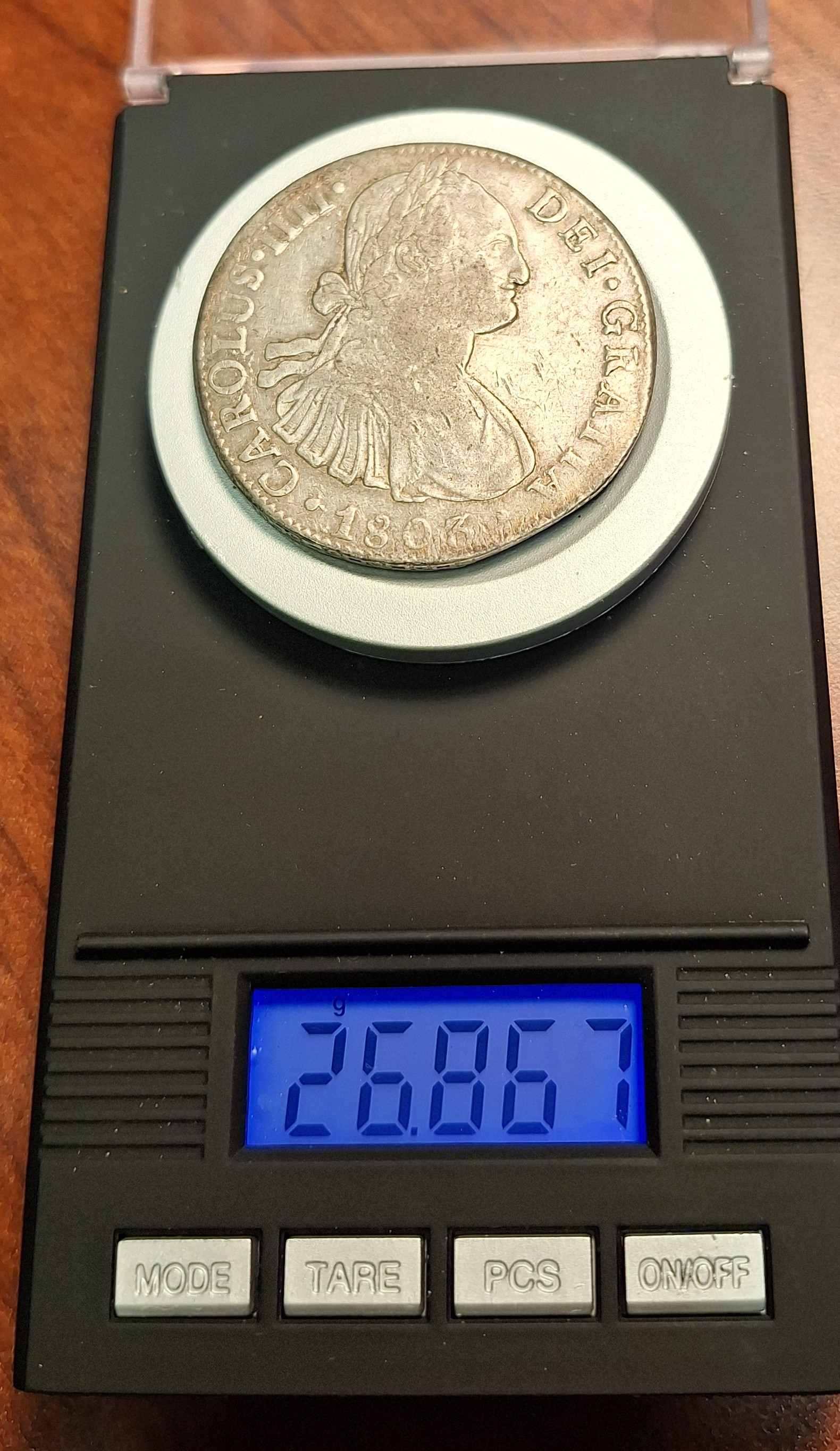
Coin BTW looks genuine <BG>. John Lorenzo.
Edited by colonialjohn
07/15/2025 4:10 pm







 to the Community!


 Posted 07/03/2025 11:33 am





 ) might want to click on some of his old posts.


