











 Posted 07/09/2025 12:57 pm


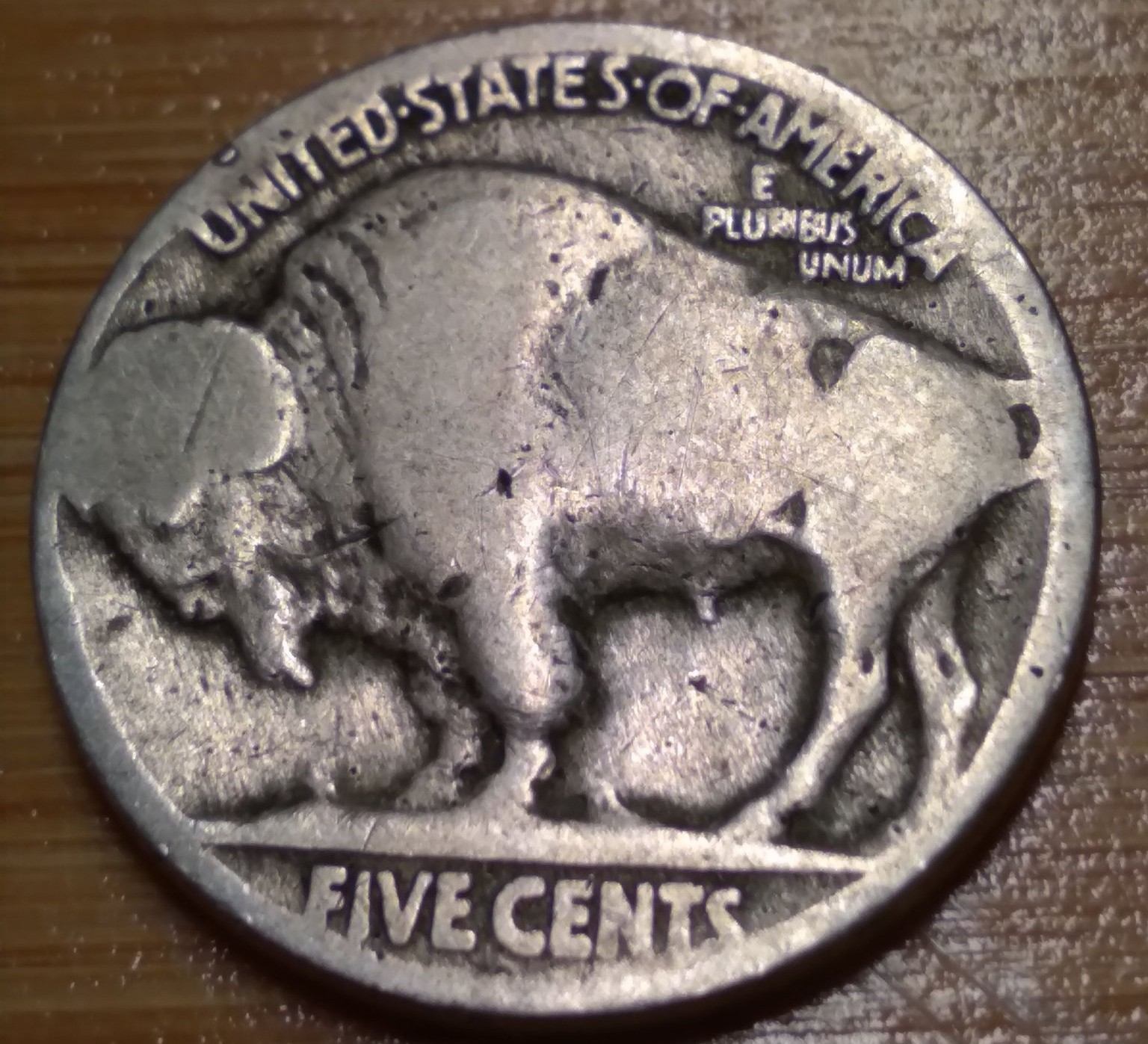
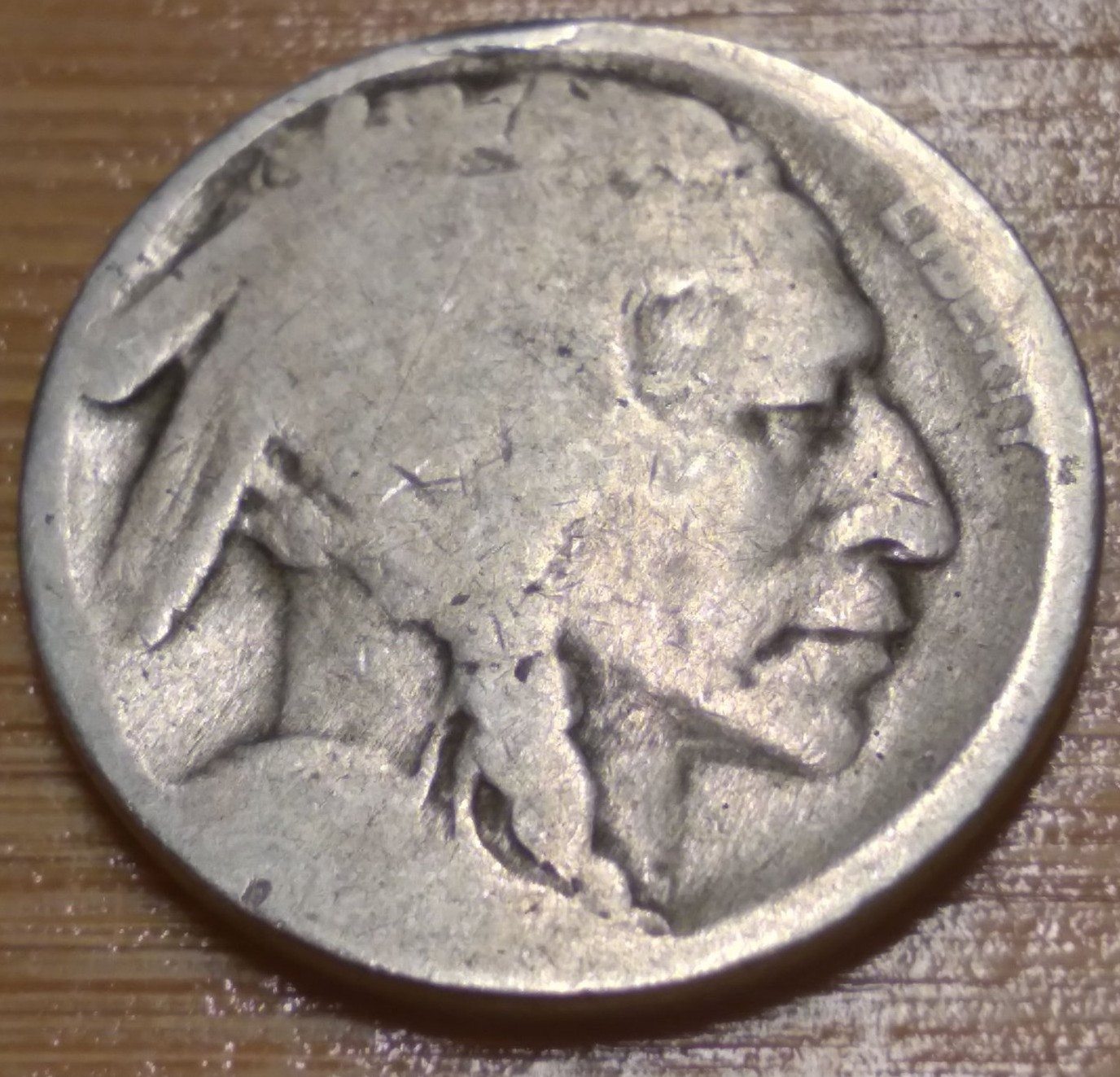
It is a two-feather Buffalo nickel. Good find!
I think it can be attributed without the date. Let me walk you through what I think it might be, and why. I believe this is a 1918 2-feather listed in Ron Pope's guide as 1918 ADO 2F #09, first die, with the specific listing as B05-18P2F-01, which is listed in the Cherry Picker's Guide as FS-05-1918P-401.
Here is how I get there:
 The obverse is ODV-001 or ODV-002, because of the shape of the left ribbon. That limits dates to 1913-1919.
LIBERTY looks slightly stronger than the weak lettering of 1913-1915, so that would make it ODV-002, used 1916-1919.
The chatter beneath FIVE CENTS does not look like a remnant of a mint mark. It looks like scratches and gouges. That makes it a Philadelphia coin.
Two of the Philadelphia 2-Feather coins have deep die die polishing scratches behind the Indian's neck. Your coin has deep die polishing scratches behind the neck. The scratches on the 1917 run in a different pattern from your coin, and there is a small curled gouge behind the neck on your coin that looks very much like the small gouge on the 1918.
That's my best guess here. Thoughts?
I think it can be attributed without the date. Let me walk you through what I think it might be, and why. I believe this is a 1918 2-feather listed in Ron Pope's guide as 1918 ADO 2F #09, first die, with the specific listing as B05-18P2F-01, which is listed in the Cherry Picker's Guide as FS-05-1918P-401.
Here is how I get there:
The obverse is ODV-001 or ODV-002, because of the shape of the left ribbon. That limits dates to 1913-1919.LIBERTY looks slightly stronger than the weak lettering of 1913-1915, so that would make it ODV-002, used 1916-1919.The chatter beneath FIVE CENTS does not look like a remnant of a mint mark. It looks like scratches and gouges. That makes it a Philadelphia coin.Two of the Philadelphia 2-Feather coins have deep die die polishing scratches behind the Indian's neck. Your coin has deep die polishing scratches behind the neck. The scratches on the 1917 run in a different pattern from your coin, and there is a small curled gouge behind the neck on your coin that looks very much like the small gouge on the 1918.That's my best guess here. Thoughts?


