The 1941 Lincoln Cents are a playground for
DDO enthusiasts, with doubled second "T"s in TRUST, doubled first "T"s in TRUST, doubled fours in the date, doubled eyelids, and some stunning major doubled dies, some of which are still unlisted. (That's a hint.)
The 1941 Philadelphia cents are filled with mysteries.

What did they do to the poor hubs that resulted in at least two different broken second "T"s in TRUST? And when did they also break the first "T" in TRUST on one of the hubs?
When they rehubbed the broken second "T" dies, what hub did they use? It clearly wasn't made from the same master, because the fours in the date are different. (That's why they are doubled). The rehubbed four has a sharper left point, a slightly taller top point, and a very slightly shorter crosslet. Interestingly, the 1940 dies had those features. Did they grind the zero off a remaining 1940 hub and use it? Was 1941 what suggested to the mint to do it (again?) in 1949, when preparing the additional three dies for San Francisco?
Why are there so many
harshly abraded die pairs for 1941? At least seven die pairs were abraded across the entire obverse and reverse, and not gently. Presumably clash polishing is the reason, but is there anything else lurking beneath the polishing? (Hint.)
So here is today's mystery coin. First, the whole coin photos, showing the aggressive die polishing.
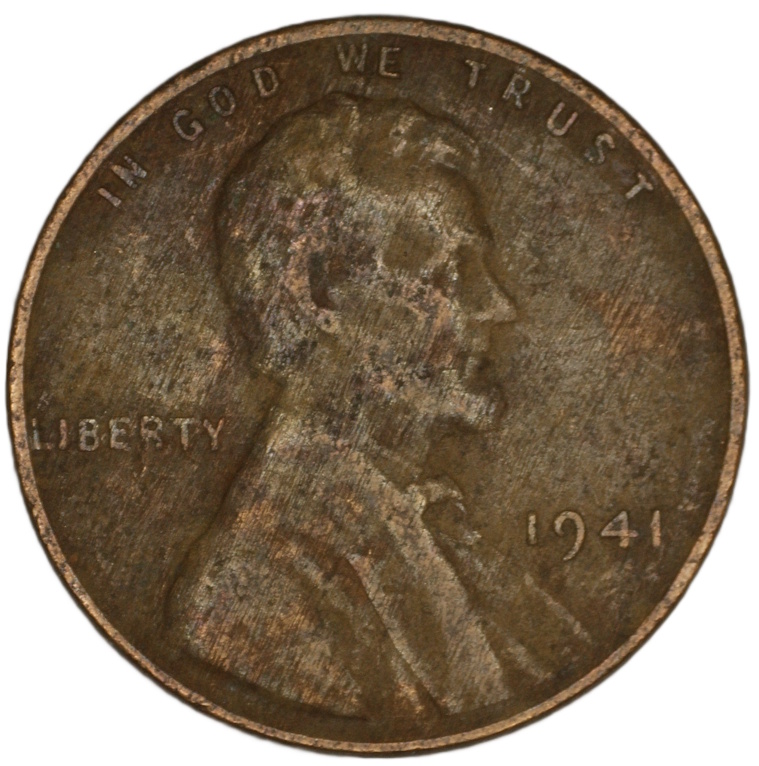
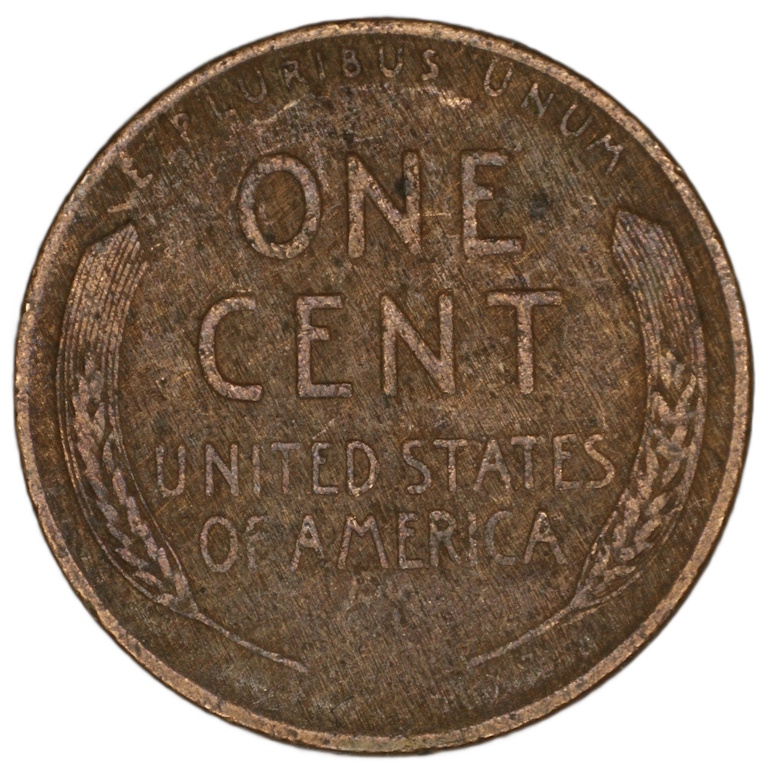
Now the mystery. The coin has a very slightly doubled second "T" in TRUST, with the intact hub over the broken hub, like so many other 1941 cents. The four is doubled, with the sharp point of the rehubbed four lightly visible. That isn't unusual, and is more the norm than out of the ordinary. But that wouldn't be a reason to obliterate the die.
The coin does have the usual die clashing, with the wheat stalks abraded on the obverse. It also appears to have been a slightly rotated clash from the tilted "N" in CENT clashing slightly out of place. But that doesn't explain the obliterated dies.
Everything else on the coin seems fairly normal, except for one thing that raises an eyebrow, but doesn't have an answer. There is a curve between the "I" and "N" of IN. Here's the photo.
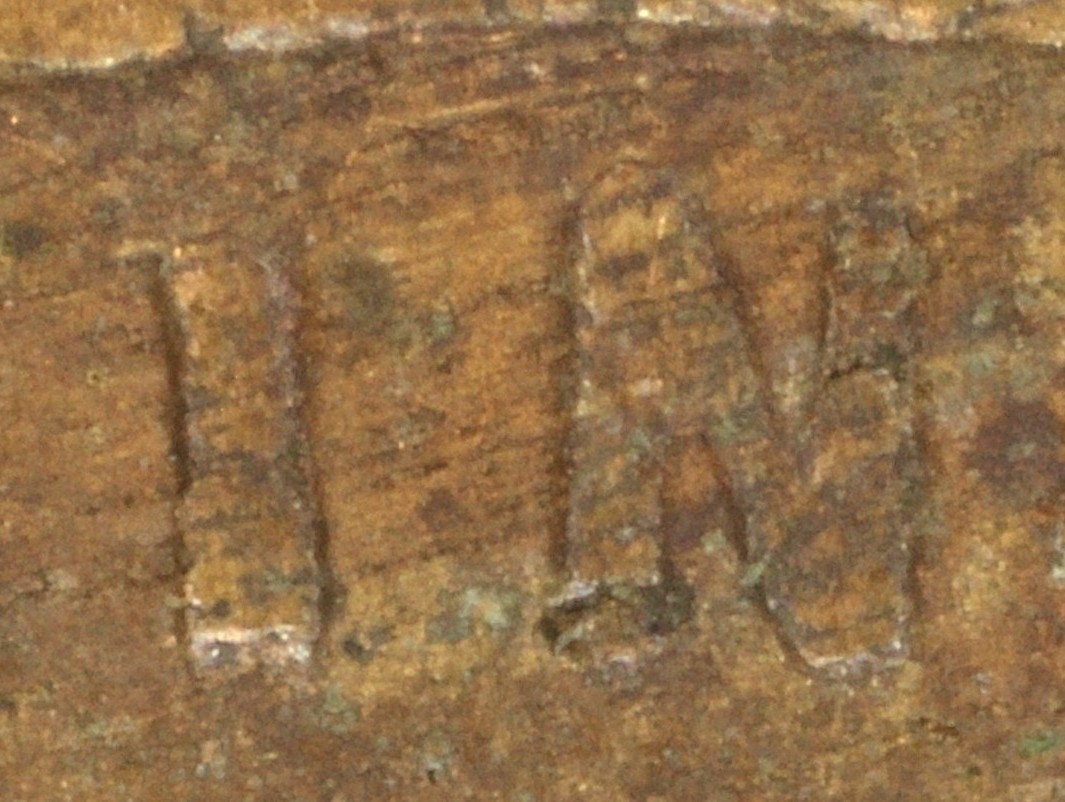
It can't be a clash, because there isn't an "O" in the reverse lettering near the rim (EPU). Did someone wildly misalign the die and hub on the rehubbing, and was this the "O" from GOD? Is it just a random gouge?

We probably will never know, but whichever mint employee was tasked with making it go away certainly did that.
We all like neatly solved mysteries with an "aha!" moment, but this isn't a solved mystery, or even a particularly fun mystery. It's just another day in the weird life of 1941 cents.
I say all of that to say one thing: when you find a heavily abraded 1941 die pair, take some time and look for what lies beneath the die polishing. There
are interesting things lurking, even though this die pair isn't one of them. (And that
is a hint, by the way.) Enjoy the hunt. It's worth it.












 Posted 07/23/2025 3:27 pm


