| Author |
 Replies: 15 / Views: 897 Replies: 15 / Views: 897 |
|
|
Pillar of the Community
 United States
6880 Posts |
I became intrigued by this doubled die when I realized that it is the only strong DDO in the Presidential dollar series. Over the last few weeks, I tracked down three encapsulated examples on ebay, although a fourth escaped me when an auction ended early. The doubling is very strong across all obverse devices, particularly on the right side of the coin. Harrison and the designer initials (PH) show the doubling best, although lettering on the left side of the obverse have strange little twisted areas. I have to say that I'm a little surprised that this doubled die isn't considered a Best Of WDDO by the Wexler team. 2012-P Harrison Presidential dollar DDO-001 / WDDO-001Bear with me on the photos, it was a bit of a pain to get full coin images without all sorts of glare and reflections on the plastic.  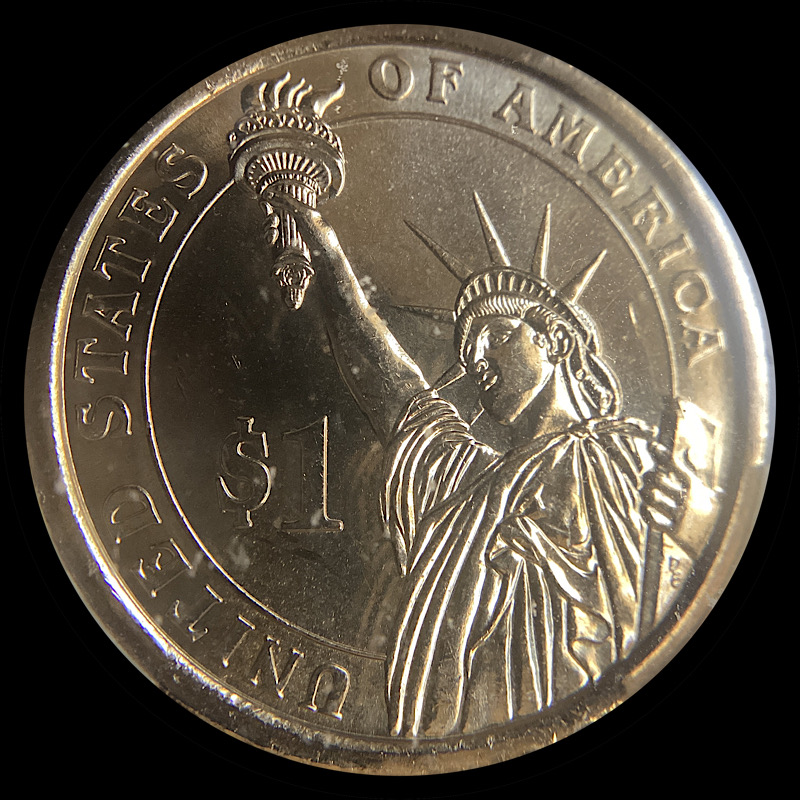 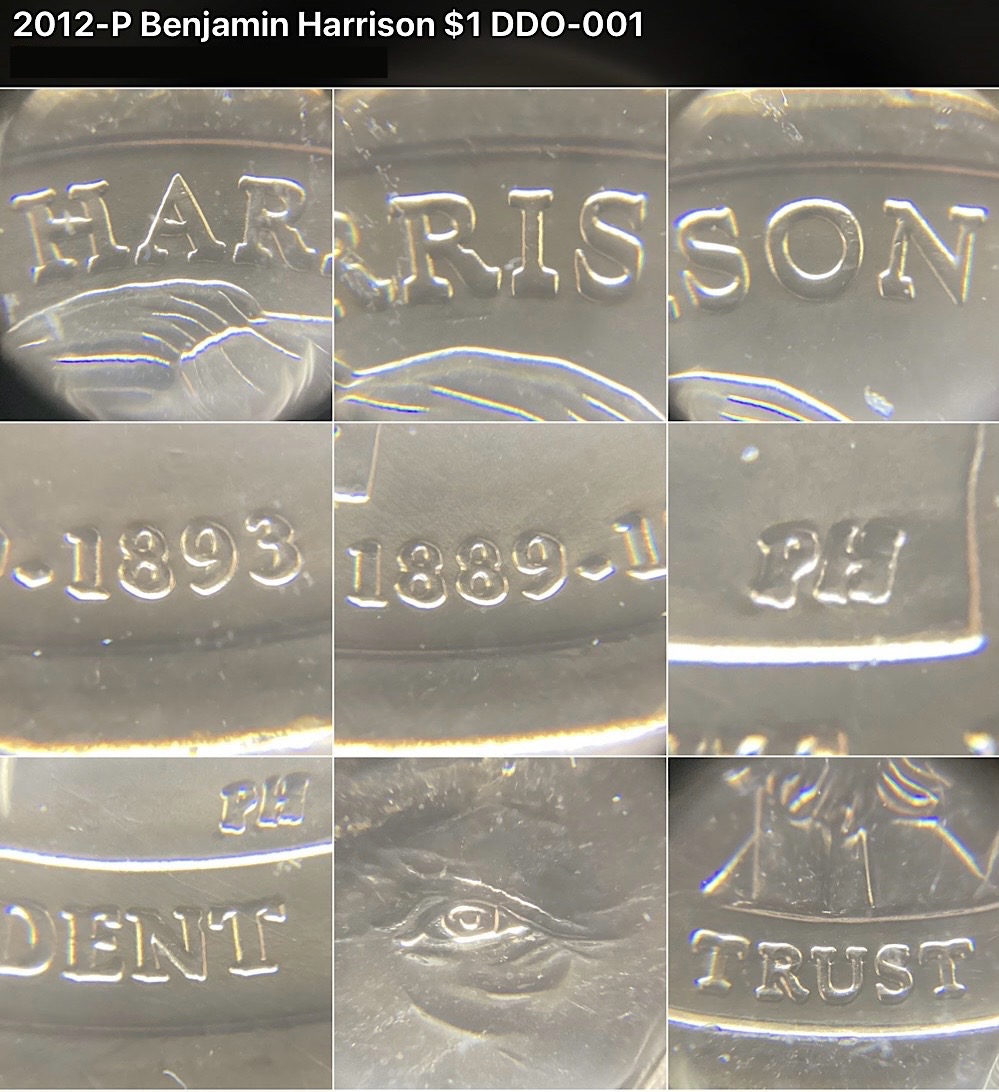 None of the three coins show the Wexler dot below the T in President (and upon closely looking at the image, it might be a little ding and not a die dot). The tiny gouge was visible in the N of United on two of the coins. I couldn't see the die scratches between Of and America, but that might have been entirely due to interference from the slab plastic. |
|
|
|
Pillar of the Community
United States
8960 Posts |
Very nice, chunky distortion! I've never searched small dollars before.
-makecents-
|
|
Pillar of the Community
United States
2887 Posts |
Nice find. That's a new one for me, thanks for sharing.  |
|
Bedrock of the Community
United States
78387 Posts |
Nice find and nice DDO! I have one of these in my collection. A CCF member gave it to me for free. Errers and Varietys.
|
|
Pillar of the Community
 United States
6880 Posts |
Thanks, guys. =)
What I find interesting about the doubling—apart from that blocky chunkiness—is the asymmetry. For example, PH was clearly dragged sideways. So why is one leg of H so much thicker than the other? Why is the post of the P so very thick, but the loop is only slightly thicker?
|
|
Pillar of the Community
United States
8960 Posts |
Quote:
So why is one leg of H so much thicker than the other? Why is the post of the P so very thick, but the loop is only slightly thicker? Maybe the conical shape of coin dies?  -makecents-
Edited by -makecents-
08/11/2025 5:58 pm
|
|
Pillar of the Community
United States
6880 Posts |
That had actually occurred to me. I wondered if maybe the convex die blank wasn't a smooth curve as intended, but maybe had some uneven areas that deformed during hubbing. Or perhaps it was the wrong angle over the die blank.
|
|
Moderator
 United States
105559 Posts |
Quote:
So why is one leg of H so much thicker than the other? Why is the post of the P so very thick, but the loop is only slightly thicker? It could just be the angle at which the doubling occurred. |
|
Pillar of the Community
United States
8960 Posts |
|
|
Moderator
United States
194816 Posts |
Very nice! |
|
Pillar of the Community
United States
6880 Posts |
Makecents, I have indeed read the ER, CONECA, Wexler, and other guides to doubling. Sometimes it's good to have a referesher, though. Thanks for the link.
|
|
Pillar of the Community
United States
6880 Posts |
Just wanted to upload a comparison photo to a PCGS MS67 plate coin to show how bonkers the extra thickness is on 2012-P $1 BH DDO-001. 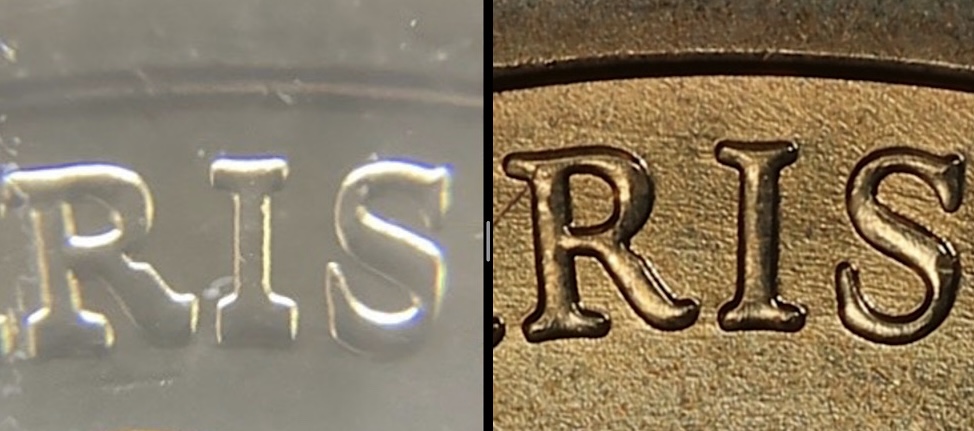 |
|
Pillar of the Community
United States
1770 Posts |
wowwww I love this doubling.  Very cool! gigi2110
|
|
Pillar of the Community
United States
8960 Posts |
Quote:
Makecents, I have indeed read the ER, CONECA, Wexler, and other guides to doubling. Sometimes it's good to have a referesher, though. Thanks for the link Brand, I have no doubt that you have read them and they are in your bucket, for life. I most definitely are not like you, you see things in a different way, that is a good thing, at least for the rest of us, I am sure it aggravates you.  I am most definitely not the sharpest knife in the drawer but am extremely good at reading those that are, don't know why, but I can pick you folks out in a heartbeat. I have met more plus 160 IQ people than average, just in life's journey, not at a Mensa meeting, because they would never let me in there, even if I wanted to.  I expect to see you leading us in so many ways and look forward to it. The link I gave you was not to necessarily explain what class XI hub doubling is but the fact the "Big Dogs" aren't sure what it is either. This is not the only type of doubling they are still grappling with either, class II, class VIIII and class VIIIII are still an issue and maybe class IV. That is one of the biggest things I love about numismatics, it is ever evolving.... Keep up the good work and I will follow. -makecents-
Edited by -makecents-
08/12/2025 10:17 pm
|
|
Pillar of the Community
United States
6880 Posts |
LOL. That's very flattering. I can't say that I've ever taken an IQ test, but I think 160 is like Sheldon Cooper smart. I might be a touch above average. Quote:
The link I gave you was not to necessarily explain what class XI hub doubling is but the fact the "Big Dogs" aren't sure what it is either. I really did appreciate that. I have also had the notion that some of the doubled die classification explanations aren't particularly satisfying. For example, Class 9.1 jolted die has a thorough and plausible explanation in the single squeeze die manufacturing process. Class 9.2 seems not very plausible, and also not likely to produce twisty letters, super thick letters, or doubling that mimics multiple misaligned hubbings. |
|
Pillar of the Community
United States
8960 Posts |
As I said, I expect to see you leading us in so many ways and look forward to it.
-makecents-
|
| |
Replies: 15 / Views: 897 |
|





 Posted 08/11/2025 5:22 pm





