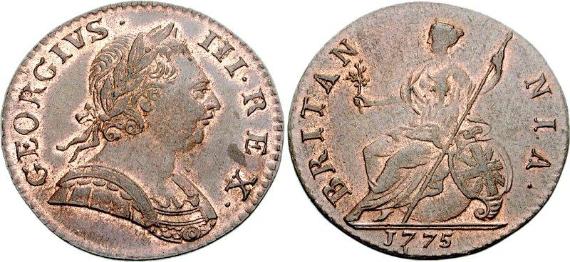
This is a British evasion piece. During the latter half of the 18th century Britain suffered from a chronic shortage of small coin especially coppers. This void was filled by counterfeits, tokens, and evasion pieces. Counterfeits were exactly what they sound like, fake lightweight coins made to look like the real thing. The tokens (Conder tokens) made little or no attempt to copy the regal coins and first were more storecard or advertising tokens. The evasion pieces wer made to look like the regal coinage but the legends were typically misspelled or fanciful. The makers relied on the fact that most of the population could not read and that the similar looking inscription would result in the coins being accepted.
Why did they use that method? Because the law at the time only permitted a person to be charged with counterfeiting, a serious offense, if his product was made in "exact similitude to the regal coinage". By changing the legends the coin was no longer an exact copy and the maker was able to evade the counterfeiting laws. Hence the term "Evasive pieces" or Evasives"
This piece seems to be a mule not listed in Cobwright.
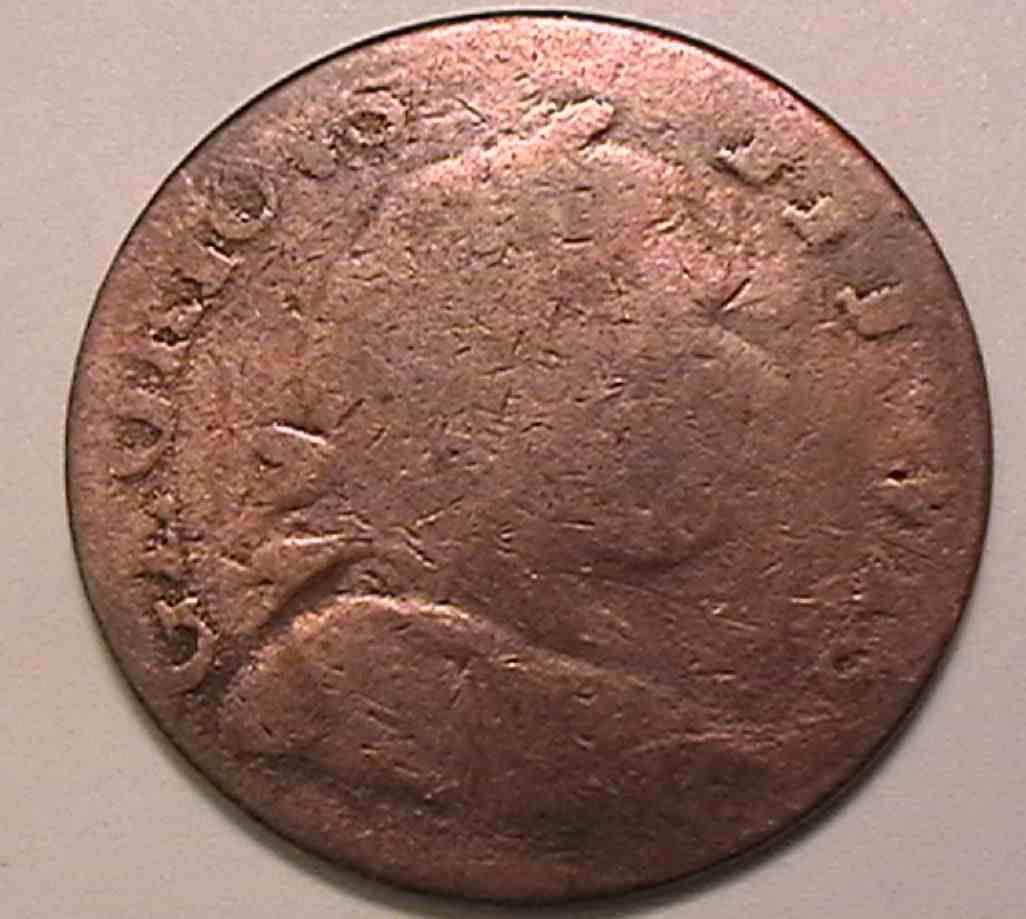
The obv is clearly G.0835 a right facing bust with the legend GLORIOVS. III VIS
That obv is listed with 5 different reverses, none of which match this one.
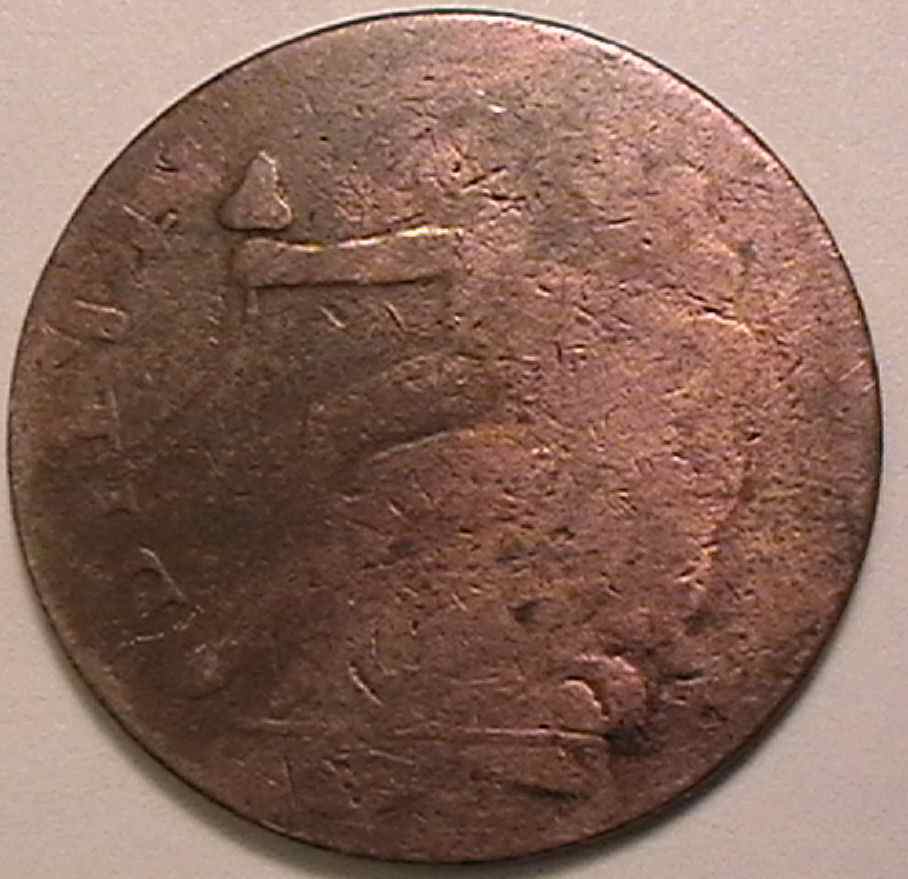
The rev seems to be B.0168 which is the only rev that has four letters on the left starting with B and ending with an I or T. (BRIT AIN)
But that rev is only listed as coming with obv G.0714 A left facing bust with the legend GEORGVIS II. RFX
So this would be a new listing G.0835/B.0168 (It may already be known but there has not been a new edition of Cobwright since 1993.)












 Posted 06/12/2009 03:56 am