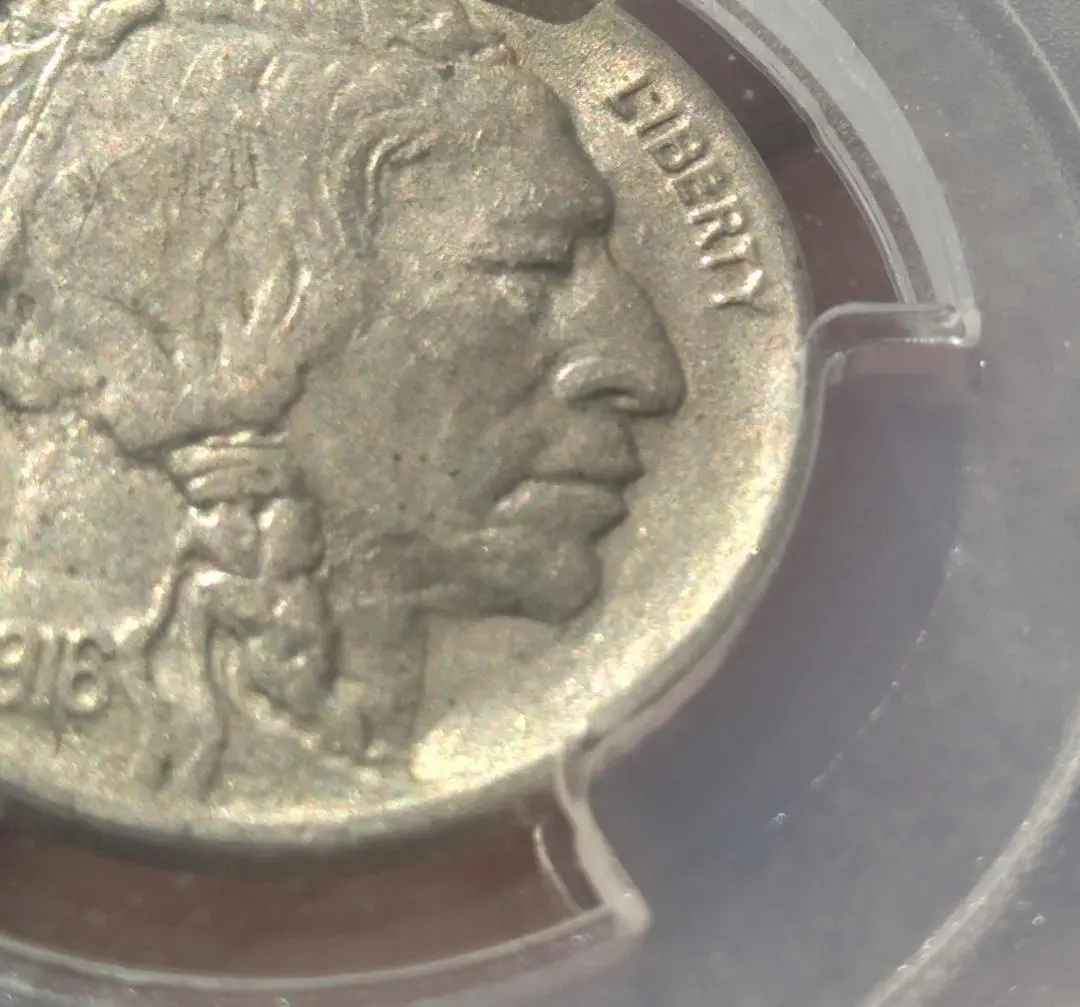
The 1916 two-feather and two-and-a-half-feather Buffs are still a bit of a debated issue. They clearly exist, and that isn't the debate. What is debated is how many die pairs were involved and whether the known two-and-a-half-feather later became a two-feather.
When Ron Pope wrote his book, he believed that there were multiple die pairs that produced the 1916 two-feather. He also noted the 1916 two-and-a-half-feather, but did not include a photo. Ron's view (with a couple exceptions he mentioned in his book) was that no part of the feather could remain on a "true" two-feather.
Several things can be said about the 1916 feather varieties. First, they are common. Second, they exist with a wide variety of clashing and die polishing. Third, they exist in a wide variety of die states.
The cluttered design created a die clash mess for the mints. This led to more extensive die polishing than earlier five cent coins. The heavy nature of the polishing was due in part to the coining presses being used, which lacked safety guards. To be blunt, mint employees were a lot less concerned about damage they did to dies by overpolishing than they were about losing a hand or arm in a press accident while polishing the dies.
The first clash polishing involving feathers usually was the second feather / buffalo's head clash. The second polishing usually was the hairy neck / buffalo's back clash. This is the polishing that frequently abraded the area where the third feather joined the back of the Indian's head. The polishing understandably affected the shallower areas of the die first. That, in turn, created the "floating feather" or severed feather seen across several dates.
A great example is the 1937-D three-leg nickel. The first polishing abraded the leg, but did not sever the third feather. This is the scarcer earlier die state of the three leg variety. The second polishing created the better known die state with the severed third feather.
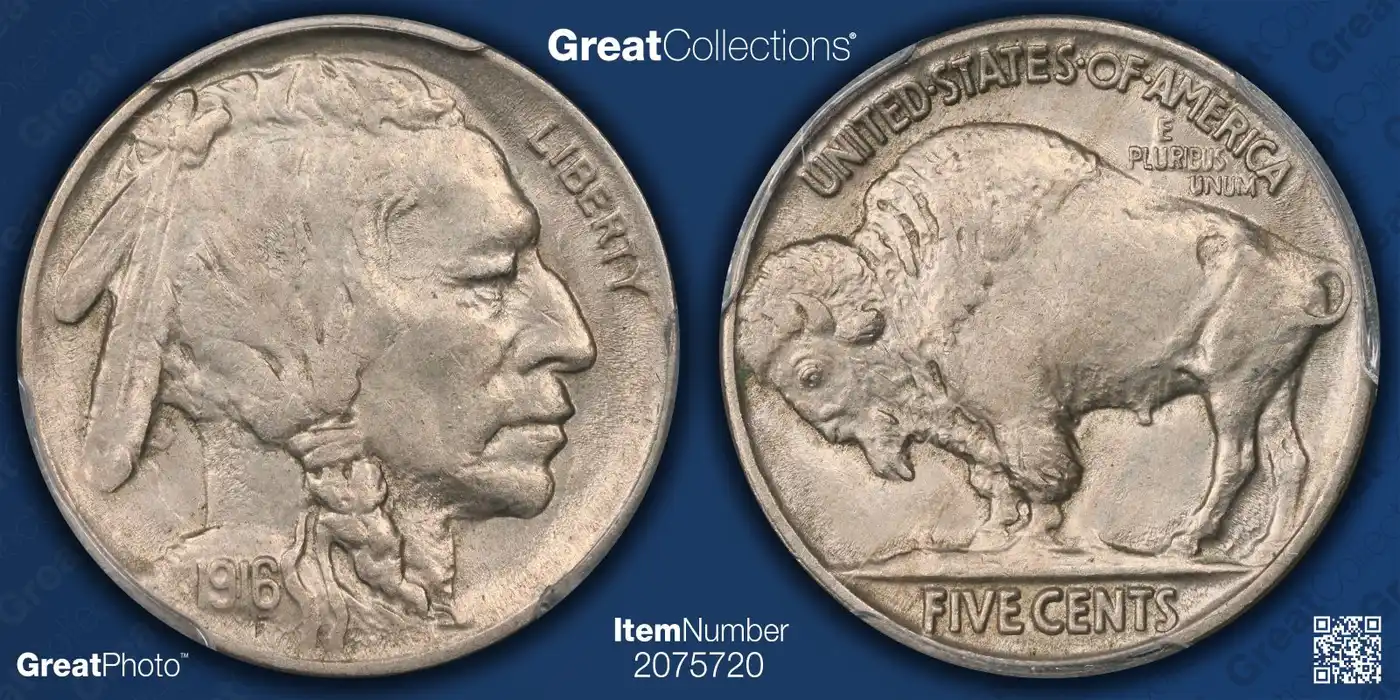
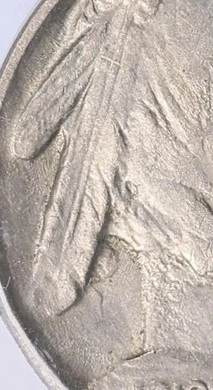
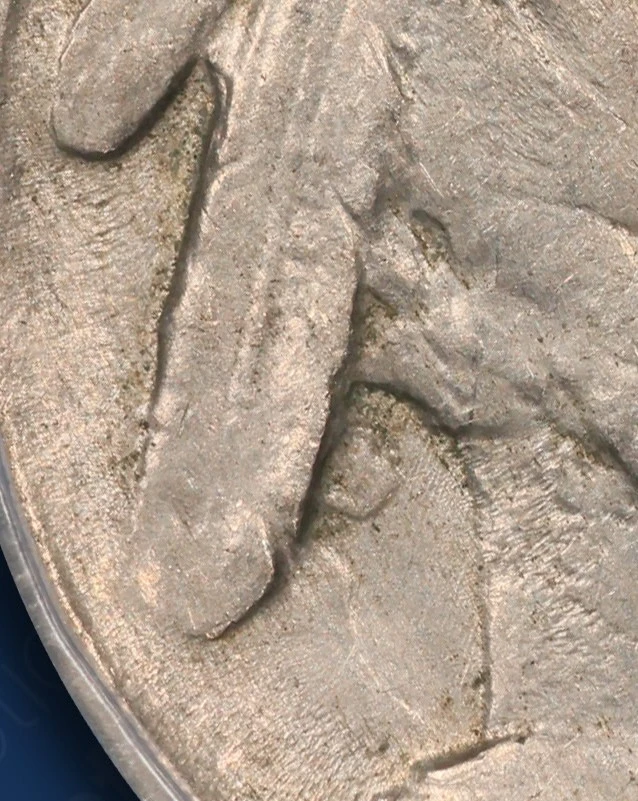
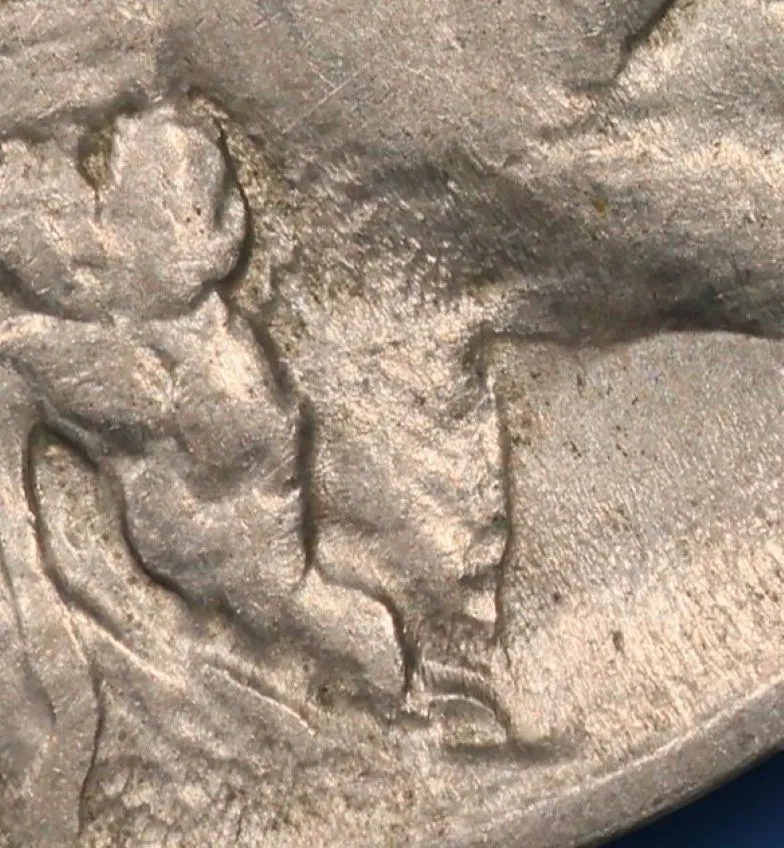
The auction coin appears to be an earlier die state of the known two-and-a-half-feather 1916 Buff. A great example of the later die state (after another polishing) is on Mad Die Clashes, where they list it as an example of a typical die clash as
TDC-5c-1916-01. Notice in particular the curved clash beneath the auction coin's third feather, which corresponds with the buffalo's upper back. It is weak on the auction coin, but much more bold on the Mad Die Clashes coin.
One of the unanswered questions is whether the two-and-a-half-feather die pair had yet
another clash polishing, where the remnant of the second feather was removed entirely. If so,
that stage of the die life would make it one of the 1916 two-feather die pairs.
There are clearly at least two 1916 die pairs for the two-feather coins, because of the large number of known coins and differing die markers across die stages. I believe Ron Pope was right that there are multiple two-feather dies. It might be worthwhile comparing the markers on the auction coin with the known 1916 two-feather coins. The Cherry Picker's Guide shows the better known die pair with the heavy polishing marks. (I don't have the most recent edition, though, and later editions may show both commonly identified die pairs.) Photos of both common die pairs are shown on the PCGS population report pages.
That's a very long-winded way of saying that the auction coin appears to be an earlier die state of the known two-and-a-half-feather variety, and is not yet a two-feather variety. The 1916 feather varieties aren't rare, and don't command the hefty premium of scarcer dates.









 Posted 03/08/2026 10:43 pm