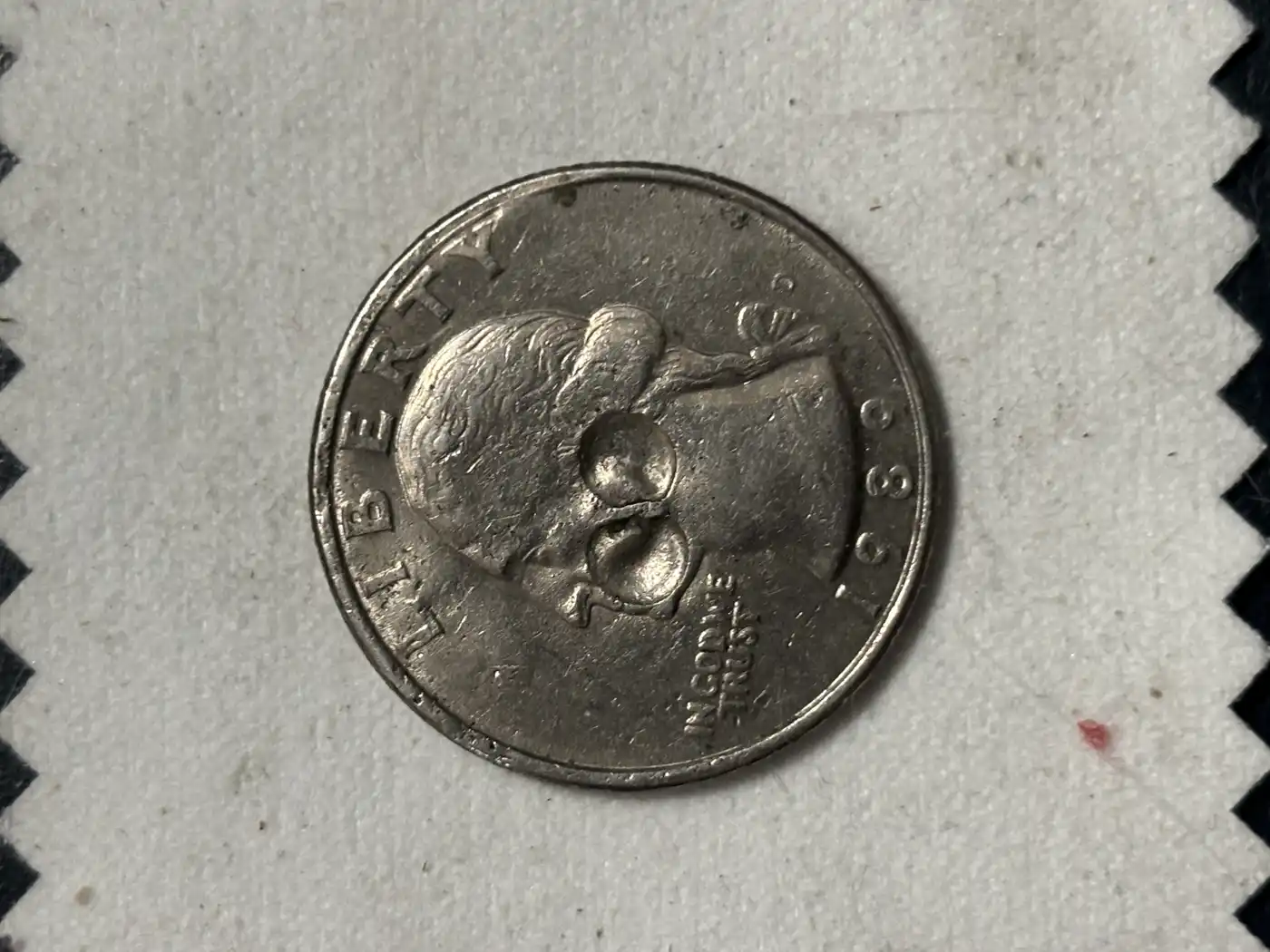
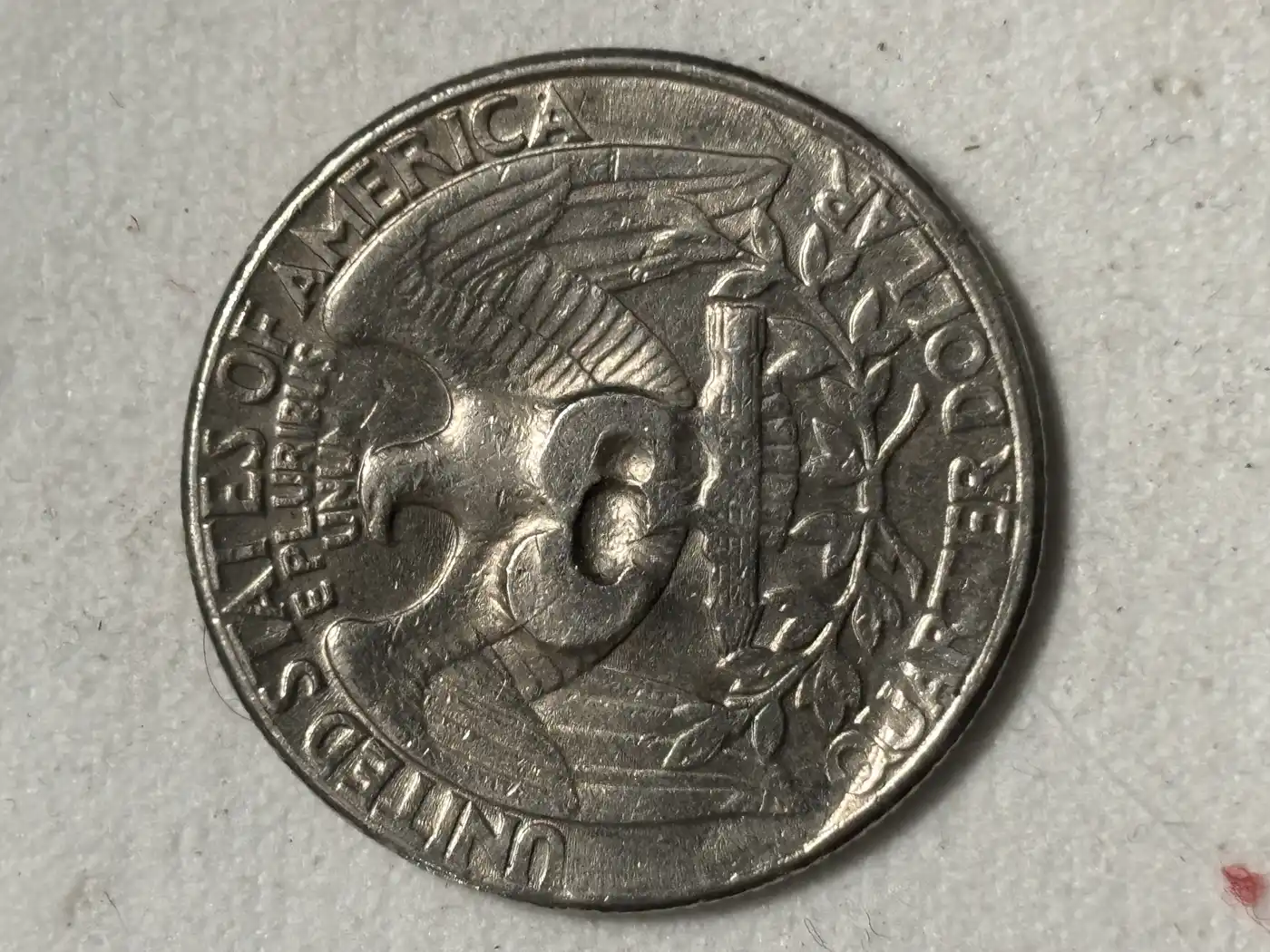
Maybe a BB gun? It's hard to tell. I've never really done a definitive analysis of the comparison of "slow" damage (such as pressing a heavy pointed-end weight into a coin over many years) to "fast" damage (such as being hit with a hammer or gun).
Working out "what might have caused"
PMD can be a fool's errand, because once a coin is put out there into circulation and into the hands of millions of bored, imaginative or careless people with more time on their hands than money or sense, coins can and have been damaged in more ways than any single person could possibly imagine in their lifetime.
Actual mint errors, on the other hand, can only happen in a relatively small number of ways. The making of coins is, mechanically, still essentially the same as it's always been - a piece of metal is squeezed between two dies - and the modern minting process is well understood and well documented. There are only a relatively small number of ways that this process can fail in such a way as to create an "error coin".
For example: as a (very general) rule, when a mint error that kind-of resembles this pattern of damage exists, the damage normally only happens to one side of a coin - things like
Struck Through Grease, struck through foreign object, and anything else that's likely to leave a large "hole" or "dent" in the coin, is almost always going to leave the other side of the coin looking perfectly normal.
This is not what we see with your coin, with each of the "holes" on one side having a corresponding raised "lump" on the other side. This clearly implies that whatever caused this damage pushed metal through and deformed the entire coin. This cannot happen while the coin is being squeezed between the two dies, as the dies would push back, which means that the best way to explain this damage is to assume it occurred long after it was actually struck.
Don't say "infinitely" when you mean "very"; otherwise, you'll have no word left when you want to talk about something really infinite. - C. S. Lewis









 Posted 03/12/2026 9:43 pm





