On copper plated zinc cents we have a few additional types of doubling that can be visible that are not exactly what would be known as
Machine Doubling although they often get lumped in under the same heading.
The plating can shift a little bit along the edges of letters, or numerals. This includes the mintmark. This causes a little "ripple" so to speak often visible as a form of doubling. We call it plate shift doubling and it doesn't normally take away from the normal size of the mintmark or whatever detail is effected.
The die can also cut through the plating when a coin is struck. On a pristine coin, you might see bright, shiny zinc peeking out from under the copper plating. This can happen around the devices or lettering. Essentially any sharp edge on a die can cut through the plating. As a plated coin circulates, the exposed zinc begins to corrode and that darker corrosion next to the letters, numerals or devices give us the appearance of doubling. This is called Plate split doubling or split plating doubling, depending on who labels it:-) This type of doubling also does not usually take away from the size of the mint mark or whatever else was effected.
As seen in Chuck's sketches (and for those who don't know it...He is a brilliant artist as well as a numismatic expert)....traditional
Machine Doubling is a result of the die moving the metal on the surface of the coin.
Machine Doubling moves the metal in such a way that it changes the look of the lettering, numerals, or devices in such away as to make them appear smaller in size than they should be.
The D on your coin suffers more from the two forms of doubling that I described above and not quite as much, if at all from traditional
Machine Doubling although many would classify this as a form of
Machine Doubling. I would probably specify what kind of doubling this is rather than lump it into the machine doubled category.
So...Good "old fashioned"
Machine Doubling will always give the impression that it takes away from the size of whatever is effected.
Other types of doubling may not.
I hope this helps,
Bill







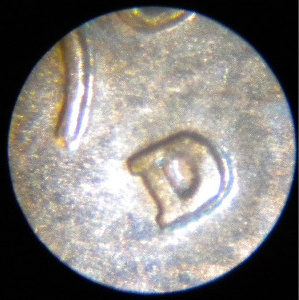 really just light reflection, in the same direction and not really any doubling.


 Posted 08/19/2009 4:19 pm





