| Author |
 Replies: 10 / Views: 1,697 Replies: 10 / Views: 1,697 |
|
|
Pillar of the Community
United States
4113 Posts |
Whats with the lack of detail on the reverse of this Minnesota State Quarter, especially between the trees on the left side of the coin where most of the DDR's have been found. This coin seems to be lacking details. I don't have a regular Minn quarter to compare it to, but in looking at pics on the Net, there are differences in these areas. Highly polished die? 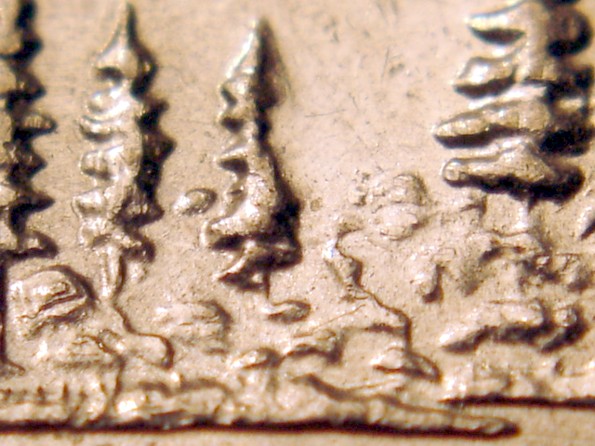 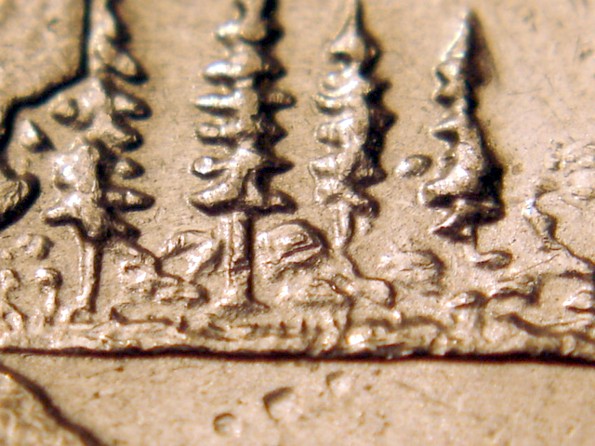 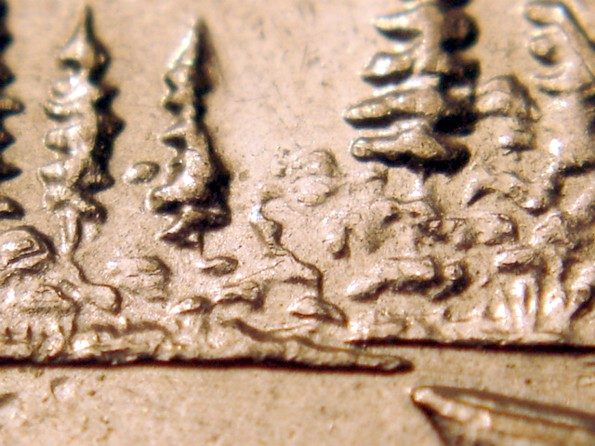 |
|
|
|
Pillar of the Community
United States
1219 Posts |
You got it. Either highly overpolished or extremely worn die. 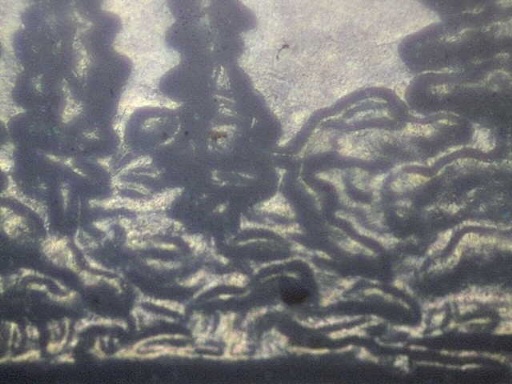 |
|
Pillar of the Community
 United States
4113 Posts |
|
|
Pillar of the Community
United States
7629 Posts |
An extremely worn die would not cause lower relief to disappear. It would cause ALL the relief to become very mushy. The relief on this coin is not mushy, it is partly missing...that can only result from a polished die or a weak strike.
|
|
Pillar of the Community
United States
1219 Posts |
Still learning, thanks Charles.
|
|
Pillar of the Community
United States
4113 Posts |
|
|
Bedrock of the Community
United States
17884 Posts |
Quote:
The relief on this coin is not mushy, it is partly missing...that can only result from a polished die or a weak strike. A weak strike would result in the low relief details being present and the high relief details would be missing. This coin has the high relief details and the low relief is missing, so it is a polished die, not a weak strike. |
|
Pillar of the Community
United States
3507 Posts |
Digging into this just a little further. While this coin has details missing due to a polished die, The weakness of strike in a particular area does not have to follow the pattern that he suggests.
The pressure of a strike and how the details on the reverse of a coin are designed with respect to their relationship to the details on the obverse of the coin can cause some variation in what high relief and low relief details get struck up on a coin.
One of the big things that is considered when a coin is designed is this relationship of the obverse and reverse designs. Some designs have gotten off the drawing board only to be scrapped during experimentation with dies prepared according to some idea for a design that didn't work.
Sometimes high relief details won't strike up even when all is right and it is not because a weak strike.
It is also important to point out that the high relief details on a struck coin are the deepest recesses in a die. As two dies come together in a weak strike, the deepest recesses on the dies , forming the high relief on the coin are the furthest away from each other and may not fully strike up anyway.
Thanks,
Bill
Edited by foundinrolls
09/08/2009 2:19 pm
|
|
Pillar of the Community
United States
2734 Posts |
When the thread title said "Highly Polished Reverse", I thought it was a thread about a harshly cleaned coin!  ( Oh, you meant 'Highly Polished Reverse Die ( Oh, you meant 'Highly Polished Reverse Die! ) |
|
New Member
Canada
19 Posts |
here's something good to know: if you spend it it's worth 25 cents. but if you keep it, it's actually worth 50 DOLLARS! seriously, that coin is in the ' Red Book' |
|
Pillar of the Community
United States
3507 Posts |
What page and what edition?
In any case, any Minnesota 25c piece that is out of the ordinary that would be listed anywhere is a doubled die. (Actually there are many doubled dies) The ones with a 50 buck price tag would be one of the doubled dies.
This one isn't one of them:-)
Thanks,
Bill
|
| |
Replies: 10 / Views: 1,697 |
|






 Posted 09/08/2009 11:13 am





