| Author |
 Replies: 9 / Views: 2,078 Replies: 9 / Views: 2,078 |
|
|
New Member
Singapore
2 Posts |
Hi, I am new here, Help this coins is real? How I check with this coins? Thank you for your helping. 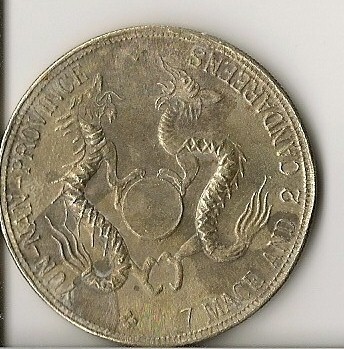 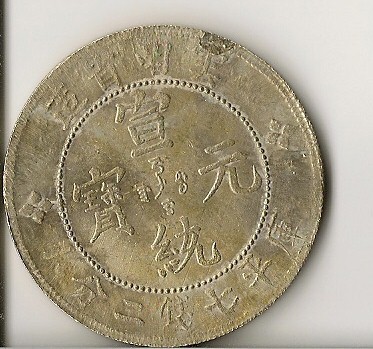 Edited by william76101
10/02/2009 05:13 am
|
|
|
|
Moderator
 United States
23731 Posts |
 to the community. Sorry to say this coin appears to be fake, it doesn't even like to be silver but some kind of cast silver color metal. Whatever the metal it is corroding and looks poorly made. |
|
Pillar of the Community
Canada
1082 Posts |
That's what I was thinking too, especially on the non-dragon side where between 12:00 - 1:00 it appears that there is either something grown on to it or flaked off of it.
|
|
Pillar of the Community
Thailand
1509 Posts |
Hi william76101 and welcome to the forum.
I have to agree with echizento. It does look like a cast one and a very poor one at that. If you're in Singapore I'm sure you'll come across plenty of these fakes. I know I do, here in Thailand, but some of them are of much better quality. If in doubt just ask here, there are any number of helpful experts (of which I am not one).
|
|
New Member
 Singapore
2 Posts |
Another coins, This coins is real? How I know this coins is fake? 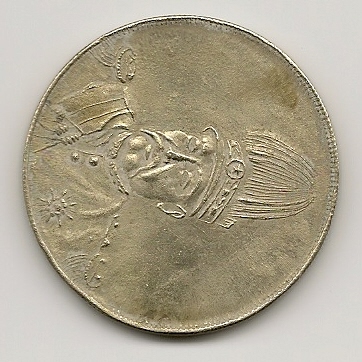 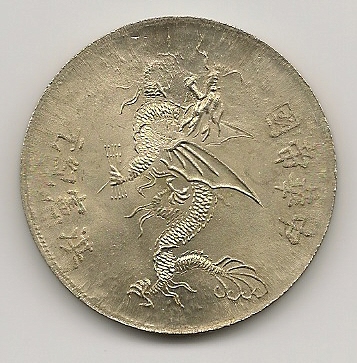 |
|
Moderator
United States
23731 Posts |
The second one is also a fake, very poorly made.
|
|
Pillar of the Community
United States
3499 Posts |
william76101- Yep, both are fake. A good way to tell is by their granular surfaces and very weak details. Also, both seem poorly struck as well. Often it can also be easy to detect a fake by the fact that many of these Yuan silver coins are actually quite rare and expensive (and, if I recall correctly, the last one is worth a couple hundred dollars in VF), so if the deal seems too good to be true, it probably is. Also, keep an eye out for strange combinations of obverse and reverse designs. Counterfeiters presume that those who will buy their coins are probably so inexperienced with Chinese coins that they will not even bother to have the right obverse and reverse properly matched. So this can result in a fake having the obverse of a coin from the 1930s and the reverse being from the 1880s.
|
|
Pillar of the Community
Australia
2830 Posts |
G'day & welcome, the coins shown have been described as "poorly struck":
but I suspect that a more likely explanation for their "granular surfaces and very weak details" is that they are not "struck" at all - they are cast. So, the granulation tells you something about the casting medium, usually fine sand, or something similar.
Secondly, Chinese dollars or Yuans, are copied in vast numbers, so these coins ought to arouse your suspicions immediately. The chances of finding a real one is smaller than of winning one of the better lotteries.
Thirdly, these fakes are usually underweight. I don't know the precise standard for the Yuan, but the English Crown, Spanish dollar, etc, are all about 28~29 grams. Fakes are significantly less: I have one that it is only 19g, and it is excellent in appearance.
Fourthly, but this is not a reliable indicator: fakes are sometimes magnetic.
However, plenty of fakes are non-magnetic.
But if the supposedly-silver coin is made from "magnetic silver", you can bet that it didn't come from the official mint.
This makes for a mildly interesting party trick. Won't impress other collectors, but.
In PRC, these are readily available every evening from the footpath-vendors that spring up at the end of the day.
Being a Gui-Lo, it was assumed that I was rich and stupid.
When I offered US$1 for one, as a momento of my travels, I was greeted with such enthusiasm that I realized that $1 was far more than the seller was willing to accept.
Peter in Oz
|
|
New Member
Singapore
2 Posts |
Thanks everyone for answer.
This coins has sound. Shoud I go to prawnshop to check for me?
|
|
Pillar of the Community
Australia
3832 Posts |
There's no need to. Most likely struck or cast with cheap metal.
|
| |
Replies: 9 / Views: 2,078 |
|







 Posted 10/02/2009 09:49 am





