The description as given was accurate - BUT rather misleading. It is typical of what you see on
ebay from dealers who are not particularly honest. The coin is a modern Chinese counterfeit - most probably a CAST copy.
The coin is actually Silver as I stated. But I didn't say it was 90% silver or anything else. The Specific Gravity of this coin is 10.13 or roughly 78-80% silver. But original 8Rs were made with 90% fine silver which has an SG of 10.3. So silver is accurate but incorrect. It may have been cast from nominal 0.800 fine silver coins - like those made in Canada.
I also said
Quote:
The coin is STRIKE DOUBLED extensively on both faces making the details look a bit odd.
From that you could infer it was a struck coin - it is Strike Doubled but it may be that the mold that was in fact strike doubled.
The molds or dies used to make this coin are simple transfer forgeries with some degree of retooling of the molds/dies. The high points on the finished coin were abraded to simulate wear and the color is definitely artificial aging. Some people commented about the color - that is a correct impression. The color here is WRONG. It is possible to have a real 8R with this color (if it was in a corrosive environment) but would you really want to own one?
The fact that the coin is overweight IS EXTREMELY CRITICAL - as was pointed out by one member. Overweight 8Rs are always suspect. However, they are not all forgeries. A small percentage of real 8Rs were overweight when made, but from period sources it appears that most of the overweight coins that went into circulation were in fact melted.
In this case, the forger actually filed the edges all the way around on both sides. This could be due to two different reasons - (1) It may have been done to lower the weight or (2) it may have been done to conceal evidence of casting. At some points this final filing removes some of the "artificial aging". Bright silver appears on the full perimeter of both faces.
Because the entire perimeter has been filed - there is no evidence at all for strike versus edging priority. In fact, given the minimal number of flow features - I do believe this could be an injection molded coin and the apparent
Strike Doubling coould be the result of multiple impacts used to make the mold.
But in any event, it is a clearly modern forgery of a type that unfortunately fools many unsuspecting buyers all the time.
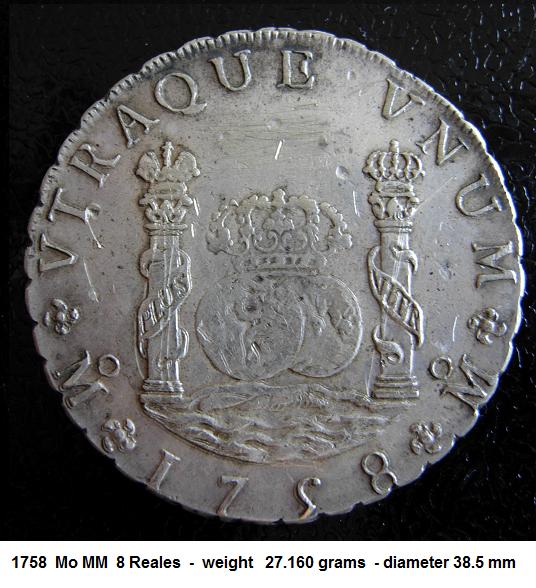
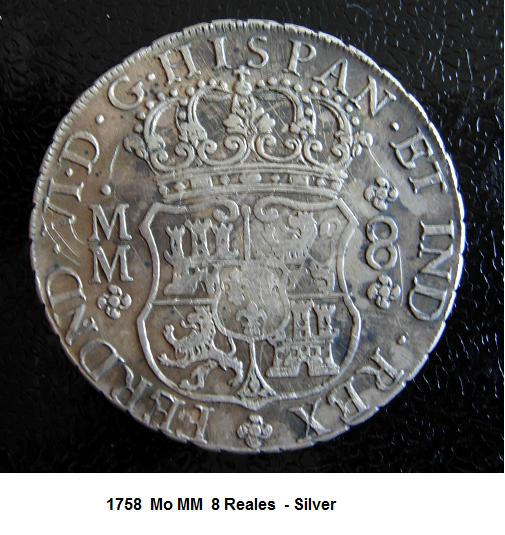
Here are a few photographic blow ups of the details. I took a series of 58 photos to document all parts of it. I do not own this particular coin, but I do own dozens like it. Some are easier to spot as forgeries others are far more deceptive.
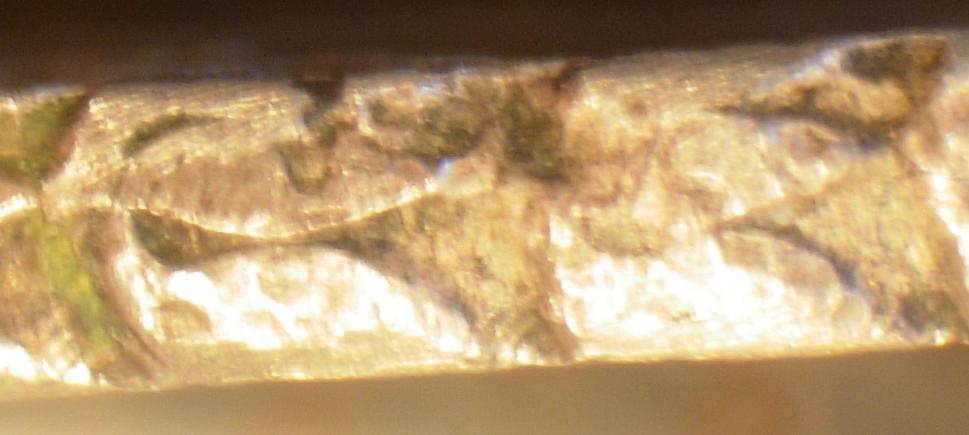
Here is a picture of a typical section of the edge. If you will notice - the Lotus sections are of different lengths and also different shapes. This is critical because the edge dies were made using punches that were standardized. The punch molds were imported from Spain and were made with exceptionally accurate tolerances to discourage counterfeiting.
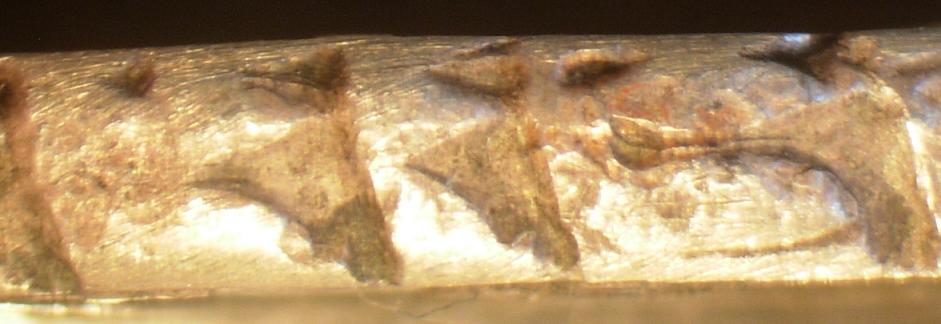
This next edge view shows the closest thing I could find to an overlap in the edge design. There is one VERY short segment. But on the opposite side the edge is "normal" with nothing similar. Also note the degraded design of the lotus flowers. For the record on this edge the lotus flowers all face the SAME direction.
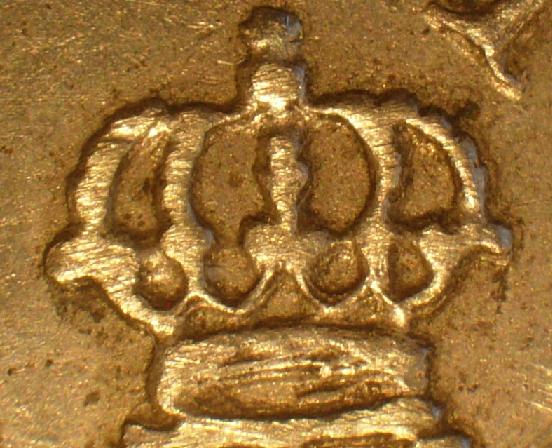
This is a detail showing the crown on the Right Pillar. The details are POOR and they are typical of most of the fine details on the coin. The fields show some unevenness and the high points were filed to clean off the artificial toning and "improve" the appearance. This is a technique often seen on "dug" coins and there may be an overt attempt to make the forgery look "dug".
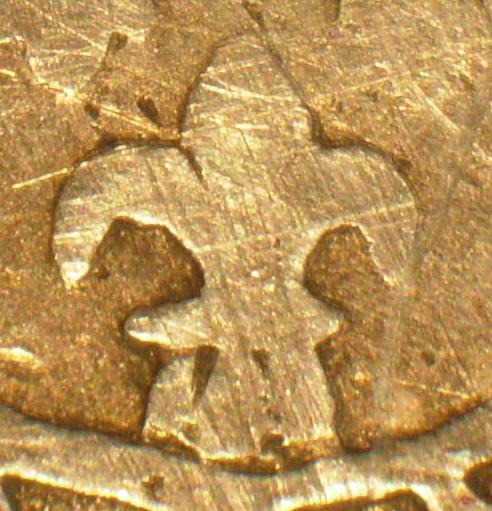
Someone also commented on the Fleur-de-lis. This is a blow up of the lowest of the 3 - I believe it was recut. It is definitely not symmetrical.
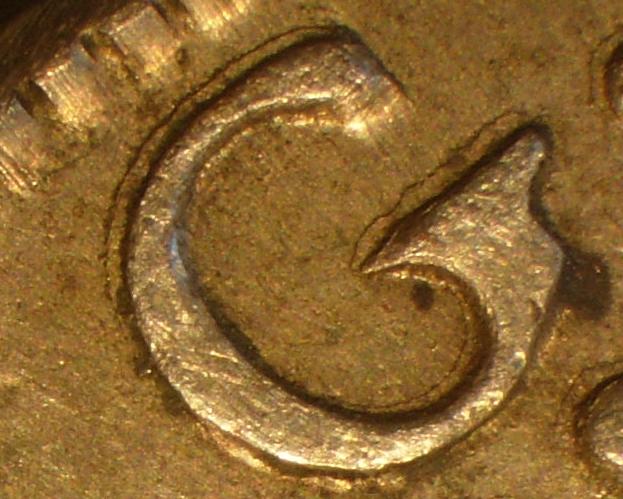
Here is the letter G - showing the "Strike Double" effect. But do you see any real "flow lines"? The lines on the dentils could be transferred in the process of mold creation and represent the "best" example of flow lines I could find on the coin.
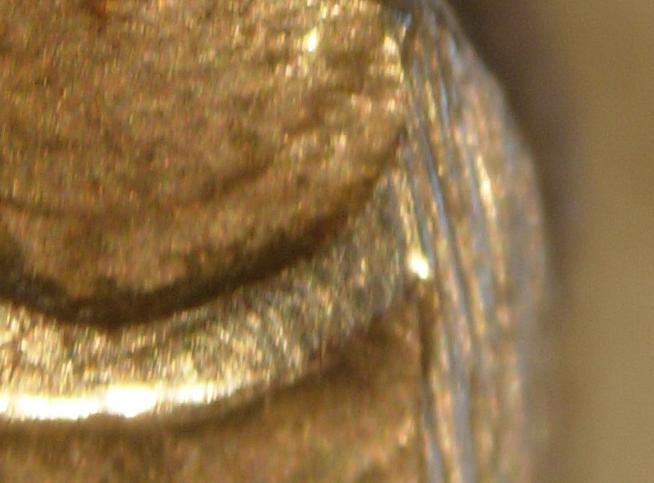
This is an example of the edge filing at the 8 in the date. This filing goes all around the coin and the direction of the filing scratches is remarkably parallel - as if someone held the coin against a spinning abrasive wheel and rotated the coin slowly. This is the exact finishing technique used by Chinese forgers to remove edge seams. The bright silver file marks extend onto the numeral and they REMOVE the artificial toning. I have a few other edge shots showing the same thing but they are essentially redundant.
So the winners are the members who would not bid. Remember if you are unsure about any fact always ask the seller BEFORE you bid. The only DUMB question is the one you do not ask.












 Posted 05/21/2010 2:28 pm


 and Many Thanks Swamperbob.


