| Author |
 Replies: 10 / Views: 3,918 Replies: 10 / Views: 3,918 |
|
|
Valued Member
United States
128 Posts |
I just started collecting and have been perusing the foreign coin bucket at a local dealer. Here are a couple of my (I think)better finds so far (noting that I know very little as of yet.) Also I thought it would be interesting to see or at least hear about people's interesting finds in such "buckets" or bulk lots. These two seem to "book" for a bit more than many of the other Mostly WWII era coins I brought home. I do realize that neither of these coins are going to exactly knock anyone's socks off. 1931 10 Kopecks Y #95 Date Mintage F VF XF Unc BU 1931 122,511,000 3.00 5.00 8.00 14.00 - 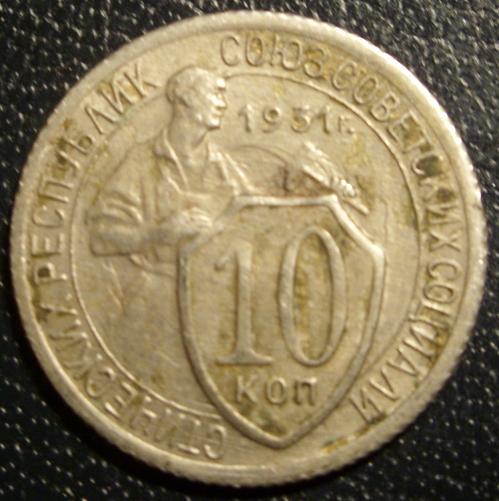 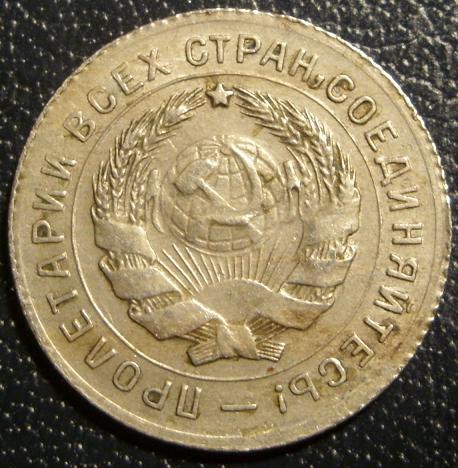 KM # 66.1 or 66.2 (I don't know the thickness - if the thinner of the two, then not a particularly great find) 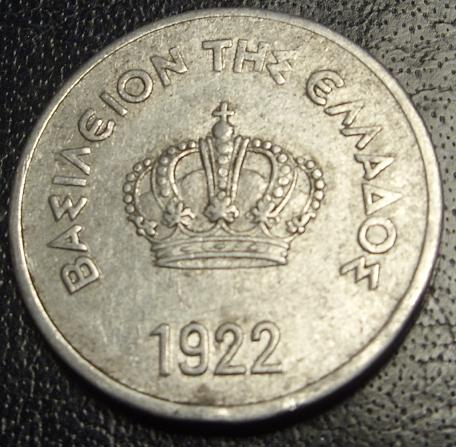 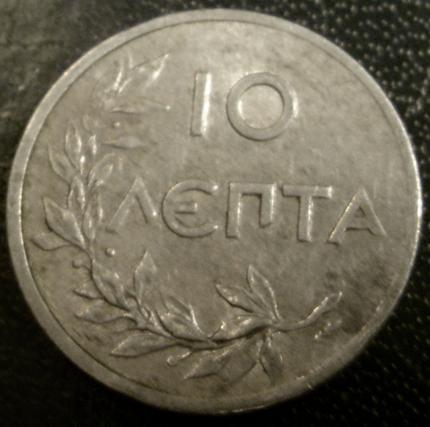 Edited by Nazarene
06/08/2010 01:47 am
|
|
|
|
Pillar of the Community
Thailand
1509 Posts |
Hi Nazarine and welcome to the forum.
I think you picked out a very nice pair of coins there. You're not going to get very high grade coins out of coin buckets but if that doesn't bother you then keep on picking. Keep on posting your acquisitions and I'm sure other members will chip in with fascinating insights or snippets of info on them.
As for the thickness use a quarter (about 1.7mm) for comparison.
And yes they do knock my socks off (well they would if I wore them!).
Edited by thai-vic
06/08/2010 02:58 am
|
|
Valued Member
United States
420 Posts |
 Nazarene as long as they knock your socks off, or spark an interest in collecting .... thats great ! I'm not big into world coins, but I always and I mean ALWAYS check my dealer's "grab box" he keeps for the "kids" - I'm just a bigger kid than most  even picked up a 1942 Netherlands-East Indies silver 1/10 gulden , along with 4 other world coins last week for a buck being online, having access to the internet, along with joining the forum here.. everyone can gain knowledge about coins from anywhere, minted at any point in history enjoy your choices, you did well |
|
Pillar of the Community
United States
5362 Posts |
Nice finds Nazarene I would have picked them out as well. I love the coinage from the pre-WWII era.
The Russian coin has an interesting feature which can tell you a bit about the machine the coin was made on. Notice the way the reeded edge caused damage to the rim right at the edge of the coin. It is most apparent on the side of the coin with what I would call the State Shield. That effect results from a coin being ejected from a tight collar. The effect is usually more pronounced on one side which shows the direction the collar die was moving when the coin was being ejected. That in turn identifies the hammer and anvil dies provided you understand the specific coining press.
Modern coin presses are typically similar - although some minor differences do occur - especially in the collar. But lets say we know that the USSR was using a "standard" 3 die press with a rising collar (very typical of the majority). There is a stationary die (the anvil die) mounted in the press. The anvil die contains the design of one side of the coin. Around the anvil die is the collar die. The collar moves up and down and it contains the edge design. The hammer die is the moving die (mounted on essentially a piston) that imparts the design of the second side.
So there are three dies NOT TWO in most modern presses.
At the start of the stroke of the piston - there is a space between the anvil and hammer dies. Fingers insert a blank planchet on top of the anvil die (The name fingers recalls the old days when a human inserted the blank). Then the collar die rises catching and holding the planchet in place over the anvil die. Then the hammer die drops (or is driven) into the top surface. The three dies together form the coining chamber which exists only a fraction of a second while the immense pressure causes the metal in the planchet to flow like a semi-liquid into all of the features on all three dies.
The coin is born at this instant.
Then the hammer die pulls back and the collar drops. Actually the collar is pulled down because the coin metal has been forced into every tiny nick and crevasse in the collar die and FORCE is required. This force pulling downward toward the anvil die creates the distortion seen on the downward side of the coin as metal from the coin's edge is dragged to and beyond the face of the coin. The coin is ejected from the press by the fingers and the process repeats.
Several times a second.
So on your Russian 10 Kopeck coin the State seal is on the Anvil die and the Man and date are on the Hammer die - provided there was a rising collar in use at that time. Most mints actually publish the type of equipment in use so someone familiar with Russian coining technology would know for sure. A bit of research can confirm the type (google is great).
Just a brief lesson covering commonly known but often forgotten facts that any beginner needs to know.
|
|
Pillar of the Community
Turkey
870 Posts |
Thank you swamperbob, even though this was not intended for me, I've learned from it! :) Bless.
|
|
Valued Member
 United States
128 Posts |
Thank you all very much. I didn't find anything to retire off of :) but I am having a great time looking at and learning about the coins. I got a couple reference books from the library. One even had the book on CD in it, so I put it in my computer. Maybe i'll post a few more pics later of some of the more interesting (to me) coins from "the bucket." It literally is a bucket (somewhat fancy, but a bucket nonetheless.) I appreciate the welcomes, encouragement and information. Swamperbob... wow, thanks that was quite a lesson and ineresting.
One thing I have learned thus far is that I don't care for aluminum coins. Too light. I prefer some heft to my coinage. Anyway.....
|
|
Pillar of the Community
United States
2605 Posts |
While it may not "knock anyone's socks off" this is the most interesting 10 kopeck design that there is. Great find!
Forgot to say, thank you, swamperbob, for this very informative passage!
Edited by svslav
06/08/2010 3:03 pm
|
|
Pillar of the Community
United States
528 Posts |
Some aluminum coins are nice This one makes me want to sail to Tahiti  French Oceania 5 Francs 1952 ____________________________________________________________ Check out my website at: http://www.brianrxm.comRoman Coins, Mexican Coins, Favorite Coins, Movie Coins The San Francisco Mint 1949 Mexico Peso Restrike for China |
|
Pillar of the Community
United States
2605 Posts |
I do like some aluminum coins as well. In particular some French colonial and this one. |
|
Valued Member
United States
106 Posts |
Hi 'Nazarene', welcome aboard. Those are very nice coins you've aquired. Some people under estimate the kind of coins people might find in the bargain bin. Here's one I found a few years ago in the 10 cent bin. This is 10 Reichspfennig from the GERMANY (THIRD REICH) 1945 A. While most of these coins are common as dirt, the 1945 issues are very scarce since the reich was on the very of collapse, and thus fewer were minted.  GERMANY (THIRD REICH)~10 Reichspfennig 1945 A GERMANY (THIRD REICH)~10 Reichspfennig 1945 AEdited by DJB1968
06/14/2010 9:48 pm
|
|
Valued Member
United States
128 Posts |
A few decent finds in the bucket today:
Netherlands 2 1/2 Cent 1912 KM150
Switzerland 20 Rappen 1907 KM 29
Germany (Weimar Republic) 5 Reichpfennig 1924A KM 39
Algeria (French Occupation) 20 Francs 1949 KM 91
(3) Newfoundland One Cent 1941 (one in great shape) KM 18
and a Panama 1/10 Balboa 1947 (.9000 Silver) KM 10.1
I will try to take pics when the light is better (it's too dark in here now.) These coins appear to my untrained eye to be in pretty good shape despite being in the foreign coin bucket.
|
| |
Replies: 10 / Views: 3,918 |
|










 Posted 06/08/2010 04:05 am


