| Author |
 Replies: 11 / Views: 2,742 Replies: 11 / Views: 2,742 |
|
|
New Member
United States
5 Posts |
|
|
|
|
Pillar of the Community
United States
1418 Posts |
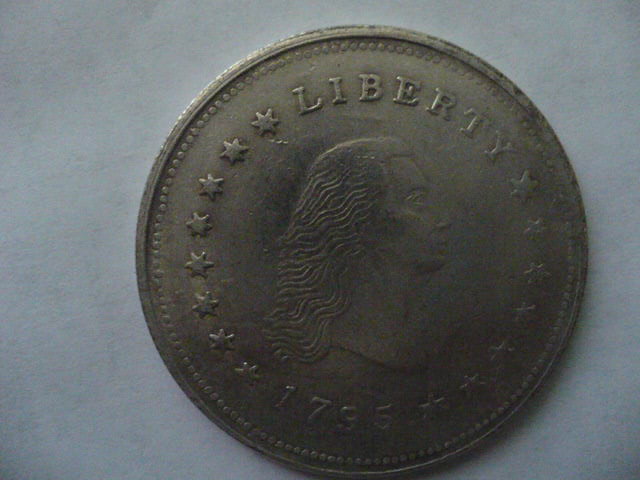
No, look at the star to the left of the date and the hair near it, and then look at this one.  |
|
Pillar of the Community
United States
4541 Posts |
|
|
Pillar of the Community
United States
1415 Posts |
|
|
Pillar of the Community
United States
1055 Posts |
|
|
Bedrock of the Community
United States
12437 Posts |
Forget the design differences for a minute and look at the rim. That "token" was obviously struck in a collar die, the rims are squared, beaded, and may even be reeded. The problem is that early US coins were struck on screw presses with an open collar(no collar used) so it would be impossible to have a rim with that appearance. The US Mint did not strike coins in a collar until about 40 years later. Open collar coins will have the U-shaped dentils and the larger denominations had lettered edges. As a die wears, the dentils may weaken but then you will have another PUP- the star points will be drawn towards the rim. That is a side effect of striking a coin in an open collar, the coin expands more than it would in a closed collar and exaggerates the die wear at the periphery. Edited by biokemist6
07/06/2010 11:46 am
|
|
Pillar of the Community
United States
1055 Posts |
 That is an important point to remember. |
|
Bedrock of the Community
United States
10045 Posts |
Quote:
That "token" was obviously struck in a collar die, the rims are squared, beaded, and may even be reeded. That is an air-tight diagnostic for coins of this era. |
|
Pillar of the Community
United States
8904 Posts |
Sorry RuggedBadger! I have to also go with Fake.  (and it's not a very good one...)  to the Forum! |
|
Moderator
 United States
16694 Posts |
Common fake more than likely, of Chinese origin.
swcoin.ecrater.com
|
|
Bedrock of the Community
United States
17884 Posts |
Quote:
That is an air-tight diagnostic for coins of this era. Unfortunately it isn't quite correct. Some of the coins were struck with and open collar (half cent, cent, 50 cent, and dollar) where the collar was merely used for centering and did not restrain the expansion of the planchet. The other coins were struck in a collar that wasn't a tight CLOSE collar, but it was close enough that the expansion against the collar imparted the reeding on the edge of the coins. ( Half Dime - quarter, all of the gold coins) For this reason the reeded edge on these early coins is not a sharp and crisp reeded edge as is found after the 1820's when the tight close collar began to be introduced. (Introduction completed for the reeded silver and gold coins by 1828 I believe, but not phased into the rest of the coins until 1836.) Edited by Conder101
07/07/2010 4:13 pm
|
|
Pillar of the Community
United States
2125 Posts |
At least they got the amount of stars correct :)
|
| |
Replies: 11 / Views: 2,742 |
|








 Posted 07/06/2010 10:47 am





