| Author |
 Replies: 19 / Views: 14,017 Replies: 19 / Views: 14,017 |
|
Pillar of the Community
3660 Posts |
I have large collections of hundreds of old to very old notes from Morocco, Egypt, Thailand, Turkey, and Persia. If anyone is interested in this type of stuff, I will post pictures starting with Thailand. edited to add: I do also have smaller (50-100 old notes each) from Ethiopia, Lybia, Syria, Netherlands Indies, Lebanon, Japan, Djibouti, and Belgian Congo, but probably the largest collection is the Chinese Empire of many hundreds of notes. Thailand is an interesting collection to me because while many Thai note collectors collect by series, there are aficionados who collect by prefix number or signature. I have a collection of older Thai notes that was collected both of these ways. These first two notes are souvenirs from the first day of the opening of the Thai Printing Works on June 18th, 1969. About 5,000 notes each of the 5 and 10 baht denominations were printed that day, thus the low prefix/serial numbers. Prior to that, most Thai banknotes were printed for the country by Thomas de LaRue in England, and the US and Japanese governments. 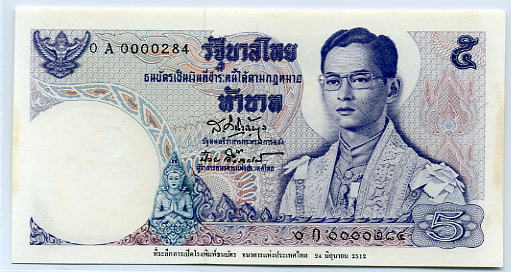 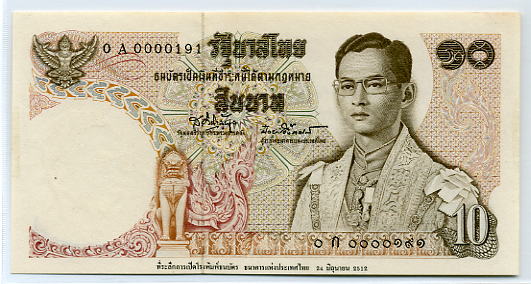 Edited by zeewool
07/20/2010 12:16 pm
|
|
|
|
Pillar of the Community
Thailand
1509 Posts |
Hi zeewol
Sounds like you have quite a collection. So how many in total, but don't tell if you don't want to?
I too collect them from anywhere in the world. My total currently stands at over 2,300 and I'm very proud of them.
As I live in Thailand I'm currently trying to complete my collection of all denomination and signature types especially of the current King Rama IX. I have 154 so far but most are in circulated condition, budget constraints preventing me from upgrading to unc.
Vic
|
|
Pillar of the Community
 3660 Posts |
Hey Vic, Actually, it sounds like YOU have quite the collection. The countries that I mentioned are pretty much all I have. (no stray notes from other countries). With the exception of Thailand, all of the other notes are at least 60 ears old with most being 100 or more. I have no idea how many total, but I would doubt that there are 2400; maybe though. Mine all came to me pre collected as part of an inheritance along with a bunch of old US coins and currency. Most of mine are in circulated condition as well (some very, very circulated). Collecting by denomination and signature can be quite a daunting task. I have tried to keep the Thailand collection current by adding those from series 10 on up. I am having a great deal of trouble with the 500,000 baht note though. It seems that they were printed in very limited numbers, sold at 2X face, and change hands only once in a blue moon. I have located two of them, and made offers of 5X face on each. One owner seemed to be almost insulted that a foreigner would even ask to buy such a thing, almost like it is a religious relic, and the other person laughed at me and asked if I was "poo ying bah bah ba boe"? The search continues. Do you have one of these yet? Maybe we could strike up a deal? (I have virtually all signature/denomination of all series). Anyway, it is both interesting and sad that many indigenous peoples actually know less about their currency than some foreigners. For instance, the Free Thai banknotes of series 4 are highly sought after by many Thai collectors. In actuality, these are nothing more than counterfeits introduced by the British Government to destabilize the economy, just as they did in Turkey and other countries during WWII. For every Free Thai note printed by de La Rue, there was a previous one printed earlier by the same company with the same serial number. Today these notes carry a healthy premium over the genuine note. I'll try to post pictures of these later. edited to add a picture of 20 baht series 5 for no particular reason other than I like pictures: 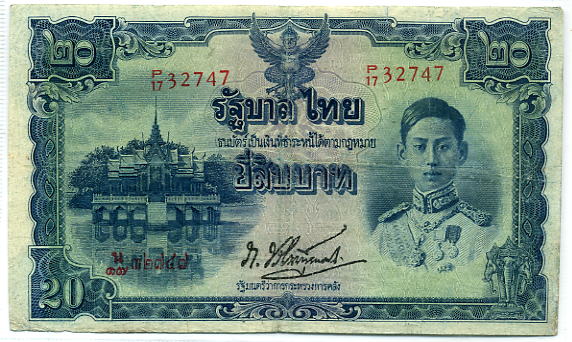 Edited by zeewool
07/17/2010 06:24 am
|
|
Pillar of the Community
3660 Posts |
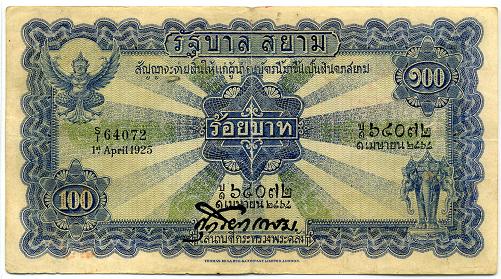
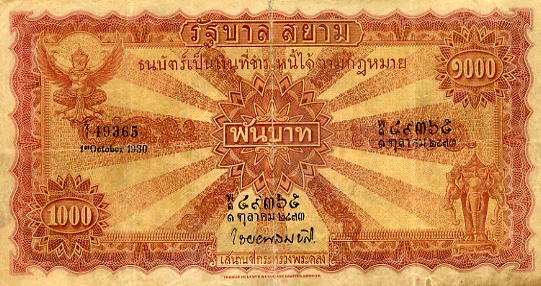
Here are a couple of Free Thai (counterfeit) notes. They look real, because they were printed by the same bank note company that printed the originals. The differences between original and Free Thai are too subtle to show with my scanner. 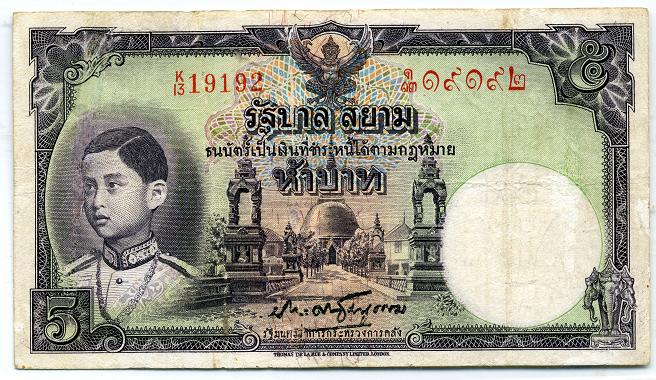 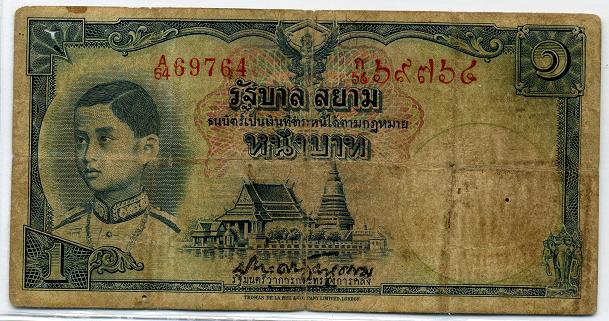 Here is a very common, yet interesting note. It looks like a type 6 from series 9, does it not Vic? Actually, this note was printed in 1974 (at the same time that the Thai Government was printing series 11 bank notes) by the Thomas de La Rue Bank Note Company in England that printed the other series 9 notes in the 1940s, 50s and 60s. The Thai Printing Works was unable to keep up with the pace of growing demand and in 1974, made a one time order with de La Rue for 200 million 10 baht notes and 100 million 20 baht notes of the same design as the series 9 notes. These notes began with the same prefix numbers that they left off at years earlier. 10 Baht notes began with prefix W424, and 20 baht notes began with prefix Y357. The posted note was one of the very first. 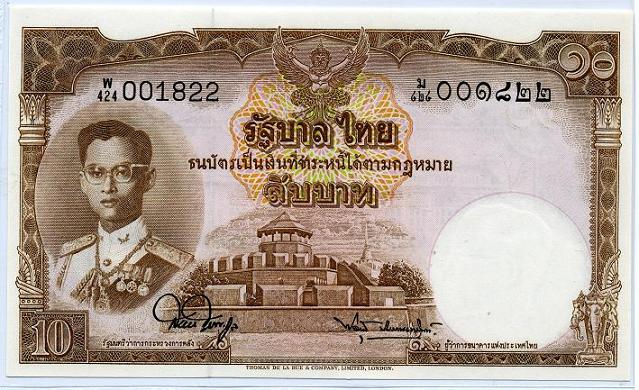 Starting with Series 2 bank notes, and through Series 7, each denomination used a unique prefix letter followed by a number (starting with 1) 1 baht= A.....5 baht=K......10 baht=N.....20 baht=P.....50 baht=O.....100 baht=S.....1000 baht=T. Here are examples of the second generation of notes (series 3) to use this system. Series 3 is also the first series of banknote to picture an image of the King. 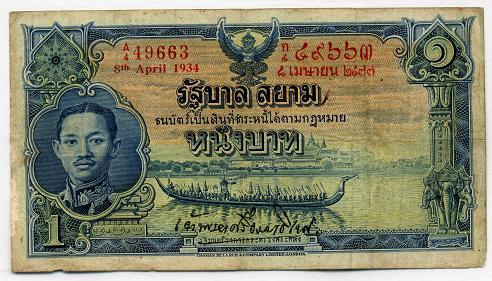 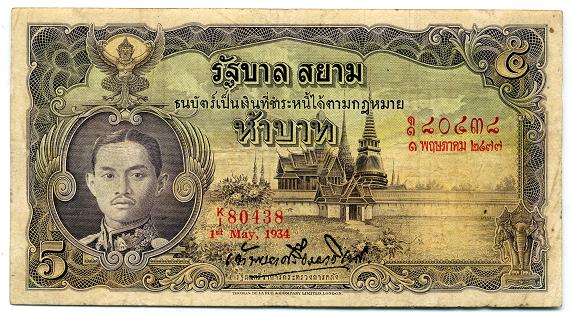 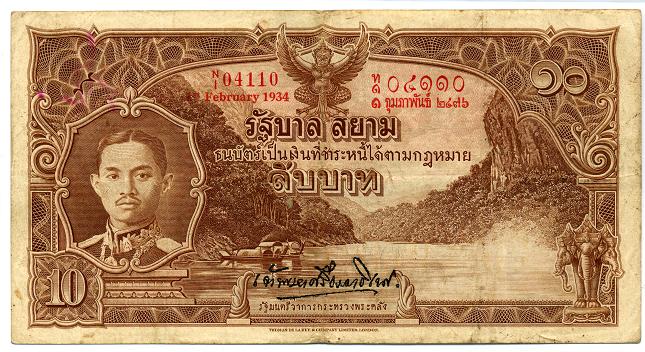 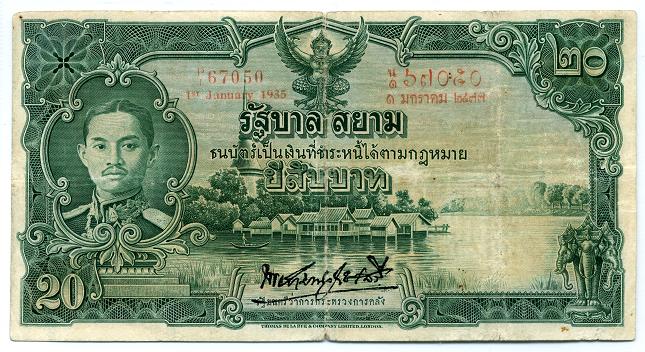 Edited by zeewool
07/18/2010 9:08 pm
|
|
Pillar of the Community
Thailand
1509 Posts |
Wow, zeewool, I bow to your far superior knowledge about Thai notes.
I've just had a quick look at the SCWPM and I see I'm sadly lacking in knowledge. Some serious studying called for, when I have some spare time. To be honest I use a reference book printed in Thailand. In Thai of course so if I have a query I have to ask my wife to translate.
I didn't even realize that a 500,000 baht note had even been issued but there it is tucked away in the catalog but no image. That kind of note is seriously out of my price range. Yes you are right about the sometime ignorance of people's own currencies but Thais do tend to hang on to older notes as good luck charms although they frequently write Buddhist charms on them which rather spoils them.
So thank you for the pointers and I see I'm going to have to go through my collection with a fine-toothed comb and try to attribute them correctly.
Vic
|
|
Pillar of the Community
3660 Posts |
I would not say 'superior' knowledge Vic...I prefer to look at it as different things that we each have learned. I have very little doubt that you know many things about these notes that I do not. We could learn from each other. I assume that your forte' is Rama 9 notes. I will post some early series 9 notes later, and we can exchange information about them if you like.
|
|
Pillar of the Community
3660 Posts |
Here are the first notes of series 9, the present King, printed in 1948 in red ink. Within a year, the ink color of the serial numbers was changed to black because the ink that was used by de La Rue, required a specific red pigment imported from Asia, and this became prohibitively expensive to import into England. 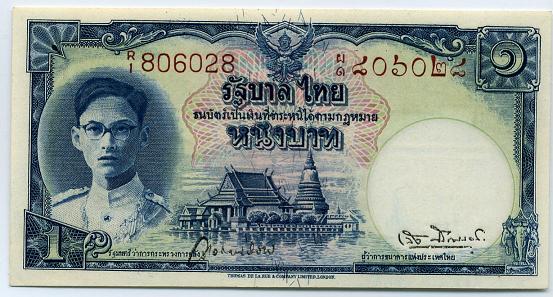 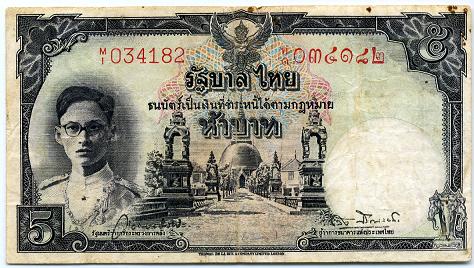 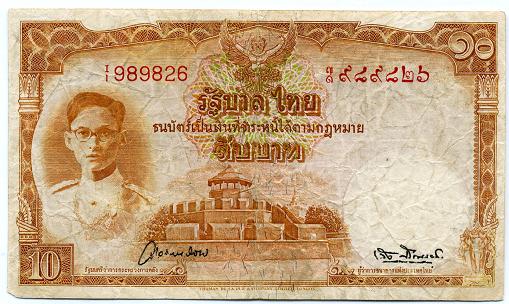 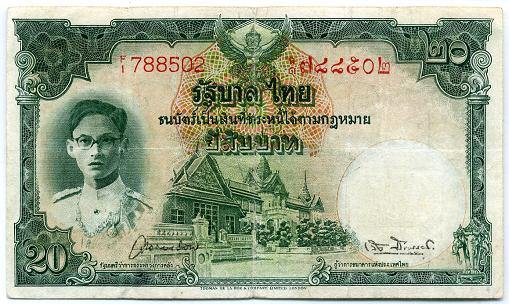 An interesting side note to this series is the 20 baht note of the F-12 prefix. Although each prefix represented one million notes, this particular prefix had three different signature combinations. Here is an example of the second combination, representing about 70 percent of all F-12 notes. 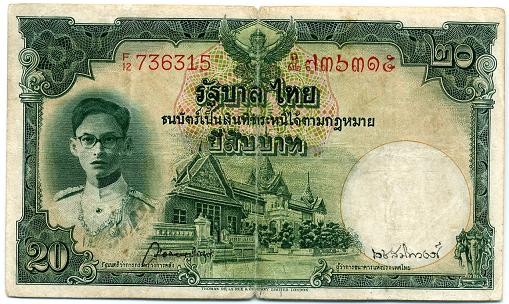 Here is the first signature combination, comprising only the first 5000 notes printed. This note (serial 004004) is to the best of my knowledge unique. There are no other known notes of this prefix / signature combination. That may not sound like a big deal, but to serious Thai banknote collectors, it is a very big deal. 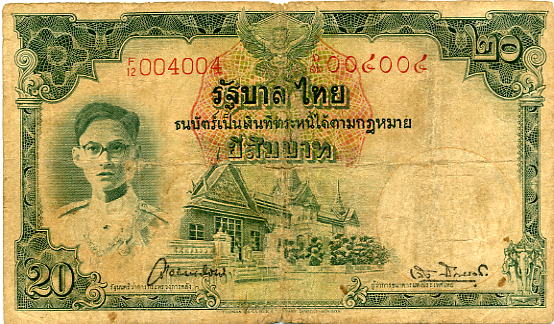 |
|
Pillar of the Community
3660 Posts |
|
|
Pillar of the Community
United States
3098 Posts |
No, you ARE quite the expert on Thai notes!
It just hit me... all Thai denominations have had the same primary color. Would you happen to know why? For the Singapore/Malaysian notes, the colors are the same because of older Borneo issues... but Thailand...
And also, when did it start? It seems that the tical notes didn't have any color at all.
** By the way, if you have time, would you mind posting up just a few of your Chinese empire notes?
Edited by wd1040
07/19/2010 01:43 am
|
|
Pillar of the Community
3660 Posts |
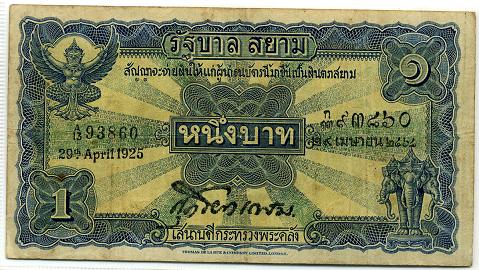
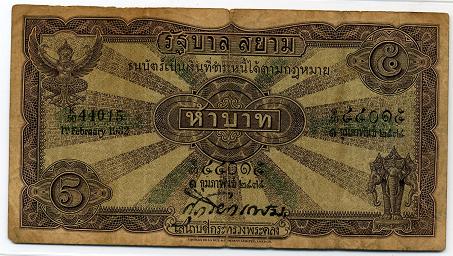
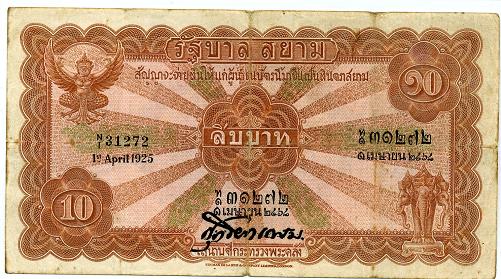
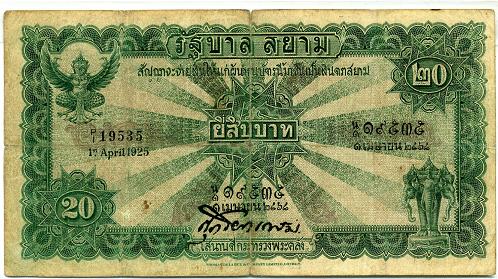
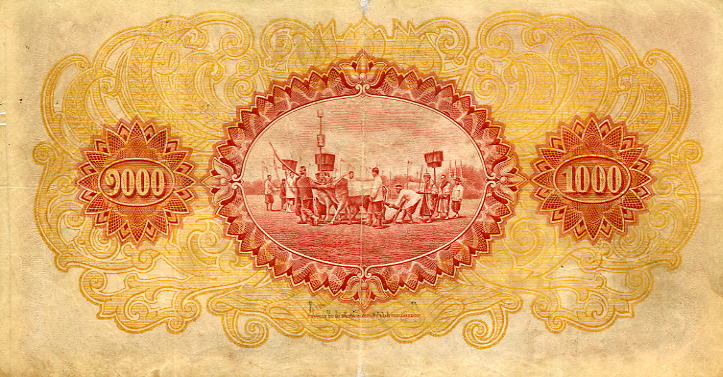
You ARE quite observant WD, and interesting questions call for interesting answers, which all tie together in the history of the Thai banknote & the Thai people. The tical notes (series 1) were as you say, very plain and uniface. The vast majority of Thais during the first half of the 20th century were (through no fault of their own) illiterate. It was an easy thing for scoundrels alter notes with pencils and erasers, since the notes pretty much lacked in any vivid colors (there are color to the notes,but only very subtle ones). Here is just how messed up the Tical notes of series 1 really were: the 1, 5, and 50 Tical notes were all the same size. The 10, 20, 100, and 1000 were all the same size. As for the subtle colors, the 1 and 50 were gray. The 5, 10 and 100 were brown. Varieties of the 5, 10 also came in green as did the 20. The 1000 was yellowish brown. In order to remedy this, the King ordered from Thomas de La Rue in England an entirely new type of banknote.....different sizes and colors for each denomination so that all people could recognize them even if they were unable to read. This also would thwart counterfeiters. This is now known as series 2. 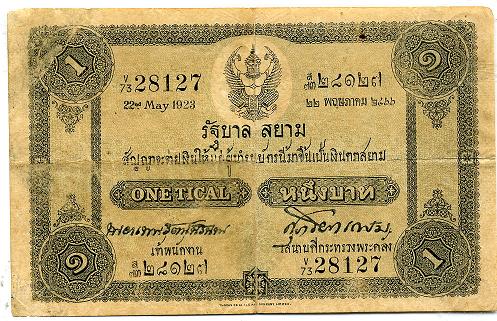 The series 2 notes that I posted earlier were the beginning of the color scheme of Thai banknotes according to denomination. Series 3 followed the colors of series 2, and series 4 followed series 3..... Blue for 1 baht, purple for 5 baht, brown for 10 baht, green for 20 baht, blue for 100 baht, and yellowish brown for 1000 baht. Here are major designs of 1 Baht notes for you to compare color. 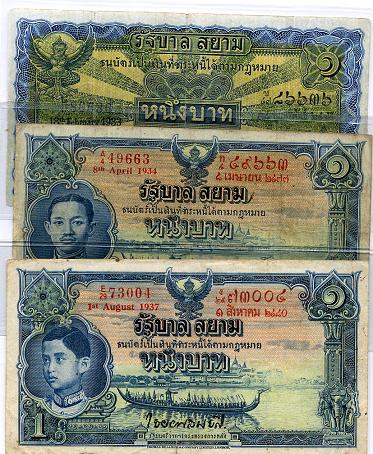 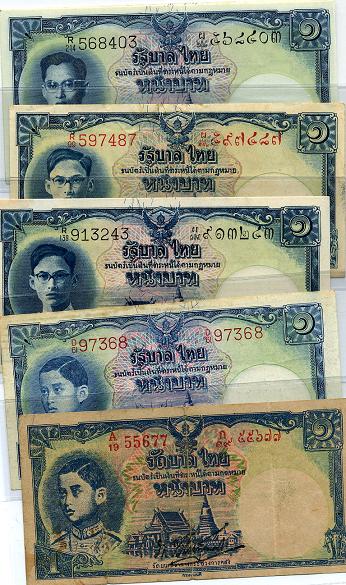 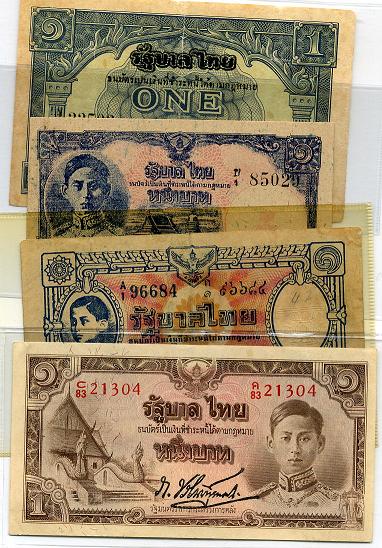 You will notice a brown 1 baht note in that last picture. This was printed during WWII by the Japanese government. The Japanese occupied Thailand during this time, and chose their own color schemes for the countries that they occupied. So, there are exceptions to every rule. You will notice also exceptions with certain WWII notes of other denominations if I am able to upload some. Here are some 5 baht notes for color comparison: 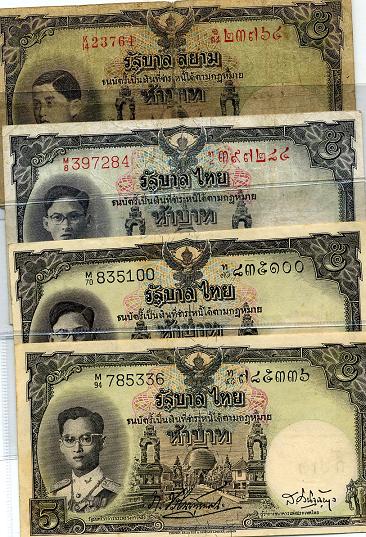 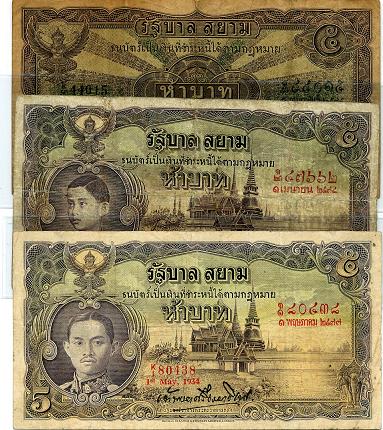 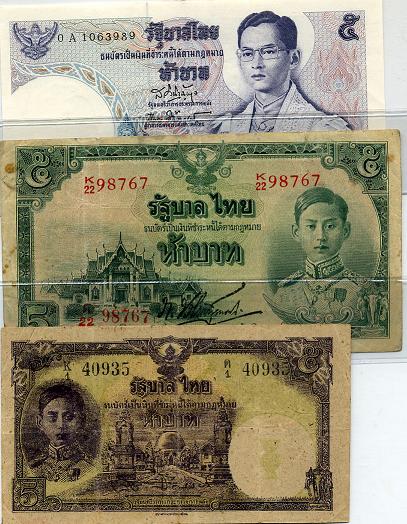 10 baht: 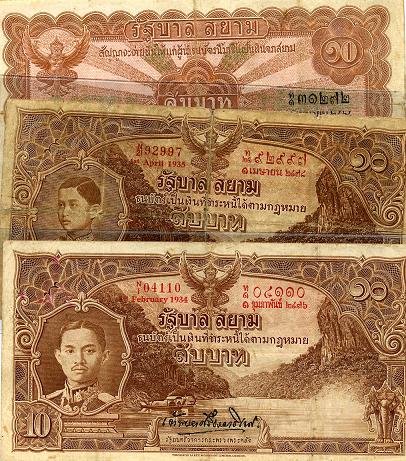 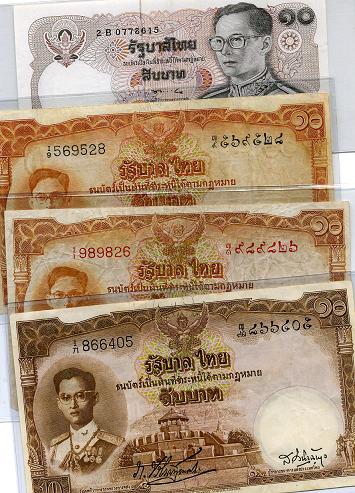 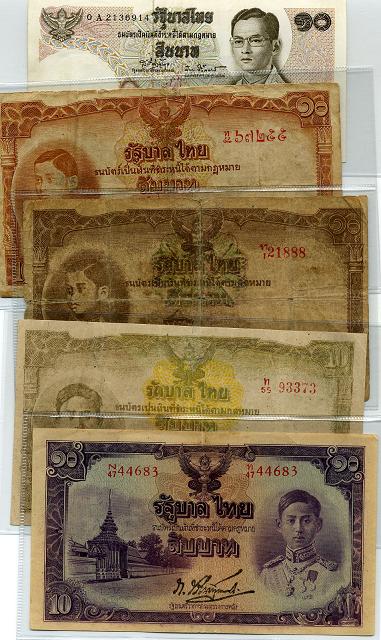 20 baht 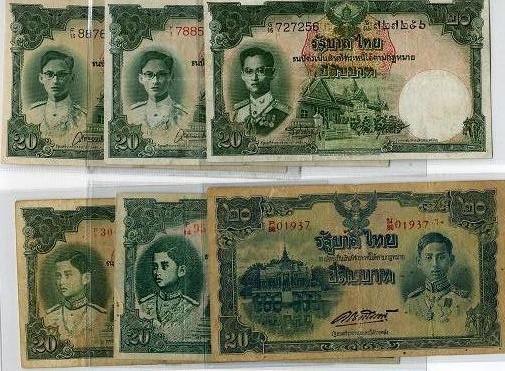 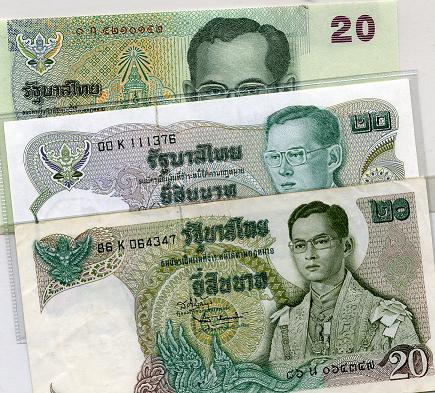 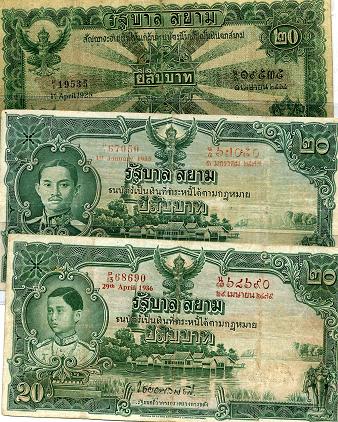 50 baht: 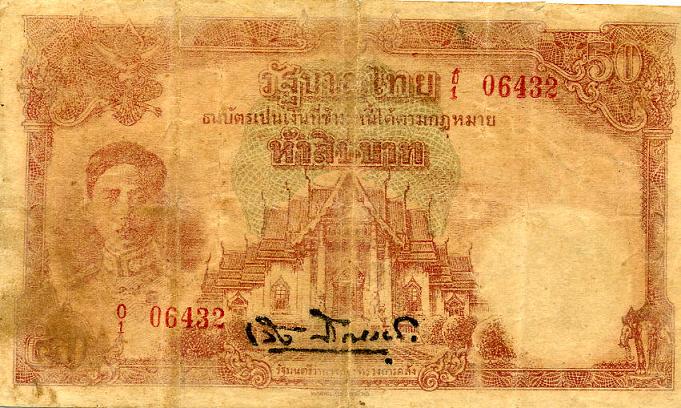 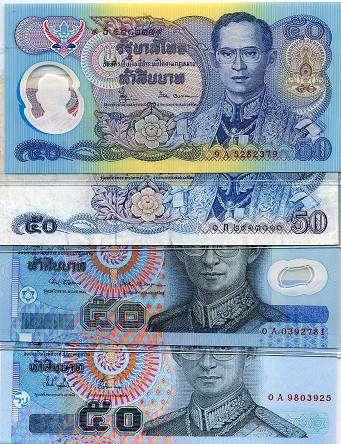 100 baht: 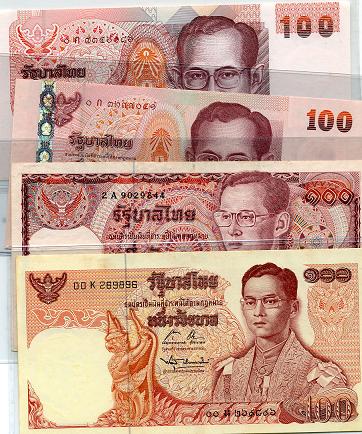 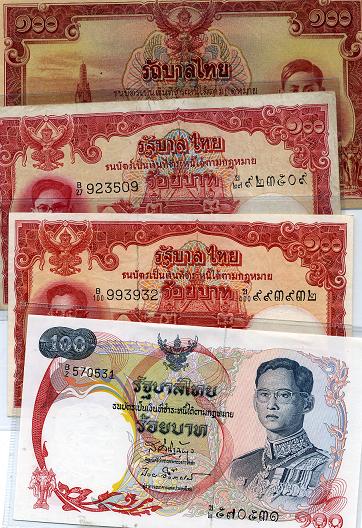 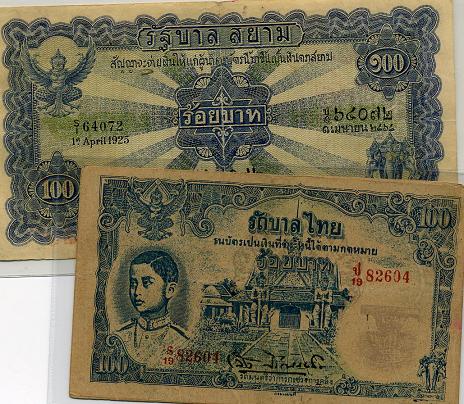 500 baht: 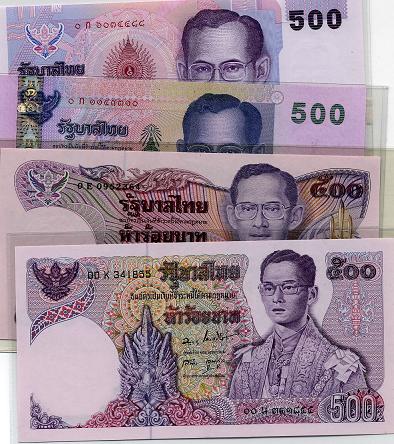 1000 baht: 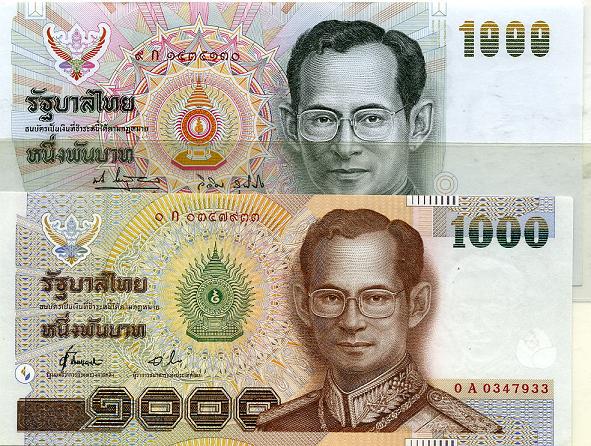 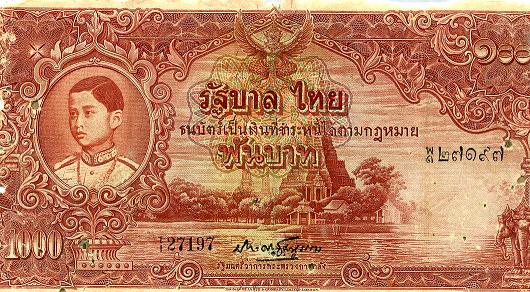 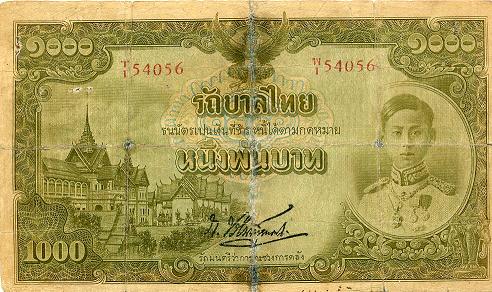 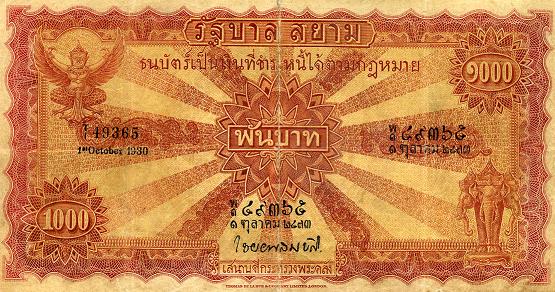 I am sure that you know that Thailand is big on commemorative notes, there are many, some are very big and fancy. I think that I said before that I had Turkish notes, but that was in error, I had said Turkey when I mean Ottoman. As far as the Chinese empire notes go, I am only 5'2" and weigh 97 lbs. The Chinese notes are in about 10 or 12 albums that probably total in weight more than I do. If you could tell me what you are looking for, I will look for specific ones. (I am familiar with Pick #s). They are all in safety deposit boxes, and I will hunt for them when I take these Thai notes back. I only have three albums of them, but it is still quite a chore. I am looking forward to getting out the Belgian Congo album. I recall there being some huge notes with elephants, leopards, sterotypical natives, etc that would fit in with a recent zoo thread that I saw. Edited to add some the series 8 American supplied notes for use after WWII (to replace the Japanese notes). Also here are some oddball half baht notes: 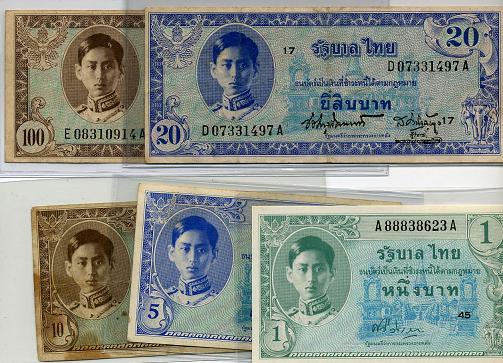 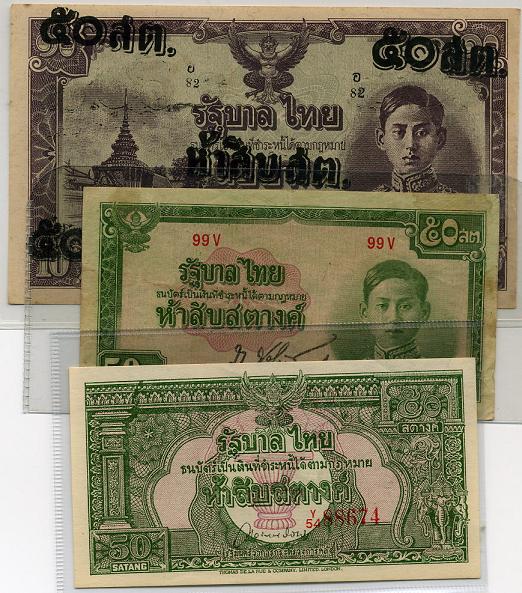 Edited by zeewool
07/19/2010 4:11 pm
|
|
Pillar of the Community
United States
560 Posts |
Thanks so much for sharing! I'm in awe of your vast knowledge and collection!
|
|
Pillar of the Community
3660 Posts |
Actually, my vast ignorance of Thai notes stands in stark contrast to what little I do know. For instance, I had the opportunity to view the collection of a Thai Banknote Printing Works official. Mostly new, common stuff, boring until he got to the errors. One caught my eye as being impossible, and I called him on it. He explained as best he could how this occurred, but the language barrier precluded my understanding. He ultimately made the note a gift to me, but the only thing that I do understand is that the equipment and processes involved are quite dissimilar to that of the BEP. I still don't understand it, but here it is. Maybe someone can explain this in English? First the reverse of a normal note: 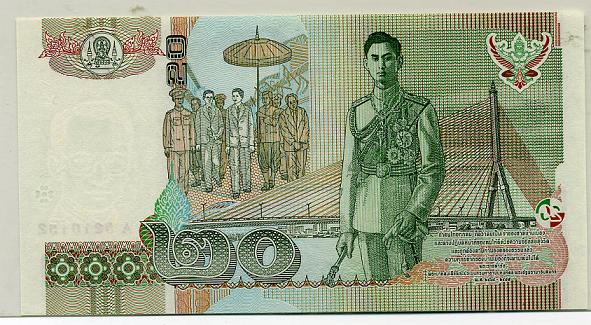 Now the face and back of the alleged error note: 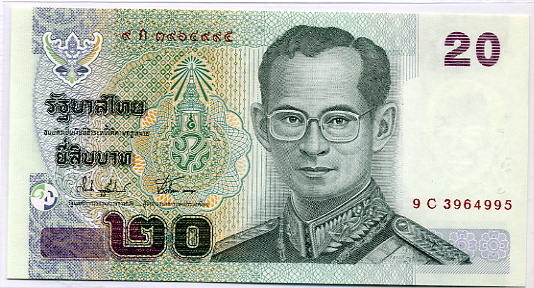 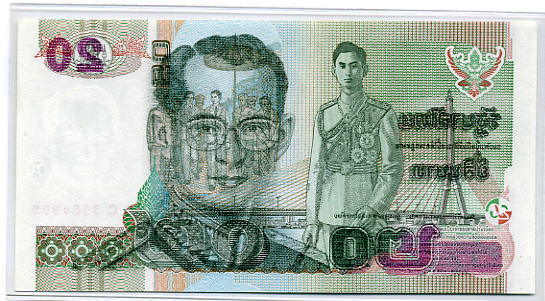 |
|
Pillar of the Community
United States
3098 Posts |
I'm going to save this amazing collage of information!
About the error, there are 2 things I have heard that could have happened.
1. The ink simply didn't dry in time. Thus, there was the imprint on the next note.
2. I don't remember where I heard this, but maybe from Joe Bolling. It's equivalent to a die clash, where the face plate somehow came in contact with the back plate before they wiped and re-inked it, so that ink was stuck to the back plate. When they printed it, both images came up (the back place and the ink left from the front)
Again, I'm not really sure about the 2nd one. Either I did hear it somewhere or I had a very odd dream...
About the Chinese money, do you collect Central Bank issues only, or also the commercial bank notes (Communications, Farmers, etc)?
|
|
Pillar of the Community
Thailand
1509 Posts |
That is a fantastic collection of Thai notes - he says turning green with envy. Now regarding the 20 baht you posted with the comment "Here is the first signature combination, comprising only the first 5000 notes printed. This note (serial 004004) is to the best of my knowledge unique. There are no other known notes of this prefix / signature combination." 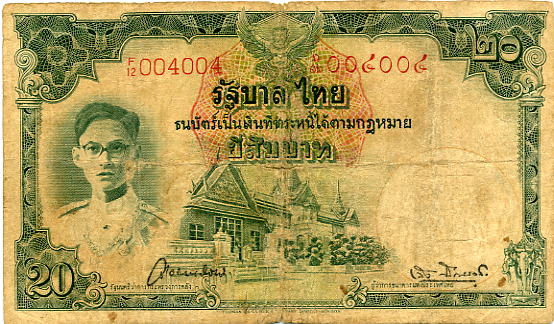 Here is the relevant section from my Thai book of Thai banknotes. This note was first issued in BE2491 (1948). There was a further issue with some similar signature sets two years later but the serial numbers were in black and the serial prefix started at F13. 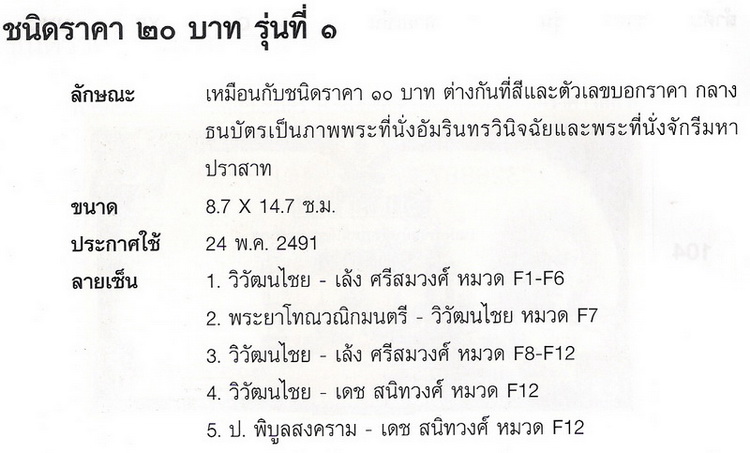 Now here is the related info on the signature varieties. Unfortunately the relational number system they use is out of kilter. The signature on your note is 106.2 which corresponds to details in point 3 of the previous page (serial prefix F8-F12). 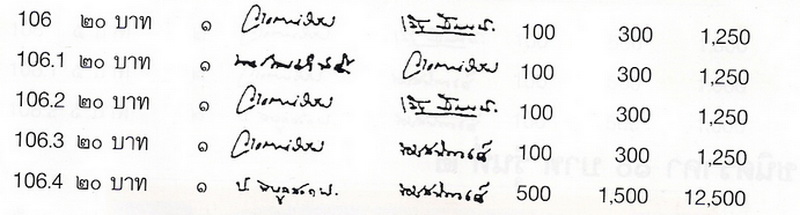 The price columns (in Thai bahts) are for grades G, XF and Unc. The last signature combination seems to be the rarer. Even if that run only went to 5000 and yours was obviously in circulation at some time then there must be some still out there? |
|
Pillar of the Community
United States
1285 Posts |
That alleged error looks to be like a "bold / full wet ink transfer". I do not know anything about the Thai process but is it possible to contact the equivalent of the Thai BEP or the printer?
Nice collection of notes.
Peace
|
|
Pillar of the Community
3660 Posts |
Thanks very much for the possibilities WD, Vic, Ceylon. Actually the note was given to me by a Printing Works official (high ranking BEP equivalent), so his testimony coupled with your thoughts leaves me little room to argue its legitimacy. The watermark, and even the smallest of details are correct. The main problem with catalogs and other books on Thai banknotes is plagiarism. One person who doesn't have his facts straight authors a book, others copy the bulk of it and cash in by authoring their own clone. I also have a catalog that is worthless, but I would have to say that it might be better than yours Vic. (I think that we may have done this comparison before). 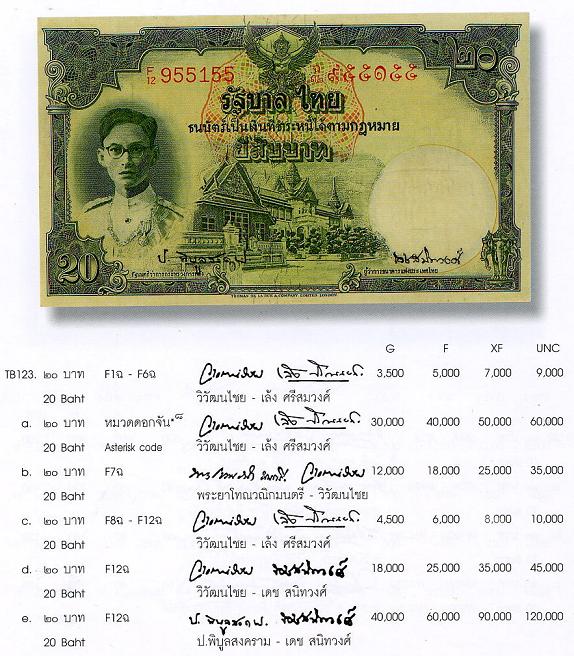 I base my statement of the rarity of the note in question on conversations with a few of the top dealers and collectors in Thailand, and the fact that my uncle dropped a high six figures on this note, and he was not an idiot in what he collected. Just try finding another, anywhere, at any price. (Just try). Your book is wrong, my book is wrong. Yes, I do understand the prefix numbering and signature system. Here are some changeover prefix examples for the major varieties: 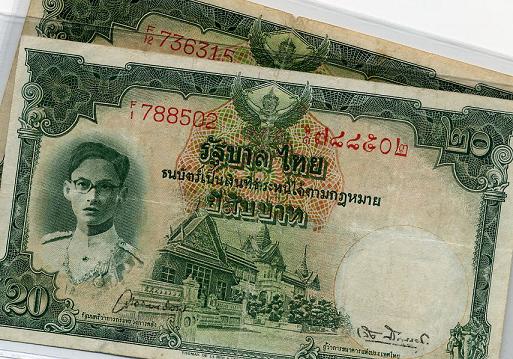 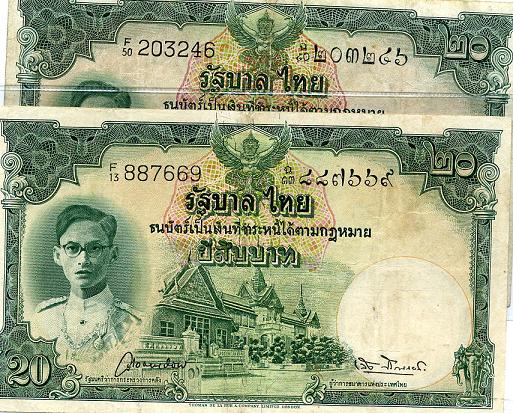 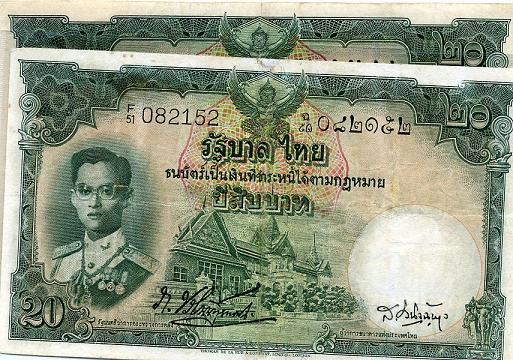 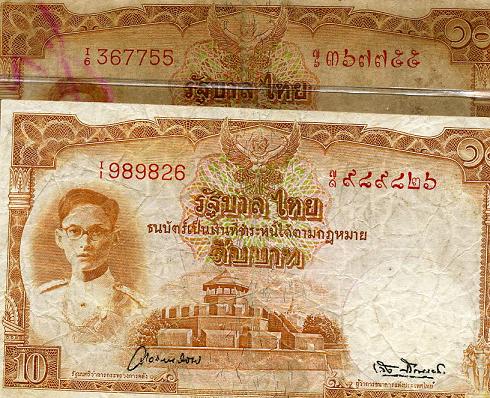 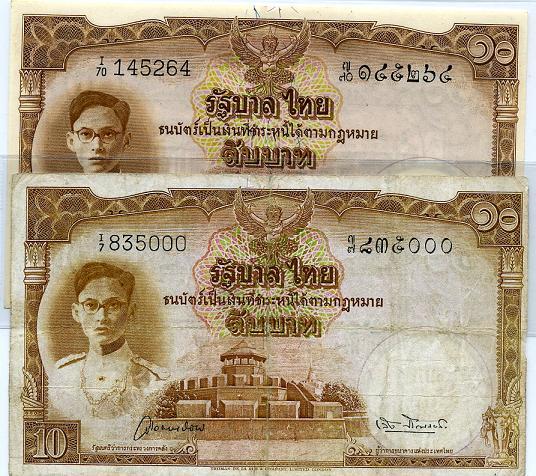 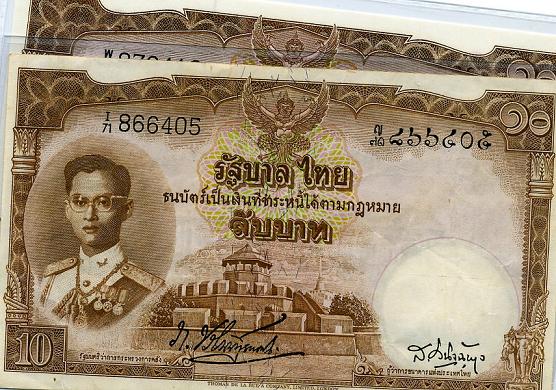 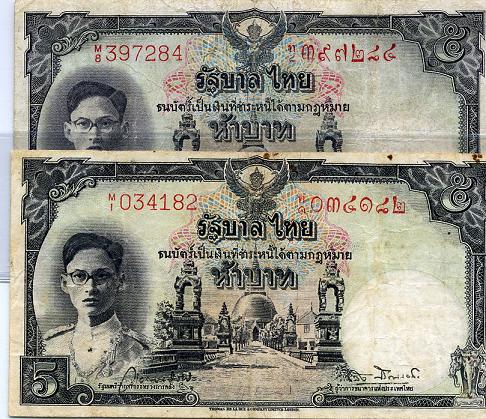 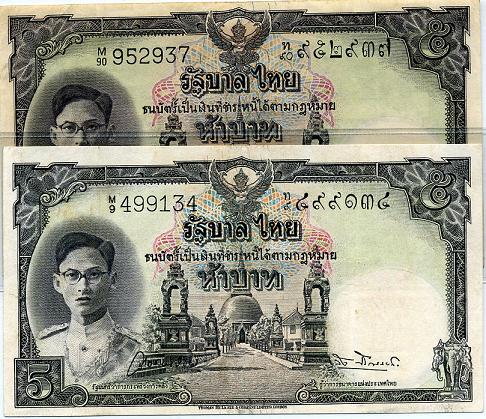 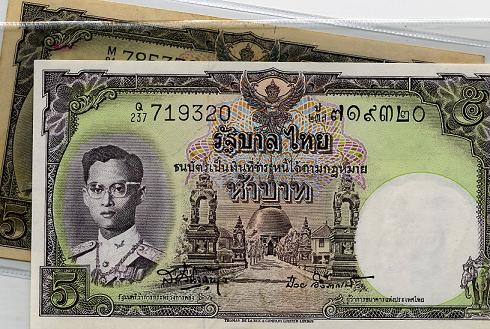 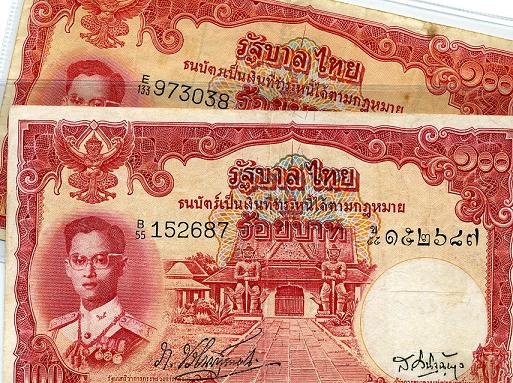 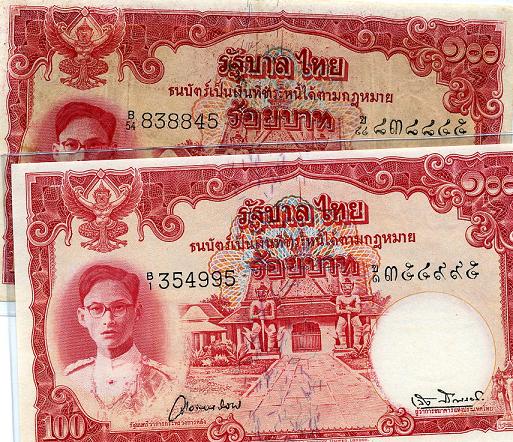 De La Rue was also not immune to printing errors. The change from the red numbers on the 10 baht notes also incorporated the requested change in hue from light brown to dark brown for the main body of the note. This is why red serial numbered 10 baht notes have an overall different look about them than do the black numbered notes. Compare the following: 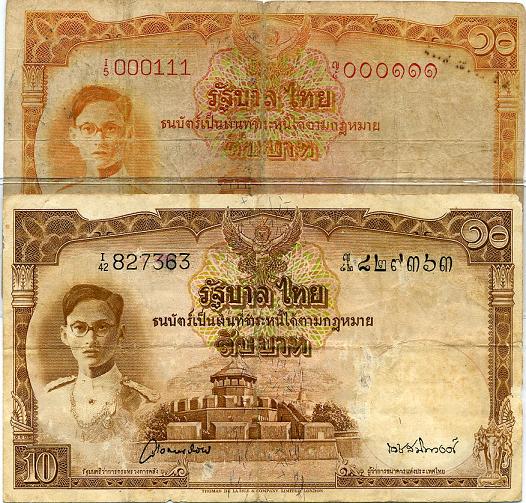 This change occurred from the red I6 to the black I7. A few notes from prefix I9 however, slipped in with the old underprint. Compare: 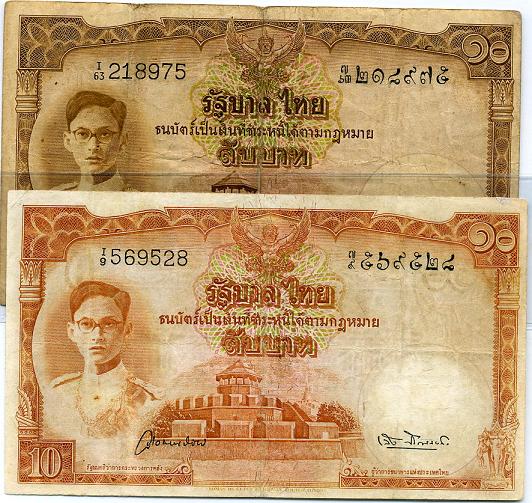 There is a similar anomaly in the N61 prefix of the 5 baht notes, but I think that this is probably a pigment miscalculation or ink adjustment: 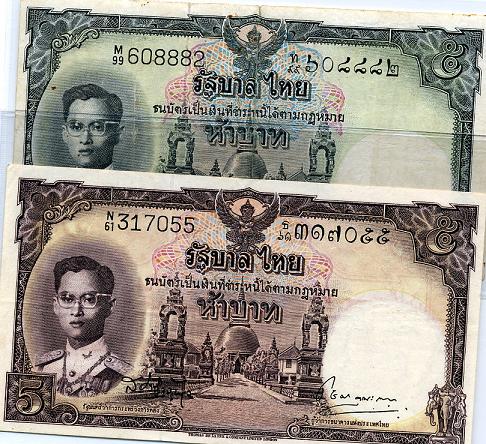 Here is another of those odd backward overprint things on a 1925 1 baht note The ink 'does' look like it was wet and heavy when this happened: 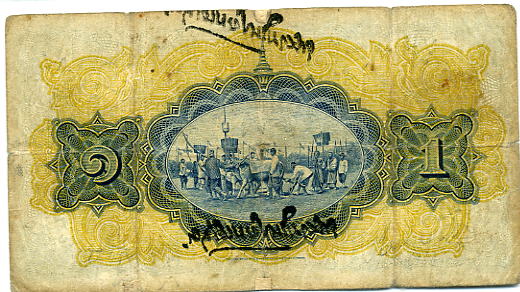 Beginning with series 11 regular issue banknotes, the denominations were no longer prefix specific. 5 and 10 baht notes stared at prefix 0A, and all higher denominations started at prefix 00K. This scheme continued through series 12. 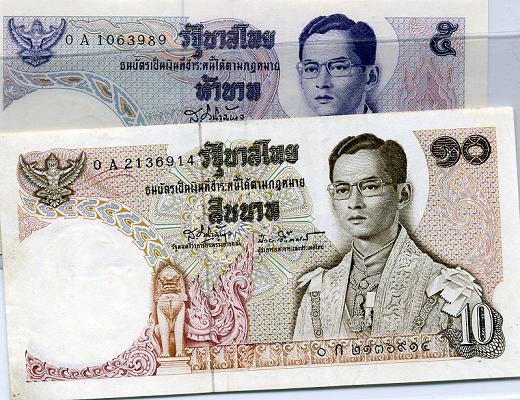 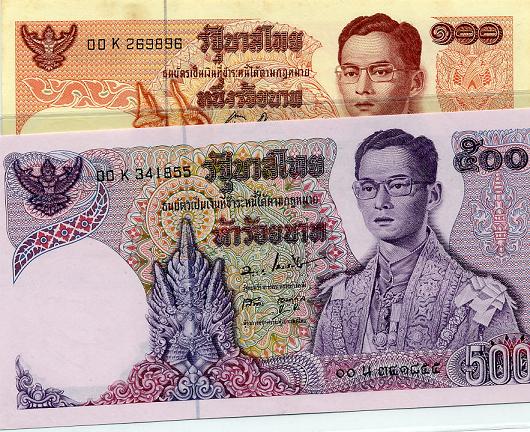 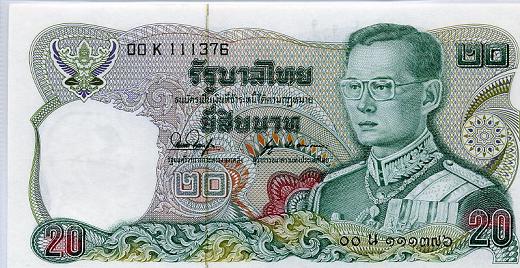 Beginning with series 13, the 00K Prefix was dropped, and prefix 0A became the first prefix for all regular issue notes regardless of denomination. 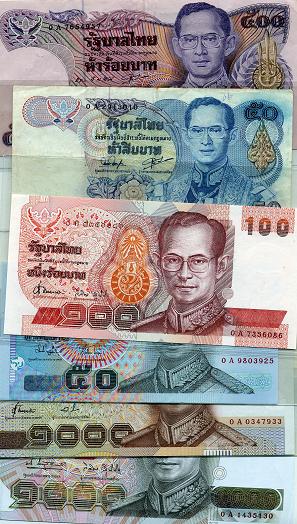 Special issue notes usually begin with prefix 9A, (while commemorative issues often begin with prefix 0E usually with a watermark other than that of the King). 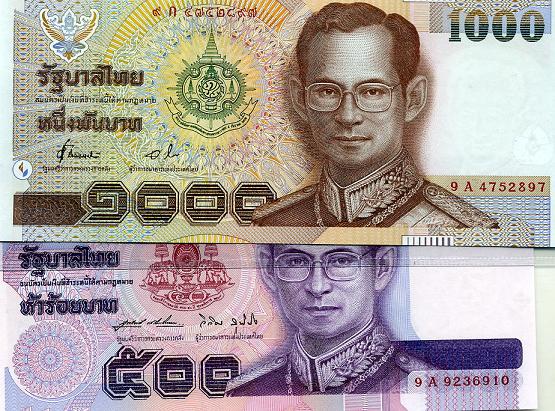 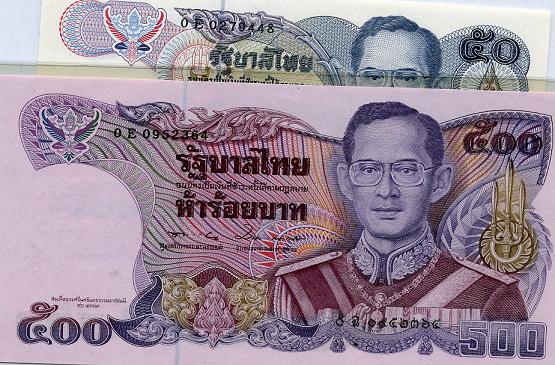 Just as with a Napier / Thompson note, there are certain signatures and signature combinations that are rare, and will command huge premiums over other notes of the same series.  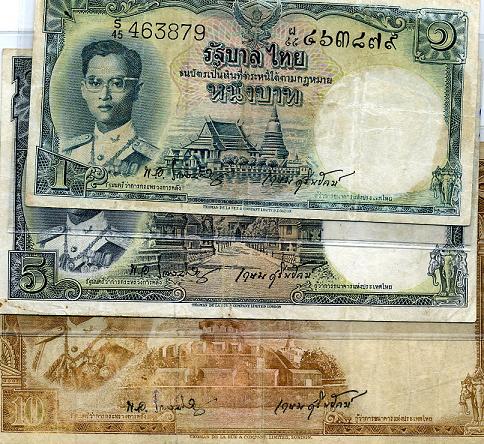 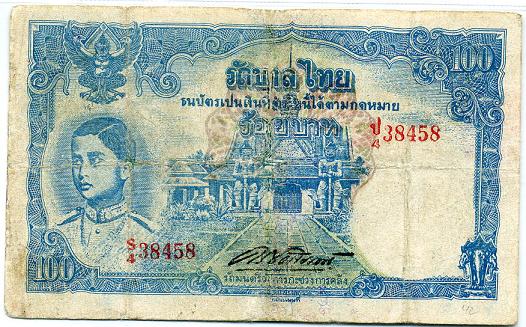 Here is a matching serial number pair. One regular issue with prefix 0A and the King's watermark....the other with prefix 9A and the Queen's watermark. 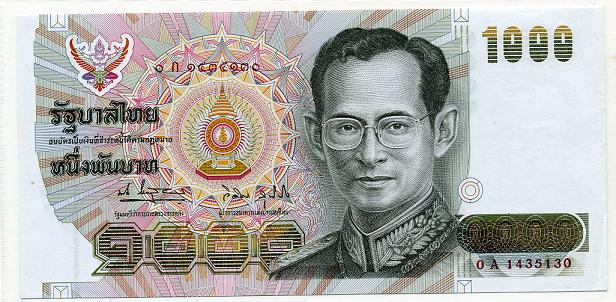 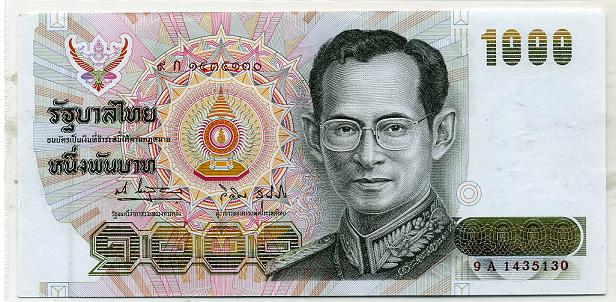 |
| |
Replies: 19 / Views: 14,017 |
To participate in the forum you must log in or register.
Disclaimer: While a tremendous amount of effort goes into ensuring the accuracy of the information contained in this site, Coin Community assumes no liability for errors. Copyright 2005 - 2026 Coin Community Family- all rights reserved worldwide. Use of any images or content on this website without prior written permission of Coin Community or the original lender is strictly prohibited.
Contact Us | Advertise Here | Privacy Policy / Terms of Use
|
| Coin Community Forum |
© 2005 - 2026 Coin Community Forums |
| It took 0.71 seconds to rattle this change. |
 |
|










 Posted 07/17/2010 06:04 am