| Author |
 Replies: 22 / Views: 8,392 Replies: 22 / Views: 8,392 |
|
Valued Member
Canada
311 Posts |
I purchased a micrometer to measure the thickness of this penny, and here is what it came out to, 0.031", where an ordinary penny measured at the same point is 0.056". This came from a collection of my nephews, by marriage, grandmother had in her collection of different coins. She had past away a couple of months ago, and I was asked to help with the coins she had collected. Some as old as an American Half Dime, 1852O. I hope these pictures of the penny are clear enough, I cannot get an end shot, because I have not figured out how to do it, but I will try if need be. take care. 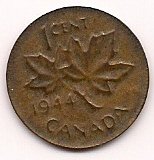 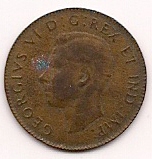 |
|
|
|
Valued Member
Canada
250 Posts |
Have you any guesses as to which planchet they may have used? The rim appears somewhat cropped from stamping a smaller coin. Cool find. Now I will need to get a digital scale too...sigh...so many tools in my shop...so little time.
$0.02 Worth
|
|
Moderator
 United States
16694 Posts |
I've seen U.S. cents like this before. Looks to be soaked in acid. Some folks would do this to put them in parking meters I believe.
swcoin.ecrater.com
|
|
Valued Member
 Canada
311 Posts |
I don't know which planchet was used, this has been sitting around for a long time in a lock box. When I figure out how to use the camera, and not the scanner, I will try and get more details. About the digital scale, I will try and find one. I hope to get a second opinion from someone that I will be taking the penny to, a local coin dealer. I will then have another opinion from someone who can see it directly, he is the one that gave me this site to log onto. Thanks for the info, any update and I will post it. take care.
|
|
Valued Member
Canada
311 Posts |
Hopefully, these pictures will show more detail, first time for everything, take care 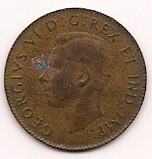 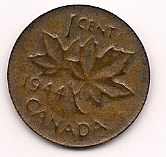 |
|
Valued Member
Canada
311 Posts |
Sorry, need more educating on how to enlarge pictures for this forum. take care
|
|
Bedrock of the Community
United States
14454 Posts |
Quote:
Looks to be soaked in acid. Some folks would do this to put them in parking meters I believe. is the 1944 Canadian Cent copper? if not what was it made of? Quote:
Sorry, need more educating on how to enlarge pictures for this forum. take care if you have some large files that you had to re-size for the forum and want help uploading larger pictures I will email you through the forum email system and all you will need to do is click on reply and attach the files before editing and I will edit them myself and make them bigger for the forum. Just let me know if you would like me to email you so you can attach the files |
|
Valued Member
Canada
311 Posts |
it is copper. As for the editing and enlarging, please email me the forum email system, that would sure be appreciated, thanks, take care
|
|
Valued Member
Canada
272 Posts |
I have seen this coin in hand and I do not believe it to have
been acid dipped,however it is a rather strange looking coin both
in size and thickness.
On close inspection the design is sharp but appears hollow,
especially in the maple leaves,the edge shows a raised rim as you would expect and the denticles are in fine shape..
It is possible it was minted on a foreign planchet though if that was possible back in 1944 then it leaves more room for debate.
|
|
Valued Member
United States
462 Posts |
In my opinion, the coin has been acid treated. Classic example. Acid tends to eat into the field area while leaving the design relatively sharp although I can see from the pictures that the design does exhibit weakness..letters are wavy, etc. Often mislabeled as struck on foreign planchets, they show up very frequently on ebay. Most of the time, especially under magnification, you can see a coarse/pitted surface on the coin's field. Usually occurs on copper cents and nickels. Thanks, |
|
Valued Member
Canada
272 Posts |
OK, now I am confused, if the coin has been acid dipped as every one
seems to be saying how does that explain the coin being way undersized, after all the denticles are still in place.
Just wondering out loud.
|
|
Valued Member
United States
462 Posts |
The acid appears to reduce the thickness of the coin at a faster rate than reducing the diameter. As stated earlier, the design elements will remain relatively clear although under close examination, pitting occurs especially in the field area and the design elements are not sharp but give an overall fuzzy look. Everytime you see an example of this type, you will be more and more comfortable identifying it.
|
|
Valued Member
Canada
272 Posts |
I can understand an acid coin getting thinner but no one seems to be able to explain how the coin can get smaller in diameter as in this case.
Are you saying that if you put acid on a coin it will actually shrink
in diameter, (somehow I find that hard to believe)..
|
|
Valued Member
Canada
272 Posts |
I can understand an acid coin getting thinner but no one seems to be able to explain how the coin can get smaller in diameter as in this case.
Are you saying that if you put acid on a coin it will actually shrink
in diameter, (somehow I find that hard to believe)..
|
|
Bedrock of the Community
United States
12437 Posts |
Yes, the acid attacks all of the dimensions of the coin. Thickness and diameter are reduced which directly leads to a weight loss. The denticles are still there but the rest of the rim is gone, one of the tell-tale signs of an acid coin.
|
|
Valued Member
Canada
329 Posts |
if it was truely a thin planchet, would it not have led to a weak strike?
|
| |
Replies: 22 / Views: 8,392 |







 Posted 09/29/2010 12:24 am





